
Executive Overview: The Reemergence of a Literary Anomaly
The cardinal rule of the sports novel is that it is almost never truly about sports. In the landscape of modern American fiction, athletics serve primarily as a canvas for grander existential inquiries—meditations on personal sacrifice, mortality, power, and the pursuit of transcendence. For writers, whose actual labor involves sitting alone in dimly lit rooms staring at blank pages or glowing screens, the hyper-physical arena offers a dynamic surrogate for professional and philosophical anxieties.
Among the giants of American postmodernism, Don DeLillo has repeatedly turned to athletics to anchor his sweeping critiques of culture, language, and systemic dread. While his gridiron novel End Zone (1972) transposed Cold War nuclear paranoia onto college football, and his sprawling masterpiece Underworld (1997) used a single legendary home run to trace the moral outline of late-twentieth-century America, his most elusive and financially successful sports narrative remained out of print for decades.
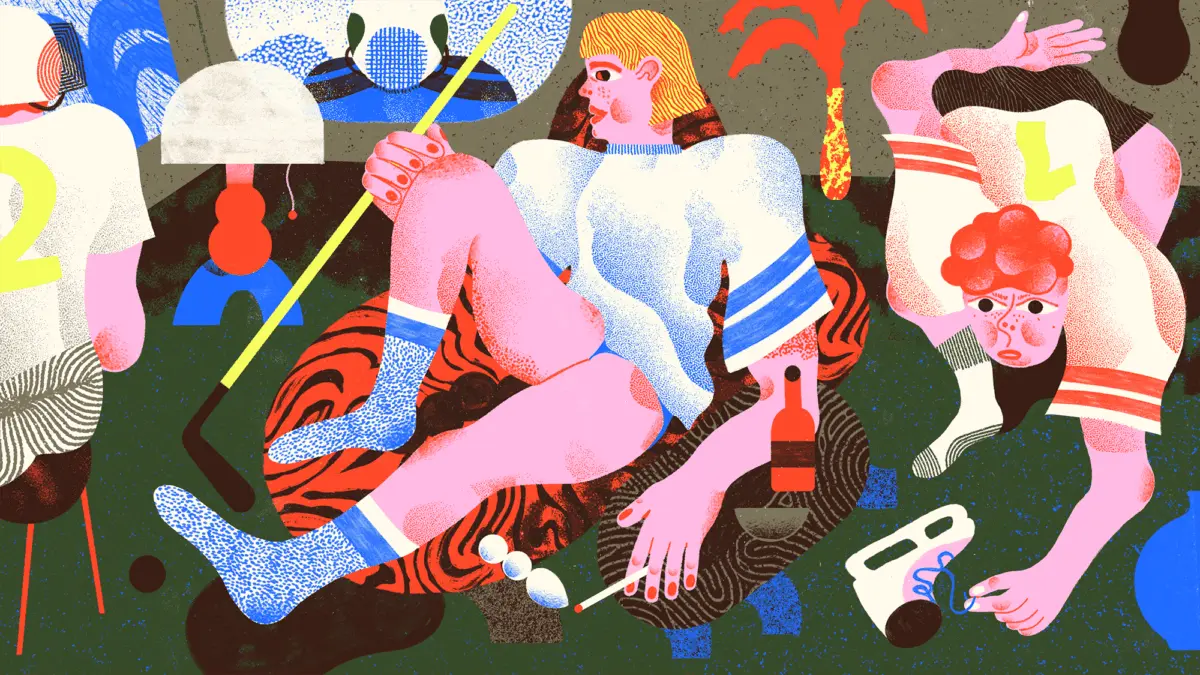
That book is Amazons: An Intimate Memoir by the First Woman Ever to Play in the National Hockey League, published pseudonymously in 1980 under the name of its fictional protagonist, Cleo Birdwell. Long disowned by its creator, shrouded in literary rumor, and traded among hyper-literate collectors like underground contraband, Amazons has finally been sanctioned for reissue by DeLillo at the age of ninety.
Read Also
Driven in part by a contemporary cultural resurgence in sports romance and hockey fiction, the republication of Amazons provides a critical opportunity to reexamine one of the most intriguing anomalies in contemporary literature. Far from being a mere curious foot-note, the novel bridges the gap between DeLillo’s early clipped cynicism and the grand cultural theories that defined his later career. It presents an audacious, gender-bending satire of male vulnerability, commercialism, and body politics that feels astonishingly ahead of its time.
Detailed Chronology: Don DeLillo’s Trajectory Through Sports and Systems
To understand the significance of Amazons, one must trace DeLillo’s literary evolution across five decades of engagement with competitive athletics, geopolitical anxiety, and media-saturated landscapes.
+-----------------------------------------------------------------------------------+
|                            DON DELILLO'S SPORTS MATRIX                            |
+-----------------------------------------------------------------------------------+
|  1972: "End Zone"                                                                 |
|  -- Theme: College Football & Nuclear Annihilation                                |
|  -- Core Question: Can the violence of sport redeem existential Cold War dread?   |
+-----------------------------------------------------------------------------------+
                                         |
                                         v
+-----------------------------------------------------------------------------------+
|  1980: "Amazons" (as Cleo Birdwell, with Sue Buck)                                 |
|  -- Theme: Women in the NHL, Male Vulnerability & Erotica Satire                  |
|  -- Core Question: How do physical bodies navigate male fragility & fame?         |
+-----------------------------------------------------------------------------------+
                                         |
                                         v
+-----------------------------------------------------------------------------------+
|  1985–1988: Mid-Career Masterworks ("White Noise" & "Libra")                      |
|  -- Connections: Crossover of character Murray Jay Siskind; focus on "men in      |
|     small rooms" defining systemic history.                                       |
+-----------------------------------------------------------------------------------+
                                         |
                                         v
+-----------------------------------------------------------------------------------+
|  1997: "Underworld"                                                               |
|  -- Theme: Baseball, Atomic Power & Postmodern Systems Theory                     |
|  -- Core Question: How does a single sporting artifact reverberate over decades?  |
+-----------------------------------------------------------------------------------+
                                         |
                                         v
+-----------------------------------------------------------------------------------+
|  Present: The "Amazons" Reissue                                                   |
|  -- Catalyst: Viral surge in hockey romance literature and canon preservation.    |
+-----------------------------------------------------------------------------------+
1972 – End Zone and Nuclear Metaphors on the Gridiron
DeLillo’s second published novel, End Zone, introduced his fascination with the overlap between athletic discipline and total destruction. The novel follows Gary Harkness, a college football player obsessed with the logistics of thermonuclear war. Gary forces himself to visualize "Milwaukee in flames" as a form of psychological conditioning, attempting to purge himself of the twisted thrill of imagining millions dead.
The novel asks whether the ritualized "work, pain, fury, sweat" of football can offer redemption from the looming threat of annihilation. End Zone established DeLillo’s early signature style: deadpan, philosophically charged dialogue spoken by characters who seem acutely aware of their own symbolic weight.
1980 – The Amazons Experiment and Pseudonymous Commercial Success
Seeking a departure from the heavy existential tone of his early books, DeLillo partnered with Sue Buck—a former advertising colleague who provided real-world hockey lore and background detail—to craft Amazons. Writing as Cleo Birdwell, the first female player in the NHL, DeLillo embraced a fast-paced, erotic, and comedic narrative.
Unbeknownst to the literary establishment at the time, Amazons became a commercial sensation. For years, it stood as DeLillo’s highest-selling work, outperforming his critically acclaimed literary titles until the publication of White Noise in 1985.
1985–1997 – From White Noise to Underworld
The thematic DNA of Amazons bled quietly into DeLillo’s canonized work. The character of Murray Jay Siskind—a pop-culture-obsessed academic who first appeared as a sportswriter in Amazons—became a central figure in the National Book Award-winning White Noise (1985).
In Libra (1988), DeLillo noted that a researcher studying Lee Harvey Oswald had come to realize "his subject is not politics or violent crime but men in small rooms." This insight applied directly back to DeLillo’s own obsession with human claustrophobia and performance.
This line of inquiry culminated in 1997 with Underworld, an 800-plus-page epic that opens with Bobby Thomson’s famous 1951 home run ("The Shot Heard ‘Round the World") and weaves through decades of Cold War history, waste management, and interconnected human lives.
The 2020s – The Revival of a Forgotten Classic
Following decades of secrecy—during which DeLillo quietly distanced himself from the book while dedicated fans hunted down rare paperback copies—reports confirmed that DeLillo had approved a official reissue of Amazons. Spurred by a shift in the publishing landscape, where hockey fiction and sports-centric romances have achieved massive popularity, the novel is returning to bookstores as both an artifact of literary history and a surprisingly contemporary comedy.
Supporting Context and Literary Metrics: Deconstructing Amazons
The Mechanics of Cleo Birdwell’s World
Amazons abandons the dark, apocalyptic anxiety of End Zone in favor of an exploration of male sexuality, gender power dynamics, and athletic celebrity. The narrative hinges on a simple thesis repeated throughout the text: "Athletes have bodies."
Cleo Birdwell is framed not as a tortured pioneer bearing the crushing weight of gender politics, but as a pragmatic, clear-eyed Midwesterner from the fictional town of Badger, Ohio. Possessing elite athletic skill and an unshakeable sense of self, Cleo navigates professional hockey with the calm detachment of a manager overseeing a routine workplace.
+-----------------------------------------------------------------------------------+
|                            THE CHARACTER LANDSCAPE OF AMAZONS                     |
+-----------------------------------------------------------------------------------+
|  Cleo Birdwell           |  The pragmatic, ice-ceiling-shattering protagonist.    |
|                          |  Views hockey and male absurdity with dry detachment.  |
+--------------------------+--------------------------------------------------------+
|  Murray Jay Siskind      |  Sensualist sportswriter obsessed with pop nostalgia   |
|                          |  (later resurrected in "White Noise").                 |
+--------------------------+--------------------------------------------------------+
|  The Ivy League GM       |  Neurotic executive capable of intimacy only under     |
|                          |  strictly controlled "laboratory" conditions.          |
+--------------------------+--------------------------------------------------------+
|  The Québécois Coach     |  Desperate for a female audience simply to speak French.|
+--------------------------+--------------------------------------------------------+
|  Toby Scott              |  Emasculated, credit-card-wielding color commentator   |
|                          |  who sneaks into hotel rooms to watch people sleep.    |
+--------------------------+--------------------------------------------------------+
|  The Comatose Player     |  A former hockey player put into a medically induced    |
|                          |  coma, becoming an object of bizarre affection.        |
+-----------------------------------------------------------------------------------+
The comedy of Amazons stems from the subversion of traditional male power. The men who populate Cleo’s professional life are consistently exposed as fragile, needy, or comically flawed:
- The Ivy League General Manager: Incapable of sexual performance without laboratory-like conditions of order and silence.
- The Québécois Coach: Desires nothing more than an attentive female listener to hear him speak French.
- The Saudi Oligarch: Purchases the franchise and suggests Cleo play in a veil, a proposition she demolishes with a single line of dry sarcasm: "Do I have a home veil and a road veil?"
- Toby Scott: A ferret-faced color commentator who breaks into hotel rooms, not as a predatory force, but as an emasculated figure seeking silent presence, ultimately begging for Christian forgiveness when caught.
Stylistic Tropes and Queer Sensibility
Literary critics have noted that Amazons shares an unexpected stylistic kinship with mid-century gay literature and queer vanguard fiction, such as the works of Gary Indiana (Rent Boy) and John Giorno (Great Demon Kings). The novel treats sex without moralizing shame or romantic melodrama, viewing penetrative intimacy and physical bodies with a frank, anatomical, and lighthearted curiosity.
DeLillo uses Cleo’s detachment to turn the traditional male gaze inward. When sportswriters attempt to reduce her to physical descriptors—obsessing over her "honey blonde hair," "taut ass," and "downy white thighs"—Cleo responds not with despair, but with a sharp critique of male helplessness.
"In a way, you could call it a victory for the movement."
— Cleo Birdwell, on taking her turn in the rotation of brutal hits on the ice.
When rival fans scream obscenities from the stands, Cleo dryly observes that the crowd appears to be "overwhelmed by a massive thyroid deficiency." Violence on the ice is stripped of its hyper-masculine mythos; it is treated as an objective, seasonal reality that strikes every player regardless of gender.
Official Statements and Critical Perspectives
The secret history of Amazons was preserved for years through industry insider knowledge and correspondence between prominent literary figures.
The David Foster Wallace Connection
In a 1992 fan letter to Don DeLillo, author David Foster Wallace confessed his deep familiarity with DeLillo’s entire body of work, specifically citing his awareness of the pseudonymous hockey novel:
"Even a certain anomalous thing by a Ms. Birdwell, which Gerry took great grim delight (after I’d told him there was no way you hadn’t written this thing) in telling me had sold more copies for you than anything until ‘White Noise.’"
The "Gerry" referenced by Wallace was Gerald Howard, an editor at Viking who worked closely with DeLillo. Howard later corroborated this detail in an essay for Bookforum, confirming that Amazons was indeed DeLillo’s most commercially successful book for a significant portion of his early career. Howard revealed that the book was written in collaboration with Sue Buck, who provided crucial real-world context for both professional hockey and the rural Ohio background of the protagonist.
+-----------------------------------------------------------------------------------+
|                        CRITICAL INSIGHTS & HISTORICAL QUOTES                      |
+-----------------------------------------------------------------------------------+
|  David Foster Wallace (1992):                                                     |
|  "Gerry took great grim delight... in telling me [Amazons] had sold more copies  |
|  for you than anything until White Noise."                                        |
+-----------------------------------------------------------------------------------+
|  Gerald Howard (Editor, Viking):                                                  |
|  Confirmed DeLillo collaborated with Sue Buck to blend sports expertise with     |
|  satirical, sharp dialogue.                                                       |
+-----------------------------------------------------------------------------------+
|  Don DeLillo (in "Libra"):                                                        |
|  "It has taken him all these years to learn that his subject is not politics      |
|  or violent crime but men in small rooms."                                        |
+-----------------------------------------------------------------------------------+
|  Don DeLillo (in "Underworld"):                                                   |
|  "Longing on a large scale is what makes history."                                |
+-----------------------------------------------------------------------------------+
The Evolution of Dialogue: From End Zone to Amazons
A comparative analysis of dialogue across DeLillo’s sports novels illustrates his shifting perspective on physical conflict and philosophical abstractions:
| Feature | End Zone (1972) | Amazons (1980) |
|---|---|---|
| Primary Sport | Football | Professional Ice Hockey |
| Core Metaphor | Thermonuclear War & Geopolitical Strategy | Male Fragility, Media Satire & Sexual Power |
| Dialogue Style | Heavy, philosophical, abstract, melancholic | Fast, clipped, satiric, highly rhythmic |
| Character Dynamic | Men debating systemic order in barren rooms | A female professional controlling weak men in hotel rooms |
| Tone | Existential dread | Joyous, deadpan subversion |
In End Zone, when players discuss quitting, they speak in grave, grand terms about global balance:
"If I don’t play football," Taft tells Gary, "the bobcat will become extinct in Wyoming."
By contrast, the characters in Amazons express their injuries through meta-fictional satire and immediate physical realities. When Cleo reflects on the repetitive structure of her romantic encounters, she breaks the narrative wall to observe:
"This is the second straight chapter that ends with sex and intimate lighting. There is a huge tradition behind this, but I’m not sure I want to be part of it."
Future Outlook and Legacy: High Postmodernism Meets Genre Subversion
The decision to reissue Amazons at this stage of Don DeLillo’s career marks a significant moment in modern American literature. For decades, literary scholarship favored a pristine image of DeLillo as the stern prophet of late-capitalist paranoia—the master who predicted airborne toxic events, political assassinations, and consumerist dread.
The return of Amazons enriches this image, showcasing a master stylist indulging in pure narrative pleasure, comedic subversion, and high-concept genre play.
+-----------------------------------------------------------------------------------+
|                        THE LEGACY METRIC OF "AMAZONS"                             |
+-----------------------------------------------------------------------------------+
|                                                                                   |
|  [Pulp / Erotica Satire]  <======================>  [Canonical Literary Fiction]  |
|            |                                                   |                  |
|            +---> Subverts sports romance tropes                +---> Introduces   |
|            +---> Explores physical body mechanics                   Murray Jay    |
|            +---> Deconstructs male power dynamics                   Siskind       |
|                                                                                   |
+-----------------------------------------------------------------------------------+
Key Takeaways for the Contemporary Reader:
- Reinterpretation of the Canon: Amazons proves that DeLillo’s exploration of "men in small rooms" was never restricted to political conspirators or nuclear strategists. It extended equally to anxious general managers, comatose athletes, and eccentric sportswriters.
- Prescient Media Critique: Long before modern sports media transformed athletes into 24-hour reality television subjects, Amazons accurately skewered the absurdity of sports marketing, corporate ownership, and public fascination with the private lives of athletes.
- A Triumph of Tone: The novel demonstrates that fiction does not need a conventional tragic resolution to achieve artistic success. Amazons succeeds through voice, cadence, and unwavering comic poise.
Ultimately, Amazons stands as a vibrant testament to the flexibility of the American novel. It reminds us that while sports may serve as a metaphor for war, politics, or existential longing, they are fundamentally carried out by physical human beings navigating their own absurd vulnerabilities. As DeLillo famously wrote in Underworld, "Longing on a large scale is what makes history." In Amazons, that longing is brought down to earth, captured with dry brilliance in the snowbound hotel rooms and icy arenas of American life.




Comments
Facebook App ID not configured. Please add it in the Customizer.