
Executive Overview
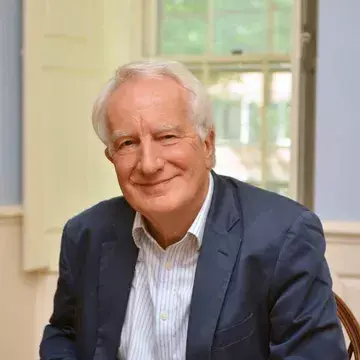
The academic world is mourning the loss of one of its most distinguished scholars of ancient philosophy with the passing of David Charles, professor emeritus of philosophy at Yale University. Charles, whose rigorous and groundbreaking interpretations of Aristotle reshaped contemporary debates in ancient metaphysics, philosophy of mind, and action theory, died on August 12. He was widely recognized as a towering intellectual figure whose influence spanned decades, institutions, and continents, bridging the traditions of British analytic philosophy and classical scholarship with rare precision and conceptual depth.
Throughout a career that saw him hold prestigious positions at the University of Oxford, Yale University, and Stanford University, Professor Charles left an indelible mark on the global philosophical community. He was the author of several seminal monographs that remain foundational texts for scholars grappling with the complexities of Aristotelian thought. His passing marks the end of an era for classical scholarship, prompting an outpouring of tributes from colleagues, former students, and academic institutions worldwide who remember not only his formidable intellect but also his profound generosity as a mentor and teacher.
This retrospective examines the life, career, and enduring scholarly legacy of David Charles, tracing his trajectory from his formative years at Oxford to his influential tenures at Yale and Stanford, and assessing the profound impact of his contributions to our understanding of ancient philosophy.
Read Also
Detailed Chronology
Formative Years and Academic Genesis at Oxford
David Charles’s academic journey was deeply intertwined with the intellectual ecosystem of the University of Oxford, where he spent the formative decades of his life and career. Immersed in a milieu that prized rigorous conceptual analysis, linguistic precision, and deep historical engagement with primary texts, Charles distinguished himself early on as a scholar of exceptional promise.
He completed his undergraduate and graduate studies at Oxford, ultimately earning his Doctor of Philosophy (D.Phil.) degree. During his time at Oxford, the philosophical climate was heavily shaped by the legacy of ordinary language philosophy and the burgeoning fields of philosophy of mind and action theory. Charles uniquely positioned himself at the intersection of these modern disciplines and the ancient Greek texts, refusing to treat classical philosophy merely as a museum piece. Instead, he approached Aristotle and his predecessors as living interlocutors capable of offering profound solutions to contemporary philosophical dilemmas.
Establishing an International Reputation: The Oxford Years
Following the completion of his doctorate, Charles secured a permanent academic home at Oxford, where he spent many years teaching, researching, and mentoring generations of students. It was during his tenure at Oxford that he established his international reputation as a leading authority on ancient philosophy.
His early work culminated in the publication of Aristotle’s Philosophy of Action in 1984. This landmark study challenged prevailing orthodoxies regarding how Aristotle understood human agency, practical reasoning, and intentionality. By meticulously examining texts such as the Nicomachean Ethics and De Motu Animalium, Charles demonstrated that Aristotle’s account of action was far more sophisticated and systematically coherent than many contemporary commentators had assumed. The book immediately cemented Charles’s reputation as a scholar of rigorous textual fidelity combined with deep philosophical creativity.
Building upon this foundation, Charles expanded his inquiries into the ontological and semantic underpinnings of Aristotle’s philosophy. This trajectory led to the publication in 2000 of Aristotle on Meaning and Essence, a monumental work that re-evaluated Aristotle’s metaphysical views on definition, essence, and natural kind terms. In this text, Charles engaged vigorously with contemporary philosophy of language and metaphysics (such as the work of Saul Kripke and Hilary Putnam), arguing that Aristotle anticipated modern insights concerning essentialism and natural kinds. The book was widely reviewed and sparked extensive academic debate, further elevating Charles’s status as a premier global scholar of ancient metaphysics.
The Yale Tenure (2014–Present)
In 2014, Professor Charles made a high-profile move across the Atlantic, joining the faculty of the Department of Philosophy at Yale University as a full professor. His arrival injected fresh momentum into Yale’s already esteemed ancient philosophy program, drawing top-tier graduate students and fostering a vibrant intellectual community centered on classical metaphysics and epistemology.
At Yale, Charles was known not only for his rigorous graduate seminars and undergraduate lectures but also for his collaborative spirit. He integrated seamlessly into the department, contributing significantly to faculty governance, curriculum development, and the mentorship of a new generation of philosophers. His courses on Aristotle’s Metaphysics, De Anima, and ethics were legendary for their textual depth, meticulous close-reading methodology, and insistence on philosophical rigor.
Later Years and Stanford Visiting Professorship
Following his formal retirement from Yale and transition to professor emeritus status, Charles showed no signs of slowing down his scholarly output or his commitment to teaching. He accepted a visiting professorship at Stanford University, where he continued to share his profound insights with students and colleagues on the West Coast.
During this period, he also brought decades of accumulated research to fruition with the publication of The Undivided Self in 2021. This masterwork represented the culmination of his life-long inquiry into Aristotle’s psychology and philosophy of mind, offering an integrated account of how soul and body function together in living organisms according to Aristotelian hylomorphism. Even in retirement, Charles remained an active, vital participant in international conferences, workshops, and scholarly exchanges, cementing his legacy as a tireless devotee of philosophical inquiry.
Supporting Context & Metrics
Key Publications and Scholarly Output
To fully appreciate David Charles’s impact on philosophy, one must examine the depth and trajectory of his published works. His scholarship bridged ancient texts and contemporary analytical philosophy, providing a blueprint for how historical figures can be brought into dialogue with modern debates.
- Aristotle’s Philosophy of Action (1984): A pioneering study that transformed how philosophers understand agency, desire, and practical reason in ancient thought. It argued against reductionist readings of Aristotelian psychology and highlighted the internal coherence of Aristotle’s teleological framework.
- Aristotle on Meaning and Essence (2000): A comprehensive examination of Aristotelian metaphysics that drew fascinating parallels between ancient essentialism and modern semantic externalism. Charles explored how definitions capture real essences and how Aristotle’s account of natural kinds withstands modern philosophical scrutiny.
- The Undivided Self (2021): His final major monograph, which presented a unified vision of Aristotle’s philosophy of mind. The book explored the intricate relationship between psychological states and their physical realizations, offering a compelling defense of Aristotelian hylomorphism against contemporary physicalist and dualist alternatives.
Academic Genealogy and Institutional Footprint
Throughout his career, Professor Charles worked at three of the world’s most elite academic institutions:
- The University of Oxford: Where he earned his D.Phil. and spent decades establishing his global reputation.
- Yale University: Where he served as a senior faculty member from 2014 onward, shaping the Department of Philosophy’s graduate profile.
- Stanford University: Where he served as a visiting professor in his post-retirement years, extending his pedagogical reach to the Pacific coast.
His academic lineage includes numerous doctoral students and junior colleagues who now hold prominent positions in philosophy departments across the globe. Through his supervision, meticulous peer reviews, and editorial contributions, Charles quietly guided the trajectory of scholarship in ancient philosophy for over four decades.
Official Statements and Tributes
The announcement of Professor Charles’s passing, shared via academic networks by his colleague and fellow philosopher Victor Caston, triggered an immediate wave of condolences, tributes, and remembrances from the global philosophical community.
Colleagues at Yale University released statements highlighting his intellectual generosity, his fierce dedication to clarity, and his uncompromising standards of scholarship. "David combined an extraordinary level of philological mastery with genuine philosophical imagination," noted one Yale colleague. "He did not merely report what Aristotle said; he reconstructed what Aristotle should have said to address our deepest philosophical puzzles. His loss leaves a void in our department and in the broader philosophical world that cannot easily be filled."
Former students and mentees took to social media and academic forums to share personal anecdotes of his mentorship. Many recalled his legendary patience in office hours, where he would spend hours untangling a single line of Greek text or a complex argument from the Metaphysics, always treating undergraduate and graduate students alike with profound intellectual respect.
"David was the epitome of a scholar’s scholar," wrote one former doctoral advisee. "He was entirely devoid of pretense, driven solely by a passionate, relentless love for the truth and a deep reverence for the texts he studied. To be taught by him was to be initiated into a tradition of rigorous, honest intellectual inquiry."
Future Outlook
The Enduring Legacy of Aristotelian Scholarship
As the academic community digests the loss of David Charles, scholars are already looking toward the future to assess how his body of work will shape the next generation of research in ancient philosophy.
Professor Charles leaves behind a paradigm of scholarship that refuses to neatly separate the history of philosophy from systematic philosophy. By demonstrating that Aristotle’s theories of action, meaning, and mind possess direct relevance to contemporary discussions in philosophy of mind, metaphysics, and ethics, Charles ensured that ancient philosophy remains a vibrant, cutting-edge subfield within the discipline.
Preserving a Scholarly Heritage
Institutions such as Yale and Oxford, alongside the wider philosophical community, are expected to host memorial conferences and commemorative symposia in the coming academic year to celebrate Charles’s life and intellectual contributions. Furthermore, his published volumes—particularly The Undivided Self and Aristotle on Meaning and Essence—will continue to serve as essential touchstones for graduate seminars, dissertation projects, and faculty research seminars worldwide.
While the passing of David Charles closes a brilliant chapter in the history of classical scholarship, his rigorous spirit of inquiry, his uncompromising intellectual honesty, and his profound love for philosophy will continue to inspire scholars for generations to come.





Comments
Facebook App ID not configured. Please add it in the Customizer.