
Executive Overview
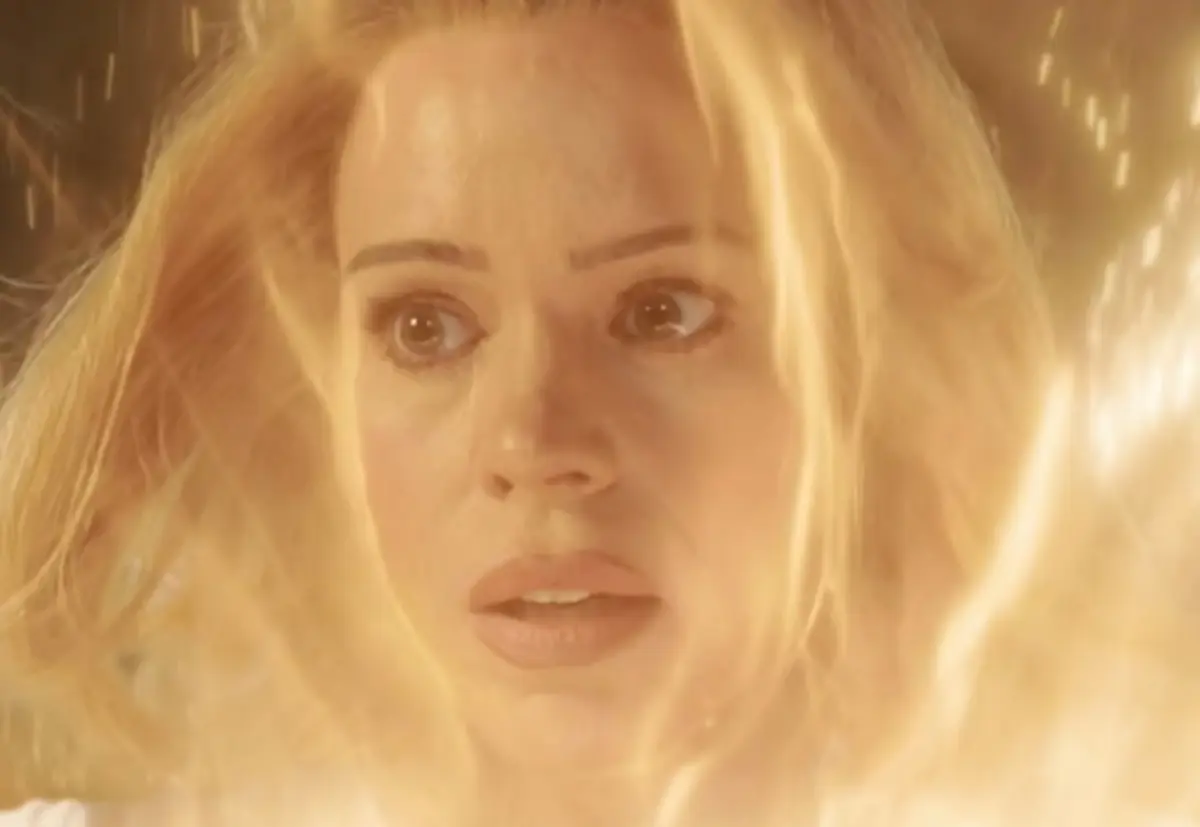
The long-running British science-fiction institution Doctor Who finds itself navigating turbulent temporal streams once more. Following the dramatic conclusion of Ncuti Gatwa’s tenure as the Fifteenth Doctor—which culminated in a stunning, universe-shaking regeneration sequence that transformed the Time Lord into Billie Piper—the future of the series has plunged back into uncertainty.
The collapse of the ambitious high-budget co-production partnership between the British Broadcasting Corporation (BBC) and entertainment giant Disney has left the franchise in a state of indefinite narrative hibernation. Aside from a mandated holiday outing slated for late 2026, the TARDIS was effectively grounded.
However, that final lifeline—a highly anticipated Christmas Special engineered by returning showrunner Russell T. Davies—was quietly dismantled in June 2026. Now, through a revelatory excerpt published by The Guardian from his upcoming memoir, Davies has finally pulled back the curtain on the behind-the-scenes machinations that led to the execution of the special.
Read Also
Far from a simple scheduling conflict, the cancellation exposes deep-seated creative anxieties about franchise fatigue, the logistical nightmares of modern television production, and the precarious balancing act of pleasing a fiercely protective global fandom.
More importantly, the decision to scrap the episode fundamentally alters the trajectory of the series. With the special permanently shelved, Billie Piper’s unexpected incarnation as the Doctor has been effectively excised from the broadcast timeline, casting a long shadow over how incoming creative teams will manage the legacy of the world’s longest-running science-fiction program.
Detailed Chronology: From Disney Split to Memoir Revelations
To understand the sudden demise of the 2026 Christmas Special, one must examine the cascading sequence of events that destabilized the production ecosystem of Doctor Who over a tumultuous eighteen-month period.
[Late 2024–2025] ──► BBC-Disney Co-Production Agreement Strains
                           │
                           ▼
[Late 2025/Early 2026] ──► Gatwa’s Regeneration into Billie Piper Airs
                           │
                           ▼
[Early 2026] ──────────► BBC Mandates 2026 Christmas Special as Continuity Anchor
                           │
                           ▼
[Spring 2026] ─────────► Production Bottlenecks & Creative "Middle-Child" Crisis
                           │
                           ▼
[May 2026] ────────────► Davies Petitions BBC to Cancel Episode; Network Agrees
                           │
                           ▼
[June 2026] ───────────► Official Cancellation Made Public
                           │
                           ▼
[October 2026] ────────► Memoir Excerpts Reveal Inner-Workings of the Decision
The Breakdown of the Disney Alliance
The modern era of Doctor Who, characterized by cinematic visual fidelity and international distribution muscle, was heavily reliant on the financial and strategic infusion provided by the BBC’s partnership with Disney. When structural shifts and shifting corporate priorities caused this international bridge to fracture, the show’s operational budget and production schedule were immediately thrown into chaos.
Without the guaranteed financial backing that defined Gatwa’s later seasons, the BBC faced a stark reality: the machine required a cooling-off period. The series was put on formal hiatus, leaving a gaping hole in the network’s holiday schedule.
The Piper Paradox
Into this vacuum stepped the final creative flourish of the Davies-Gatwa era. In a move designed to shock and awe audiences, the regeneration scene did not introduce a fresh-faced newcomer, but rather brought back franchise icon Billie Piper—whose original role as companion Rose Tyler remains legendary—as the new face of the Doctor.
This bold narrative swing generated massive online engagement and critical discourse, establishing an immediate hook for whatever came next. Yet, it also created an unprecedented continuity trap.
The BBC’s Continuity Mandate
Anxious to signal to the public and investors that Doctor Who remained a cornerstone of the BBC’s festive lineup despite the Disney fallout, network executives insisted on pushing forward with a standalone 2026 Christmas Special.
According to Davies’ memoir, the impetus for the episode came squarely from the broadcaster. The network viewed the holiday broadcast as a vital anchor of public commitment—a tangible proof-of-life for a franchise momentarily caught between major eras.
Davies, despite harboring deep-seated reservations from the very beginning, attempted to honor the request. He conceptualized a sprawling, ambitious narrative canvas:
- The Setting: An olde-worlde, hyper-traditional English village juxtaposed against the colossal, looming silhouette of a mysterious starship.
- The Event: An outer-space festival bearing the evocative name "Winternox."
- The Antagonists: Legions of Daleks, swarming the narrative framework alongside a deeply buried, highly unconventional secret waiting to be uncovered.
The Anatomy of a Cancellation
As production realities set in, the project began to buckle under its own weight. Key personnel across departments grew overwhelmed, and the logistical hurdles multiplied.
More critically, Davies underwent a profound creative epiphany regarding the narrative placement of the special. Trapped in a creative limbo, the episode risked feeling completely disconnected from the broader sweep of the series’ mythology.
In May 2026, Davies initiated a candid dialogue with BBC leadership. He argued that forcing a compromised, awkward special into production would serve neither the network nor the audience. The executive team reviewed the creative trajectory, concurred with his assessment, and officially pulled the plug in June 2026.
Supporting Context & Metrics: The Weight of Fan Expectations
The decision to cancel an episode of television—particularly one backed by a major network for a high-profile holiday slot—is exceptionally rare in modern broadcasting. To contextualize Davies’ choice, one must examine the unique psychological and cultural metrics governing the Doctor Who fandom.
The "Fish nor Fowl" Dilemma
In his memoir, Davies articulates a foundational rule of television writing: middle-chapter episodes designed purely to service nostalgia often suffer from structural bloat. He writes:
"There’s a huge era behind us, there’s a huge era ahead of us, what’s this thing in the middle? A single episode which is neither here nor there, neither fish nor fowl. It really existed to please the fans, except the irony is, it was exactly the sort of episode that fans would not be pleased by."
This quote encapsulates a paradox well-known to showrunners of long-running intellectual properties. When a series transitions between showrunners or major eras, bridging episodes run the risk of satisfying neither casual viewers nor hardcore continuity purists.
By attempting to balance the end of the Gatwa/Piper cliffhanger with a standalone holiday romp involving Daleks and festivals, the episode risked becoming an overstuffed, tonally confused compromise.
Franchise Resilience vs. Continuity Scars
The cancellation of the special also highlights how modern franchises manage continuity disruptions. In the television landscape of the 2020s, serialized storytelling has conditioned audiences to expect meticulous, airtight continuity where every loose thread is tied up across multi-season arcs.
However, Doctor Who has historically thrived on a loose, almost mythic approach to its own internal logic—a tradition dating back decades. Davies points out that institutional panic over continuity errors is almost always overblown:
"Doctor Who problems are simple to solve (remember, in 1996, it was proclaimed that the Doctor is half-human—that was fixed by everyone discreetly never mentioning it again). A new production team can either seize hold of that appearance happily, or—and this is more likely—they can explain the event away with exactly seven words. Painless. That’s not a problem, that’s a piece of piss."
This philosophical stance underscores a vital metric of the show’s longevity: its elasticity. The TARDIS can withstand virtually any narrative shock because the core premise of a shape-shifting, time-traveling alien is built to absorb contradictions, retcons, and abandoned plotlines.
Official Statements & Memoir Insights
The publication of excerpts from Davies’ upcoming memoir, The Queerest of Folk, via The Guardian, provides a rare, unfiltered look into the executive suite of British public service broadcasting.
The Decision-Making Process
Public relations statements from major networks typically cloak cancellations in sanitized corporate phrasing, attributing halted productions to "scheduling shifts" or "creative realignment." Davies’ memoir shatters this convention by laying bare the messy, intuitive nature of creative leadership.
The initiative to scrap the special did not originate from a cold corporate algorithm, but from a veteran showrunner recognizing the exhaustion of his creative team and the artistic dead-end of the script. By walking into the BBC offices in May 2026 and advocating against his own work, Davies demonstrated an accountability rarely seen in high-stakes franchise management.
The Network Response
The BBC’s willingness to acquiesce to Davies’ recommendation is equally telling. Rather than forcing a costly production through sheer institutional inertia to salvage holiday advertising or viewing metrics, the network elected to protect the long-term brand health of Doctor Who.
This pragmatic alignment between creator and broadcaster signals an understanding that the integrity of the TARDIS brand supersedes the immediate gratification of a single festive broadcast slot.
Future Outlook: Navigating the Post-Piper Landscape
With the 2026 Christmas Special officially consigned to the realm of what-might-have-been, the immediate and long-term future of Doctor Who enters uncharted territory.
The Billie Piper Question
The most fascinating casualty of the cancellation is the fate of Billie Piper’s incarnation. Because the regeneration aired at the end of Gatwa’s run, millions of viewers witnessed the transformation. Yet, with no subsequent episode produced to explore her tenure, Piper’s Doctor occupies a ghostly, unrealized space in television history—canonically triggered on screen, yet functionally nonexistent in narrative practice.
How will future creative teams handle this Schrödinger’s Doctor?
- Option A: The Embrace. An incoming showrunner could decide to lean into the audacity of casting a beloved former companion as the Doctor, crafting an entire season arc around the mystery of why the Time Lord assumed that specific face.
- Option B: The Seven-Word Eraser. As Davies cheekily suggested, a new team can easily sweep the entire incident under the rug with a brisk, hand-waving line of dialogue, bypassing the awkwardness entirely and moving forward with a brand-new regeneration. Given the television industry’s preference for clean slates, the latter option remains statistically and historically more probable.
The Path Forward for the TARDIS
As the dust settles on the collapsed Disney partnership and the aborted Christmas special, the BBC faces a critical juncture. The hiatus provides an essential breathing space. It allows the creative establishment to evaluate what the series needs for its next evolution—whether that means scaling back budgets, re-evaluating international streaming strategies, or finding a fresh narrative voice capable of steering the program into its next decade.
The cancellation of the 2026 special is not the death knell of Doctor Who, but rather another chapter in its eccentric, cyclical history of near-death experiences and miraculous rebirths. As Russell T. Davies reminds us, the show’s greatest strength has always been its ability to shed its skin, abandon its baggage, and step back into the blue box without looking back.



Comments
Facebook App ID not configured. Please add it in the Customizer.