
Executive Overview
History often records the tragedies of totalitarian regimes through the macro-lens of mass graves, show trials, and sweeping ideological purges. Yet, the true psychological anatomy of authoritarian terror is frequently best preserved in the micro-narratives of domestic life—within the high-walled corridors of power, such as the Kremlin grounds and the elite dachas of the Soviet nomenclature.
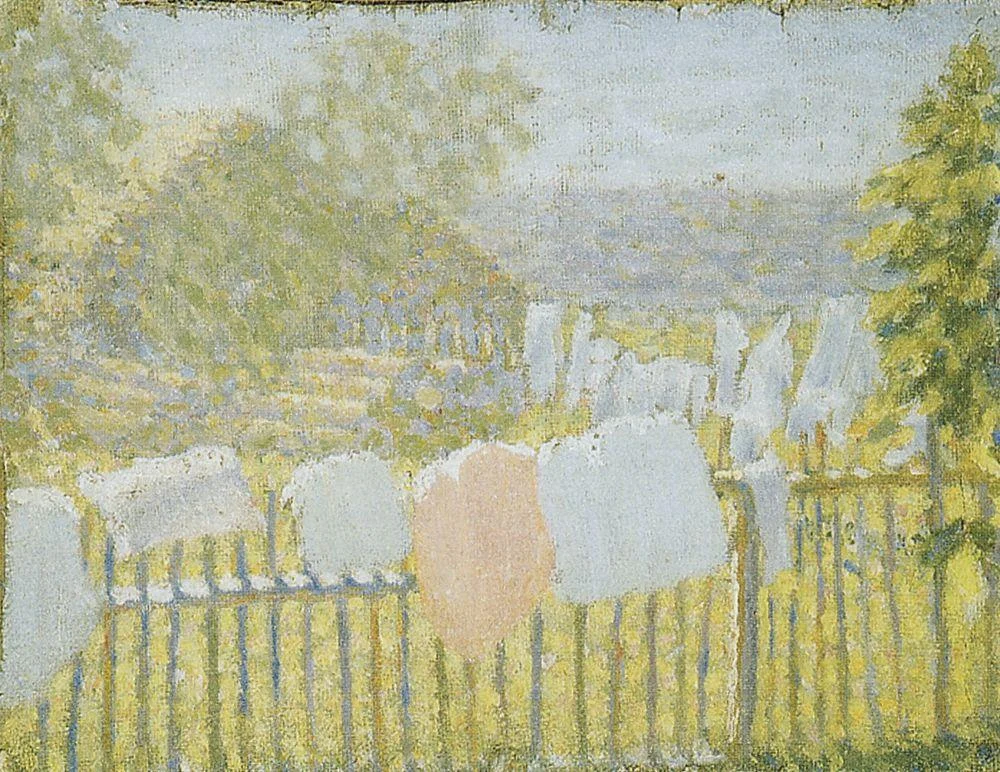
This investigative report examines a haunting literary and historical reflection recently brought to light through archival and artistic lenses, epitomized by Kazimir Malevich’s evocative painting Underwear on the Fence and the haunting poetic fragment: "Long after Bukharin’s execution, the fox ran the Kremlin’s grounds."
By analyzing the intersection of high-level political purges, the psychological trauma inflicted upon the children of the Soviet elite, and the surreal juxtaposition of idyllic dacha summers with state-sanctioned murder, this article constructs a comprehensive look at the human cost of the Stalinist terror. We explore how childhood innocence was systematically hollowed out, transformed into a meticulous, agonizing ritual of cutting paper dolls to represent the "enemies of the people" who had vanished from the long dining tables of the Soviet golden circle.
Read Also
Detailed Chronology: From the Kremlin Table to the Execution Cellars
To understand the weight of the domestic devastation experienced by the children of the Soviet high command, one must trace the timeline of betrayal, paranoia, and institutionalized violence that defined the height of the Great Purge (1936–1938).
The Golden Age of False Security (Early 1930s)
Before the machinery of the Great Terror consumed its own architects, the families of high-ranking Bolshevik officials, commissars, and intellectuals lived in a gilded, isolated bubble. Summers were spent in government-assigned dachas—such as those in Peredelkino or near the pristine birch forests surrounding Moscow.
- The Sensory Landscape: As captured in contemporary memoirs and poetic interpretations, these summers were defined by sensory richness: the fragrant steam of birch leaves atop the banya stove, sunbeams slicing through dusty air, and long, communal tables groaning under the weight of freshly harvested berries and elaborate meals.
- The Illusion of Permanence: Children sat on the laps of men who signed death warrants by day and played doting patriarchs by night. Nikolai Bukharin, once dubbed the "darling of the party," and his peers mingled freely, seemingly oblivious to the ideological fault lines fracturing beneath their feet.
The Fracturing of the Circle (1936–1937)
The illusion began to shatter with the First Moscow Trial in August 1936, which saw the execution of Grigory Zinoviev and Lev Kamenev. Suddenly, the guest lists at the long dacha tables began to shrink.
- The Disappearance of Families: "When do you notice that each summer one family doesn’t arrive?" This rhetorical core of the trauma speaks to the creeping normalization of absence. One year, an uncle figure is present; the next, his name is excised from textbooks, his photographs inked out with black grease pencil, and his children quietly transferred to state-run orphanages for the children of "enemies of the people" (ChSVR — Chlen semyi vragov naroda).
- The Bukharin Fall: The arrest and subsequent execution of Nikolai Bukharin in March 1938 marked a critical turning point. Bukharin’s fall symbolized that no revolutionary pedigree—not even one praised by Lenin himself—was immune to the paranoid calculus of Joseph Stalin’s regime.
The Aftermath and the Phantom Kremlin (Late 1930s and Beyond)
Once the adults were executed or sent to the Gulag, the physical spaces they inhabited took on a spectral quality.
- The Kremlin Fox: The haunting image of a fox running the Kremlin grounds long after Bukharin’s execution serves as a powerful metaphor for nature reclaiming the sterilized, blood-soaked corridors of power. The human element had been hunted out, leaving behind an eerie, wild desolation.
- The Domestic Void: For the children left behind, toys were confiscated, names were changed, and a profound silence fell over households that once echoed with political debate and elite laughter.
Supporting Context & Metrics: The Mechanics of Elite Terror
While popular history often views the Great Purge as a phenomenon targeting peasants, workers, and suspected counter-revolutionaries, the terror at the top was uniquely systemic and psychologically devastating.
The Statistical Scale of the Purge
- The Central Committee: Of the 139 members and candidate members of the Central Committee elected at the 17th Party Congress in 1934 (known as the "Congress of Victors"), an astonishing 98 members—78%—were arrested and shot, mostly during the peak years of 1937–1938.
- The Military Elite: The purge decimated the Red Army command, executing 3 out of 5 marshals, 13 out of 15 army commanders, and 50 out of 57 corps commanders.
- The Family Fallout: Under Soviet law, being an "enemy of the people" carried automatic guilt-by-association clauses. Spouses were routinely sentenced to 5 to 8 years in labor camps (the ALZHIR camp system for wives of traitors was specifically created for this purpose), while children were categorized based on age: infants were sent to state nurseries, and older children were placed in NKVD-run re-education orphanages where they were forced to denounce their parents.
The Metaphor of Malevich and the Art of Erasure
Kazimir Malevich, a pioneer of geometric abstract art whose later works navigated the suffocating realism demanded by the Soviet state, provides a visual parallel to this era. Works like Underwear on the Fence evoke a sense of mundane domesticity disrupted by stark, geometric boundaries—much like the rigid fences and checkpoints that separated the Soviet elite from the reality of the gulags, before those same fences enclosed them.
The act of "cutting out clothes for the dead"—as described in contemporary artistic reflections—encapsulates the surreal psychological labor imposed upon the survivors. Children endowed paper dolls with the identities of the vanished, acting as both mourners and executioners in miniature, processing an incomprehensible reality through the only medium left to them: scissors, paper, and silence.
Official Statements and Archival Revelations
In recent years, the opening of select Soviet-era archives (including the fondes of the Politburo, the NKVD, and personal diaries of elite families) has allowed historians to reconstruct the intimate terror of the Kremlin inner circle.
"We lived in a state of suspended animation," noted a compiled institutional analysis of memoirs from the children of the 1937 victims, published by the Memorial Human Rights Center. "The car would arrive at night. Doors would slam. Footsteps on the parquet floor. And by morning, the room belonged to someone else, or remained locked, gathering dust like a museum of a crime that never officially occurred."
Historian Dr. Elena Rostova, speaking at a recent seminar on totalitarian psychology, emphasized the unique burden placed on the children of high-ranking victims:
"These were not children of dissidents; they were the crown princes and princesses of the regime. Their betrayal came from the very gods they had been taught to worship. When your father is declared a fascist spy overnight, your entire cognitive reality collapses. The paper dolls, the silent meals, the game of dressing the dead—these were coping mechanisms for an environment where reality itself was illegal."
The declassification of NKVD interrogation transcripts further reveals the psychological torture applied not just to the accused, but to their domestic spheres. Servants were interrogated about family conversations; drivers were questioned about subtle shifts in tone during car rides from the dacha to the Kremlin. Every surface of domestic life was weaponized.
Future Outlook: Preserving the Micro-Histories of Totalitarianism
As political landscapes globally experience renewed flirtations with authoritarianism, historical preservationists, artists, and historians argue that the lessons of the Stalinist purges must move beyond dry political science and into the realm of cultural and psychological memory.
1. Shift Toward Oral History and Micro-Narratives
Future historical research is increasingly pivoting away from macro-political maneuverings toward the "history of everyday life" (Kulturnost and Byt). Projects dedicated to recording the final testimonies of the last surviving children of the "Old Bolsheviks" are racing against time to capture the visceral textures of elite terror before the generation vanishes entirely.
2. Archival Transparency and Digital Access
While access to Russian state archives has faced severe restrictions and closures in recent years, international coalitions of historians continue to digitize smuggled memoirs, family photographs, and personal artifacts. These digital repositories serve as a bulwark against historical revisionism, ensuring that the domestic reality of the purges—the empty chairs at the long table, the fragrant birch leaves, the silent screams—remains documented.
3. Cultural and Artistic Interventions
The integration of historical poetry, avant-garde painting analysis (such as Malevich’s oeuvre), and psychological trauma studies into educational curricula offers a new framework for understanding totalitarianism. By teaching students how political terror reverberates into the nursery and the dacha, educators can foster a deeper, more empathetic resistance to the erosion of democratic norms.
Conclusion
The image of the fox running the Kremlin grounds long after Bukharin’s execution stands as an enduring monument to the hollowness of absolute power. When a regime consumes its own creators, it leaves behind a desolate landscape where only wild animals roam the corridors of former glory.
For the children who sat at those long tables, cutting paper dolls to replace the vanished adults, the terror was not merely a political event—it was the shattering of their world. By confronting these intimate, harrowing domestic histories, we ensure that the victims of the Soviet elite terror—both the executed architects and the silent children left with scissors in hand—are never truly erased by the passage of time.


Comments
Facebook App ID not configured. Please add it in the Customizer.