
Executive Overview
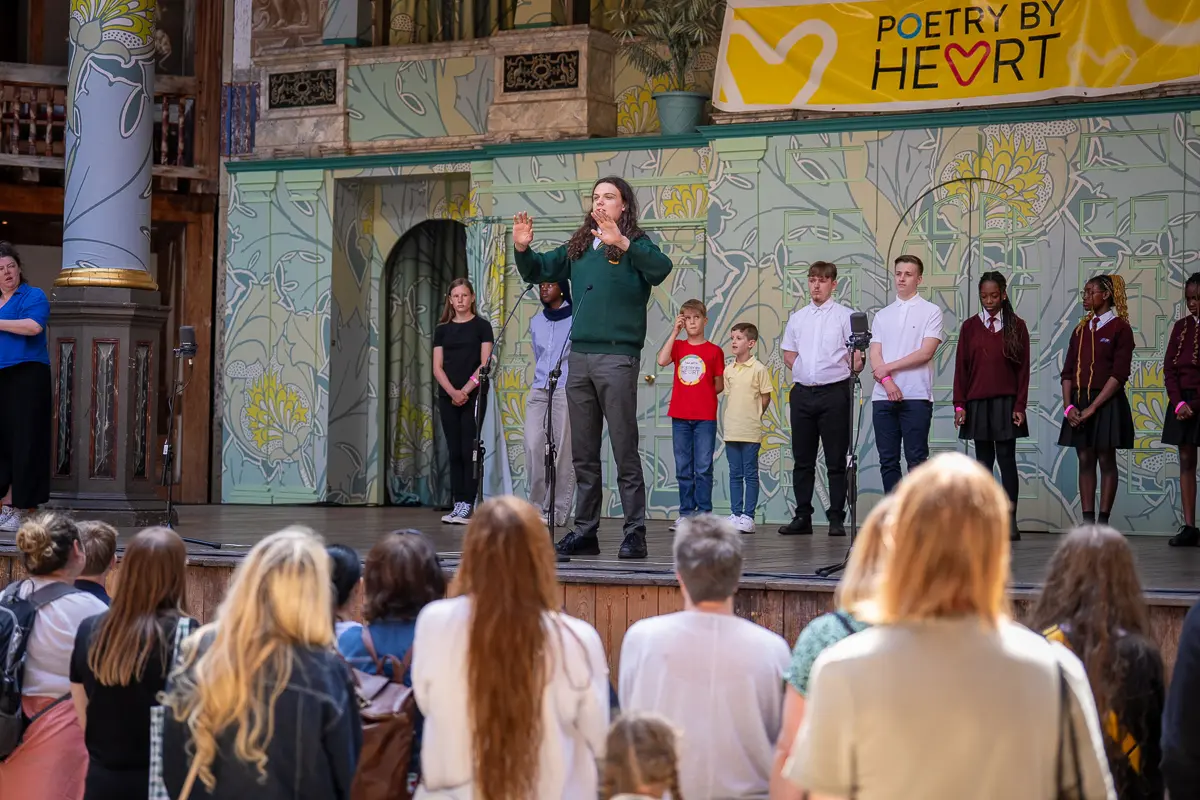
On Monday, July 6, 2026, the iconic stage of Shakespeare’s Globe in London will transform into the epicenter of the UK’s youth literary scene. Poetry By Heart, the nation’s premier poetry-speaking competition, has officially unveiled the roster of exceptional young orators, educators, and schools selected to compete for its coveted National Champion titles.
Now well over a decade into its mission, the initiative continues to redefine how a new generation interacts with verse. Far from being a dry academic exercise, the program has evolved into a cultural phenomenon—affectionately dubbed by co-director Dr. Julie Blake MBE as "the Glastonbury of school poetry." The 2026 campaign has achieved unprecedented reach, drawing participation from one in four state secondary schools and more than 1,000 primary institutions across England.
The upcoming Grand Finale promises a dynamic synthesis of classical mastery and contemporary innovation. Featuring 40 finalists in the rigorous Classic competition, 12 schools in the inventive Freestyle category, and—for the first time—a cohort of daring teachers taking to the stage, the event highlights a thriving, nationwide passion for the spoken word. Against a backdrop of rapid technological shifts, including the dominance of artificial intelligence, Poetry By Heart stands as a vibrant testament to the enduring power of human memory, voice, and emotional expression.
Read Also
Detailed Chronology and Event Breakdown
The Path to the Globe: From Classroom to National Stage
The journey to Shakespeare’s Globe is the culmination of months of intensive literary exploration. The process begins in classrooms across England, where students are empowered to independently choose poems they genuinely love. Rather than forcing a standardized curriculum of rote memorization, the competition encourages deep, personal engagement. Students learn their chosen verses by heart and perform them in initial school-level events.
These local showcases build immense confidence, transforming reluctant speakers into poised performers. Successful candidates advance through regional rounds, culminating in the selection of the elite finalists who will grace the London stage on July 6.
The 2026 Finalists and Categories
The Grand Finale is structured to celebrate both traditional interpretive excellence and modern collaborative performance:
- The Classic Competition: Forty finalists have been meticulously chosen by judges for their outstanding achievement in traditional poetry speaking. These young people must demonstrate a profound understanding of tone, pacing, rhythm, and emotional resonance without the aid of props or musical accompaniment.
- The Freestyle Category: Recognizing that poetry takes many forms, 12 schools have been recognized for their creative, highly inclusive approaches. Highlights of this year’s Freestyle entries include a poignant, unaccompanied solo performance of Matthew Sweeney’s “Fishbones Dreaming”; rich, multi-media interpretations accompanied live on guitar and piano; and a high-energy, 13-strong school poetry club tackling Joshua Seigal’s playful “Addicted to Chicken.”
- The Educators Take the Stage: In a unique twist that underscores the collaborative culture of the program, teachers are also encouraged to lead by example. Ten educators have been selected to showcase their own memorization and performance skills during the finale, bridging the generational divide in artistic vulnerability.
- New People’s Choice Awards: For the first time in the competition’s history, the live audience at Shakespeare’s Globe will play a direct role in the adjudication process. Attendees will be invited to vote for their favorite Freestyle performances, with the winners receiving newly minted People’s Choice accolades.
Supporting Context and Metrics: Reaching Every Corner of Society
Scale and Accessibility
The 2026 data underscores the astonishing growth and democratic reach of Poetry By Heart. By embedding itself within 25% of England’s state secondary schools and over 1,000 primary schools, the organization has democratized access to high-culture performance spaces for children from all socioeconomic backgrounds.
Special Awards: Poetry Without Barriers
While mainstream participation is soaring, Poetry By Heart has gained critical acclaim for its unwavering commitment to inclusivity. Three Special Awards have been designated this year to honor schools that faced extraordinary systemic or logistical challenges, treating those hurdles not as dead-ends, but as springboards for radical pedagogical innovation.
Notable recipients include:
- Kingfisher Academy: A specialized hospital school delivering vital educational continuity and creative outlets to children receiving treatment at Sheffield Children’s Hospital.
- A Defence Schools Collective: A remarkable collaborative entry uniting five separate Ministry of Defence schools based in Cyprus, proving that distance and transient military lifestyles are no match for a shared literary bond.
The Shadow of History: The Resonance of WWI Verse
A striking trend of the 2026 competition has been a profound, collective turn toward historical reflection. Organizers noted a significant surge in young people selecting texts from the competition’s curated anthology of First World War poetry.
Traditional masterworks continue to hold immense sway over modern youth. Frequently chosen titles include:
- Wilfred Owen’s harrowing “Dulce et Decorum Est”
- Isaac Rosenberg’s “Break of Day in the Trenches”
- Laurence Binyon’s elegiac “For the Fallen”
- Alan Seeger’s “I Have a Rendezvous with Death”
- John McCrae’s “In Flanders Fields”
- Ivor Gurney’s “Strange Hells”
- Siegfried Sassoon’s “Suicide in the Trenches”
Simultaneously, students demonstrated remarkable literary curiosity by unearthing lesser-known gems, such as Alice Dunbar Nelson’s “I Sit and Sew,” Edgell Rickward’s “A Soldier Addresses his Body,” Sara Teasdale’s haunting “There will come soft rains,” and Helen Mackay’s poignant exploration of war partings, “Train.”
Furthermore, modern poetic dialogues with the Great War proved deeply appealing to teenage orators. These included former co-founder Sir Andrew Motion’s “Death of Harry Patch,” Owen Sheers’ evocative “Mametz Wood,” and Imtiaz Dharker’s “A Century Later”—a brilliant contemporary response to Wilfred Owen’s “Anthem for Doomed Youth.”
Official Statements and Expert Perspectives
The weight and cultural relevance of the event are reflected in the caliber of its judging panel and leadership. The 2026 finalists will be evaluated by an esteemed panel of celebrated contemporary poets: Patience Agbabi, Liz Berry, Valerie Bloom, Glyn Maxwell, and Jean Sprackland. These luminaries will bear the responsibility of crowning the National Champions after a day filled with live performances and poetic celebration.
Dr. Julie Blake MBE, co-founder and co-director of Poetry By Heart alongside former Poet Laureate Sir Andrew Motion, captured the philosophical core of the initiative in a statement released ahead of the finals:
"The Poetry By Heart Grand Finale is now firmly established in the calendar as the Glastonbury of school poetry! For our audience, it offers a unique opportunity to connect with an inspirational living anthology of poems, with young people taking centre stage. We can’t wait to celebrate their latest achievements in learning and sharing poems.
Choosing, learning and sharing a poem out loud is uniquely human, whatever else AI and computers can do."
This sentiment strikes a chord in an era dominated by automated content generation and digital isolation. Memorizing and performing poetry requires breath, body, eye contact, and emotional vulnerability—qualities that no algorithm can replicate.
Future Outlook: The Enduring Legacy of Spoken Word
As Poetry By Heart looks past its 2026 Grand Finale, the program’s trajectory points toward an even more integrated role within the British educational landscape. By continuously evolving—such as the introduction of the audience-voted People’s Choice awards and the embrace of diverse digital and institutional spaces like hospital and military schools—the competition ensures that poetry remains a living, breathing art form rather than a relic confined to textbook pages.
The success of the 2026 cohort demonstrates that when young people are given the agency to select, internalize, and project the words of history’s greatest writers, they do not just recite—they resurrect. On July 6 at Shakespeare’s Globe, these young ambassadors will prove once again that the human voice remains our most powerful and revolutionary technology.

Comments
Facebook App ID not configured. Please add it in the Customizer.