
Executive Overview
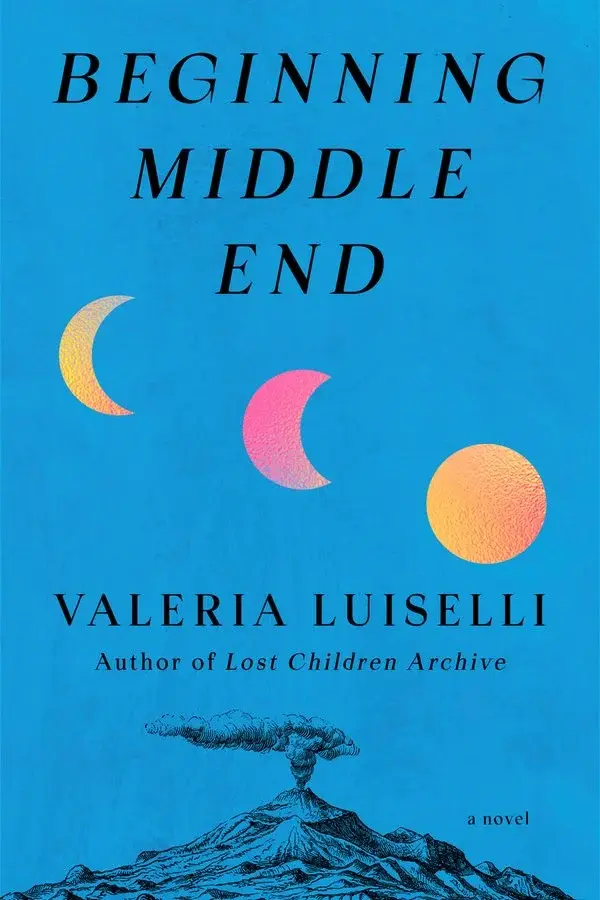
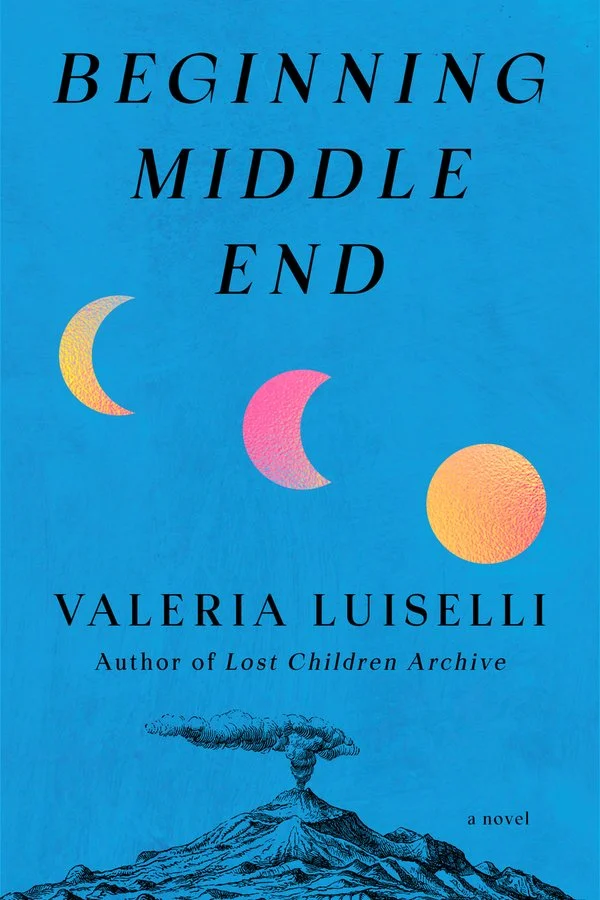
Renowned author and essayist Valeria Luiselli has consistently pushed the boundaries of literary form, integrating tangible records of the material world—from legal transcriptions to field recordings and polaroid photography—into her narrative universe. Her latest novel, Beginning Middle End, represents an ambitious evolution in multi-sensory storytelling. Constructed as a mother-daughter road novel told through fragmented vignettes, the book incorporates primary artifacts, including photographs, postcards, and QR code-accessible field recordings captured directly on location in Sicily.
The story follows an unnamed narrator—a fiction writer—and her 12-year-old daughter as they travel across the Mediterranean to return an ancient archaeological relic stolen decades earlier by the family’s matriarch. As the mother writes a novel within the novel, the daughter documents their journey through letters and photographs intended for her grandmother, whose memory is rapidly deteriorating.
In a landmark interview with fellow Mexican writer Ofelia Montelongo for Electric Literature, Luiselli detailed the thematic and structural mechanics of Beginning Middle End. The conversation illuminated how the novel functions across multiple axes: as a multi-generational exploration of memory loss, a geological and geopolitical examination of borders, and a linguistic experiment written concurrently in English and Spanish without reliance on traditional translation.
Read Also
Creative Chronology: The Literary and Sonic Evolution of Valeria Luiselli
Luiselli’s body of work reveals a deliberate, continuous thematic trajectory. Rather than viewing each publication as a discrete entity, her oeuvre operates as an interconnected ecosystem where abandoned thematic threads from earlier texts are retrieved and fully realized in subsequent projects.
+-----------------------------------------------------------------------------------+
|                         VALERIA LUISELLI'S CREATIVE EVOLUTION                      |
+-----------------------------------------------------------------------------------+
|                                                                                   |
|  Faces in the Crowd (2011)                                                        |
|  * Theme: Translation, fractured identity, literary ghosts                       |
|  * Medium: Fragmented prose narrative                                             |
|                                                                                   |
|         │                                                                         |
|         ▼                                                                         |
|                                                                                   |
|  Swings of Harlem                                                                 |
|  * Theme: Spatial mapping, neighborhood documentation                             |
|  * Medium: Text merged with Polaroid photography                                  |
|                                                                                   |
|         │                                                                         |
|         ▼                                                                         |
|                                                                                   |
|  Tell Me How It Ends: An Essay in Forty Questions (2017)                          |
|  * Theme: Child migration, legal bureaucracy, border crises                       |
|  * Medium: Non-fiction transcriptions and court testimonies                       |
|                                                                                   |
|         │                                                                         |
|         ▼                                                                         |
|                                                                                   |
|  Lost Children Archive (2019)                                                     |
|  * Theme: Displacement, sound documentarians, multi-generational road trips       |
|  * Medium: Fiction incorporating theoretical research on acoustics and space      |
|                                                                                   |
|         │                                                                         |
|         ▼                                                                         |
|                                                                                   |
|  Echoes from the Borderlands                                                      |
|  * Theme: Tectonic and geopolitical borderscapes                                  |
|  * Medium: 24-hour sonic essay / field recording installation                     |
|                                                                                   |
|         │                                                                         |
|         ▼                                                                         |
|                                                                                   |
|  Beginning Middle End                                                             |
|  * Theme: Memory preservation, ancestral restitution, multi-generational legacy   |
|  * Medium: Hybrid prose, QR-embedded sonic landscapes, polaroids, bilingual craft|
|                                                                                   |
+-----------------------------------------------------------------------------------+
From Page to Soundscape: A Paradigm Shift
- The Protagonist as Medium: Across Luiselli’s novels, her narrators mirror her evolving artistic curiosities. In Faces in the Crowd (Los ingrávidos), the protagonist is a literary translator; in Lost Children Archive, she is a sound documentarist; in Beginning Middle End, she is a fiction writer actively grappling with the ethics and mechanics of narrative creation.
- The Visual and Acoustic Turn: Luiselli’s experimentation with visual media began in Swings of Harlem, a project documenting Harlem’s playgrounds through Polaroid photography. This methodology matured in Lost Children Archive, where acoustic theory served as a narrative framework, and later materialized physically in Echoes from the Borderlands, a six-year collaborative project mapping the acoustic environment of the US-Mexico border.
- Integrated Audio Artifacts: In Beginning Middle End, audio is no longer merely referenced within the prose or confined to external gallery installations; it is embedded directly into the text via digital access points, providing readers with an embodied, auditory dimension of the physical environment described on the page.
Supporting Context & Structural Architecture
                       +-----------------------------------+
                       |      BEGINNING MIDDLE END         |
                       |     Tripartite Structure          |
                       +-----------------------------------+
                                         │
       ┌─────────────────────────────────┼─────────────────────────────────┐
       ▼                                 ▼                                 ▼
+--------------+                 +--------------+                 +--------------+
|   BEGINNING  |                 |    MIDDLE    |                 |     END      |
| Ancient Relic|                 | Active Travel|                 | Fading Memory|
+--------------+                 +--------------+                 +--------------+
       │                                 │                                 │
       └─────────────────────────────────┼─────────────────────────────────┘
                                         │
                                         ▼
                       +-----------------------------------+
                       |        THE FOURTH LAYER:          |
                       | Ancestral Legacy & Great-Grand-  |
                       | mother "Nanna" Memory Archiving   |
                       +-----------------------------------+
The Geopolitical and Tectonic Threshold of Sicily
A core thematic pivot of Beginning Middle End is its setting. Sicily serves not merely as a decorative backdrop, but as a dynamic geographic, historical, and geological entity that anchors the novel’s broader inquiries into displacement and memory.
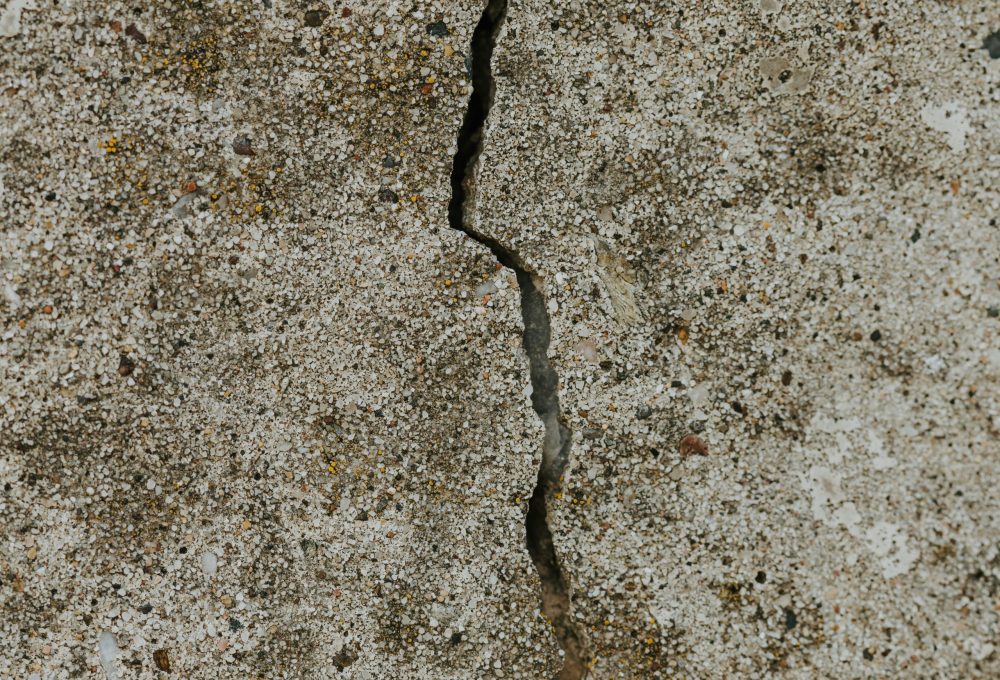
- Tectonic Intersection: Geologically, Sicily rests directly on the fault line where the African tectonic plate meets the Eurasian plate. The resulting subterranean friction generates intense volcanic activity (such as Mount Etna), volatile winds, and erratic maritime currents. Luiselli utilizes this physical phenomenon as a metaphor for human migration and cultural collision.
- Geopolitical Borderland: Positioned between North Africa and Southern Europe, Sicily has historically functioned as a crossroad of empires, languages, and trading routes. In contemporary geopolitics, it remains one of the primary entry points for refugees and migrants crossing the Mediterranean toward Europe.
- Historical Reciprocity: Luiselli highlights the historical ironies of migration, emphasizing that nations currently enforcing strict border controls often forget their own histories of exodus. By tracing the migration of the narrator’s family from Italy to Mexico and North America, the novel frames migration as an inevitable, universal human condition driven by political upheaval, environmental crisis, or economic necessity.
Multi-Generational Archiving and the Fractured Narrative
The architecture of Beginning Middle End mirrors the fragmented nature of human memory and history. The narrative operates through four distinct generational layers:
- The Great-Grandmother (Nanna): The original migrant who removed the archaeological relic from Sicily during her initial departure to Mexico, setting the multi-generational journey in motion.
- The Grandmother: Residing in the present day, her memory is rapidly fading due to cognitive decline. She represents the threat of cultural and familial amnesia.
- The Narrator (Mother): A fiction writer attempting to make sense of her family’s history while constructing a novel about a mother and daughter on a journey, constantly reflecting on the boundaries between auto-fiction and narrative construction.
- The Daughter (Age 12): The archivist of the present moment. Through photographs and letters written to her declining grandmother, she attempts to preserve the present for a relative who is losing her grasp on the past.
Official Statements & Key Insights
During her dialogue with Ofelia Montelongo, Luiselli provided detailed insights into the conceptual rigor and formal mechanics behind Beginning Middle End.
+-----------------------------------------------------------------------------------+
|                        KEY STATEMENTS FROM VALERIA LUISELLI                       |
+-----------------------------------------------------------------------------------+
|                                                                                   |
|  ON CONTINUITY IN WRITING:                                                        |
|  "There's always a moment in a novel when you have to abandon a path because      |
|   you are already on another. Those abandoned paths are ones that I often pick up  |
|   again in another book."                                                         |
|                                                                                   |
|  ON GEOLOGICAL AND GEOPOLITICAL BORDERS:                                          |
|  "Sicily is an island that has belonged to everyone and to no one; no one         |
|   belongs to it, and everyone belongs. It's a very bizarre kind of borderland."   |
|                                                                                   |
|  ON SOUND AS AN EMBODIED MEDIUM:                                                  |
|  "Not a single sound is stock sound. All sounds were recorded there... They're    |
|   more like a sort of Greek chorus, an emotional undercurrent for the novel."     |
|                                                                                   |
|  ON FREEDOM OF IMAGINATION OVER AUTOFICTION:                                      |
|  "We all have a right to imagine. We should exercise it freely... If it's real    |
|   or not, who cares? I mean, we want to know, but really, it doesn't matter."     |
|                                                                                   |
+-----------------------------------------------------------------------------------+
On Sonic Field Recordings as Narrative Infrastructure
Addressing the inclusion of authentic field recordings from Sicily, Luiselli emphasized the organic nature of the book’s audio components:
"There is an entire layer of sound that we recorded on-site in Sicily, and we recorded all the winds mentioned. We recorded underwater soundscapes and currents, beautiful volcanic exhalations—which sound a little like thunder… We recorded fish markets where fishermen are screaming, saying things, and singing about swordfish. We have this entire sonic landscape that we are spreading together with the narrative, and not a single sound is stock sound. All sounds were recorded there. They’re very subtle. They’re more like a sort of Greek chorus, an emotional undercurrent for the novel."
On the Refusal of the Autofiction Paradigm
When asked about the meta-fictional elements of the book—where the protagonist anticipates being asked whether her story is autobiographical—Luiselli dismissed strict dichotomies between reality and invention:
"In terms of trying to understand a work of literature better, it really doesn’t help us. It’s a dead-end street, because there’s no yes or no answer. Did this actually happen? Yes. So, what? Did this actually happen? No. Okay. So does it really shine light on a piece of work? I really don’t think so… I think we all have a right to imagine. We should exercise it freely."
On Concurrent Bilingual Composition
Unlike traditional translation workflows where a manuscript is completed in a primary language before being adapted into another, Luiselli revealed that Beginning Middle End was drafted simultaneously in both English and Spanish:
"This is the first book I [wrote] where I wouldn’t even use the term translation. I wrote it in both languages, period. I didn’t translate from one to the other. I just wrote it in those languages… The chronology of it is messy; it’s not quite retellable. Not linear. Which also means it’s not a translation. I wrote it in both languages."
Future Outlook & Artistic Implications
Valeria Luiselli’s work on Beginning Middle End establishes significant precedents for contemporary literary production, border studies, and digital humanities.
+-----------------------------------------------------------------------------------+
|                          FUTURE IMPLICATIONS FOR PROSE                            |
+-----------------------------------------------------------------------------------+
|                                                                                   |
|  1. HYBRID AUDIO-TEXTUAL FORM                                                     |
|     Demonstrates how print literature can seamlessly incorporate raw audio        |
|     archives without sacrificing literary depth or narrative autonomy.            |
|                                                                                   |
|  2. EXPANDED BORDERLAND THEORIES                                                  |
|     Shifts literary migration discourse from purely nation-state borders to       |
|     deep tectonic, historical, and cognitive borderlands.                         |
|                                                                                   |
|  3. BILINGUAL COMPOSITION MODELS                                                  |
|     Challenges the traditional publishing pipeline by writing and editing         |
|     works simultaneously across multiple linguistic ecosystems.                   |
|                                                                                   |
+-----------------------------------------------------------------------------------+
By integrating field recordings, multi-generational perspectives, and a non-linear bilingual composition process, Luiselli demonstrates that literature can transcend the flat plane of the printed page. Beginning Middle End challenges readers to rethink how stories are preserved across generational divides, positioning imagination and sensory archiving as vital tools against individual memory loss and broader cultural amnesia.

Comments
Facebook App ID not configured. Please add it in the Customizer.