
In its landmark July edition, Guernica magazine has released a sweeping, cross-disciplinary collection of works that interrogates the fundamental ethics of human observation, memory, and presence. Spearheaded by Editor-in-Chief Raaza Jamshed, the mid-summer issue is anchored by a haunting and provocative thematic question: "Must a people disappear for us to know that it existed?"
Spanning photography, narrative nonfiction, contemporary fiction, literary translation, intimate interviews, and verse, the issue challenges the reactive nature of the contemporary cultural gaze. Modern media and global attention, the contributors argue, frequently gravitate only toward that which is already endangered, marginalized, or facing imminent erasure. By contrast, the curation in the July release deliberately resists this belated recognition. It invites readers to look before disappearance occurs, to listen before cultural or physical silences fall, and to love—and document—before profound loss takes hold.
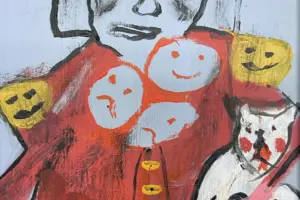
Featuring original visual artwork by Ben Buckland, Melissa Monroe, and Andra Otilia Nicolescu, this month’s issue arrives at a critical juncture in global discourse, echoing a sentiment voiced by activist and poet Kathy Engel during her conversation with Tyler Barton: "The times are urgent—we must slow down." What follows is an in-depth examination of the pieces that comprise this vital literary and artistic intervention.
Read Also
Detailed Chronology and Thematic Breakdown
The July issue is structured as an interconnected web of stories, images, and poems that trace the arcs of personal and collective survival across different geographies and timelines.
1. Visual Anthropology and the Ethics of Visibility
- “Must a People Disappear for Us to Know That It Existed?” by Ben Buckland and Carissa Western
The issue opens with a striking photo essay that transports the reader directly into Sebeïba, a centuries-old Saharan festival, capturing the complex ritual and cultural life of the Imuhar people. Beyond the arresting visual composition, Buckland and Western’s work forces an uncomfortable ethical reckoning.
The essay questions the innocence of preservation, tourism, state interest, and casual spectatorship. When external observers arrive at the threshold of threatened worlds, their gaze is rarely neutral. The piece asks whether the act of recording a culture facing environmental and political pressures inadvertently accelerates its commodification or signals its impending end.
2. Nonfiction and the Architecture of Grief
- “The Death Years” by Mahreen Sohail
Moving from the macro-level of cultural preservation to the microscopic intensity of the domestic sphere, Mahreen Sohail’s essay measures the immense weight of motherhood against humanity’s inevitable mortality. Weaving together family history, inherited generational grief, and the distinct terror of loving a child in a precarious world, Sohail explores the delicate balance of remembering those who have passed while learning how to continuously inhabit the present.
3. Fiction: Brotherhood, Exile, and Historical Aftershocks
- “Bojack Blues” by Herbert Girtley
In the realm of fiction, Herbert Girtley delivers a masterclass in character-driven storytelling with "Bojack Blues." Centered on themes of friendship, unspoken hurt, and the unifying power of music, the story follows a man who seemingly vanishes right before a scheduled musical gig.
What begins as an investigation into an absence blossoms into a rich, deeply textured portrait of male friendship. By the banks of a quiet creek, two men slow down long enough to confront and share their personal pain. In doing so, Girtley demonstrates how vulnerability between men can carve out vital spaces for communal healing and the sublime.
- “Places of Memory” by Andra Otilia Nicolescu
Complementing Girtley’s contemporary domestic realism is an excerpt from Andra Otilia Nicolescu’s unpublished novel, Midnight in Exile. Set in the post-1989 aftermath—a historical turning point when the collapse of state socialism in Eastern Europe shattered old borders and absolute certainties—the narrative follows Paul and Ana as they navigate America late in life.
For the aging couple, exile functions simultaneously as a strange, disorienting new beginning and a harsh reckoning. From the literal and metaphorical rubble of a bygone world, Nicolescu constructs a layered, multi-generational meditation on migration, enduring marriage, history, and the quiet, intimate revelations that only manifest after an entire life has already been lived.
4. Dialogue and Resistance: Art and Activism
- “The Poems Will Not Stop: An Interview with Kathy Engel” by Tyler Barton
Cultural critic and interviewer Tyler Barton engages poet, activist, and organizer Kathy Engel in a wide-ranging conversation that spans decades of international solidarity work. Engel, who has spent her life writing alongside and in support of struggles in Palestine, Nicaragua, Indigenous sovereignty movements, and broader social justice campaigns, reflects on the enduring responsibilities of the artist.
The dialogue explicitly references the historical precedent of 1982—specifically, the barring of Palestinian poet Mahmoud Darwish from a New York poetry event following Israel’s invasion of Lebanon and the devastating Sabra and Shatila massacres. Grounded in this history, Engel and Barton discuss how art, grief, and beauty intersect, fiercely defending the necessity of refusing any artificial separation between the poem on the page and the geopolitical realities of the world.
5. Global Spotlights: Folklore and Personal Agency
- “Go for it” by Masami Kakinuma (Translated by Sharni Wilson)
In the magazine’s Global Spotlight section, Japanese author Masami Kakinuma—translated by Sharni Wilson—pulls the reader into a traditional grandmother’s home nestled in rural Iwate. Here, ancient folklore is intricately braided with the quiet, muted disappointments of adult life. The narrative deftly reimagines good fortune, presenting it not as a stroke of random luck, but as something rendered possible only when an individual summons the courage to move toward the life they once desperately wished for.
6. Poetry: From Stalinist Terror to Ancestral Inheritance
The issue’s poetry section offers a visceral journey through historical violence, domestic breakdown, and generational trauma:
- “Svetlana at the Dacha, 1938” and “Joseph” by Michelle Matthees: These companion pieces place childhood innocence directly into the long, suffocating shadow of Stalinist terror, examining how institutional and political violence metastasizes into private, psychological wounds.
- “The Anatomy of a Bullet Alchemising into Death” by Denoo Edinam Yawo: Yawo conceptualizes violence not merely as an isolated incident of harm, but as a permanent inheritance stored deep within the human body. The bullet transforms into a dark language of displacement, secrecy, and grief—an ancestral rite passed inexorably from mother to child.
- “Her Five Children” and “Noose” by Anna T. Szabó (Translated from Hungarian by Ági Bori): Szabó traces the exact psychological threshold where the safety of the domestic sphere gives way to horror, probing the limits of human care when the systemic structures meant to support families have fractured completely.
Supporting Context and Metrics
To fully appreciate the scope of Guernica’s July publication, one must examine the socio-cultural metrics and publishing trends driving independent literary journals today. Over the past decade, digital-first literary magazines have faced mounting economic pressures, making ambitious, multi-format curation increasingly rare.
| Edition Feature | Primary Focus / Medium | Geographic / Historical Anchor |
|---|---|---|
| Buckland & Western | Photo Essay / Visual Anthropology | The Sahara / Imuhar Community |
| Mahreen Sohail | Narrative Nonfiction | Domestic Mortality / Motherhood |
| Herbert Girtley | Contemporary Fiction | Male Friendship / Music |
| Andra Otilia Nicolescu | Historical Fiction Excerpt | Post-1989 Eastern Europe / America |
| Kathy Engel Interview | Oral History / Political Activism | Palestine, Nicaragua, Global Justice |
| Masami Kakinuma | Translated Fiction / Folklore | Rural Iwate, Japan |
| Mathees, Yawo, Szabó | Verse / Poetry | Stalinist Russia, Transgenerational Trauma |
By commissioning and pairing works that stretch across continents—from the Saharan desert to rural Japan, from post-communist migration to the historical corridors of Middle Eastern and Central American solidarity—Guernica maintains a high standard of globalized literary engagement. The inclusion of works in translation (Sharni Wilson and Ági Bori) underscores the magazine’s ongoing commitment to breaking down linguistic and national barriers.
Official Statements and Editorial Vision
In her framing of the July issue, Editor-in-Chief Raaza Jamshed emphasizes that the collection is designed to disrupt passive consumption. The overarching editorial objective is to re-establish art as an active participant in historical preservation and moral witness.
Quoting Bayo Akomolafe via Kathy Engel’s interview—"The times are urgent—we must slow down"—Jamshed provides a clear directive for both the contributors and the readership. In an era dominated by rapid-fire news cycles, algorithmic feeds, and disaster fatigue, the July edition of Guernica acts as an intentional friction point.
The official editorial stance maintains that true cultural empathy cannot exist in a state of constant acceleration. By demanding that audiences attend to the marginalized before they vanish, mourn the dead while actively living, and recognize the quiet endurance embedded in human relationships, the magazine sets a rigorous benchmark for contemporary literary journalism.
Future Outlook
The release of the July 2026 issue signals a transformative period for Guernica as it continues to expand its international reach and deepen its commitment to cross-genre storytelling. Looking forward, the questions raised in this edition—regarding the ethics of visibility, the transmission of generational trauma, and the responsibilities of artists in times of geopolitical crisis—will likely resonate across upcoming literary publications.
As independent publishers navigate shifting digital landscapes, collections like Guernica‘s July issue prove the irreplaceable value of slow, deliberate, and ethically conscious curation. By insisting that we bear witness to the world in all its fragility, the magazine ensures that stories of the marginalized, the exiled, and the endangered are neither overlooked nor forgotten when they need our attention the most.

Comments
Facebook App ID not configured. Please add it in the Customizer.