
Executive Overview
Award-winning author LaToya Watkins is preparing to release her highly anticipated second novel, The Book of Chuck, scheduled for publication by Tiny Reparations on August 18, 2026. Represented by literary agent Samantha Shea, Watkins follows up on her critically acclaimed 2022 debut novel, Perish, and her celebrated short story collection, Holler, Child—which was longlisted for the National Book Award and won both the Reading the West Book Award in Fiction and the Writer’s League of Texas Book Award in Fiction.
The Book of Chuck investigates the complex architecture of grief, the fluidity of time, and the heavy burden of familial inheritance. On the surface, the literary fiction novel introduces readers to a remarkable family possessing the supernatural ability to foresee death. Beneath this speculative premise, however, lies a deeply human exploration of one man’s desperate quest to become an ancestor worthy of his descendants. It is a story about breaking generational cycles, loving deeply despite profound human failings, and leaving behind a legacy far superior to the one he inherited.
In this exclusive interview and literary profile, Watkins reflects on the personal tragedies that inspired the manuscript, the grueling six-year journey from conception to publication, the radical shifts in her daily writing routine, and her ultimate aspirations for her readers.
Read Also
Detailed Chronology: From Personal Loss to Literary Reality
The genesis of The Book of Chuck is inextricably linked to a profound and sustained period of personal mourning. Over a span of fifteen years, Watkins experienced the devastating loss of ten close family members. This wave of compounding grief forced the author to confront the quiet, insidious ways in which memory fades over time.
The Genesis (2020–2022)
The conceptual framework for the novel crystallized in 2020, coinciding with a monumental moment in Watkins’s personal life: the birth of her grandson. Standing at the intersection of new life and accumulated loss, Watkins began meditating on how memories survive across generations. She realized that loved ones do not truly vanish when they pass away; rather, they fade only when the living stop remembering them.
This realization birthed a narrative philosophy that rejected linear time. Watkins envisioned a world where memory reigns supreme over chronology—a universe where characters can locate and commune with one another across any timeline, provided that someone keeps their stories alive.
The formal drafting process commenced in 2022, shortly after the celebratory release of her debut novel, Perish. What began as a scattered collection of thoughts bloomed into a structured exploration of a flawed, deeply loving protagonist grappling with his impending legacy.
The Evolution of the Manuscript (2022–2026)
Over the six-year span from initial idea to its upcoming August 2026 publication, The Book of Chuck underwent significant organic transformations. While early drafts featured secondary characters and narrative subplots that ultimately fell away, the emotional core of the novel remained entirely intact.
Watkins set out to construct a protagonist who was simultaneously flawed and fiercely loving—a man whose inevitable failures never eclipsed his capacity for grace. Throughout the editing and polishing phases, supported by her publisher Tiny Reparations, that foundational objective never wavered.
Supporting Context & Metrics: The Literary Landscape of LaToya Watkins
To understand the weight and significance of The Book of Chuck, one must examine the critical foundation LaToya Watkins has built within contemporary American literature.
Critical Accolades and Bibliography
- Short Story Collection: Holler, Child
- Longlisted for the National Book Award
- Winner of the Reading the West Book Award in Fiction
- Winner of the Writer’s League of Texas Book Award in Fiction
- Debut Novel: Perish (Published in 2022 to widespread critical acclaim)
- Short Fiction and Essays: Featured widely in prestigious literary publications, including A Public Space, The Sun, McSweeney’s, and the Kenyon Review.
Thematic Constants in Watkins’s Work
Watkins’s bibliography consistently explores the intersections of Black family structures, historical trauma, systemic pressure, and the resilience of love. While Perish examined the complicated dynamics of an interconnected Texas family grappling with their past, The Book of Chuck expands Watkins’s literary toolkit by integrating speculative elements—specifically, the clairvoyant ability to see death coming—into an otherwise deeply grounded domestic and psychological drama.
Official Statements & Insights from the Author
In a series of candid reflections, Watkins opens up about the emotional toll of writing The Book of Chuck, the surprises she encountered during the creative process, and the profound lessons imparted by the publishing journey.
On the Real Purpose Behind the Supernatural Premise
"On the surface, it’s about a family with the ability to see death coming. But underneath, it’s really about one man trying to become the kind of ancestor his descendants deserve. To love well, to break cycles, and to leave his family with something better than what was handed to him."
On Confronting Buried Grief
The process of writing the novel did more than produce a work of art; it served as an emotional catalyst for the author and her relatives. Watkins discovered that grief operates on an independent timeline, completely indifferent to human readiness.
"I learned that grief has her own sense of time. She doesn’t leave just because we aren’t ready for her. She waits. This book shook loose grief I’d been telling to wait for almost 40 years, and it did the same for members of my family as I started asking questions and uncovering the stories we’d inherited about loss. I realized grief isn’t something we outrun. We simply arrive at her when we’re finally able, and then the work begins."
On Changing the Writing Routine
Historically, Watkins carved out isolated, dedicated blocks of time to produce her work. However, the sheer emotional and psychological demands of The Book of Chuck forced a radical shift in her methodology. For this project, she abandoned sporadic writing sessions in favor of radical consistency.
"With this book, I wrote every day. Every single day. There was something about returning to the story daily that changed my relationship with writing. I wasn’t waiting for the right moment anymore. I was living inside the work."
The Core Message for Readers
As readers prepare to dive into The Book of Chuck upon its August 2026 release, Watkins hopes they look past the heavy themes of mortality and generational trauma to find the resilient heartbeat beneath.
"I hope readers see the love. This is a novel about grief, inheritance, failure, and loss, but beneath all of it is love, persistent and stronger than the things that threaten it. I hope that’s what stays with them: the belief that love outlives our failures, our suffering, and even death itself."
Future Outlook: Advice for Aspiring Writers and the Road Ahead
As the literary community anticipates the late-summer release of The Book of Chuck on August 18, 2026, Watkins remains grounded in the tenacity that brought her from short fiction recognition to becoming one of the most vital voices in contemporary literary fiction.
Reflecting on her journey through longlists, awards, and multi-year novel projects, Watkins offers a pragmatic and encouraging message to emerging writers navigating the often grueling publishing landscape:
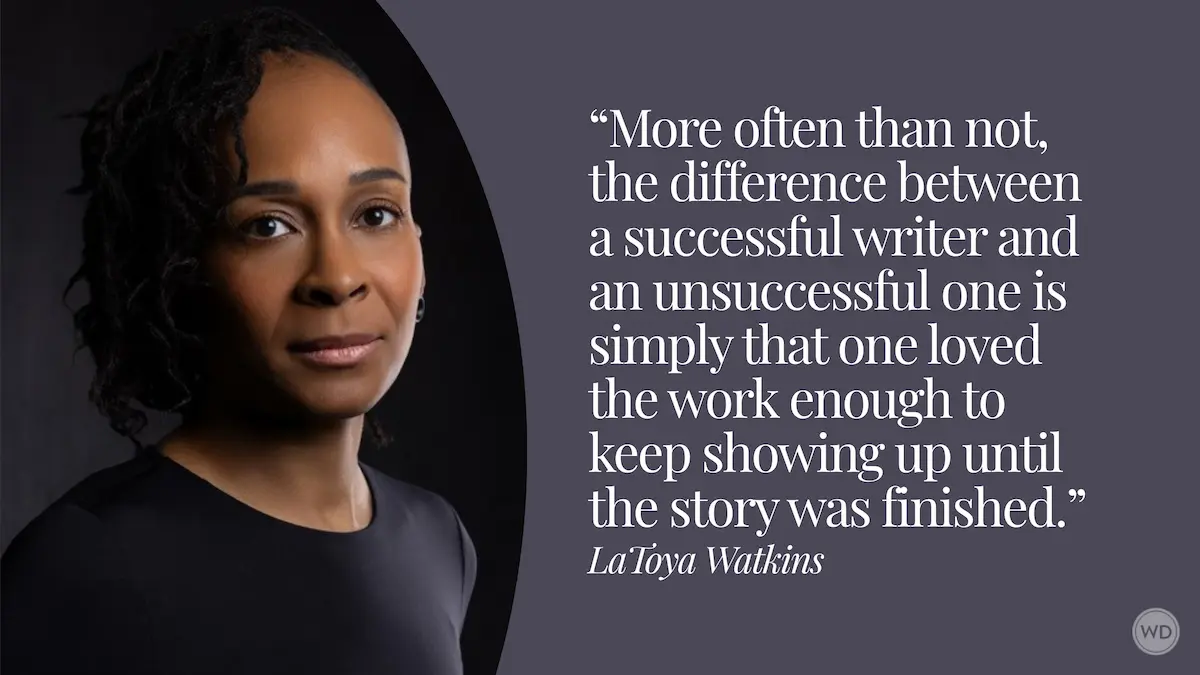
"Keep writing the stories that inspire you. Talent matters, but persistence matters more. More often than not, the difference between a successful writer and an unsuccessful one is simply that one loved the work enough to keep showing up until the story was finished."
With The Book of Chuck, LaToya Watkins has once again shown up for the work—transforming personal sorrow into collective healing, and proving that literature possesses the rare power to conquer time, honor the dead, and illuminate the path forward for the living.



Comments
Facebook App ID not configured. Please add it in the Customizer.