
Executive Overview
For wilderness adventurers, naturalists, and outdoor artists, the concept of solo travel remains a deeply contentious subject. While authorities universally caution against the perils of venturing into remote backcountry alone, a distinct subculture of wilderness travelers argues that solitude offers unmatched creative clarity, psychological depth, and a profound communion with nature.
In his acclaimed book Boreal Wilderland, author, artist, and naturalist Rob Mullen recounts more than twenty wilderness art expeditions. Among them, all or parts of four journeys were undertaken entirely solo. These lone excursions—born of shifting life circumstances, scheduling conflicts, and logistical attrition—forced Mullen to confront the razor-thin margin between calculated risk and sheer recklessness.
Read Also
This deep dive explores Mullen’s transition from a disgruntled New York advertising artist fleeing the digital takeover of his profession, to a seasoned wilderness painter navigating the icy lakes of Ontario and the rugged, unforgiving alpine tundra of Alaska’s Brooks Range. Through these reflections, we examine the mechanics of risk assessment, the psychological weight of isolation, and the pivotal moment that led Mullen to make a permanent vow: to never travel solo in the wilderness again.
The Crossroad: From New York Advertising to the Wilderness Canvas
The Corporate Churn of 1991
By the early 1990s, the writing was on the wall for traditional commercial artists. The rise of desktop publishing and computer-generated graphics was eating away at the freelance advertising art market in New York City. For Mullen, the corporate grind was suffocating his true calling.
While his future ex-wife pushed for a traditional, stable path—even suggesting law school, a proposition Mullen met by taking the LSAT simply to prove the futility of the idea—his heart lay in nature art. He began participating in wildlife art shows, slowly establishing a foothold in the national fine art community.
By mid-October 1992, Mullen was gearing up for a painting seminar in the Colorado Rockies. Because the birth of his second daughter the previous year had forced him to skip his traditional northern Canadian canoe trip, he decided to weave a detour into his western migration. He planned a multi-day paddle through Ontario’s iconic Algonquin Provincial Park. It would be his maiden voyage as a solo wilderness traveler—a relatively short route characterized entirely by flat water, or so he thought.
Entering the Mist: Ontario’s Canoe Lake
Cool autumn rain fell steadily as Mullen parked his vehicle at the bustling boat access point on Canoe Lake. For many, dropping temperatures and relentless rain spell misery and hypothermia; for Mullen, it fueled an eager sense of adventure. Recognizing the seasonal hazards of autumn water temperatures, he took an extra safety precaution, packing a wetsuit to wear beneath his clothes and rain gear.
As he paddled north, he encountered a loose flotilla of canoes heading south. Conversing with passing paddlers, he learned they were racing back to civilization in a frantic dash to catch the Toronto Blue Jays playing in the World Series. While most were good-naturedly shocked that a lone paddler was heading upstream into the teeth of the weather while history was being made on television, one encounter shifted from friendly to antagonistic.
The Unsolicited Lecture on the Water
A single canoe broke formation, bearing down on Mullen with purpose. After a perfunctory greeting, the occupants launched into a stern, uninvited sermon on the extreme dangers of solo paddling.
While Mullen fundamentally agreed with their theoretical premise—that solo travel carries elevated risks—he rejected their aggressive conclusion and refused to turn around. As he maintained his northward course, their lecture escalated from concern to indignation, ultimately culminating in personal denunciations branding him as irresponsible and a menace to the reputation of the canoeing community.
Pricked by the unwarranted hostility rather than taking the high road, Mullen delivered a parting counter-punch. He noted that if they were to capsize in heavy, open-water conditions far from shore—the exact nightmare scenario they had projected onto him—they would be in a single boat facing the exact same mortal peril, whereas he at least possessed the foresight of a wetsuit. He paddled away, completed a successful trip, and learned later that the Blue Jays had taken the series.
Detailed Chronology: The Evolution of Risk Assessment
The Psychology of Solitude
Mullen’s early skirmishes with public perception highlight a core truth of wilderness travel: familiarity and necessity often distort our perception of danger. Driving an automobile from Connecticut to Ontario and onward to Colorado poses statistical risks that frequently dwarf those of a quiet flat-water paddle, yet society readily accepts highway travel while condemning backcountry solitude.
Over years of research and artistic expeditions for Boreal Wilderland, Mullen developed an intimate understanding of the paradox of solo travel. The advantages—absolute independence, uninterrupted focus, and an eerie, immersive quiet—are constantly shadowed by lurking dangers.
Crucially, Mullen’s expeditions were rarely solo by design; they were born of necessity. Yet, his wife, Bonnie, supported these endeavors despite her entirely justified anxieties. Rather than demanding he abandon the trips, Bonnie chose a partnership of mitigation: she worked tirelessly to improve communication protocols, double-checked every gear list, and served as a reliable anchor back home. This lack of domestic resentment allowed Mullen to process his journeys with clarity.
The 2011 Smithsonian Genesis
The true crucible of Mullen’s solo career took shape in 2011 during a planning conference at the Smithsonian’s National Museum of Natural History. The collective hatched an ambitious, multi-part expedition: to circumnavigate the western Brooks Range by ascending the Noatak River on the north flank and descending the Kobuk River on the south, bridging the two watersheds by portaging canoes across the mountains near Mount Igikpak.
This ambitious route would traverse the delicate transition zone where Arctic and alpine tundra melts into the northernmost reaches of the North American boreal forest.
- 2012 Reconnaissance: The team successfully scouted Angiaak Pass near Mount Igikpak and ran the Noatak River down to the Chukchi Sea and Kotzebue.
- The 2013 Attrition: Through the winter and spring leading up to the final push, the expedition’s mountain crew suffered steady attrition. When launch day arrived, the team had evaporated down to a single individual: Rob Mullen.
Supporting Context & Metrics: The Alaska Expedition
August 1, 2013: The Summit of Angiaak Pass
On August 1, 2013, Mullen stood alone at the summit of Angiaak Pass, kneeling beside his folding canoe and expedition kit. Smiling broadly, he snapped a self-portrait, convinced that the hardest leg of the journey was behind him and that gravity would now be his ally.
Heavy clouds, however, were boiling up the pass from the south. He pitched a secure camp just below the crest, sliding beneath his tarp as rain began to drum against the fabric. Surrounded by cloud-wreathed peaks, he felt a profound sense of peace. He was slightly behind schedule, but his body felt resilient, and he had already completed four plein air paintings.
The Epiphany Under the Tarp
As he lay resting, his thoughts drifted to Bonnie back home. In that quiet intersection of physical contentment and domestic worry, a profound psychological shift occurred.
The hyper-focus that had blinded him to the broader realities of his endeavor suddenly fractured. The inherent selfishness of courting catastrophe thousands of miles from civilization hit him with unmistakable clarity. Right there beneath the canvas, he pulled out his journal and penned a definitive resolution: he loved her, he missed her, and this would be his final solo journey. The decision was absolute.
Nature’s Retribution
The romanticized solitude of the moment was quickly tested by the raw, untamed reality of the Alaskan wilderness. The trials that followed were formidable:
- Raging, unpredictable glacial torrents threatening to sweep away equipment.
- An extended, two-day visitation by lonely juvenile black bears.
- Navigating "Alder Hell"—impenetrable thickets of dense brush that turn every mile into a grueling physical battle.
- Severe local food shortages.
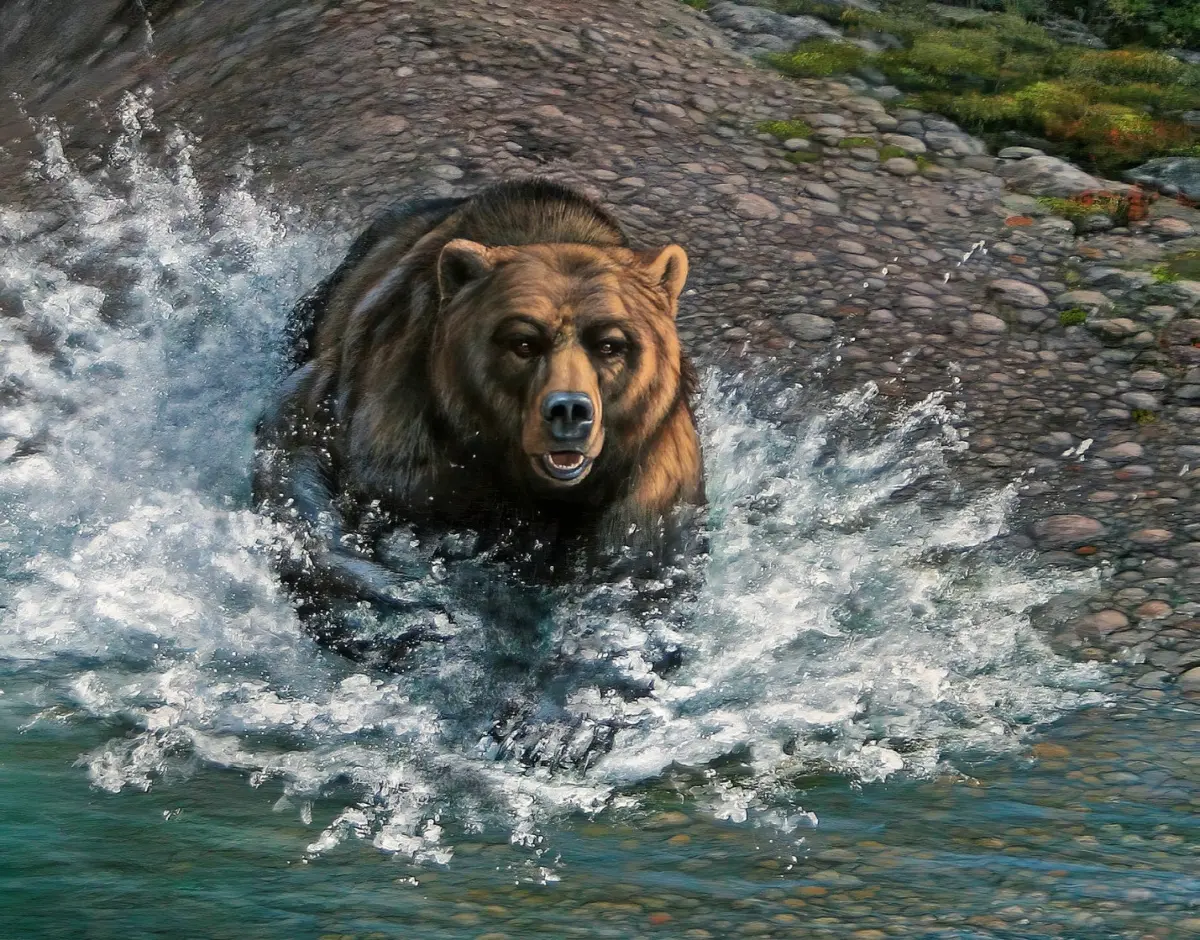
- A heart-stopping, charging grizzly bear encounter.
Despite surviving these trials, the emotional architecture of Mullen’s wilderness philosophy had permanently shifted.
Official Statements & Industry Perspectives
The debate surrounding solo wilderness travel involves voices from search-and-rescue (SAR) organizations, outdoor educators, and veteran expedition leaders.
- The Safety Consensus: Most wilderness authorities and park superintendents strongly discourage solo travel, particularly in remote regions like northern Canada or the Alaskan interior. Without a partner to administer first aid, manage emergency communications, or extract an injured party, minor injuries can easily escalate into fatal emergencies.
- The Psychological Counter-Perspective: Veteran naturalists often argue that group dynamics can dilute the immersive quality of nature. True ecological observation—tracking wildlife without human disruption, deep artistic concentration, and meditative silence—is frequently compromised when negotiating interpersonal relationships in high-stress environments.
Mullen’s journey bridges these two worlds. His ultimate verdict does not dismiss the transformative power of solitude, but rather acknowledges the disproportionate emotional and physical toll placed on loved ones waiting at home.
Future Outlook: The Permanent Vow
Rob Mullen’s decision to swear off solo wilderness travel marks a significant evolution in his career as an adventurer and artist. While his final solo expedition through the Brooks Range produced some of the most unforgettable experiences and artistic achievements of his life, the cost was measured in the quiet anxieties of his wife and the realization that isolation is a luxury best enjoyed with a companion.
Today, Mullen’s legacy stands as both an inspiration to aspiring backcountry artists and a cautionary tale regarding the hubris of isolation. Through books like Boreal Wilderland, he continues to document the fading margins of North America’s great wildernesses—reminding us that while nature demands our respect, our greatest journeys are ultimately measured by the people we return to when the paddling is done.





Comments
Facebook App ID not configured. Please add it in the Customizer.