
Executive Overview
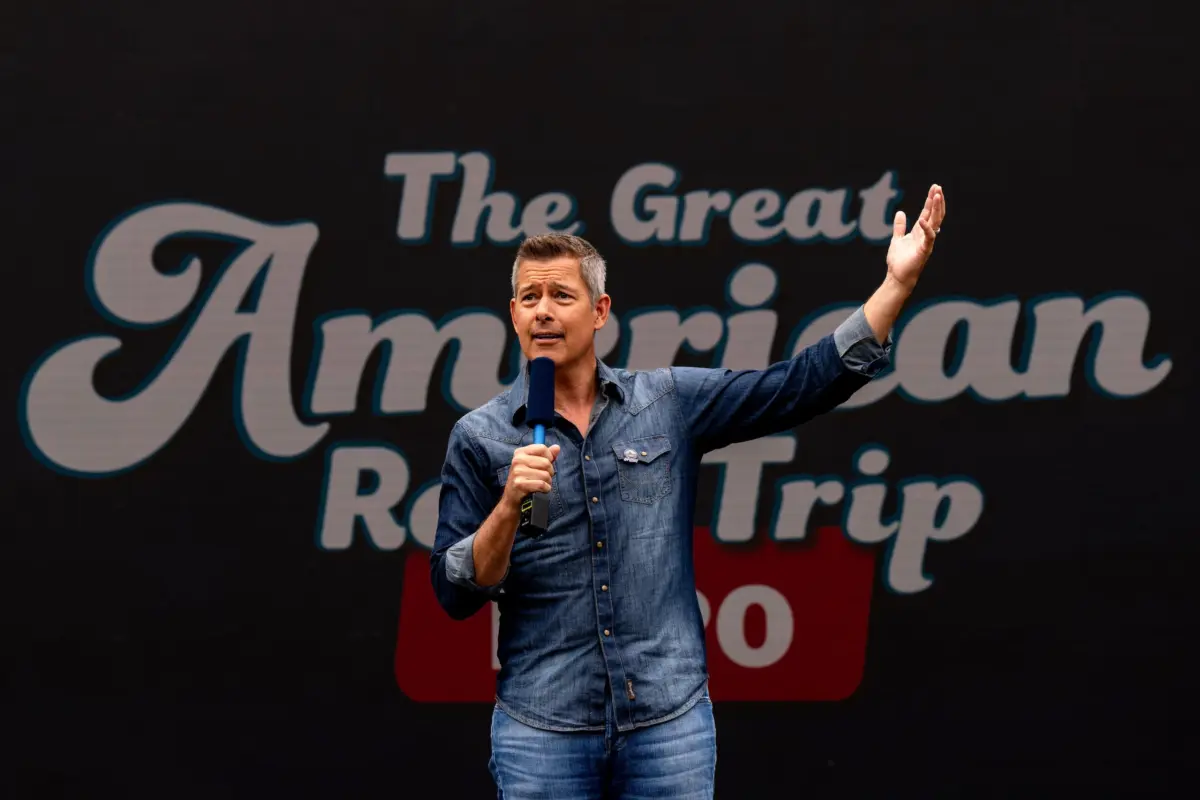
In an unusual convergence of cabinet-level federal governance, corporate sponsorship, and legacy reality television tactics, United States Secretary of Transportation Sean Duffy launched a six-part YouTube digital series titled The Great American Road Trip. Produced alongside his wife, Fox News host Rachel Campos-Duffy, the initiative was officially framed as a patriotic travelogue intended to inspire American families to explore the nation in celebration of the upcoming U.S. Semiquincentennial. However, the production has triggered significant ethics inquiries, congressional pushback, and critical commentary regarding the blurring lines between public office, personal brand-building, and commercial interest.
Originally scheduled for a early-summer release, the series faced multiple delays before quietly landing on YouTube. Behind the wholesome, family-centric facade lies a complex web of ethical controversies. The show was financed through a custom-built non-profit organization that secured major corporate sponsorships from companies directly regulated by the Department of Transportation (DOT)—including aerospace giant Boeing, building materials conglomerate CRH, and autonomous vehicle developer Waymo.
Beyond its regulatory conflict of interest, The Great American Road Trip serves as a case study in the evolution of American political communication. Both hosts leveraged backgrounds in MTV’s foundational reality programming (The Real World and Road Rules) to create a hybrid product that fluctuates between government public relations, ideological debate, and domestic drama. The project ultimately highlights the increasing reliance on entertainment media mechanics within high-level political appointments and raises critical questions about executive branch ethics oversight in the digital age.
Read Also
Detailed Chronology
[May 2025] ---------- [June - July 2025] ---------- [August 2025]
Initial Announcement   Delays & Senate Probe         6-Episode YouTube
on Fox News            over Corporate Funds          Release
Origins and Announcement (May)
The project was formally announced during a joint appearance by Sean Duffy and Rachel Campos-Duffy on Fox News. Framed as an official Department of Transportation initiative tied to national unity and historical appreciation, Duffy presented the series under the slogan, "To love America is to see America."
Campos-Duffy pitched the series as a wholesome alternative to modern digital media, emphasizing traditional family values. A promotional trailer released concurrently highlighted scenic highway drives intercut with personal family moments involving several of the couple’s nine children.
Production Delays and Congressional Scrutiny (June–July)
Although promised for release in June to coincide with the peak summer travel season and initial Semiquincentennial festivities, the project encountered immediate procedural and political resistance:
- Economic and Geopolitical Backlash: External critics questioned the optics of promoting high-consumption cross-country road trips amidst elevated fuel prices and broader economic uncertainties stemming from international conflicts in the Middle East. Independent calculations estimated that a complete journey along the featured routes would cost upward of $1,000 in fuel alone per household.
- Senate Ethics Interrogation: During a contentious hearing before the Senate Appropriations Committee, Senator Patty Murray (D-WA) formally questioned Secretary Duffy regarding the funding structure of the program.
- Corporate Conflict Probes: Media investigations revealed that the non-profit entity established to finance the production had accepted financial contributions from entities with high-stakes matters pending before the DOT, notably Boeing and Waymo.
Duffy aggressively defended the project during public appearances and legislative testimony, dismissing critics as political adversaries hostile to national pride.
Public Debut and Episode Narrative Arc (August)
The series was quietly released in its entirety on YouTube, divided into six episodes averaging thirty minutes each. The content revealed a narrative structure that oscillated between official agency visits, historical sightseeing, and staged family dynamics:
 Episode Breakdown:
 ├── Ep 1: Washington, D.C. & Philadelphia (White House, Liberty Bell, Rocky Steps)
 ├── Ep 2: Boston, MA (Real World Reunion, Harvard University Ethics/Catholicity debate)
 ├── Ep 3: Wyoming & Montana (Medical Emergency, Family Gender Reveal)
└── Eps 4–6: Charleston, SC; Texas; Arizona (Corporate Facility Visits: Boeing, CRH, Waymo)- Episode 1 (Washington, D.C. & Philadelphia): Features a visit to the White House to meet President Donald Trump, followed by historic stops at the Liberty Bell and the Philadelphia Museum of Art. The narrative relies heavily on standard promotional tropes, punctuated by candid commentary from the Duffy children regarding the tedious nature of political meetings.
- Episode 2 (Boston, Massachusetts): Focuses on personal legacy and ideological friction. The narrative centers on daughter Paloma Duffy’s higher education choices, highlighting family debates over attending Harvard University versus maintaining Catholic values. The episode includes a visit to the original residential set of MTV’s The Real World: Boston, featuring an on-screen reunion with former housemate Montana McGlynn.
- Episode 3 (Wyoming and Montana): Shifts toward traditional unscripted family drama. It documents a gender-reveal event hosted by eldest daughter Evita and her husband, Michael—who was simultaneously campaigning for Duffy’s former congressional seat in Wisconsin. The episode includes a medical scare involving son Patrick, whose sudden emergency hospital visit was later diagnosed as severe constipation.
- Episodes 4–6 (Charleston, South Carolina; Texas; Arizona): The final three installments abandon much of the spontaneous family framing, focusing heavily on visits to corporate sites operated by show sponsors, including a Boeing manufacturing plant in Charleston, a CRH subsidiary site in Texas, and an autonomous vehicle demonstration ride with Waymo in Arizona.
Supporting Context & Metrics
The Corporate Sponsorship Structure
The core legal and ethical vulnerability of The Great American Road Trip stems from its financing model. Rather than utilizing direct federal appropriations—which would have required explicit congressional approval and adhered to strict anti-deficiency guidelines—the project operated under a dedicated non-profit entity. This structure allowed the production to accept direct sponsorship dollars from private sector corporations.
| Sponsoring Entity | Primary Business Sector | Regulatory Oversight by DOT |
|---|---|---|
| Boeing | Aerospace & Commercial Aviation | Federal Aviation Administration (FAA) safety certifications, manufacturing audits, and compliance orders. |
| CRH plc | Infrastructure & Construction Materials | Federal Highway Administration (FHWA) grant allocations and federal material standards. |
| Waymo | Autonomous Vehicle Technology | National Highway Traffic Safety Administration (NHTSA) safety testing protocols, autonomous vehicle guidelines, and recall enforcement. |
The Department of Transportation asserted that Secretary Duffy’s involvement fell within official duties and complied with ethics regulations because the travels incorporated relevant official site visits and meetings. However, ethics watchdogs highlighted that leveraging cabinet status to secure corporate funding for media projects involving a Cabinet member’s immediate family sets a questionable precedent in executive branch operations.
       +-------------------------------------------------+
       |         Private Corporate Sponsors              |
       |        (Boeing, CRH, Waymo, etc.)              |
       +------------------------+------------------------+
                                |
                                | Financial Contributions
                                v
       +-------------------------------------------------+
       |           Designated Non-Profit Entity          |
       +------------------------+------------------------+
                                |
                                | Production Funding
                                v
       +-------------------------------------------------+
       |     "The Great American Road Trip" Production   |
       |  (Promoting DOT Agenda / Duffy Family Brand)   |
       +-------------------------------------------------+
Digital Performance and Audience Engagement
Despite the political controversy generated prior to its launch, public reception metrics following the series premiere indicate low audience conversion:
- Average Viewership: Initial view counts across the six episodes remained consistently low, averaging under 15,000 views per episode within the first week of availability—a stark contrast to mainstream digital travel creators and political media outlets.
- Production Logistics: The trip was filmed incrementally over several months rather than as a continuous cross-country journey, requiring multiple logistics deployments and official travel schedules.
- Consumer Cost Discrepancy: The promotional framing of the series as an accessible family activity clashed with prevailing economic data. With average fuel prices elevated during production and regional travel costs rising, independent consumer analyses estimated that replicating the travel itinerary presented in the series would cost an average American family upwards of $3,500 in total expenditures, including fuel costs exceeding $1,000.
Governance and the Reality Television Landscape
Sean Duffy’s career trajectories mirror a broader shift in American political recruitment, where background in unscripted entertainment serves as a launchpad for public office.
  [MTV's The Real World: Boston (1997)]
                   │
                   ▼
  [District Attorney / U.S. House of Representatives (WI-07)]
                   │
                   ▼
  [Fox Business Host / Political Commentator]
                   │
                   ▼
  [U.S. Secretary of Transportation (2025)]
This trajectory reflects a broader trend over the past two decades where visibility in reality television and digital media has translated into political capital. While this model proved uniquely successful for figures like Donald Trump (The Apprentice), recent electoral cycles show mixed results for candidates emerging directly from unscripted media platforms:
- Spencer Pratt (The Hills): Unsuccessfully campaigned for Mayor of Los Angeles on a populist platform.
- Luke Gulbranson (Summer House): Defeated in a bid for a U.S. House seat in Minnesota.
- Mark Moran (FBoy Island): Withdrew early from a Virginia U.S. Senate primary.
Unlike purely political campaigns, The Great American Road Trip attempted to merge official cabinet-level policy promotion with reality TV conventions—confessional interviews, family arguments, and strategic product placement. The result demonstrates the limitations of applying entertainment tropes directly to federal policy execution.
Official Statements
Department of Transportation and Sean Duffy
Defending the project against congressional inquiries and media oversight, Secretary Sean Duffy maintained that the production was intended to serve the public interest and promote national unity:
"Our motto is ‘To love America is to see America.’ America isn’t something you can understand through a phone screen. You have to get out and see it. Don’t you want to celebrate America? Let’s celebrate this country. It’s our birthday."
— Sean Duffy, U.S. Secretary of Transportation (Public testimony and media appearances)
Addressing criticisms regarding the wholesomeness and tone of the series, Duffy added:
"The radical, miserable left doesn’t like what we’re doing because it’s too wholesome. It’s too patriotic. It’s too joyful."
Co-host Rachel Campos-Duffy framed the show as a necessary alternative to contemporary mainstream digital content:
"In our ‘PornHub world,’ this show is really wholesome, good family stuff."
Regarding legal and ethical compliance, official spokespersons for the Department of Transportation issued statements affirming that all financial arrangements, corporate partnerships, and travel schedules were reviewed and cleared by agency ethics counsel, asserting that the travel constituted official government business integrated with site inspections.
Congressional Oversight and Critics
Congressional opponents launched harsh criticisms regarding the propriety and funding mechanisms of the project during Senate budget hearings:
"The entire endeavor raises serious questions about public trust, federal oversight, and whether official executive authority is being used to solicit corporate funding for what appears to be a personal media campaign."
— Senator Patty Murray (D-WA) (Senate Appropriations Committee Hearing)
Industry critics and media ethics experts highlighted the clear conflict of interest in receiving corporate funds from regulated transportation entities, noting that even if legally structured through a third-party non-profit, the optics undermine regulatory neutrality.
Future Outlook
The launch and subsequent critical reception of The Great American Road Trip provide key insights into the future of political branding, ethics enforcement, and government public relations:
1. Hardening Ethics Oversight on Cabinet Digital Content
The controversy surrounding the funding of The Great American Road Trip is likely to prompt tighter legislative frameworks regarding how executive branch officials utilize third-party non-profits for promotional initiatives. Congressional oversight committees are expected to introduce stricter guidelines prohibiting cabinet members from starring in sponsored digital content that involves corporations directly impacted by their department’s decisions.
2. The Efficacy of Government "Infotainment"
The modest viewership metrics achieved by the series suggest that audiences remain skeptical of top-down governmental efforts to adopt unscripted reality television formats. While digital video platforms remain essential tools for agency messaging, blending personal family narratives, corporate site visits, and statecraft struggles to find a clear audience.
3. Long-Term Political Implications for Sean Duffy
While Secretary Duffy has publicly dismissed ambitions for higher executive office, the high-production-value series inevitably functions as a platform for political self-promotion. By positioning his family at the center of a national travelogue, Duffy reinforces his brand within the conservative movement. However, the regulatory scrutiny triggered by the project’s corporate financing could pose a significant vulnerability in future Senate confirmation hearings or political campaigns.
Ultimately, The Great American Road Trip stands as a defining example of modern political communication—a project where statecraft, corporate interests, and personal branding intersect, testing the boundaries of traditional government ethics.



Comments
Facebook App ID not configured. Please add it in the Customizer.