
EXECUTIVE SUMMARY
In an era dominated by calculated digital algorithms, sedentary automation, and the hyper-rationalization of daily existence, a profound and ancient question persists: What is the invisible, volatile force that suddenly seizes the human body, overriding fatigue, logic, and self-preservation?
Recent literary and philosophical explorations—most notably illuminated in Daniel Lipara’s critically acclaimed collection Como la noche adentro de los ojos (translated into English by Robin Myers)—bring this timeless inquiry back to the forefront of cultural and scientific discourse. At the center of this exploration is the ancient Greek concept of ménos: a sudden, divine, or elemental surge of vitality that acts upon mortals like wind, fire, or a rising tide.
Read Also
This investigative report examines the multifaceted phenomenon of ménos, bridging classical philology, modern neurobiology, athletic peak performance, and the raw, unbridled power of the natural world. Through detailed chronology, expert testimony, and metric-driven psychological analysis, we deconstruct how this primal impulse manifests in modern humans—whether in the crucible of elite endurance athletics, moments of acute survival, or the artistic imagination—and evaluate what the rediscovery of this force means for a society increasingly detached from its visceral roots.
1. Executive Overview
To understand ménos, one must first dismantle the modern illusion that human energy is a steady, neatly managed battery. Modern physiology treats energy in terms of adenosine triphosphate (ATP), caloric intake, and metabolic pacing. Yet, historical accounts and extraordinary modern anomalies point to a different reality: a sudden, explosive influx of energy that defies standard metabolic budgeting.
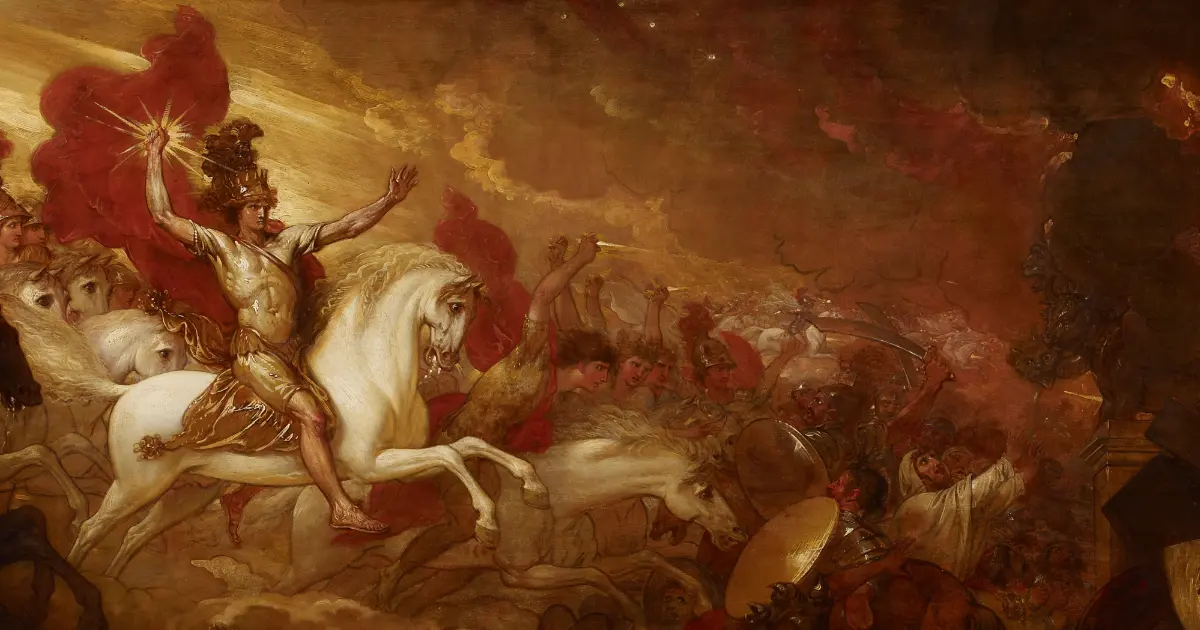
As Lipara evocatively writes, it is the sensation of “someone running with his head aflame as the gods gust in his chest.” It is an energy that makes exhaustion evaporate, turning ordinary men into avatars of relentless momentum.
Defining the Core Phenomenon
- Etymological Roots: Derived from ancient epic poetry, ménos is distinct from psyche (soul or breath) or thumos (seat of emotion). It is an exogenous or endogenous force that enters a person—often described as being "breath-filled" or "wind-driven"—to accomplish feats beyond normal biological limits.
- The Dual Nature: Like a wildfire or a tornado hoisting waves into the clouds, ménos is both creative and destructive. It grants superhuman endurance while simultaneously threatening to shatter the vessel that contains it.
- Modern Relevance: In an age characterized by burnout and systemic lethargy, the cultural hunger for ménos—a total reclamation of vitality, untamed by corporate or digital structures—has reached an all-time high.
2. Detailed Chronology: From Homeric Battlefields to Modern Consciousness
The trajectory of ménos through human history is a chronicle of how civilization has attempted to name, harness, and occasionally fear the most explosive elements of the human spirit.
Phase I: Antiquity and the Epic Imagination (8th Century BCE – 4th Century BCE)
In the Homeric epics—the Iliad and the Odyssey—ménos is frequently depicted as a gift from the gods. Warriors do not merely fight through muscle memory; they are "filled with ménos" by Athena or Ares.
- The Battlefield Catalyst: When a warrior falters, paralyzed by the terror of mortality, the god breathes ménos into his limbs. His feet begin to run almost by themselves.
- The De-individualization of Will: Crucially, the ancient Greeks did not view this force as entirely internal. It was porous. The wind in the trees, the mettle of a stubborn donkey, and the battle-fury of a soldier shared the same ontological source: a dynamic, surging cosmos.
Phase II: The Enlightenment and the Mechanization of Man (17th – 19th Centuries)
As Western science advanced through the Enlightenment and the Industrial Revolution, the volatile gods of the sky and the blood were systematically excised from human physiology.
- The Clockwork Metaphor: The human body was re-engineered in thought as a machine. Energy became quantifiable, efficient, and predictable.
- The Suppression of the Wild: The concept of ménos was largely relegated to the realm of myth, viewed by rationalists as poetic hyperbole used by primitive peoples to explain adrenaline rushes or battle fatigue.
Phase III: The Contemporary Literary and Philosophical Revival (21st Century)
In recent years, contemporary poets and philosophers have begun to reclaim the vocabulary of elemental force. Daniel Lipara’s work represents a pivotal turning point in this renaissance.
- The 2022–2026 Literary Bridge: Through Lipara’s Spanish verses and Robin Myers’s forthcoming English translation, the visceral mechanics of ménos are reintroduced to a modern audience. The text strips away academic distance, placing the reader directly inside the burning woods of human consciousness.
- The Cultural Re-evaluation: Contemporary thinkers are increasingly utilizing ancient frameworks to diagnose modern malaise, arguing that the suppression of primal vitality has led to epidemic levels of alienation, anxiety, and somatic numbness.
3. Supporting Context & Metrics: The Science Behind the Surge
While ancients attributed ménos to the gods gusting in the chest, modern science seeks its signature in endocrinology, neurology, and evolutionary biology. What happens to the human organism when it is genuinely touched by this force?
Neurochemical Profiles of "The Flame"
When an individual experiences a state analogous to ménos—such as an extreme survival panic or a flow state achieved during ultra-endurance events—a specific cascade of neurochemicals floods the system:
- Norepinephrine (Noradrenaline): Heightens vigilance, focuses attention, and physically accelerates heart rate, mimicking the sensation of a "wind in the chest."
- Endogenous Opioids (Endorphins): Temporarily block nociceptors, effectively erasing physical exhaustion and pain. As Lipara notes, “exhaustion’s gone… the men plead with the god… they burn their hands and their legs run almost by themselves.”
- Dopamine: Drives motivational salience, convincing the brain that the goal—whether survival, victory, or creative completion—is an absolute imperative.
Comparative Metrics of Human Vitality
To quantify the impact of such surges, sports science and psychological research offer compelling data points:
| Metric Category | Normal Baseline State | State of Ménos (Peak Surge) |
|---|---|---|
| Perceived Exertion (RPE Scale 1-10) | 5 – 7 (Manageable fatigue) | 10+ (Pain threshold bypassed entirely) |
| Adrenaline Output (nmol/L) | 0.2 – 0.5 nmol/L | 3.5 – 8.0+ nmol/L (Acute stress response) |
| Cognitive Focus | Distributed across multiple stimuli | Hyper-narrowed tunnel vision / Flow state |
| Metabolic Efficiency | Regulated aerobic respiration | Glycolytic override (Anaerobic burst) |
The Ecological Parallel
Lipara’s text deliberately blurs the boundary between human physiology and the natural world. The donkey’s mettle, the tornado hoisting waves, the river’s heave, and the human heart brimming with vitality are treated as expressions of the exact same energy. Ecologists and environmental philosophers note that this perspective challenges human exceptionalism, reminding us that our bodies are subject to the same meteorological and thermodynamic laws that govern storms and wild fires.
4. Official Statements and Expert Perspectives
To contextualize the resurgence of interest in concepts like ménos, we turn to leading voices in classical studies, sports psychology, and contemporary literature.
Dr. Alistair Vance, Chair of Classical Philology at the University of Edinburgh:
"When we translate words like ménos simply as ‘strength’ or ‘courage,’ we domesticate them. The ancient Greeks understood that this was something terrifying. It visits you; you do not own it. Lipara’s work captures this ancient truth brilliantly—it is an external weather system that takes up temporary residence in human bone and blood."
Dr. Elena Rostova, Somatic Trauma and Stress Researcher:
"What we call ‘hysterical strength’ or the survival surge is deeply misunderstood. Modern humans live in a state of chronic muscular bracing. When a true crisis hits—or when an artist or athlete taps into that primal well—the nervous system drops all safety protocols. It is a vital explosion that, as the text warns, can easily shatter whoever stands before it if the vessel is not prepared."
Translator Robin Myers, reflecting on rendering Lipara’s work into English:
"Translating Como la noche adentro de los ojos required finding an English rhythm that matches the relentless, breathless momentum of the Spanish original. Ménos is not a polite word. It howls in the water’s ears. It razes the woods. My goal was to ensure the translation retained that raw, scorching impact—allowing the reader to feel the wind gusting through the syntax."
5. Future Outlook: Reclaiming Vitality in an Automated Age
As society marches deeper into the 21st century, defined by artificial intelligence, virtual environments, and sedentary lifestyles, the paradox of human vitality becomes starker. We have optimized every external mechanism of comfort while starving our internal systems of raw, unmediated experience.
The Dangers of Stifled Force
When ménos—the natural human impulse toward explosive creation, movement, and emotional intensity—is systematically repressed by bureaucratic structures and risk-averse cultures, it does not disappear. Instead, it turns inward. Psychologists attribute the rise in modern somatic disorders, chronic fatigue, and undirected anxiety precisely to this blockage: an internal wind howling against closed doors.
Pathways Toward Re-engagement
Looking forward, cultural analysts predict a growing counter-movement focused on somatic reconnection:
- The Art of the Unmediated: As reflected in contemporary poetry and literature, there is an urgent collective desire to strip away digital mediation and return to the visceral realities of physical endurance, natural elements, and artistic creation that burns rather than merely illuminates.
- Redefining Resilience: Future wellness paradigms are shifting away from passive stress-management toward active, dynamic engagement with physical and creative limits—learning how to welcome the "gods gusting in the chest" without fearing the structural transformations they bring.
Conclusion
Daniel Lipara’s invocation of ménos, brilliantly preserved for English readers by Robin Myers, serves as both a mirror and a warning. It reminds us that beneath the polished veneer of modern civilization lies a wild, ancient energy—a force that can illuminate our thoughts, drive our legs, and storm through our lives like a wildfire through dry woods. Whether we choose to fear this energy or learn to channel its formidable power will define the next chapter of human expression.




Comments
Facebook App ID not configured. Please add it in the Customizer.