In the summer of 2024, deep beneath the frigid, silt-laden waters of the Baltic Sea, technical divers from the Polish exploration group Baltictech made a discovery that would quietly rewrite a fascinating chapter of 19th-century European history. Operating off the coast of Sweden at a depth of 190 feet, divers Pawel Truszynski and Marek Cacaj illuminated a fully preserved cargo hold packed with rows of upright bottles, collapsed wooden barrels, and buried ceramic crates.
What initially looked like a routine maritime anomaly soon unraveled into an extraordinary archaeological find. Subsequent historical investigations—spanning European archives, French Champagne houses, and British pottery ledgers—revealed that the unnamed vessel sank between 1856 and 1857. More importantly, its magnificent cargo included hundreds of bottles of vintage Louis Roederer Champagne, luxury Selters mineral water, English Davenport ceramics, state-of-the-art scientific instruments, and rare meteorites.
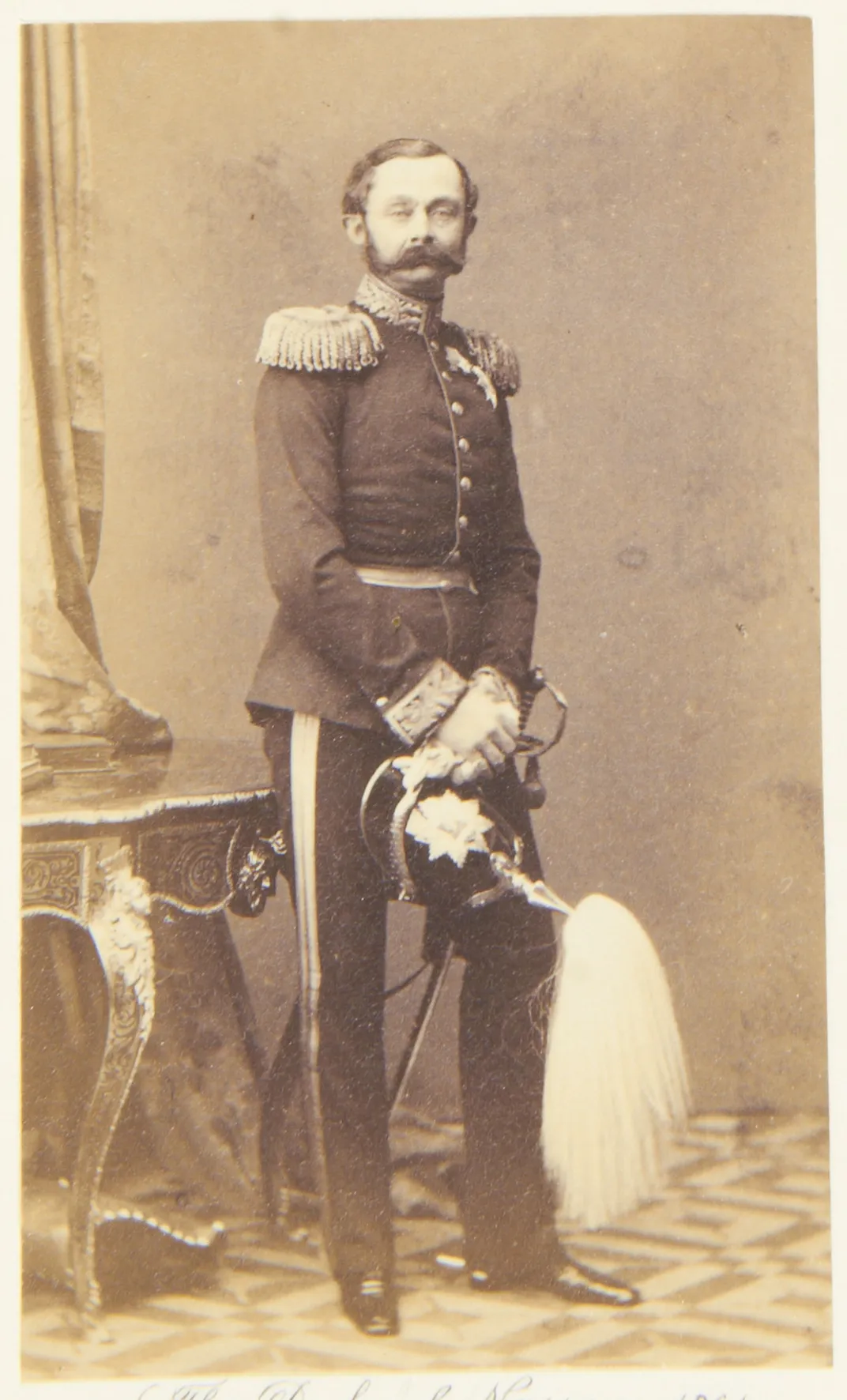
According to lead researcher Pawel Truszynski, this multi-origin cargo was not merely a commercial shipment. It was intended as a physical bridge of goodwill and elite international diplomacy from Adolf, Duke of Nassau, to Tsar Alexander II of Russia, dispatched in the immediate aftermath of the devastating Crimean War. Preserved in near-pristine condition for nearly 170 years, the wreck stands as an untouched monument to post-conflict geopolitical maneuvering and the lavish tastes of European aristocracy.
Detailed Chronology: From Seafloor Anomaly to Archival Breakthrough
The 2024 Discovery
The journey began during a routine technical diving expedition sponsored by Baltictech, an organization renowned for hosting major global diving conferences. Late one evening, as the team prepared to wrap up operations, a strange blip registered on their sonar screen.
"It looked like absolutely nothing special—just a minor anomaly barely visible against the silt," Truszynski recalls. Descending to 190 feet, Truszynski and Cacaj swam into history, encountering an exposed cargo hold untouched by time. Tomasz Stachura, leader of the Baltictech expedition, later noted to the press that while divers frequently encounter isolated bottles on historic wrecks, discovering an entire vessel with its cargo hold completely intact was an unprecedented professional milestone.
Initial Finds and the Nassau Connection
Exercising strict archaeological protocols, the divers left the vast majority of the site undisturbed but brought up a select trio of artifacts for preliminary identification: a clay water jug, a Champagne bottle, and several ceramic dishes.
The first major clue emerged from the clay jug. Emblazoned with a distinct stamp bearing the word "Nassau," the artifact was initially misidentified by the divers as a Caribbean rum jug dating back to the golden age of piracy. However, ceramic expert Matylda Gierszewska-Noszczynska corrected the record, identifying the stamp as the emblem of the German Duchy of Nassau and the contents as high-end Selters mineral water. Specifically, the stamp design dated the bottle to between 1836 and 1866, providing a crucial chronological anchor for the doomed voyage.
Decoding the Champagne and Ceramics
Weeks after the initial dive, Tomasz Stachura’s son noticed a faint, embossed French inscription on the cork of the recovered Champagne bottle. Closer inspection by Truszynski revealed it to be Carte Blanche, a signature offering from the prestigious Reims-based house Louis Roederer, established in 1776. Laboratory testing by the Champagne house subsequently confirmed the liquid inside was an 1857 vintage possessing a remarkably high sugar content, tailored precisely for the sweet-toothed Russian imperial market of the era.
A second breakthrough occurred during a return expedition in 2025, when diver Michaś Iwicki methodically excavated the silt resting directly on the ship’s deck. He unearthed a ceramic plate stamped with a factory mark and the number "56," pointing directly to the Davenport pottery works in England. Records at the Stoke-on-Trent City Archives verified that Davenport manufactured the earthenware in 1856 and exported it immediately, narrowing the ship’s departure window to late 1856 or early 1857.
Supporting Context & Metrics: Geopolitics and Elite Trade
The Shadow of the Crimean War
To fully grasp the significance of the shipwreck, historians must examine the fragile geopolitical landscape of Europe in the mid-1850s. The Crimean War (1853–1856) pitted the Russian Empire against an alliance of the Ottoman Empire, France, Great Britain, and Sardinia. Triggered by disputes over religious holy sites in Palestine and Russian expansionist pressures, the bloody conflict resulted in a humiliating defeat for St. Petersburg.
Following the death of Tsar Nicholas I in March 1855, his son, Alexander II, ascended the throne. Though burdened by his father’s legacy, Alexander inherited an empire starved of Western European luxury goods due to wartime blockades. When the conflict formally ended with the Treaty of Paris in March 1856, and British naval forces lifted their blockade of the Baltic Sea, commercial and diplomatic channels flew wide open.
Nassau’s Calculated Neutrality
During the war, the German Duchy of Nassau—ruled by Duke Adolf—maintained a strict, calculated neutrality that quietly favored St. Petersburg. This diplomatic posture was underpinned by deep dynastic ties: Duke Adolf’s first wife, Grand Duchess Elizabeth Mikhailovna of Russia, was a cousin of Alexander II.
Following the war’s conclusion, Duke Adolf sought to rapidly mend official relations and congratulate the new czar on his ascension. He commissioned a commercial sailing vessel out of the bustling port of Hamburg to execute a dual mission: supply the starved private markets of St. Petersburg with everyday luxuries (hides, wine barrels, and mass-market ceramics) and deliver an extraordinary, official state gift directly to the Romanov court.
Quantifying the Trade and Cargo Metrics
190 Feet: The depth at which the shipwreck rests on the floor of the Baltic Sea.
1836–1866: The precise operational window of the Selters mineral water clay stamp discovered on site.
600,000 Bottles: The approximate volume of annual Champagne exports from Louis Roederer to Russia by 1857, illustrating the immense appetite of the Russian aristocracy.
Three Corners of Europe: The logistical convergence point of the ship’s cargo—English ceramics, French Champagne, and interior German mineral water and state artifacts—all funneling through Hamburg toward St. Petersburg.
Official Statements and Researcher Insights
The collaborative nature of this discovery has brought together maritime divers, ceramic experts, and archival historians.
Pawel Truszynski, summarizing the magnitude of the find in an email to Smithsonian magazine, emphasized its unique historical value:
"This cargo was intended to be a physical bridge of goodwill celebrating the return of peace to Europe, reopening blocked commercial channels and cementing Nassau’s strategic alliance with the Russian Empire. This wreck is an absolute, untouched monument to 19th-century diplomacy and elite international relations in Europe."
Reflecting on the emotional shift from physical exploration to archival detective work, Truszynski added:
"The real adventure begins on land, when these silent objects suddenly come alive. It is a spectacular feeling when a clay jar ceases to be just a piece of debris from the seafloor and becomes a key that unlocks the cabinets of emperors and czars."
Tomasz Stachura, leader of the Baltictech diving team, underscored the rarity of the find to the Washington Post:
"I have been diving for 40 years, and it often happens that there is one bottle or two… but to discover a wreck with so much cargo, it’s a first for me."
Future Outlook: The Search for Definitive Proof
Despite the compelling alignment of archival manifests from Amsterdam and Hamburg with the physical artifacts recovered from the seafloor, Baltictech’s investigation remains actively underway. The team has deliberately withheld the exact historic name of the vessel while they await final permissions from the Swedish government to launch a third, highly specialized expedition.
Once authorization is granted, the upcoming dive plan will divide the team into two distinct operational units:
The Perimeter Unit: This group will scour the seabed surrounding the wreck’s immediate vicinity in search of the ship’s brass bell, which may have been displaced by powerful underwater currents over the past 170 years.
The Cargo Hold Excavation Unit: This team will methodically dig down to the deepest levels of the hull to uncover items listed on the archival manifest that have yet to be retrieved.
At the very top of the wish list are the rare mineral specimens and meteorites commissioned by Duke Adolf. Because these extremely heavy and valuable scientific artifacts were packed into specialized, lead-lined, and reinforced wooden crates tucked securely beneath the protective layers of Selters water and Louis Roederer Champagne, researchers believe they have a high probability of surviving intact.
Recovering these scientific items—alongside the ship’s bell—will provide the 100 percent scientific verification required to unlock London insurance registers from the 1850s. This final step will reveal precise details regarding the vessel’s sinking, its underwriting, and whether an insurance payout was ever claimed for the loss of one of the 19th century’s most diplomatically sensitive maritime cargos. Until then, the silent sentinel resting off the coast of Sweden continues to guard its imperial secrets beneath the Baltic waves.

/https://tf-cmsv2-smithsonianmag-media.s3.amazonaws.com/filer_public/4f/2b/4f2b2208-f188-4e62-9e79-b57bf12e7c13/baltictech1.png)
/https://tf-cmsv2-smithsonianmag-media.s3.amazonaws.com/accounts/headshot/meilan_headshot2.png)
:focal(750x500:751x501)/https://tf-cmsv2-smithsonianmag-media.s3.amazonaws.com/filer_public/4f/2b/4f2b2208-f188-4e62-9e79-b57bf12e7c13/baltictech1.png)
/https://tf-cmsv2-smithsonianmag-media.s3.amazonaws.com/filer_public/39/2d/392d11b4-cd72-4f33-8589-a4e8d59109e7/image13.jpeg)
/https://tf-cmsv2-smithsonianmag-media.s3.amazonaws.com/filer_public/63/f7/63f7b69a-0de4-48be-8e30-50ad9e00a710/img_6584.jpeg)
/https://tf-cmsv2-smithsonianmag-media.s3.amazonaws.com/filer_public/a2/19/a2190fba-012b-4386-8f97-850ee50739b8/image3.jpeg)
/https://tf-cmsv2-smithsonianmag-media.s3.amazonaws.com/filer_public/2e/0c/2e0c9301-7985-4ec0-a628-101732cc728c/zar_alexander_ii.jpg)




Comments
Facebook App ID not configured. Please add it in the Customizer.