
Executive Overview
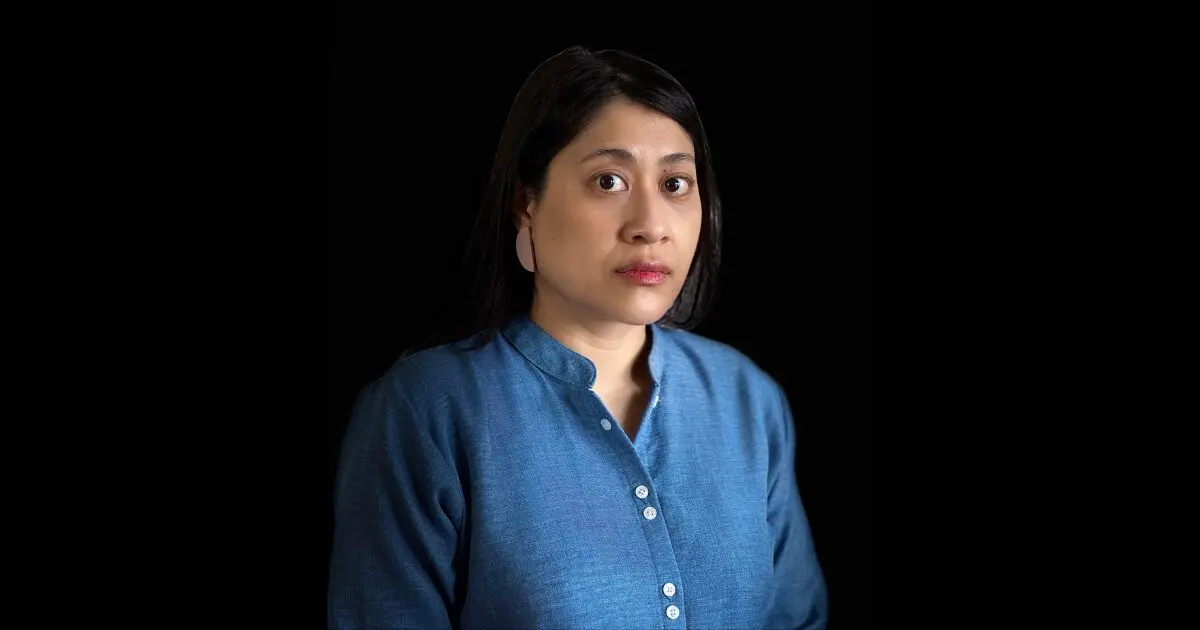
To understand Jakarta is to unravel a complex, high-stakes game of urban chess where the rules shift beneath one’s feet. For writer, artist, and scholar Khairani Barokka, mastering this sprawling metropolis is an ongoing, visceral enterprise. In her estimation, the Indonesian capital is a pulsating mosaic of hypercapitalist contradictions, unmappable jalan tikus (rat lanes), sonic tidal waves, and an unyielding undercurrent of human resilience.
This comprehensive report examines Jakarta not merely as a geographic coordinate, but as a living, breathing archive of colonial trauma, political suppression, vibrant counter-cultural resistance, and sensory overload. Drawing on Barokka’s deep-rooted perspectives as a Minang artist raised during the authoritarian twilight of the Soeharto regime, this feature investigates the city’s hidden infrastructures, its marginalized communities—particularly D/deaf and disabled populations—its sacred culinary traditions, and the looming threat of commercialization hanging over its historic cultural sanctuaries. Through an analysis of urban mobility, literary landscapes, and cross-archipelagic identities, this article maps the soul of a city that constantly demands to be heard.
Detailed Chronology: Tracing Jakarta’s Historical Trauma and Artistic Evolution
To contextualize the modern Indonesian capital, one must trace a historical trajectory defined by political upheaval, structural violence, and the enduring survival of its artistic communities.
Read Also
The Shadow of 1965–1966
The foundational psychological architecture of modern Jakarta is deeply tied to the aftermath of the 1965–1966 anti-communist genocide. Raised in the epicenter of General Soeharto’s Western-backed, capitalist military dictatorship, Barokka recalls an era where elders were forced to hold their breath, practicing freedom exclusively through subterfuge.
Generations were mandated by systemic state violence to deny the atrocities of the mid-1960s—a collective trauma passed down silently through families. Despite sanitized accounts frequently propagated by external observers and Western historical texts, resistance in Jakarta was never extinguished. It simply migrated underground, finding sanctuary in the studios of artists, poets, and dissidents willing to risk everything to document the unnameable.
The Evolution of Taman Ismail Marzuki (TIM)
For decades, the Taman Ismail Marzuki (TIM) cultural complex has served as the heart of Jakarta’s artistic memory. Established as a crucible for theatrical performances, film screenings, art exhibitions, and late-night intellectual discourse, TIM represents the intersection of the city’s damp earth and celestial ambitions. Housing both the Jakarta Arts Institute (IKJ) and the Jakarta Planetarium, the grounds fostered a unique animus where creativity and environment coalesced.
However, recent years have marked a critical inflection point for the cultural park. Resistance efforts led by artists and activists have mobilized against controversial plans for "commercial revitalization" within the complex. This bureaucratic push for modernization threatens to bulldoze historic memory in favor of corporate optimization, placing the future of Jakarta’s premier cultural hub under severe jeopardy.
A Fourteen-Year Artistic Archival Project
The city’s tumultuous relationship with history, memory, and colonial fallout is epitomized in Barokka’s multi-year creative endeavor, culminating in her book Annah, Infinite. Developed over fourteen years, the project draws deep inspiration from her late grandmother’s collection of black-and-white photographs documenting Javanese girlhood.
By juxtaposing these intimate portraits of young girls against the vile colonial exoticization found in Paul Gauguin’s painting Annah la Javanaise, the work explores how nervous systems process historical trauma, state violence, and familial memory. The chapter "Nightmares of 1965" serves as a direct reckoning with the psychological residue of systemic oppression, articulating what the human body can no longer quietly contain.
Supporting Context & Metrics: The Anatomy of the Metropolis
Jakarta’s physical and social layout defies conventional urban planning metrics. It is a mega-urban organism defined by sensory overload, spatial segregation, and unseen networks of mutual aid.
The Sensory and Spatial Landscape
Jakarta operates on a sensory frequency that is entirely its own. Hypercapitalist glass monoliths tower directly over informal settlements connected by an intricate labyrinth of jalan tikus (rat lanes). The acoustic landscape is a perpetual dialogue between the spiritual and the profane: the call to prayer (azan) echoing alongside roaring traffic, street vendors broadcasting their wares into uneven corridors, and the rhythmic pulses of dangdut music blending with hundreds of archipelagic languages and philosophies.
The Invisible Infrastructure of Disability Justice
Abled society routinely fails to register the profound presence of D/deaf and disabled individuals throughout the metropolis. Despite being ubiquitous across the urban fabric—including those bearing invisible disabilities—disabled populations remain chronically underserved by municipal infrastructure and societal attitudes.
Yet, underneath the city’s bureaucratic indifference lies an unacknowledged indigenous disability justice culture. This subterranean network encourages marginalized populations to endure grotesque discrimination while practicing radical mutual aid and community care.
The Kinetics of Transit: Moving Through the Megacity
For the average Jakartan, a significant portion of life is spent in transit. Whether navigating the city via trains, buses, bajaj, bemo, motorcycle taxis (ojek), or historic cycle rickshaws (becak)—which were banned from many areas in decades past—mobility is the lifeblood of the urban experience.
The enclosed, moving spaces of public transit foster unique socio-spatial dynamics. Extended hours spent navigating traffic jams and transit lines forge deep human connections, spark friction, cultivate humor, and yield moments of collective solidarity. These mobile enclaves serve as continuous incubators of nostalgia, allowing residents to witness the city’s relentless physical metamorphosis in real time.
Official Statements and Cultural Testimonies
The complexities of Jakarta cannot be fully understood without listening to the voices shaping its contemporary intellectual and literary identity. The following curated testimonies highlight the city’s emotional and philosophical undercurrents.
On the Mood and Passion of Jakarta
"Hypercapitalist monstrosities amidst unmappable jalan tikus (‘rat lanes’); uncapturable masses; brawling, unresting, sonic pulse-scapes; sleaze and azan; laughter and fireworks; unending persistence of mothers of the disappeared; aches of resilience, in a city of quiet blows… To me it is a city of messy emotions, difficult memories, fiery activism, of loving what may destroy us despite ourselves, and tricking it into laughing with us."
— Khairani Barokka
On Culinary Cartographies and Padang Restaurants
For the Minang diaspora, maintaining a connection to ancestral roots within Jakarta involves sacred culinary rituals. Traditional Padang restaurants serve as living museums of cultural preservation:
"It is only at a Padang restaurant that you see, under the gaze of illustrated icons in the shape of rumah gadang, the artfully stacked formations of plates holding each other up in the glass window, all the shared plates laid out in similar fashion on your table at the start of your meal, by service staff whose movements are shaped in some way by the sanctity of tari piring, and the practice of paying for only exactly how much is eaten from these shared receptacles."
— Khairani Barokka
Essential Literary Voices of the Capital
To grasp the literary topography of Jakarta, Barokka emphasizes the necessity of reading local and migrant voices that capture the city’s eccentricities, humor, and social friction. Key literary figures recommended for deep engagement include:
- Ziggy Zezsyazeoviennazabrizkie
- Intan Paramaditha
- Cyntha Hariadi
- Hanna Fransisca (noted for capturing the acute comedic timing and migrant perspectives essential to understanding the city’s social fabric)
Future Outlook: The Indelible Sprawl and the Fight for Cultural Preservation
As Jakarta looks toward the future, it faces existential questions regarding urban planning, environmental sustainability, and cultural preservation.
The Jabodetabek Tentacle: Sprawl and the Blurred Boundaries of "Outside"
The relentless expansion of the Jabodetabek metropolitan area (Jakarta-Bogor-Depok-Tangerang-Bekasi) continues to function as a tentacled, consuming sprawl. Yet, geographical definitions of "inside" and "outside" remain porous. With over 700 cultures and languages thriving across the Indonesian archipelago—and hundreds of them actively operating within city limits—Jakarta cannot be neatly cordoned off. Native Betawi residents carry their Jakarta wherever they migrate, rendering the boundary between the capital and the wider archipelago perpetually fluid.
The Battle for Cultural Sanctuaries
The primary challenge facing Jakarta’s intellectual class is the defense of its remaining public and cultural commons. The ongoing struggle to protect spaces like Taman Ismail Marzuki from destructive commercial revitalization projects is indicative of a broader war over the soul of the city. If developers succeed in sanitizing these historical incubators, Jakarta risks erasing the physical spaces where collective memory, artistic dissent, and radical community building take root.
Ultimately, Jakarta remains a city of profound paradoxes. It breaks hearts just as quickly as it stitches them back together through sheer human stubbornness. As Barokka’s life and work demonstrate, to inhabit Jakarta is to embrace a messy, fiery, and unyielding existence—one where survival itself is an act of artistic creation.





Comments
Facebook App ID not configured. Please add it in the Customizer.