The tragic death of a young woman in Rawalpindi has ignited a fierce nationwide conversation regarding domestic abuse, systemic failures, and the safety of women within marital homes in Pakistan. Hina Javed, who married earlier in 2025, was found dead under deeply suspicious circumstances on August 20, hanging from a wire noose attached to a bathroom shower at her in-laws’ residence. What was initially handled with administrative ambiguity quickly morphed into a high-profile murder investigation following a formal First Information Report (FIR) lodged by the victim’s brother, Fahad.
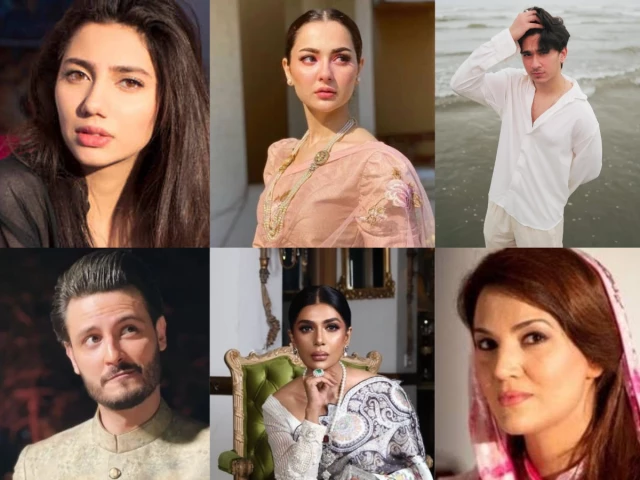
As the legal wheels slowly turn—resulting in the remand of the victim’s husband and a domestic worker into police custody—the vacuum left by systemic delays has been aggressively filled by Pakistan’s civil society and prominent entertainment figures. A-list celebrities, including Mahira Khan, Hania Aamir, Osman Khalid Butt, Iffat Omar, and Samar Jafri, have leveraged their massive digital platforms to demand a transparent, uncompromised, and expedited investigation.
This high-profile advocacy has transcended mere celebrity slacktivism; it has morphed into a powerful socio-political pressure movement. Public figures are challenging institutional apathy, questioning the cultural normalization of domestic violence, and directly calling out political leadership, notably Punjab Chief Minister Maryam Nawaz Sharif, to use executive authority to safeguard female citizens. This comprehensive report explores the timeline of the tragedy, the social media-driven advocacy campaign, the systemic context of violence against women in Pakistan, and the psychological and institutional challenges that plague the pursuit of justice.
Detailed Chronology: The Tragedy of Hina Javed and the Legal Response
To understand the current public uproar, one must trace the grim timeline of events that culminated in Hina Javed’s death and the subsequent legal maneuvers.
The Marriage and Relocation (Early 2025)
Hina Javed entered a new chapter of her life earlier this year, marrying Asghar Imam and moving into her marital home in Rawalpindi. By all accounts from her grieving family, what was supposed to be a partnership of mutual respect quickly degenerated into a nightmare of isolation, psychological torment, and physical abuse.
According to harrowing claims subsequently amplified by advocacy groups and the victim’s family, Hina was systematically cut off from her support systems. She was allegedly subjected to severe physical beatings, restricted to isolated quarters within the house, and denied basic autonomy. These preliminary allegations paint a harrowing picture of escalating domestic hostility—a trajectory terrifyingly familiar to domestic abuse experts across South Asia.
The Discovery of the Body (August 20, 2025)
On August 20, the Rawalpindi household became the center of a grim police inquiry. Hina was found dead inside the home, hanging from a wire noose attached to a bathroom shower. While initial reports and standard police protocols often lean toward labeling such tragic discoveries as suicides, the victim’s family immediately rejected this narrative, alleging foul play of the highest order.
The FIR and Initial Arrests
Recognizing the deep contradictions and suspicious positioning surrounding the crime scene, Hina’s brother, Fahad, formally registered a murder case against three primary individuals:
Asghar Imam (The Husband)
The Victim’s Father-in-Law
A Domestic Worker
Following the registration of the FIR, local law enforcement acted swiftly under public pressure, arresting the husband and the domestic worker. A local court subsequently remanded both suspects into police custody for thorough interrogation. However, legal experts emphasize that these arrests are merely the preliminary steps of a long, arduous judicial marathon. As of now, the formal allegations have not been proven in a court of law, and the defense maintains the right to due process.
Supporting Context & Metrics: The Shadow of Domestic Violence in Pakistan
Hina Javed’s case is not an isolated incident; rather, it is a glaring symptom of a deeply entrenched systemic crisis plaguing Pakistani society. To contextualize the public outrage, one must examine the broader metrics and sociological factors driving violence against women in the country.
The Hidden Epidemic
According to data compiled by various human rights organizations, including the Human Rights Commission of Pakistan (HRCP) and the Sustainable Social Development Organization (SSDO), thousands of cases of violence against women—ranging from domestic physical abuse to honor killings and suspicious deaths within marital homes—are reported annually. Crucially, experts note that these reported figures represent merely the tip of the iceberg. A staggering percentage of domestic abuse cases go unreported due to:
Social Stigma: The intense cultural pressure on women to preserve "family honor" and tolerate marital discord silently.
Economic Dependency: A lack of financial independence that prevents women from escaping abusive environments.
Institutional Deficits: Distrust in the police and judicial machinery, where victims often face victim-blaming, bureaucratic red tape, and sluggish prosecution rates.
The Marital Home as a Hazard Zone
Sociological studies consistently indicate that a significant proportion of violent crimes against married women occur behind the closed doors of in-laws’ residences. The joint-family system, while culturally valued for social support, can frequently transform into a pressure cooker of toxic power dynamics. When a bride enters a hostile domestic environment, the lack of immediate physical exits or protective mediation often leads to fatal consequences.
The immediate shift of narrative in Hina’s case—from a suspected suicide to an alleged staged hanging—highlights a recurring pattern where violent crimes within the four walls of a home are disguised as self-harm to evade criminal liability.
Official Statements and Celebrity Activism: Breaking the Silence
The swift, unified mobilization of Pakistan’s entertainment fraternity has fundamentally transformed the Hina Javed case from a local police precinct file into a national lightning rod. Recognizing their influence, prominent artists stepped past the boundaries of traditional PR-friendly silence to demand absolute transparency.
Mahira Khan: Questioning Patriarchal Norms
Superstar Mahira Khan took to Instagram, channeling the collective grief and fury of millions. Interacting directly via a dedicated awareness page, Khan did not mince words regarding the perpetrators or the broader societal conditioning of men.
"What kind of world is this? What kind of so-called men are we raising?" Khan wrote in a searing commentary.
Beyond her critique of toxic masculinity, Khan reached out directly to the grieving family with an offer of unwavering personal and public support:
"With you in any which way you need. Cannot imagine your pain and loss."
Hania Aamir and Samar Jafri: Amplifying Family Claims
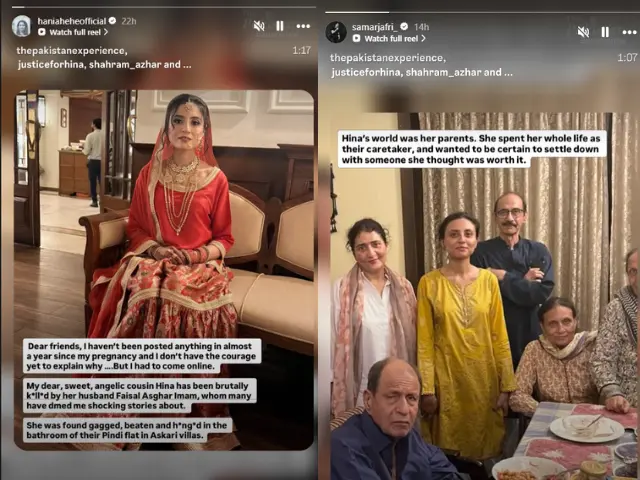
Popular young icons Hania Aamir and Samar Jafri utilized their expansive Instagram story networks to amplify the "Justice for Hina" movement. By sharing detailed breakdowns of the abuse Hina reportedly endured—including isolation, physical battering, and confinement—they ensured that algorithms could not bury the story. Their digital reach exposed hundreds of thousands of young fans to the grim realities of domestic abuse, shifting the cultural conversation away from superficial celebrity gossip toward substantive social accountability.
Iffat Omar: Direct Appeal to Executive Power
Veteran actor and activist Iffat Omar chose a direct, political route, addressing her message straight to Punjab Chief Minister Maryam Nawaz Sharif. Omar’s public statement served as both an emotional plea and an assertive political demand:
"These women trusted the men meant to protect them, and it cost them their lives," Omar posted. Addressing the Chief Minister, she added, "You have the power that most of us calling for justice do not — use it, not as a politician, but as a woman who understands exactly what these women’s silence used to sound like."
This direct call to executive leadership underscores a growing frustration among activists: the belief that systemic change requires direct, top-down political will to bypass institutional inertia.
Osman Khalid Butt: Demanding Systemic Accountability
Known for his articulate and fearless social commentary, actor Osman Khalid Butt offered a sobering analysis of the vicious cycle of outrage and judicial fatigue in Pakistan. While acknowledging the arrests made thus far, Butt warned against premature complacency.
"The details of Hina Javed’s murder are horrifying," Butt stated. "There has been outrage, arrests have been made, everyone is unified in the call for justice. But we’ve been here before."
Butt’s primary concern centers on the protracted nature of Pakistan’s judicial system, where families of victims are routinely forced to endure years of exhausting court battles, often culminating in compromised settlements or dwindling public attention. He stressed that the true test of this case will not be the initial arrests, but whether a swift, transparent, and exemplary verdict is delivered.
Future Outlook: The Road Ahead for Justice
As the legal proceedings against Asghar Imam and his co-accused move forward, the Hina Javed case stands at a critical juncture. The convergence of high-profile celebrity advocacy, grassroots social media activism, and intense media scrutiny has created an environment where sweeping this tragedy under the rug is nearly impossible. However, observers and legal experts point out several key factors that will dictate the future trajectory of this case and its broader impact on Pakistani society:
Forensic Integrity: The absolute reliability of post-mortem reports, forensic pathology, and crime scene reconstruction will be paramount. Given the initial ambiguity of a hanging inside a domestic bathroom, independent medical boards and transparent forensic evaluations are essential to determine whether the death was homicide or coerced suicide.
Protection of Witnesses and Family: The victim’s family, particularly her brother Fahad, must be protected from intimidation, coercion, or pressure to reach out-of-court settlements—a common pressure point in high-society domestic violence cases in Pakistan.
Judicial Expedition: To fulfill Osman Khalid Butt’s warning against protracted legal limbo, the trial must be conducted expeditiously. A swift, transparent verdict can serve as a powerful deterrent, signaling that the state and judiciary will no longer tolerate the domestic murder of women cloaked as accidents or suicides.
Institutional Reform: Beyond the courtroom, this case must force a structural evaluation of how local police handle domestic abuse complaints before they turn fatal. Emergency hotlines, rapid-response domestic violence units, and gender-sensitive policing remain critically underfunded and undertrained across much of Punjab.
Conclusion
The tragic death of Hina Javed has laid bare the perilous reality countless women face within the domestic sphere. Yet, the unprecedented solidarity shown by Pakistan’s entertainment community, combined with the unyielding resolve of her family, has transformed private grief into a public demand for systemic reckoning. As the investigation unfolds, the nation watches with bated breath—not merely for the verdict of a single courtroom in Rawalpindi, but for an unmistakable signal that the lives of Pakistani women possess sacred, non-negotiable value.





Comments
Facebook App ID not configured. Please add it in the Customizer.