
Executive Overview
In the contemporary literary landscape, authors frequently grapple with a persistent narrative paradox: individual scenes sparkle with wit, characters possess distinct voices, and prose reads smoothly, yet the completed manuscript fails to resonate. According to renowned writing instructor, author, and theorist K.M. Weiland, the root cause of this structural failure lies in the artificial compartmentalization of story elements.
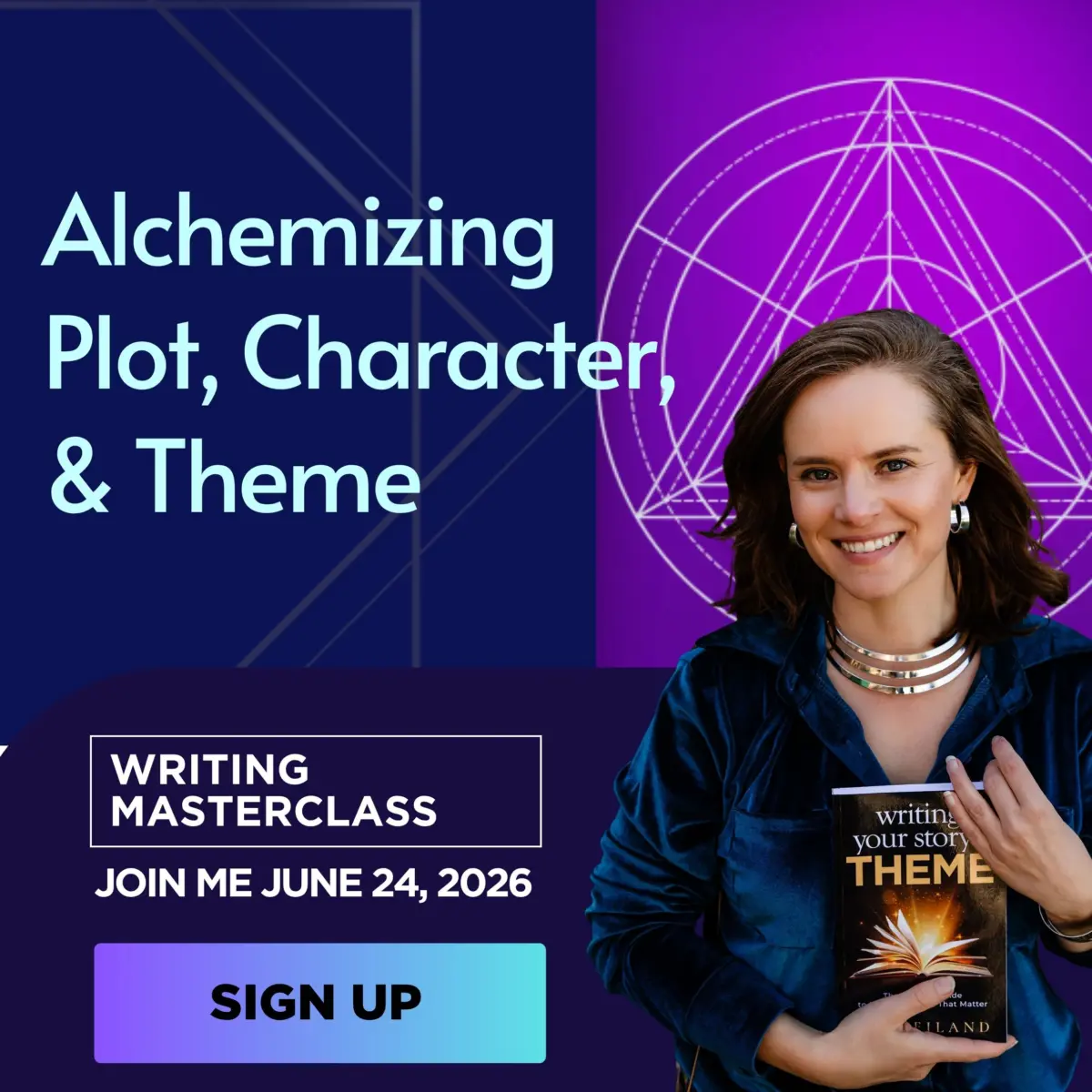
To bridge this craft gap, Weiland has officially made her acclaimed masterclass, Alchemizing Plot, Character, and Theme, available as an independent study through her specialized Story School. Originally premiered during the WorldShift Speculative Fiction Writers’ Summit, this intensive curriculum treats plot, character development, and thematic resonance not as isolated writing mechanics, but as expressions of a single, unified narrative organism.
Set for a live interactive chat and Q&A session on June 24, 2026, at 1:00 PM EDT, this re-release arrives at a critical juncture for both speculative and literary fiction writers. As readers increasingly crave mythic, psychologically deep narratives that mirror internal transformation with external stakes, Weiland’s masterclass offers an actionable blueprint for transforming fragmented drafts into cohesive, enduring works of art.
Read Also
Detailed Chronology & Origins of the Masterclass
The conceptual journey leading to the independent launch of Alchemizing Plot, Character, and Theme reflects an ongoing evolution in online writing education. Over the past several years, Weiland’s platform, Helping Writers Become Authors, has increasingly focused on the intersection of mythic storytelling, depth psychology, and structural mechanics.
1. The Genesis at WorldShift
The curriculum was initially engineered for the WorldShift Speculative Fiction Writers’ Summit, an event renowned for pushing speculative authors beyond standard genre conventions and into deeper, archetype-driven territories. Weiland designed the session to address a universal vulnerability among writers: the tendency to map out external plots independent of internal arcs, leaving themes as tacked-on morals rather than organic discoveries.
2. The Spring 2026 Curriculum Expansion
Following the summit, Weiland’s subsequent blog posts, podcast episodes, and spring Story School sessions revealed an overwhelming demand among writers for instruction that moves past rigid formulaic plotting. Participants consistently expressed a desire to understand the psychological dimensions of fiction.
3. Transition to Independent Study
Responding to inquiries from writers who missed the initial digital summit, Weiland structured the class for permanent inclusion within the Story School catalog. This transition ensures that authors worldwide can access the high-level craft session on-demand, culminating in a live interactive component scheduled for late June 2026. This release also establishes a structural bridge to Weiland’s planned autumn 2026 masterclass series.
Supporting Context & Metrics: The Mechanics of Narrative Cohesion
To understand the value proposition of Weiland’s masterclass, one must examine the diagnostic anatomy of struggling fiction versus enduring literature.
The "Sacred Triangle" of Storytelling
In her foundational teaching, Weiland categorizes the interdependence of plot, character, and theme as the "sacred triangle" of fiction. When these three elements operate in synergy:
- The External Plot functions as the crucible, placing relentless pressure on the protagonist.
- The Character Arc details the protagonist’s psychological evolution (or tragic failure to evolve) in response to that pressure.
- The Theme emerges organically not as a lecture from the author, but as the inevitable philosophical truth proven by the protagonist’s ultimate choices.
Conversely, empirical feedback from critique groups and editorial evaluations indicates that structural dissonance remains the primary culprit behind rejection slips and reader disengagement. Common symptoms include:

- The Divergent Path: The plot demands high-octane action, while the character arc requires quiet introspection, causing the narrative momentum to fracture.
- The Intellectualized Theme: The writer attempts to embed a political or moral message that contradicts the actual actions and consequences experienced by the characters.
- Episodic Drift: Events occur sequentially without causal or thematic linkage, resulting in a narrative that feels random rather than inevitable.
The Personal Paradigm: The Lord of the Rings
Weiland frequently anchors her pedagogical philosophy in profound personal reading experiences. Citing J.R.R. Tolkien’s The Lord of the Rings—encountered during a period of intense personal trial—Weiland notes that the trilogy’s enduring cultural footprint is a direct byproduct of absolute structural unity.
Every level of Tolkien’s mythos—from the sprawling geopolitical conflict of Middle-earth to Frodo Baggins’ psychological descent and resilience—participates in the same thematic movement. The story descends unflinchingly into darkness because its underlying architecture provides an authentic, structurally sound path back to the light. This level of total integration is precisely what Weiland’s masterclass teaches writers to replicate in their own manuscripts.
Official Statements & Curriculum Breakdown
In announcing the independent availability of the class, Weiland emphasized the practical, craft-oriented nature of the curriculum, ensuring writers that deep philosophical concepts are directly translated into actionable editing and outlining techniques.
Core Learning Objectives
Enrollees in Alchemizing Plot, Character, and Theme will explore several critical modules designed to overhaul their drafting methodologies:
- Unifying Narrative Movement: Dissecting how external actions and internal growth are simply two sides of the same psychological coin.
- Archetypal Resonance: Leveraging universal human patterns to give contemporary or speculative stories a timeless, mythic quality.
- Strengthening Connective Tissue: Identifying and repairing narrative disconnects where plot and theme drift apart.
- Organic Thematic Development: Moving away from heavy-handed messaging and allowing the climax of the story to naturally prove its central thesis.
"When all of those pieces begin working together, audiences feel it," Weiland notes in her instructional materials. "They may not consciously identify why the story feels powerful, but they experience the cohesion instinctively. Stories stop feeling like collections of separate parts and start feeling like a cohesive and resonant whole."
Future Outlook & Continuing Education
The re-release of Alchemizing Plot, Character, and Theme is part of a broader, strategic expansion of Weiland’s Story School ecosystem. As writers increasingly reject cookie-cutter formulas in favor of deep structural integrity, educational offerings that blend psychology with traditional craft are seeing a massive surge in popularity.
Curated Learning Bundles
For writers looking to construct an advanced curriculum, the masterclass pairs naturally with Weiland’s existing digital offerings, notably:
- Ego-Driven Character Arcs vs. Soul-Driven Character Arcs
- The Villain as Aspect of the Hero’s Psyche
These complementary sessions are currently available as a bundled package featuring a 15% discount through the official platform store.
Looking Forward to Fall 2026
With the live Q&A session locked in for June 24, 2026, participants will have direct access to Weiland to troubleshoot their specific manuscript roadblocks. Looking further ahead, Weiland has confirmed that an entirely new Story School series is slated for launch in the autumn of 2026.
For authors striving to elevate their work from competent to unforgettable, mastering the alchemy of plot, character, and theme offers the definitive path forward. Registration for the masterclass is currently open via the official Helping Writers Become Authors platform.


Comments
Facebook App ID not configured. Please add it in the Customizer.