The spring and summer of 2026 mark a transformative epoch in speculative fiction. Publishers are increasingly steering away from traditional genre boundaries to embrace hybrid narratives that interrogate the core of human identity, technology, and societal structures. An analytical survey of upcoming releases from industry titans such as Tor, Tordotcom, Orbit, and DAW, alongside vanguard independent presses like the University of New Orleans Press and Space Cowboy, reveals a collective literary fixation on the concepts of coexistence, linguistic determinism, and existential transition.
Rather than relying on the bleak, nihilistic tropes that dominated the early 2020s, the upcoming class of 2026 exhibits a distinct pivot toward what critics are calling "hopeful precarity" and "cozy fatalism." Whether examining the quiet countdown to a cosmic apocalypse, navigating the multi-dimensional oddities of small-town America, or exploring the post-human ecosystems of abandoned botanical gardens, these works prioritize the relational dynamics of their characters over mere spectacle.
This investigative report dissects eleven pivotal releases scheduled between March and June 2026, examining their thematic architectures, critical receptions, and broader implications for the trajectory of contemporary speculative literature.
Detailed Chronology of Releases (March – June 2026)
The upcoming publishing season unfolds as a carefully orchestrated rollout of high-concept novellas, sprawling novels, and critical non-fiction. Below is an exhaustive chronological breakdown of the key texts set to define the speculative discourse in mid-2026.
2026 Release Timeline:
┌────────────────────────────────────────────────────────┐
│ MARCH                                                  │
│ ├─ Tomorrow Brings Joy: Elysium (UNO Press)            │
│ └─ Wolf Worm (Nightfire)                               │
├────────────────────────────────────────────────────────┤
│ APRIL                                                  │
│ ├─ The Language of Liars (Tordotcom)                   │
│ └─ What We Are Seeking (Tor)                           │
├────────────────────────────────────────────────────────┤
│ MAY                                                    │
│ ├─ The Redemption Center Is Closed on Sundays (Tor)    │
│ ├─ Radiant Star (Orbit US)                             │
│ ├─ Ode to the Half-Broken (DAW)                        │
│ └─ A Long and Speaking Silence (Tordotcom)             │
├────────────────────────────────────────────────────────┤
│ JUNE / MID-2026                                        │
│ ├─ Human Voices, Alien Conversations (Space Cowboy)    │
│ ├─ We Burned So Bright (Tor)                           │
│ └─ Dead but Dreaming of Electric Sheep (Harper/Morrow) │
└────────────────────────────────────────────────────────┘
March 2026: Android Utopias and Historical Entomological Dread
Tomorrow Brings Joy: Elysium by Mahbod & Mahyar A. Amouzegar
Publisher: University of New Orleans Press (3/26)
Genre/Format: Near-future SF Novel
The editorial season opens with a collaborative effort from Mahbod and Mahyar A. Amouzegar. Published by the University of New Orleans Press, Tomorrow Brings Joy: Elysium is a cerebral, near-future science fiction novel that challenges the conventions of utopian literature. The narrative is set in Elysium, an ostensibly perfect society where biological humans and advanced androids live in harmonious equilibrium.
The plot thickens when the protagonist, Dolores, alongside her android companion KR, discovers the "Walled City"—a hidden, parallel social experiment running concurrently with Elysium. As Dolores and KR peel back the layers of this cloistered enclave, they uncover unsettling, systemic truths regarding the genesis of their own utopian home. The Amouzegars construct a poignant metaphor for the hidden human costs of technological progress, questioning whether any utopia can exist without an exploited underclass.
Wolf Worm by T. Kingfisher
Publisher: Nightfire (3/26)
Genre/Format: Southern Gothic Horror Novel
Concurrently, Tor Publishing Group’s horror imprint, Nightfire, delivers Wolf Worm by Hugo and Nebula Award-winner T. Kingfisher. Set against the humid, decaying backdrop of 1899 North Carolina, this Southern Gothic horror novel follows Sonia Wilson, a professional scientific illustrator. Desperate for employment and academic validation, Sonia accepts a commission to catalogue and illustrate a reclusive scientist’s private collection of exotic insects.
Kingfisher utilizes the historical setting to examine the intersections of Victorian scientific hubris, gender constraints, and ecological horror. The narrative begins as a quiet, atmospheric study of rural isolation before spiraling into visceral biological dread.
April 2026: Linguistic Espionage and Xenobiological Metamorphosis
The Language of Liars by S.L. Huang
Publisher: Tordotcom (4/26)
Genre/Format: SF Novella
April shifts the focus toward the stars with S.L. Huang’s highly anticipated novella, The Language of Liars. Huang, known for their rigorous approach to hard sci-fi concepts, delivers an intricate story centering on Reo, a member of a highly empathetic alien species. Reo is tasked with a monumental intelligence mission: training in advanced linguistics to "body jump" into the consciousness of a "Star Eater."
The Star Eaters are a mysterious, dying species of immense interstellar importance; they are the only entities capable of mining the catalyst required for faster-than-light (FTL) travel. Reo’s mission to discover the cause of their extinction quickly devolves into a dark conspiracy. Huang weaves together elements of a classic spy thriller with deep questions about linguistic relativity and colonial exploitation.
Narrative Core: The Language of Liars
┌────────────────────────┐      ┌────────────────────────┐
│      Reo (Empath)      │ ───> │     Star Eater Mind    │
└────────────────────────┘      └────────────────────────┘
            │                               │
            ▼                               ▼
  Linguistic Immersion            Secrets of FTL Catalyst
What We Are Seeking by Cameron Reed
Publisher: Tor (4/26)
Genre/Format: SF Mystery/Adventure Novel
Expanding on the theme of ecological strangeness is Cameron Reed’s What We Are Seeking. The novel follows John Maraintha, a man abandoned on the hostile, protean planet of Scythia. On Scythia, the biological rules of Earth do not apply: plants give birth to insectoid swarms, predatory trees actively hunt, and engineered monstrosities roam the wilderness alongside native alien species.
In this environment, Reed introduces a fascinating cultural clash: the planet’s human inhabitants practice a bizarre, highly ritualized, and borderline barbaric custom known simply as "marriage." The book serves as an adventurous, queer-coded exploration of transformation, identity, and the categories we use to define human relationships.
May 2026: Multi-Dimensional Oddities, Imperial Saints, and Pastoral Post-Apocalypses
The Redemption Center Is Closed on Sundays by Andrea Hairston
Publisher: Tor (5/26)
Genre/Format: Multi-Dimensional SF Mystery Novel
May 2026 represents the most crowded and diverse month of the spring catalog. Leading the charge is Andrea Hairston’s The Redemption Center Is Closed on Sundays. Hairston crafts a vibrant, multi-dimensional mystery set in a small, eccentric town. At the center of the community sits a bizarre structure where linear time breaks down and parallel dimensions collide.
When a beloved local celebrity is found murdered, the town is thrown into chaos. The catch? The only witness who knows the true identity of the killer is Oona, an inter-dimensional, traveling St. Berdoodle dog. Hairston’s narrative balances this absurd, playful premise with a deeply felt exploration of community, marginalization, and neighborly solidarity.
Radiant Star by Ann Leckie
Publisher: Orbit US (5/26)
Genre/Format: Standalone SF Novel
In the same month, space opera royalty Ann Leckie returns to her legendary Imperial Radch universe with Radiant Star. While set in the same continuity as her Hugo-winning Ancillary Justice, this novel functions as a standalone entry. The plot centers on the "Temporal Location of the Radiant Star," an ancient, mummified religious site that the modern Radch administration views as an outdated historical curiosity.
In an act of political theater, the Radch authorities permit one final pilgrim to join the mummified dead at the site to become a "living saint." Naturally, this action triggers a cascade of geopolitical and theological complications. Leckie uses this framework to examine class, empire, and the fundamental human search for belonging.
Thematic Conflict in Leckie's "Radiant Star"
┌────────────────────────────────┐     ┌────────────────────────────────┐
│      Imperial Radch Bureau     │ <─> │      Ancient Religious Site    │
│  (Modern, Secular, Hegemonic)  │     │   (The Temporal Radiant Star)  │
└────────────────────────────────┘     └────────────────────────────────┘
                │                                      │
                └───────────────> [ Living Saint ] <───┘
                                 (Catalyst for Crisis)
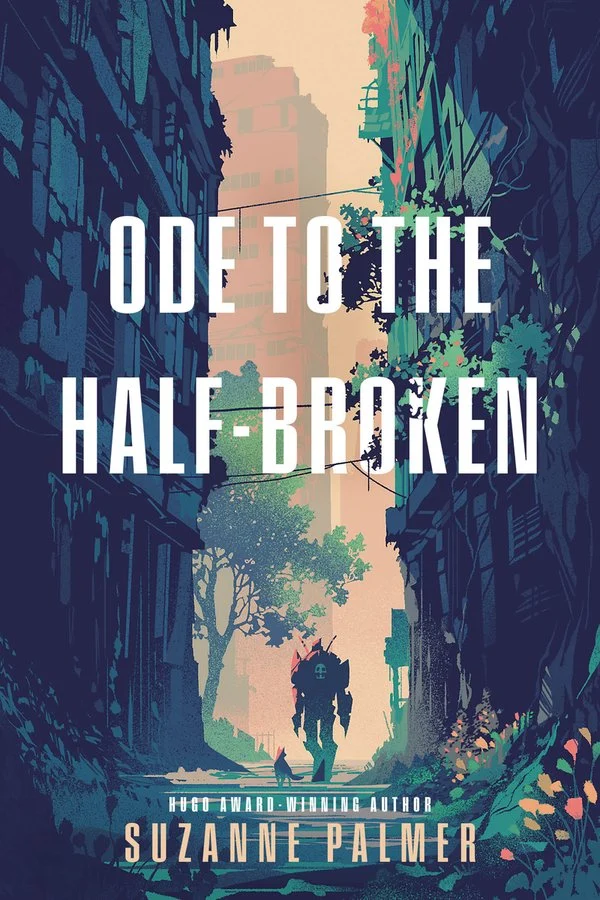
Ode to the Half-Broken by Suzanne Palmer
Publisher: DAW (5/26)
Genre/Format: Hopeful Post-Apocalyptic SF Novel
DAW Books contributes to the May lineup with Suzanne Palmer’s Ode to the Half-Broken, a novel that injects a dose of optimism into the post-apocalyptic subgenre. The story follows an aging, decommissioned assassin robot who has spent decades hiding in the overgrown ruins of the New York Botanical Gardens.
The robot’s peaceful isolation is shattered when his leg is stolen, forcing him to venture out into the wider world. Accompanied by a cynical human mechanic and a talkative cyborg dog, this mechanical protagonist embarks on a quest that becomes a moving meditation on aging, utility, and redemption in a broken world.
A Long and Speaking Silence by Nghi Vo
Publisher: Tordotcom (5/26)
Genre/Format: Fantasy Novella
Rounding out May is Nghi Vo’s A Long and Speaking Silence, the seventh installment in her critically acclaimed Singing Hills Cycle. Functioning as a prequel, this novella takes readers back to the earliest days of Chih’s journey as a wandering cleric.
Accompanied by their highly intelligent hoopoe companion, Almost Brilliant, Chih is thrust into a complex refugee crisis. While attempting to manage the human toll of the displacement, the duo must unravel a historical mystery that threatens to reignite regional hostilities. Vo’s signature poetic prose and focus on oral storytelling remain the hallmarks of this celebrated series.
June and Mid-2026: Non-Fiction Perspectives, Existential Road Trips, and Digital Horror
Human Voices, Alien Conversations by James Machell
Publisher: Space Cowboy (6/26)
Genre/Format: Non-Fiction Interview Collection
In June, Space Cowboy Books releases Human Voices, Alien Conversations, a non-fiction collection curated by James Machell. The volume features 16 in-depth interviews with a diverse array of science fiction authors, artists, critics, and editors.
Machell’s curated conversations bridge the gap between the genre’s historic legends and its rising stars, featuring insights from:
Samuel R. Delany
Pat Cadigan
Paolo Bacigalupi
Ken Liu
P. Djèlí Clark
Neil Clarke
John Clute
Ai Jiang
Cheryl Morgan
John Picacio
The collection serves as an invaluable primary source document, capturing the philosophical and practical anxieties of the science fiction community at a critical juncture in literary history.
We Burned So Bright by TJ Klune
Publisher: Tor (Mid-2026)
Genre/Format: Cozy End-of-the-World SF Novel
Scheduled for a broader 2026 release, TJ Klune’s We Burned So Bright offers a masterclass in "cozy fatalism." The novel charts the final days of humanity as a wandering black hole slowly approaches Earth.
Rather than focusing on panic or survivalist violence, Klune follows two gay men who have been partners for forty years. They embark on a final, cross-country road trip from Maine to Washington State to settle old scores and find closure. Along the way, they encounter a whimsical, poignant cast of characters, turning a cosmic disaster into a celebratory exploration of lifelong love.
Dead but Dreaming of Electric Sheep by Paul Tremblay
Publisher: William Morrow / HarperCollins (Mid-2026)
Genre/Format: Near-Future SF Horror Novel
Finally, Paul Tremblay delivers a jarring, darkly humorous near-future horror novel with Dead but Dreaming of Electric Sheep. The plot follows a gig-economy worker who takes a temporary job piloting a comatose man’s body.
Using a controller that mimics a video game interface, she drives his body across the United States on behalf of the corporation that owns the experimental AI tech embedded in his brain. The horror intensifies as she realizes that while she controls his physical form, the man’s consciousness is trapped in a terrifying, AI-generated nightmare state. Tremblay delivers a scathing critique of gig-economy exploitation and corporate ownership of human consciousness.
Supporting Context & Publishing Metrics
The Spring/Summer 2026 slate reveals several key publishing trends. To better understand the distribution of these works across the genre spectrum, we can examine the market share of major publishers and the thematic breakdown of the titles.
Publisher Distribution of Key 2026 Releases
The publishing landscape is dominated by major genre imprints, but independent and academic presses continue to hold crucial real estate by championing experimental and non-fiction works.
This data illustrates the continued consolidation of speculative fiction under the Macmillan umbrella (Tor, Tordotcom, and Nightfire representing over 54% of the highlighted titles), balanced by strategic, high-concept releases from mid-size and independent publishers.
Critical Commentary & Reviewer Analysis
The early critical consensus on these works highlights a sophisticated shift in literary execution. Renowned critics have noted that these titles are elevated by their attention to character and linguistic precision.
The Gothic and the Biological
Reviewing T. Kingfisher’s Wolf Worm, veteran critic Gary K. Wolfe highlights the narrative’s deliberate pacing and escalation:
"Once the pace accelerates and the true nature of the scientist’s research becomes clear, those who came for the horror won’t be disappointed."
Wolfe notes that Kingfisher successfully marries the slow-burn dread of historical Southern Gothic with the visceral, skin-crawling realities of early biological experimentation.
The Human Heart of Weird Fiction
In her critique of Andrea Hairston’s The Redemption Center Is Closed on Sundays, Maya C. James emphasizes the book’s community-driven focus:
"My favorite part of the book is not its playful premise, but that misfits, local personalities, and nosy neighbors are the beating heart of the book."
This sentiment underscores a broader trend: even when dealing with multi-dimensional collapses and talking animals, the emotional anchor remains resolutely human.
Linguistic Intrigue and Political Stakes
Vanessa Fogg, evaluating S.L. Huang’s The Language of Liars, praises the novella’s structural complexity:
"Huang’s book works beautifully on multiple levels. It’s a tautly plotted spy-thriller-mystery."
Fogg argues that Huang’s background in math and science shines through in the rigorous, logical implementation of the story’s telepathic and linguistic mechanics.
Post-Apocalyptic Optimism
Commenting on Suzanne Palmer’s Ode to the Half-Broken, Paul Di Filippo remarks on the author’s ability to blend nostalgic genre elements with contemporary themes:
"This book is a masterclass in how to write near-future SF that features both an old-school wisdom and charms and a totally contemporary vibe."
Di Filippo also reviewed Paul Tremblay’s Dead but Dreaming of Electric Sheep, drawing direct lines to classic existential science fiction:
"This lone harried individual experiencing his ‘I Have No Mouth, and I Must Scream’-style mental captivity does evoke Phildickian ego-unease expertly and vividly."
Identity and Belonging
For Ann Leckie’s Radiant Star, critic Russell Letson identifies the core thematic thread that binds the complex space opera together:
"What it is about, I think, is where the various characters land in their attempts to find where they belong, where they can be themselves, where they can be at home."
Future Outlook: Speculative Fiction in the Late 2020s
The Spring/Summer 2026 publishing slate serves as a bellwether for the future of speculative fiction. Based on the thematic profiles of these eleven books, several projections can be made regarding the evolution of the genre heading into the late 2020s:
The Rise of "Cozy Fatalism": As represented by TJ Klune’s We Burned So Bright, there is a growing market for stories that accept catastrophic or apocalyptic premises not as opportunities for action-hero survivalism, but as quiet, reflective backdrops for exploring human intimacy and connection.
Deconstruction of the AI/Human Dichotomy: Rather than repeating the tired "AI rebellion" narratives of the past, authors like the Amouzegars, Suzanne Palmer, and Paul Tremblay are presenting more complex, integrated futures. In these worlds, the lines between human consciousness, robotic utility, and digital exploitation are blurred, offering a more realistic reflection of our current technological trajectory.
Linguistic and Sociological Focus: Works like S.L. Huang’s The Language of Liars and Cameron Reed’s What We Are Seeking suggest a shift toward soft sciences—specifically linguistics, anthropology, and sociology—as the primary engines for science fiction world-building, displacing the physics-heavy "hard SF" dominance of previous decades.
Ultimately, the upcoming literary season of 2026 proves that speculative fiction remains uniquely equipped to mirror our contemporary anxieties. By rendering our fears of ecological collapse, technological overreach, and social isolation into compelling narratives of resilience and empathy, these authors continue to expand the boundaries of what the genre can achieve.




Comments
Facebook App ID not configured. Please add it in the Customizer.