
Executive Overview
In the hazy, high-stakes hours preceding a midnight jump into Nazi-occupied France in August 1944, 37-year-old Army Air Forces Captain Francis Lowell Coolidge sat down to pen a five-page goodbye letter to his wife, Helen. A direct descendant of President Thomas Jefferson and a veteran of the French Foreign Legion, Coolidge knew the brutal calculus of clandestine warfare. He was volunteering for Operation Union II, an elite Office of Strategic Services (OSS) deep-penetration mission designed to coordinate with the French Resistance ahead of the Allied invasion of southern France.
While Coolidge’s letter was ultimately stored away rather than delivered as a casualty notification, it provides a profoundly human lens through which to view the sacrifices of America’s early intelligence operatives. Long obscured by the classified nature of the OSS and his subsequent career within the Central Intelligence Agency (CIA), Coolidge’s service represents a rare military milestone: he is one of an exceptionally small cadre of American commandos who parachuted behind enemy lines in both the European and Pacific theaters of World War II.
From dodging Nazi machine-gun fire in the mountain passes of the French Alps to being detained by communist forces in the caves of China, Coolidge’s life was defined by a restless impulse for the front lines. Now, more than eight decades later, newly surfaced archives, family recollections, and the unprecedented publication of his wartime farewell letter offer a definitive look at a man who traded a life of pedigree for the perilous shadows of global espionage.
Read Also
/https://tf-cmsv2-smithsonianmag-media.s3.amazonaws.com/filer_public/f8/c6/f8c6c426-628a-4133-beac-bc8e5dce1071/coolidge2.png)
Detailed Chronology: From Concord to Behind Enemy Lines
The Path to the OSS
Born into a lineage tracing back to Thomas Jefferson, Francis Lowell Coolidge possessed the background to lead a quiet, comfortable existence in Concord, Massachusetts. Instead, he sought out the harshest proving grounds of the early 20th century. Before America entered World War II, Coolidge served as a combat veteran in the legendary French Foreign Legion, cutting his teeth in North Africa.
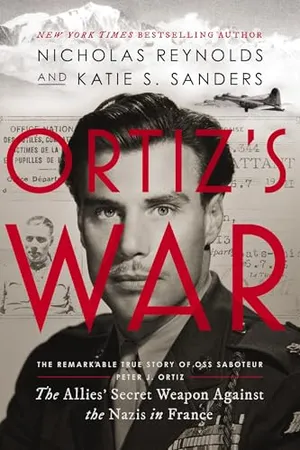
By 1943, burning to put his French language skills and paratrooper training to practical use against the Axis powers, Coolidge successfully requested a transfer to the OSS—the newly formed, wartime intelligence predecessor to the modern CIA. By the summer of 1944, he was stationed in England within the OSS’s elite Special Operations branch. There, he reunited with Peter J. Ortiz, a charismatic Marine Corps major and former French Foreign Legion comrade who had recently returned from leading the Union I resistance-support mission in France. Ortiz was assembling a team for a follow-up operation deep behind enemy lines: Union II.
Operation Union II and the European Theater
On July 31, 1944, the BBC broadcast a seemingly innocuous French phrase to the French Resistance: "In the garden, the gardener is watering his lettuce." For Captain Jean Bulle and his maquisards in the Col des Saisies mountain pass, this was the coded green light.
/https://tf-cmsv2-smithsonianmag-media.s3.amazonaws.com/accounts/headshot/katie.png)
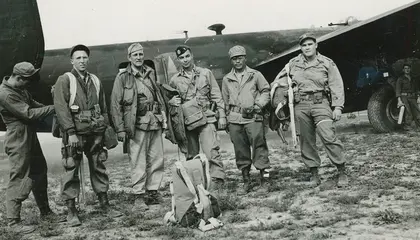
The following day, Coolidge, Ortiz, and five other OSS operatives squeezed into a B-17 heavy bomber. They jumped at a perilously low altitude of less than 500 feet, accompanied by an armada of 78 B-17s dropping 864 containers of munitions and supplies. The landing, however, was marred by tragedy. Sergeant Charles Perry was killed instantly when his parachute failed to deploy, while Marine Robert LaSalle suffered severe back and ankle injuries.
Despite the grim start, the team immediately went to work training the Bulle Battalion and conducting reconnaissance patrols ahead of Operation Dragoon—the August 15 Allied invasion of southern France. But danger closed in rapidly on August 16 near the village of Centron, when a German convoy of more than 100 heavily armed troops ambushed the OSS team.
"Pete, we have been seen," Coolidge shouted to Ortiz.
:focal(750x500:751x501)/https://tf-cmsv2-smithsonianmag-media.s3.amazonaws.com/filer_public/f8/c6/f8c6c426-628a-4133-beac-bc8e5dce1071/coolidge2.png)
Under blistering machine-gun fire, the Allied group split. Coolidge took a bullet to the right thigh but managed to escape alongside OSS Marine Frederick Brunner. Ortiz and three of his men, completely surrounded, chose to surrender under the condition that the Germans spare local civilians from brutal Nazi reprisals.
With Ortiz captured, Coolidge assumed command of the fragmented Union II remnants, fighting alongside the French Resistance until the formal liberation of the region. Though Captain Bulle was executed by German forces on August 21 while attempting to negotiate a local surrender, the region was ultimately cleared. By late September, Coolidge had returned to London, where he was awarded a Purple Heart and a Silver Star for leading the operation "with great coolness and ability."
Operation Spaniel and the Pacific Theater
Rather than seeking a safe retirement from frontline operations after recovering from his combat injuries, Coolidge volunteered for a second high-risk mission—this time on the opposite side of the globe. Promoted to major, he deployed to Japanese-held China to lead Operation Spaniel, an OSS mission tasked with contacting Chinese "puppet" generals and building intelligence networks alongside communist guerrilla forces led by Mao Zedong.
/https://tf-cmsv2-smithsonianmag-media.s3.amazonaws.com/filer_public/3f/d7/3fd7330f-8a31-47bd-8d01-21450770823f/e92-f16908-coolidge_francis-photo-1943-caption.jpg)
On May 28, 1945, Coolidge and a four-man team parachuted into China’s Fuping region. Instead of receiving a warm alliance, Chinese communist forces promptly apprehended, disarmed, and detained the American commandos in caves. Though not formally treated as prisoners of war, they were forbidden to leave—ostensibly for their own protection against Japanese patrols, though the reality was far more politically complex.
While Coolidge battled a grueling bout of malarial fever from a cave, American officials negotiated his release. Freedom finally came in exchange for a truck. Coolidge returned to the United States in September 1945, just as World War II came to a definitive close.
Supporting Context & Metrics: The Human Cost and Intelligence Legacy
| Metric / Detail | Description | |
|---|---|---|
| Birth & Death | Born: c. 1907 | Died: 1972 (Age 65) |
| Lineage | Great-great-great-grandson of U.S. President Thomas Jefferson | |
| Military Decorations | Silver Star, Purple Heart | |
| Theaters of Operation | European Theater (France, 1944); Pacific Theater (China, 1945) | |
| Post-WWII Career | CIA Chief of Station for North Africa (1958–1959); Headquarters Division Chief; Retired from federal service in 1967 as Deputy Director of the U.S. Post Office’s international postal service. |
Coolidge’s farewell letter to his wife—written on fragile stationery in the summer of 1944 and preserved for decades by his family—lays bare the psychological burden carried by intelligence operatives.
/https://tf-cmsv2-smithsonianmag-media.s3.amazonaws.com/filer_public/ad/96/ad96a659-1293-48f4-a9e9-a2da4b1dc79c/coolidge-letter.png)
"You will only get this letter in case something has happened to me," Coolidge wrote. "You have made my life. You gave me so much, and I gave so little in return… This job for which I gave my life was a worthy one. It was mixed up with the liberation of France and the defeat of the [Germans]. I felt so strongly that Cuppy and Nina had the right to grow up and live in freedom and in the way they may choose that I was willing to pay any price…"
When the war ended, President Harry S. Truman formally disbanded the OSS in October 1945. However, recognizing the indispensable nature of clandestine intelligence during the dawn of the Cold War, Truman established the Central Intelligence Agency in 1947, absorbing many former OSS veterans—including Coolidge.
Official Statements and Historical Assessments
The secretive nature of the OSS and its successor agency meant that Coolidge’s wartime exploits and Cold War intelligence career remained tightly guarded secrets for decades. Even the CIA’s modern historians have found mapping his career a formidable challenge.
/https://tf-cmsv2-smithsonianmag-media.s3.amazonaws.com/filer_public/a8/b9/a8b90d64-5b11-430b-af30-5e7da4ff2961/1_funeral1944_aug_union_2_members_at_perrys_gravesite.jpg)
Former CIA operations officer and historian Randy Burkett, speaking on behalf of the agency, notes the elusive nature of Coolidge’s official dossier:
"He’s a very challenging individual because he pops up and disappears more than once."
While Coolidge’s obituary suggested he joined the CIA in Washington, D.C., in 1950, agency records confirm employment starting around 1954. Burkett verified that Coolidge served as the CIA’s Chief of Station for North Africa between January 1958 and November 1959, later returning to headquarters in 1960 as a division chief. Despite occupying high-level administrative rungs, Coolidge’s archival notes consistently reflect an operative who chafed behind a desk and yearned for the unpredictability of field assignments.
/https://tf-cmsv2-smithsonianmag-media.s3.amazonaws.com/filer_public/f6/86/f6860392-f969-4d7c-ba14-240a41412b2c/capitaine_jean_bulle_1913-1944.jpg)
Family members who grew up in the shadow of his classified life recall a man driven by adventure rather than domestic comfort. Lucy Coolidge Trout, his granddaughter, observes that family stories "painted the picture of someone who preferred adventurous pursuits [over] the comparatively quiet life one might have expected."
Future Outlook and Commemorative Legacy
Though Francis Lowell Coolidge passed away in 1972, his legacy has experienced a profound public renaissance. On August 1, 2024—marking the 80th anniversary of the historic parachute drops—military officials, historians, and local citizens gathered in the French Alps where Coolidge and the Union II team first landed.
Among the attendees was Coolidge’s grandson, Curtis Lowell Bogetto, a U.S. Navy veteran who currently operates an English-language bookstore in Turin, Italy. Reading his grandfather’s wartime goodbye letter for the first time offered Bogetto a rare, visceral connection to a man whose children were once instructed to tell inquiring neighbors that their father was simply a mailman.
As historians continue to declassify OSS dossiers and families unearth heirloom letters preserved in attics, the sacrifices of operatives like Francis Lowell Coolidge transition from classified archives into the permanent historical fabric of the Allied victory. His journey—from the snowy ridges of occupied France to the damp caves of wartime China, and finally into the foundational halls of the CIA—stands as an enduring testament to the price of liberty and the quiet resolve of America’s first generation of modern spies.

Comments
Facebook App ID not configured. Please add it in the Customizer.