
Executive Overview
In the winter of 2024, acclaimed children’s author and decorated U.S. Army veteran Winsome Bingham found herself confined to a Department of Veterans Affairs (VA) hospital in upstate New York. Battling severe clinical depression, combat-related Post-Traumatic Stress Disorder (PTSD), and the lasting physical impacts of a traumatic brain injury (TBI) sustained during her 1991 service in Operation Desert Storm, Bingham was enduring what she describes as a "black hole." Months had passed since she had penned a single sentence. Her creative well had run entirely dry, overshadowed by the heavy, isolating fog of psychological trauma.
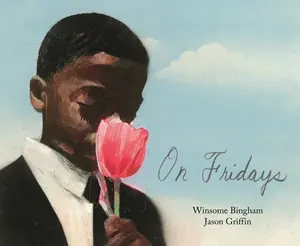
Across the state lines, inside a sunlit studio in Greenpoint, Brooklyn, Caldecott Honor-winning artist Jason Griffin was operating in what he affectionately terms "mad scientist mode." Working relentlessly amid piles of canvas, ink, and pigments, Griffin was experimenting with abstract pieces—vibrant explorations of tulips, guitars, and expansive skies—without any predetermined destination for them.
What began as an unorthodox creative experiment between two veteran collaborators would soon shatter traditional publishing conventions. Prompted by an intuitive suggestion from literary agent Elena Giovinazzo, Griffin transmitted digital snapshots of his miniature, card-sized abstract paintings to Bingham’s hospital bedside. This simple act of artistic outreach triggered a profound psychological and literary awakening.
Read Also
Working between psychiatric therapy sessions on cafeteria napkins, discarded worksheets, and construction paper, Bingham engineered a deeply moving picture book in just one week. Published by Holiday House under its Neal Porter Books imprint, On Fridays is a poignant, reverse-engineered picture book exploring grief, intergenerational community, and found families. More than just a commercial success, the project served as a literal lifeline for an author at her lowest psychological ebb. This is the inside story of how trust, vulnerability, and a reversal of the traditional picture-book pipeline forged a masterpiece out of shared human resilience.
Detailed Chronology: From a VA Hospital Bedside to Brooklyn Studios
Phase 1: The Dark Winter in Upstate New York
To understand the magnitude of On Fridays, one must first understand the profound isolation that preceded it. Born in Jamaica, Bingham carved out a respected dual identity as a dedicated military veteran and a celebrated voice in children’s literature, known for addressing complex themes of trauma and resilience (such as her 2024 Abrams picture book, Missing Momma). However, the ghosts of Operation Desert Storm—where she sustained a rifle strike resulting in a traumatic brain injury—caught up with her in early 2024.
Admitted to a VA hospital in upstate New York for severe depression and mounting anxiety, Bingham was entirely detached from her craft. Her access to technology was severely restricted; her iPad usage was tightly monitored and heavily limited. "I hadn’t written anything in months," Bingham recalls. "I was in a black hole. I didn’t have any creativity in me."
Phase 2: The Greenpoint Studio Spark
Simultaneously, hundreds of miles away in Brooklyn, Jason Griffin was maintaining his rigorous, high-output studio routine. Estimating that he spends upward of 45 to 60 hours a week immersed in visual creation, Griffin operates with an ethos centered on play, exploration, and discovery.
In early 2024, Griffin hosted his literary agent, Elena Giovinazzo (then at Pippin Properties), in his Greenpoint workspace to evaluate ongoing visual projects and brainstorm prospective collaborations. As they reviewed various concepts, Giovinazzo’s attention was drawn to a collection of diminutive, playing-card-sized abstract paintings spread across a studio table.
"They spoke to me," Giovinazzo remembers, noting their distinct tonal duality. "They were melancholy but joyful."
Breaking with standard industry protocol—where writers typically submit a finalized text to an editor before an illustrator is even contracted—Giovinazzo floated an unconventional proposition. Knowing Griffin and Bingham had previously collaborated on the critically lauded book The Table, she suggested sending the raw, homeless paintings directly to the author. "Normally an artist has to wait for the right manuscript to be sent their way," Giovinazzo explains. "We just said, ‘Well, let’s try this and see what happens.’"
Phase 3: The Convergence of Signs and Synchronicities
Bingham’s literary agent, Hannah Mann of Writers House, forwarded Griffin’s digital images to the author. For weeks, it was the first email Bingham had successfully received in the hospital.
Confined to an art therapy room within the psychiatric ward, Bingham opened the digital files. She looked down at her screen, then glanced up across the room. Leaning directly against the wall opposite her was an acoustic guitar—virtually identical to the instrument depicted in one of Griffin’s paintings. To an author searching desperately for a reason to keep going, the visual alignment felt less like a coincidence and more like a cosmic mandate.
"The colors of the artwork—the pinks, yellows, and blues—were the light I needed," Bingham states. "I immediately saw something."
The psychological barrier evaporated. Over the course of the next seven days, operating entirely between scheduled clinical therapy sessions, Bingham drafted the narrative framework for On Fridays. Devoid of traditional writing supplies, she improvised, scribbling prose onto cafeteria napkins, discarded worksheets, and scraps of construction paper.
Phase 4: Expanding the Canvas and Finding Truth
The resulting manuscript centers on Jamar, a young boy who accompanies his mother on regular visits to an assisted living facility where she is employed. Through these visits, Jamar builds rich, intergenerational bonds with the elderly residents—a delicate exploration of community and mortality that hits a tragic turning point when one of his cherished surrogate grandparents passes away.
When Taylor Norman, editorial director at Neal Porter Books, reviewed the raw manuscript, she recognized an extraordinary synergy between the text and Griffin’s abstract foundations. However, Norman challenged Griffin to push deeper, requesting a series of new, intimate character portraits to anchor the emotional core of the book.
Rather than treating the assignment as routine illustration work, Griffin leaned into a deeply personal artistic tradition. For years, the artist has painted memorial portraits of deceased family members as a mechanism for historical preservation and emotional processing. "It’s a way to immortalize them," Griffin explains.
To populate the pages of On Fridays with authentic human emotion, Griffin sourced inspiration directly from the deceased family members of individuals within his personal life. "I was on a mission," he reflects. "If I was going to do portraits, they needed to come from somewhere true, from a real place."
Supporting Context & Metrics: Challenging Publishing Norms
The creation of On Fridays stands as a stark anomaly in the modern children’s publishing landscape, where risk-averse pipelines generally dictate a linear, rigid methodology.
| Traditional Picture Book Pipeline | The On Fridays Reverse-Engineered Model |
|---|---|
| Step 1: Author writes a complete manuscript independently. | Step 1: Artist generates standalone abstract and fine art without a textual anchor. |
| Step 2: Agent pitches manuscript to publishing houses. | Step 2: Agent matches raw artwork directly to an author to stimulate creativity. |
| Step 3: Editor acquires text and signs a book deal. | Step 3: Author produces narrative response directly informed by visual stimuli. |
| Step 4: Illustrator is hired and creates storyboards based on text. | Step 4: Editorial team requests character integration; artist builds on personal memorial portrait traditions. |
The Therapeutic Efficacy of Collaborative Art
Psychological studies frequently emphasize the therapeutic utility of "expressive arts therapy" for combat veterans suffering from PTSD and TBI-induced cognitive roadblocks. However, On Fridays illustrates a rarer phenomenon: interpersonal creative contagion.
Bingham’s descent into a depressive "black hole" represented a complete severing of executive function and narrative output. By introducing tactile, color-saturated abstract images into a sterile medical environment, Griffin’s art acted as an external neurological catalyst. It bypassed the paralyzed language centers of Bingham’s brain, speaking directly to her emotional processing hubs and jump-starting her dormant creative faculties.
Official Statements and Industry Reflections
The unique genesis of On Fridays has drawn widespread acclaim from industry veterans who witnessed its miraculous assembly firsthand.
Winsome Bingham, Author and Veteran:
"I cannot talk about this book and not cry. Jason’s artwork found me when I was at my lowest point… Getting that artwork was transformative. It flipped something in my brain."
Jason Griffin, Caldecott Honor Artist:
"I call it mad scientist mode. I like to maintain a sense of play, exploration, and discovery… Trust is an important part of collaboration: to let the person have a genuine reaction and not try to control the experience. Art is my oxygen mask."
Elena Giovinazzo, Literary Agent:
"They were melancholy but joyful. Normally an artist has to wait for the right manuscript to be sent their way. We just said, ‘Well, let’s try this and see what happens.’"
Taylor Norman, Editorial Director at Neal Porter Books:
"What I love about Winsome and Jason is that they don’t settle. Winsome is an amazing force. Jason breathes out art."
Future Outlook: A New Paradigm for Creative Collaboration
As On Fridays officially enters the literary marketplace under the Holiday House/Neal Porter Books banner, its impact extends far beyond its status as a critical darling of the autumn publishing season.
For the publishing industry, the book serves as a compelling proof-of-concept for non-linear collaboration. By demonstrating that profound narrative works can be reverse-engineered from standalone abstract art, On Fridays challenges editors and agents to break down institutional silos. It suggests that pairing visual artists and authors in exploratory, cross-pollinated exercises can yield works of staggering emotional depth that a traditional, isolated writing process might never unlock.
For Winsome Bingham, the journey from the fluorescent-lit halls of a VA psychiatric ward to the finished, bound pages of a children’s book represents an ultimate reclamation of self. The black hole of depression did not win; instead, it was met with the vibrant pinks, yellows, and blues of a Brooklyn studio, proving that even in the darkest moments of trauma, creative community can serve as a bridge back to life.

Comments
Facebook App ID not configured. Please add it in the Customizer.