
Executive Overview
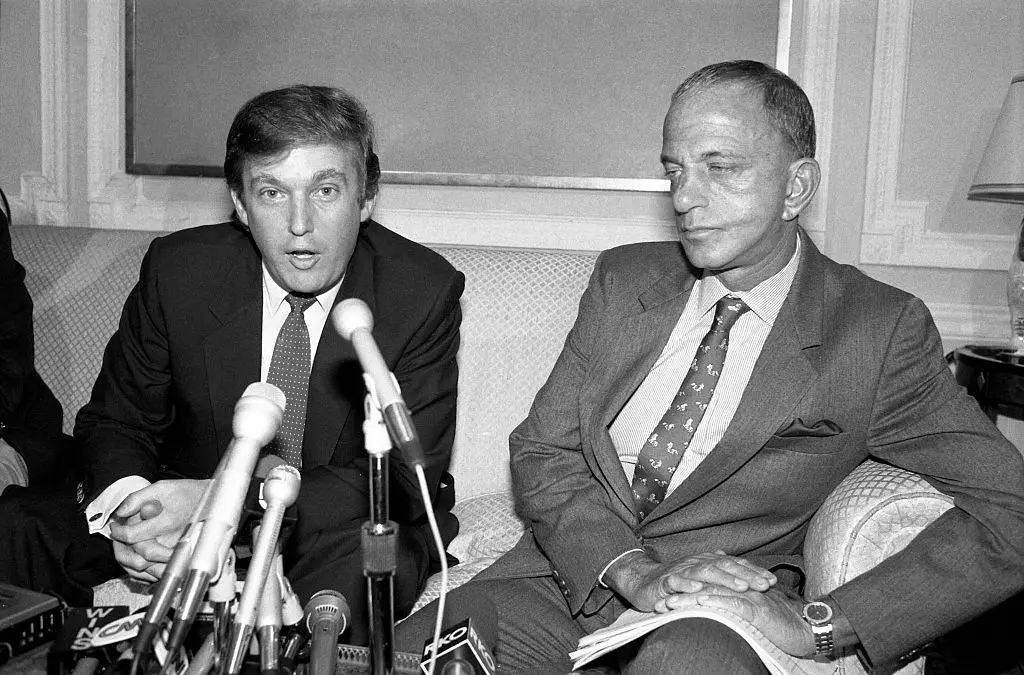
In the high-stakes intersection of art, politics, and historical memory, few decisions ignite debate quite like the preemptive suppression of an image. The Robert Mapplethorpe Foundation—tasked with safeguarding the legacy, creative vision, and foundational ethos of one of the 20th century’s most provocative photographers—has found itself at the center of a burgeoning free-expression scandal. According to a landmark report by The New York Times, the foundation’s board of directors flatly denied the licensing of a striking 1981 portrait of the infamous New York attorney Roy M. Cohn. The image was intended for the cover of a forthcoming biographical work titled American Scoundrel: Roy Cohn’s Dark Journey from Joe McCarthy to Donald Trump, co-authored by Pulitzer Prize-winning biographer Kai Bird and Susan Goldmark.
The refusal was not based on copyright disputes, financial disagreements, or artistic incompatibility. Instead, the foundation’s leadership reportedly feared that associating a Mapplethorpe photograph with a book critical of sitting U.S. President Donald Trump—who served as a young protégé and client of Cohn during the 1970s and ’80s—could invite political retaliation. Specifically, the board worried that the administration might target the foundation’s 501(c)(3) nonprofit tax-exempt status.
This decision has sent shockwaves through the American literary, legal, and artistic communities. Critics, including co-author Kai Bird, have decried the move as an alarming act of preemptive self-censorship, pointing to a chilling atmosphere where cultural institutions feel compelled to bow before potential executive overreach. Paradoxically, this controversy places the Robert Mapplethorpe Foundation—an entity forged in the crucible of late-20th-century culture wars and government censorship battles over transgressive art—in the unfamiliar and uncomfortable role of the censor. As questions mount regarding the independence of cultural preservation bodies in the current political climate, the episode highlights the enduring, unsettling gravity of Roy Cohn’s historical network and the precarious state of artistic freedom in contemporary America.
Read Also
Detailed Chronology: From the Studio to the Controversy
To fully understand the gravity of the foundation’s decision, one must trace the winding historical arc that connects a late-summer photo shoot in 1981 to a tense publishing board room decades later.
August–September 1981: Capturing the Fixer
In the late summer of 1981, Robert Mapplethorpe was at a pivotal crossroads in his career. Having spent much of the 1970s pushing the boundaries of sexual and artistic representation through his controversial documentation of New York’s underground S&M subculture—culminating in his infamous X Portfolio (1978)—the artist was beginning to pivot toward mainstream portraiture. He sought to capture the titans of high society, high finance, and the avant-garde.
Enter Roy M. Cohn. Already a legendary and feared figure in New York legal and political circles, Cohn was then the subject of a major profile for Andy Warhol’s Interview magazine. Writer and book editor Steven M.L. Aronson, who penned the profile, successfully persuaded the notoriously combative attorney to sit for Mapplethorpe.
The resulting portrait, simply titled Roy Cohn, is a masterclass in psychological exposure. Captured head-on against Mapplethorpe’s signature stark black backdrop—a visual hallmark of the photographer’s final decade—the image exposes Cohn’s intense, unyielding outward stare and the distinct scar-split bridge of his nose. At the time, Cohn was operating at the height of his powers. By day, he represented a rogues’ gallery of mobsters, corrupt moguls, and media barons, alongside a young real estate developer named Donald Trump. By night, he was a fixture of the city’s legendary nightlife, most notably Studio 54.
Despite his public persona as a ruthless, aggressively anti-communist and anti-gay political operator, Cohn lived a double life as a closeted gay man. Just a few years after the portrait was taken, the AIDS epidemic would decimate New York’s cultural elite; by the late 1980s, both Cohn (who died of AIDS-related complications in 1986) and Mapplethorpe (who succumbed to the disease in 1989) would be dead.
2011: Institutional Acquisition
Decades after their deaths, the portrait of Cohn cemented its place in the art historical canon. In 2011, as part of a major philanthropic initiative, the Robert Mapplethorpe Foundation gifted a premier print of the photograph to both the Los Angeles County Museum of Art (LACMA) and the J. Paul Getty Trust, cementing the image’s status as a public cultural asset rather than a hidden private artifact.
2024–2026: The Biography and the Veto
Fast forward to the mid-2020s. Historian and biographer Kai Bird, working alongside Susan Goldmark, penned American Scoundrel: Roy Cohn’s Dark Journey from Joe McCarthy to Donald Trump. The book traces Cohn’s malign influence across decades of American political life, drawing a straight line from his early days as chief counsel to the red-baiting Senator Joseph McCarthy to his mentorship of Donald Trump during the formative years of the future president’s real estate empire.
Recognizing the immense cultural and historical resonance of the 1981 Mapplethorpe portrait, the book’s publishers sought to license the image for the cover. Initially, standard licensing discussions proceeded. However, as the review reached the upper echelons of the Robert Mapplethorpe Foundation—which legally controls the artist’s estate, licensing agreements, and archival holdings—the process ground to a sudden halt.
According to reporting by The New York Times, the foundation’s board of directors intervened, pulling the plug on the agreement. The rationale was explicit: because the biography offers a deeply critical characterization of Donald Trump—who was once Cohn’s protégé and is now serving his second term as U.S. President—the board feared that putting Mapplethorpe’s image of Cohn on the cover would be interpreted as a partisan political statement.
Supporting Context & Metrics: The Legal and Political Landscape
The foundation’s decision cannot be viewed in a vacuum. It operates within a tightly regulated legal framework for American nonprofits, set against an increasingly volatile political backdrop regarding federal oversight of cultural institutions.
The 501(c)(3) Dilemma and Preemptive Paranoia
As a registered 501(c)(3) nonprofit organization, the Robert Mapplethorpe Foundation is legally barred from engaging in direct political campaign intervention or partisan political activities. Established by Mapplethorpe shortly before his death "to protect his work, to advance his creative vision and to promote the causes he cared about," the foundation has historically navigated these boundaries with care.
However, legal experts have expressed bewilderment at the foundation’s interpretation of the law in this specific instance. Licensing an archival portrait of a deceased historical figure for a commercially published biography does not constitute political campaigning. Yet, the foundation’s board was operating under a different calculation: fear of regulatory retaliation.
According to insiders speaking to the Times, the board’s primary anxiety was that President Trump—known for bearing grudges against entities he perceives as hostile—might retaliate by weaponizing federal agencies to threaten the foundation’s nonprofit tax status. While such retaliation would face steep First Amendment and administrative law hurdles, the mere specter of bureaucratic harassment proved enough to induce preemptive capitulation.
A Pattern of Federal Pressure on Cultural Institutions
The foundation’s fears are not entirely unfounded in terms of the current administration’s posture toward the arts and cultural sector. During his second term, President Trump has maintained an aggressive stance toward institutions that receive public funding or enjoy federal tax-exempt privileges.
Recent history underscores this hostile environment:
- The Smithsonian Institution: The administration has exerted intense pressure, forcing sweeping content reviews and threatening budgetary strangulation over exhibits and programming deemed ideologically objectionable.
- The John F. Kennedy Center for the Performing Arts: Federal takeovers and policy shifts under the current administration have led to dramatic leadership shakeups, artistic restrictions, and a corresponding plummet in institutional finances and donor confidence.
In an environment where major national landmarks and museums are struggling to maintain editorial independence under federal pressure, a private arts foundation felt uniquely vulnerable to executive displeasure.
Official Statements and Industry Reactions
The decision has triggered immediate outrage across the literary and artistic communities, drawing sharp contrasts between the foundation’s timid response and its own historical legacy of fighting censorship.
The Outraged Authors
For Kai Bird, who spent years researching the dark, complex lineage connecting McCarthyism to modern American politics, the foundation’s refusal felt like a personal and professional betrayal. Speaking to The New York Times, Bird did not mince words, describing himself as "thunderstruck" and "outraged" by the board’s capitulation.
"It’s astonishing that these people are being so cowed, so easily," Bird remarked.
Without the iconic Mapplethorpe portrait, the biography’s publishing team was forced to pivot to alternative cover art, robbing the project of a uniquely powerful visual anchor that bridged the worlds of mid-century political ruthlessness and avant-garde art. Neither the Mapplethorpe Foundation nor its representatives responded to subsequent requests for comment from The New York Times or ARTnews.
The Free Expression Community Weighs In
The decision has also drawn sharp criticism from defenders of free speech and institutional independence. Suzanne Nossel, a prominent human rights lawyer and former chief executive of the free expression advocacy group PEN America, expressed deep concern over the chilling effect demonstrated by the foundation’s actions.
"The idea that a photograph of a dead mobster lawyer could somehow qualify as political activity, even under the Trump administration, is hard to fathom," Nossel told the Times. "And yet, we’re in an environment where no one feels they can rule anything out."
Nossel’s assessment captures the pervasive atmospheric dread currently gripping the American cultural sector. When self-censorship becomes the default strategy to ward off phantom regulatory threats, the boundaries of public discourse contract sharply.
Irony and Mapplethorpe’s True Legacy
Perhaps the most bitter pill for art historians is the stark contradiction between the foundation’s current risk aversion and the fierce, combative legacy of Robert Mapplethorpe himself.
During his life, Mapplethorpe was no stranger to controversy; after his death in March 1989, his work became ground zero for the American "culture wars." Just months after he passed away, the now-defunct Corcoran Gallery of Art in Washington, D.C., abruptly canceled its scheduled hosting of a major Mapplethorpe retrospective, The Perfect Moment. The cancellation was triggered by conservative politicians who took vehement issue with the sexually explicit images featured in the X Portfolio, which had been produced with the assistance of a grant from the National Endowment for the Arts (NEA).
The resulting national debate over government funding, artistic expression, and obscenity turned Mapplethorpe into a posthumous martyr for First Amendment rights. Decades later, for the very foundation established to protect his transgressive vision to fold under the weight of hypothetical political blowback is seen by many as a profound betrayal of the artist’s uncompromising spirit.
Future Outlook: What the Mapplethorpe Controversy Means for Cultural Independence
As American Scoundrel prepares to hit shelves without its intended cover art, the fallout from this controversy extends far beyond a single book jacket. It serves as a troubling bellwether for the health of American cultural institutions in an era of heightened political polarization and executive pressure.
- The Rise of Preemptive Self-Censorship: The Mapplethorpe Foundation incident establishes a dangerous precedent. When boards of directors begin making decisions based on what a sitting president might do—anticipating retaliation without a direct order or legal challenge—they effectively do the work of censors for them. This preemptive compliance creates a slippery slope where controversial art, historical documentation, and critical literature are quietly sidelined to preserve institutional peace.
- Increased Vulnerability of Nonprofits: This episode highlights the structural weaknesses of 501(c)(3) organizations operating in highly charged political environments. As federal oversight becomes increasingly politicized, boards of cultural foundations, museums, and educational trusts will face difficult choices: stand firm on First Amendment principles or retreat into safety to protect endowments and tax exemptions.
- The Enduring Power of the Image: Ironically, by denying the image to the book cover, the Mapplethorpe Foundation has only intensified public interest in the 1981 portrait of Roy Cohn. The controversy has breathed new life into an archival photograph housed at LACMA and the Getty, transforming it from a static piece of art history into a lightning rod for contemporary debates over power, fear, and freedom of expression.
Ultimately, the story of the denied Mapplethorpe cover is not just about a photograph, a notorious lawyer, or a biography of political machinations. It is a stark reminder that the fiercest battles over free expression are frequently fought not in the courtroom under the weight of state-mandated bans, but in quiet boardrooms where the fear of power proves stronger than the courage to create.


Comments
Facebook App ID not configured. Please add it in the Customizer.