
Executive Overview
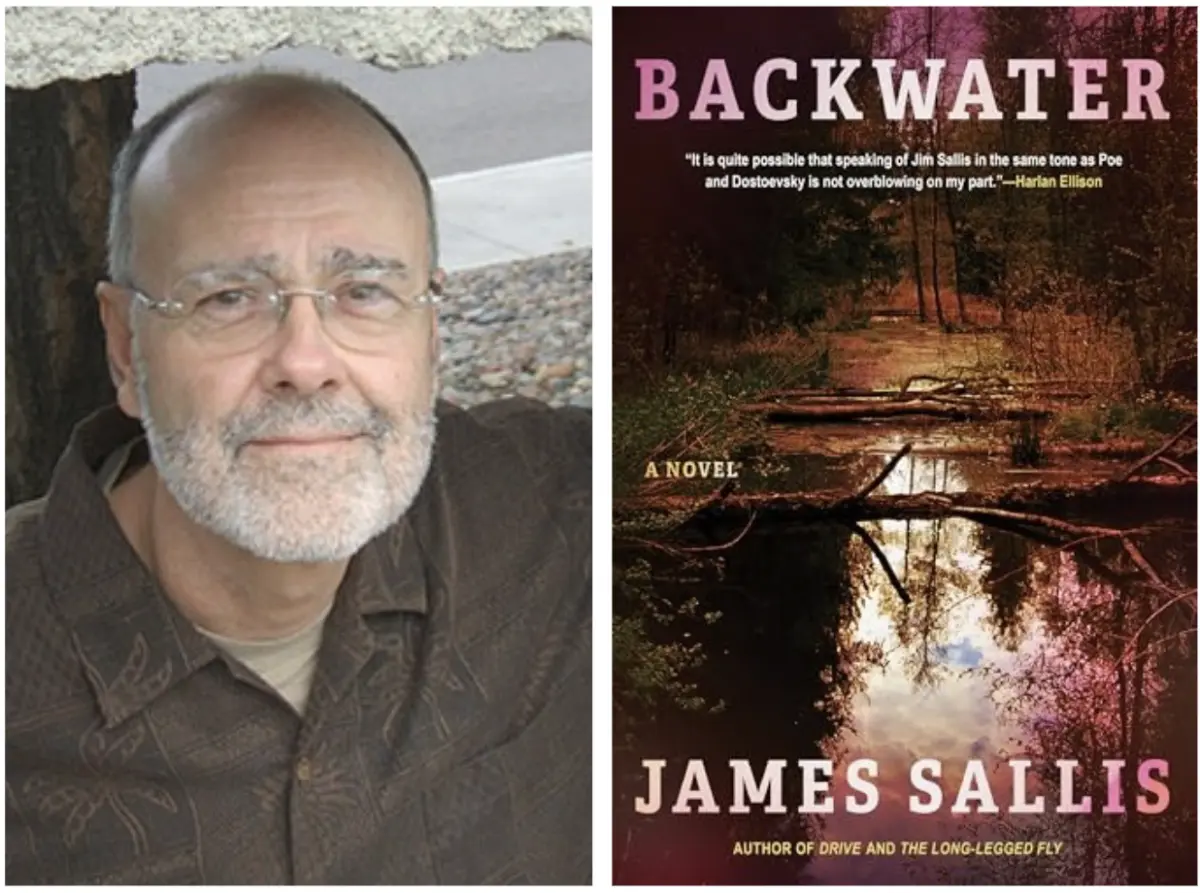
This September, the literary world will mark a bittersweet milestone with Soho Crime’s publication of Backwater, the final novel by celebrated poet and crime writer James Sallis, who passed away earlier this year. Serving as a poignant capstone to a towering career, Backwater follows a retired cop who returns to the fold to investigate an abandoned, blood-smeared vehicle. True to Sallis’s unique signature—exhibited in works ranging from the moody, quasi-noir Drive to the existential mystery Sarah Jane—the novel favors the rich, atmospheric textures of life over breakneck, page-turning action.
Sallis’s enduring legacy rests on his rare ability to dismantle traditional genre tropes and reassemble them into strange, contemplative meditations on identity, isolation, and self-discovery. In honor of Backwater’s release and the profound void left by Sallis’s departure, this review surveys five recent crime novels that similarly color outside the lines. Pushing past the conventional boundaries of mystery and thriller fiction, these contemporary releases—penned by masters and rising talents alike—demonstrate that the crime genre remains one of the most flexible and psychologically potent avenues in modern literature.

Detailed Chronology: From Sallis’s Farewell to the Contemporary Landscape
The arrival of Backwater arrives at a time of profound reflection for readers of literary crime fiction. Over decades of writing, James Sallis established a cadence entirely his own. His prose was lean yet lyrical, deeply philosophical yet grounded in the hard-edged realities of American life.
Read Also
- Early 2000s to 2010s: Sallis cemented his reputation with works like Drive (2005), which was later adapted into an acclaimed feature film. His books consistently blurred the line between poetry and hardboiled fiction, influencing a generation of writers to look beyond the procedural mechanics of crime-solving and focus instead on internal landscapes.
- Recent Years: Sallis continued to publish deeply contemplative works, including Sarah Jane (2019), showcasing a sustained mastery of existential mystery.
- 2024: Following Sallis’s passing earlier this year, Soho Crime announced the autumn publication of Backwater. Early reviews have hailed the novel as "a tender farewell from a towering talent."
- Summer and Fall 2024 Publishing Window: To honor Sallis’s ethos, the publishing world rolls out a diverse slate of boundary-pushing crime fiction. Works by literary veterans like James Lee Burke and Jonathan Ames, alongside striking debuts by Ryan Lowell and Willy Vlautin, arrive to fill the Sallis-shaped void with their own distinct stylistic risks.
Supporting Context & Metrics: Examining the Five Boundary-Pushing Releases
To understand how contemporary authors are expanding the boundaries of the genre, we must examine the specific mechanics, thematic ambitions, and critical reception of five standout releases accompanying the release of Sallis’s Backwater.
1. Clete: A Dave Robicheaux Novel by James Lee Burke
- Publisher & Price: Atlantic Monthly, $28 (336 pp.)
- ISBN: 978-0-8021-6307-3
- Publication Window: June
- The Narrative: In this gonzo latest entry from Edgar Award winner James Lee Burke, detective Dave Robicheaux’s inseparable friend, P.I. Clete Purcel, finds himself swept up in a bizarre, high-stakes pursuit of a bioweapon in late-1990s Louisiana. The plot kicks into gear when Clete wakes up on a Sunday morning to find three men systematically disassembling his Cadillac in search of contraband. A brief, violent confrontation leaves Clete unconscious, launching a dizzying narrative cascade. One of the assailants is tied to an occult neo-Nazi group, while others orbit a slimy millionaire named Lauren Bow and his actor wife, Clara. At the center of their ambitions is "Leprechaun," a mysterious bioweapon that may or may not have been hidden in Clete’s car.
- Stylistic & Thematic Resonance: Clete is aided not only by Robicheaux and Sheriff Helen Soileau, but also by Joan of Arc, who appears in prophetic visions to guide him. Burke’s trademark sterling prose elevates the surreal proceedings. He paints Louisiana as "an antediluvian place that could have been formed on the first day of Creation, then forgotten, feral and threatening." Amid the chaos, Robicheaux anchors the narrative with a philosophical truth: "Mysteries exist. The denial of them is an absurdity." It is a triumphant, eccentric addition to the Robicheaux universe.
2. A Past without Pictures by Jonathan Ames
- Publisher & Price: Mysterious Press, $23.95 (176 pp.)
- ISBN: 978-1-61316-805-9
- Publication Window: September
- The Narrative: Following his celebrated Doll trilogy, Jonathan Ames delivers a spare, potent novella that packs an emotional wallop. The story opens the morning after newly minted LAPD detective Maria Cole kills a burglary suspect in the line of duty. Her adrenaline-fueled morning is interrupted by a call from Alabama bearing devastating news: her estranged, ex-con father, Billy Cole, has been shot to death. Maria travels to the coastal town of Fair Port, where she is met by a slick, evasive police chief named Karl, who bears the supposedly comforting news that Billy’s killer has already been captured. When that very suspect is found dead in his jail cell the next day, Maria’s skepticism hardens into resolve.
- Stylistic & Thematic Resonance: Balancing her responsibilities as a cop with the grim task of settling her father’s meager estate, Maria stumbles upon a cryptic entry in Billy’s calendar that points toward a shadowy figure known only as "Charb." As she traces the clues to Fair Port’s elite power brokers, the sparse mystery metastasizes into a hyperviolent revenge thriller. Ames infuses the prose with a deep, disaffected sadness, elevating the text far beyond bog-standard crime fiction into something intensely resonant and emotionally wounding.
3. Freight by Ryan Lowell
- Publisher & Price: Mulholland, $18.99 trade paper (224 pp.)
- ISBN: 978-0-316-59651-0
- Publication Window: August
- The Narrative: Ryan Lowell makes a remarkably assured debut with this heartfelt, darkly humorous noir. Curtis works the night shift as a dispatcher for a New England trucking company. Balancing a pregnant wife, a nine-year-old son he rarely sees, and unfulfilled aspirations of becoming a writer, Curtis is trapped in a grind made worse by the fact that he cannot afford a car and must commute on a moped through freezing weather. When his shiftless uncle, Billy Trask, cooks up a half-baked scheme to steal a trailer loaded with millions of dollars in pharmaceutical drugs, Curtis reluctantly agrees to help engineer it. He devises an intricate plot to swap the valuable cargo with that of another truck, selecting an unsuspecting patsy named Theo. Theo unwisely decides to take his feisty new girlfriend, Sarah, along on his run to Canada, leaving his long-suffering wife behind.
- Stylistic & Thematic Resonance: Running parallel to Curtis’s scheme is the narrative of an exhausted trucker navigating an ill-fated 1,800-mile cross-country journey, serving as a thematic foil. Lowell crafts an ambitious, clever exploration of working-class indignity. Populated by three-dimensional, deeply human characters, Freight occasionally stumbles in narrative focus, but its stylistic verve makes the journey entirely worthwhile.
4. The Night Always Comes by Willy Vlautin
- Publisher & Price: Harper, $26.99 (224 pp.)
- ISBN: 978-0-06-303508-9
- Publication Window: April
- The Narrative: Drawing deep inspiration from the traditions of classic noir, Willy Vlautin (Don’t Skip Out on Me) delivers a stunning, heartbreaking study of an individual’s struggle against economic determinism. Set against the backdrop of Portland, Oregon’s aggressive housing boom—which has systematically priced working-class families out of the market—the novel centers on 30-year-old Lynette. Lynette works two jobs while caring for her developmentally disabled brother, Kenny, who lives with her and their mother. When their landlord offers them a favorable deal on the dilapidated house they have rented for years, Lynette finally scrapes together enough cash for a down payment. All she needs is for her mother to cosign the loan. At the eleventh hour, exhausted by a lifetime of struggle, her mother backs out.
- Stylistic & Thematic Resonance: Driven to desperation, Lynette launches a reckless, last-ditch effort to secure the home independently. Her path involves a scheme to steal a safe from a former friend who owes her money, plunging her back into a dark underworld defined by childhood trauma, mental illness, and predators who exploit vulnerable women. Vlautin’s prose is pitch-perfect, capturing a raw desperation that echoes the literary lineage of Raymond Carver and Jim Thompson.
5. The Diary of Lies by Philip Miller
- Publisher & Price: Soho Crime, $29.95 (304 pp.)
- ISBN: 978-1-64129-699-1
- Publication Window: August
- The Narrative: Philip Miller returns with the outstanding third case for investigative reporter Shona Sandison (following The Hollow Tree), expertly braiding three interconnected, high-stakes story lines. The novel opens with Shona receiving a U.K. Media Award nomination for her explosive exposé on government plans to pass the Great British Freedom Act, legislation designed to quietly undermine Scottish autonomy. Shortly thereafter, her anonymous source drops a cryptic warning: "Find Grendel." Simultaneously, Shona’s friend Hector Stricken, a media officer within the government’s Capacity and Resilience department, is accidentally looped into a virtual discussion regarding a clandestine operation bearing the exact same codename. Terrified by what he has inadvertently witnessed, Hector joins Shona in the hunt for the truth.
- Stylistic & Thematic Resonance: As Shona and Hector untangle the threads of Operation Grendel, Miller punctuates the narrative with diary entries from an unnamed intelligence agent. These entries offer crucial clues while simultaneously warning that much of what is recorded may be fabrications. Miller refuses to rush his narrative, allowing its sophisticated elements to converge organically. Enriched by striking prose—such as a mountain stream running "hard and clear, whitening with grinning teeth over boulders"—and populated by deeply sympathetic characters, this is a must-read for fans of espionage masters like Mick Herron.
Official Statements and Critical Reception
The literary community has responded with widespread acclaim to both the impending release of James Sallis’s final novel and the vibrant crop of books following in his experimental footsteps.
Industry analysts and reviewers have continually emphasized the importance of maintaining space for literary crime fiction that prioritizes psychological depth over formulaic resolutions. A spokesperson for Soho Crime noted regarding Sallis’s final work:

"In Backwater, James has left us not with a neat, tidy puzzle, but with an open window into the human condition. It is a work that reminds us why crime fiction can—and should—aspire to the condition of poetry."
Reviewers have similarly championed the featured titles for refusing to pander to genre clichés. Critical consensus across trade publications highlights that readers are increasingly hungry for crime fiction that tackles systemic economic anxiety, working-class marginalization, and existential dread with the same narrative rigor traditionally reserved for literary fiction. Whether it is the mythic, visionary landscapes of James Lee Burke or the stark, working-class desperation captured by Willy Vlautin and Ryan Lowell, the genre is proving itself to be remarkably capacious.
Future Outlook
As the publishing industry navigates the post-Sallis era, the trajectory of crime fiction appears both secure and radically transformed. James Sallis proved that the confines of genre fiction are entirely elastic—that a mystery can serve as a vehicle for poetic exploration, philosophical inquiry, and deep psychological excavation.
Looking ahead, the success of titles like Clete, A Past without Pictures, Freight, The Night Always Comes, and The Diary of Lies signals a robust market for transgressive storytelling. Writers are no longer content to merely follow the procedural blueprints laid down by early pioneers; instead, they are expanding the architecture of the crime novel to reflect the complexities, anxieties, and surreal textures of modern life.
With Backwater hitting shelves this September, readers are invited to bid a final farewell to one of the genre’s most distinctive voices while simultaneously stepping into a vibrant future where authors continue to color outside the lines. The map of crime fiction has been redrawn, and the territory ahead has never looked more promising.





Comments
Facebook App ID not configured. Please add it in the Customizer.