
Executive Overview
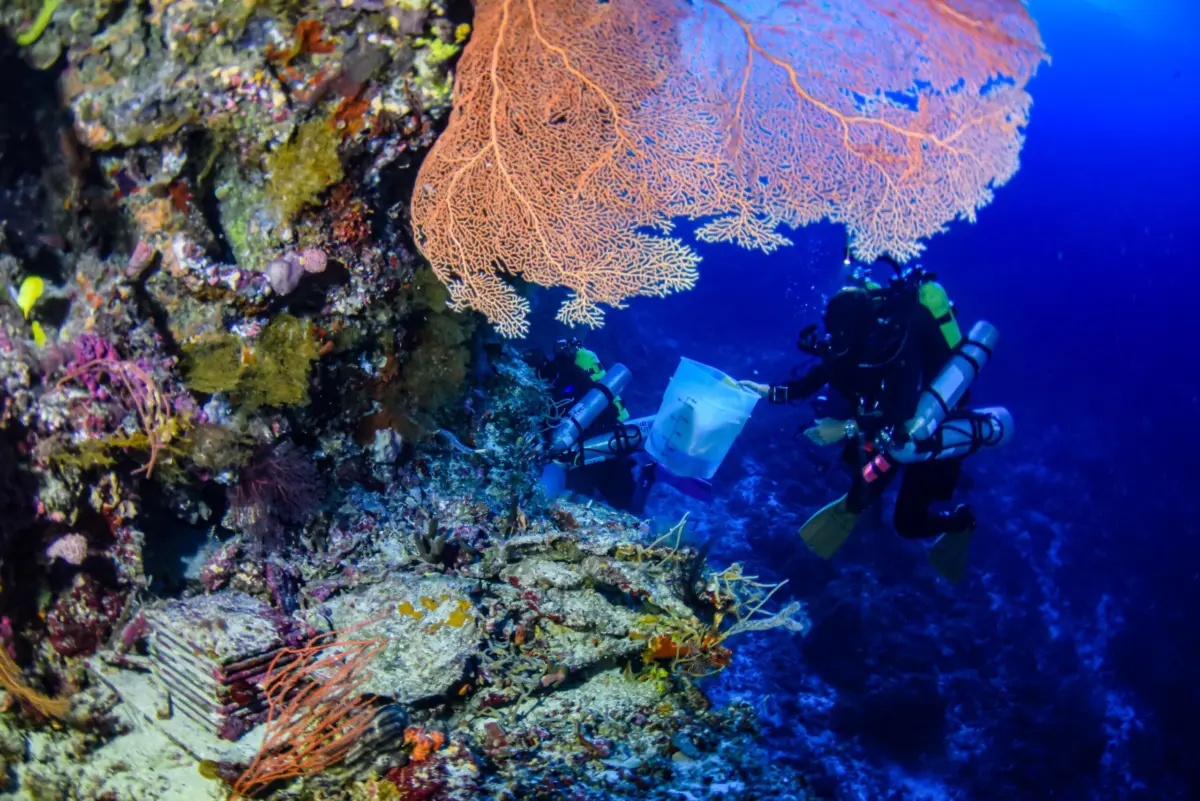
Beneath the sun-drenched, turquoise waters of Palau in the western Pacific, a quiet revolution in marine biology is unfolding. While the island nation is globally renowned for its shallow, vibrant coral reefs, an international team of scientists is looking far deeper—descending past the sunlit marine communities into a mysterious aquatic twilight zone known as mesophotic coral ecosystems.
Ranging from roughly 30 to 150 meters (100 to 500 feet) below the ocean’s surface, these "deep reefs" exist in a dim, cooler netherworld caught between bright daylight and profound darkness. For decades, these ecosystems have remained a scientific blind spot. High-pressure environments, extreme technical diving limitations, and the sheer logistical hurdles of deep-sea research have kept these communities shrouded in mystery.
However, a multi-year scientific endeavor led by researchers from the California Academy of Sciences, the Smithsonian Institution, and international partners is beginning to change that. By utilizing an innovative deployment of Autonomous Reef Monitoring Structures (ARMS)—effectively acting as standardized, prefabricated "hotels" for marine larvae—scientists are finally pulling back the curtain on the deep reef. Recovered after nearly a decade of underwater colonization, these structures are yielding thousands of biological specimens, a treasure trove of genetic data, and unprecedented insights into an ecosystem that may hold crucial answers to the broader crisis facing the world’s oceans.
Read Also

Detailed Chronology: A Decade-Long Scientific Journey
The 2016 Deployment: Planting the Seeds of Discovery
The genesis of this breakthrough dates back to 2016, when Dr. Luiz Rocha, a zoologist and curator of ichthyology at the California Academy of Sciences, spearheaded an ambitious expedition across the Pacific. Armed with private funding and a vision to systematically catalog deep-water biodiversity, Rocha and his team traveled to several remote island locations, including Palau, Guam, the Marshall Islands, and French Polynesia.
Rather than relying purely on transient snapshots captured during fleeting technical dives, the researchers opted to install long-term monitoring devices known as ARMS. Developed initially to survey shallow reefs, these devices were adapted for the twilight zone. An ARMS unit resembles a stack of grey, featureless PVC plates separated at uniform intervals, mounted securely to a base plate.
In a coordinated effort, the team deployed these structures at varying depths—around 10 meters for shallow baselines, and down at 50 and 100 meters in the mesophotic zones. Once secured, the team left the structures behind, allowing the ocean currents to seed them with the larvae of sponges, corals, mollusks, and crustaceans. The goal was simple yet profound: let the reef build itself in a controlled, standardized format, ready for future analysis.

The Waiting Game and Logistical Hurdles
While deploying the ARMS units was a complex engineering feat, retrieving them proved to be an even greater hurdle. Deep-water recovery operations are significantly more expensive and logistically demanding than deployment. As a result, the "marine hotels" remained submerged far longer than initially anticipated, quietly accumulating life through changing ocean temperatures, marine heatwaves, and shifting ecological pressures.
It took years of securing additional philanthropic underwriting before the funding finally materialized. By late spring, Rocha, alongside a dedicated team of technical divers, researchers, and journalists, returned to the waters of Palau. Their mission: locate, unbolt, and retrieve the arrays that had spent nearly ten years encrusted in the biological history of the deep.
The Recovery and Laboratory Processing
In May, the operational phase shifted from the open ocean to the laboratory benches of the Palau International Coral Reef Center. As the ARMS units were hauled up from the depths in bins of seawater, the atmosphere on the boat and inside the lab crackled with a mix of scientific rigor and sheer wonder.

Some ARMS units emerged relatively sparse, while others were choked and textured with a riot of biological growth—vibrant reds, deep oranges, pinks, and stark whites. Delicate fronds hung like coralline ferns, and massive sponges clung to the PVC frames.
Working in marathon shifts that often stretched past midnight, the researchers disassembled the plates using wrenches, meticulously photographing every layer to preserve a "time capsule" of the ecosystem. Biologists combed through trays of debris, cataloging tiny crabs, skeleton shrimp, and colorful sea slugs, while scraping organic matter from the plates for DNA sequencing. Even the stubborn residue left behind was harvested, blended, and squeezed—a rigorous process dubbed "milking the turd" by researchers to capture environmental DNA (eDNA) of unseen organisms that passed through the mini-reef.
Supporting Context & Metrics: Decoding the Mesophotic Zone
To understand the significance of this research, one must first grasp the environmental pressures that differentiate shallow reefs from their deep-water counterparts.

| Feature | Shallow Coral Reefs | Mesophotic "Deep" Reefs |
|---|---|---|
| Depth Range | 0 to 30 meters | 30 to 150 meters |
| Light Availability | High (full sunlight) | Low to absent (twilight zone) |
| Primary Energy Driver | Photosynthesis (hard corals + zooxanthellae algae) | Specialized heterotrophs, filter feeders, alternative nutrient pathways |
| Research Accessibility | High (recreational scuba diving) | Extremely low (technical diving, submersibles, ROVs) |
| Baseline Knowledge | Extensively studied over decades | Heavily reliant on "maybes"; sparse data |
The Technical Challenges of Deep Exploration
Exploring the mesophotic zone is exceptionally dangerous. Standard scuba gear is entirely inadequate for depths exceeding 30 meters due to nitrogen narcosis and oxygen toxicity. Reaching 100 meters requires specialized breathing gas mixes (such as trimix) and intensive decompression protocols.
Even with state-of-the-art technical diving equipment, human dwell time at 100 meters is severely restricted. Divers often have a mere five to seven minutes of productive working time on the seafloor before facing a grueling ascent that can take hours of staged decompression to prevent decompression sickness (the bends). While remotely operated vehicles (ROVs) and submersibles offer alternative viewing platforms, they often lack the fine motor control and close-up perspective required to spot cryptic, micro-scale marine life.
The Power of Standardization: Why ARMS Matter
Before the widespread adoption of ARMS, studying deep-water biodiversity relied heavily on grabbing random rocks or isolated coral chunks. While valuable, these samples lacked uniformity, making it nearly impossible to scientifically compare biodiversity across different geographic regions or even different depths.

As Dr. Chris Meyer, director of the Smithsonian Global ARMS program, aptly describes it, ARMS are essentially "prefab housing" for the ocean. Because every unit is manufactured identically, any variations in the colonizing species can be reliably attributed to environmental factors—such as depth, temperature, and current flow—rather than structural differences in the habitat itself. This standardization transforms chaotic marine chaos into quantifiable, comparative data.
Official Statements and Expert Insights
The collaborative nature of the Palau expedition brought together some of the world’s foremost marine authorities to reflect on the monumental task of cataloging the unknown.
-
Dr. Luiz Rocha (California Academy of Sciences):

"Anything between 30 meters and 150 meters is really, really unknown… Whenever we go somewhere, the first thing we find is new species. It’s the most basic thing in science you can do. But in some ways, we don’t even know what questions to ask. We really only know what questions to ask after we have a baseline understanding of what the ecosystem is. And for deep reefs, we don’t know that yet."
-
Dr. Chris Meyer (Smithsonian Global ARMS Program):
"It’s prefab housing, and then you just look to see who moves in."

-
Sarah Tweedt (Smithsonian National Museum of Natural History):
"We’re looking for every unique thing, which we call a morphospecies. And we’re trying to get some representative tissue samples from all of these things so that we can sequence the DNA—and match the DNA to the organism."
-
Susanne Bähr (Postdoctoral Researcher, California Academy of Sciences):
Providing an update on the painstaking identification process months after the field expedition, Bähr noted that processing thousands of samples is a glacial task. Out of roughly 3,000 collected specimens, only about 3 percent have been identified down to the species level, with fewer than 20 assigned a definite genus. The vast majority still await comprehensive genetic barcoding to determine whether they represent entirely new branches on the tree of life.
Future Outlook: Building the Puzzle for the Next Generation
As marine biologists continue to process the genetic data and morphological traits of the thousands of specimens hauled from the Palau twilight zone, the long-term implications of the ARMS project are coming into sharper focus.
One of the most pressing questions facing modern conservationists is whether mesophotic coral ecosystems can act as a "deep refuge" for shallow-water species fleeing warming, acidifying surface waters driven by climate change. As surface temperatures trigger devastating coral bleaching events worldwide, understanding the connectivity between shallow and deep reefs is a matter of ecological urgency.
Yet, researchers remain pragmatic about the timeline of their discoveries. When asked if humanity will successfully assemble the complete ecological puzzle of the deep reefs in our lifetimes, Dr. Rocha offered a sober yet optimistic assessment:

"No, we will not assemble the puzzle, no, but we’ll generate some good pieces for the next generation to assemble."
The twilight zone remains one of the final true frontiers on Planet Earth. Through standardized innovation like the ARMS project, persistent international collaboration, and a profound tolerance for difficult scientific puzzles, researchers are finally illuminating the dark corners of the sea—ensuring that the secrets of the deep reef are preserved, understood, and protected before they are lost to time.




Comments
Facebook App ID not configured. Please add it in the Customizer.