
Executive Overview
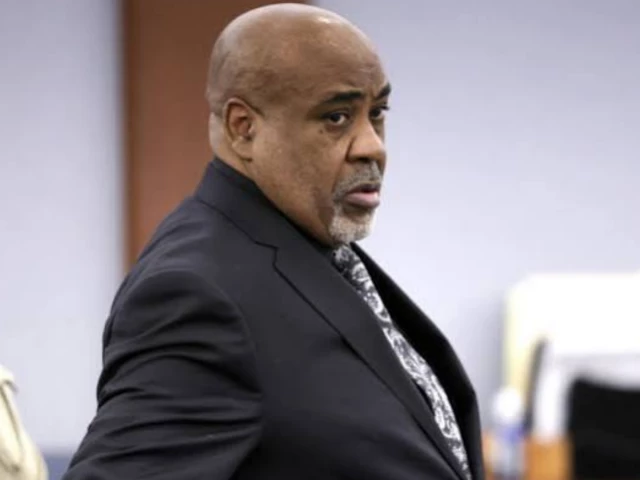
Nearly three decades after a volley of bullets shattered a white Cadillac on a Las Vegas boulevard and silenced one of the most brilliant and influential voices in modern music, a measure of legal accountability has finally been achieved. On Monday, following a swift and decisive deliberation period lasting less than three hours, a Las Vegas jury found 63-year-old Duane "Keffe D" Davis guilty of orchestrating the 1996 murder of legendary rap icon Tupac Shakur.
The verdict marks a historic milestone in hip-hop history and true crime jurisprudence: Davis is the first and only person to face a criminal conviction in connection with a cold case that has baffled law enforcement, spawned countless conspiracy theories, and gripped global pop culture for nearly 30 years. Convicted of a single count of murder with a deadly weapon, Davis now faces a mandatory maximum sentence of life imprisonment, effectively closing a painful chapter of American cultural history while opening a new one regarding accountability, gang dynamics, and the long arm of the law.
The trial, which spanned over a week of intense testimony, stark legal clashes, and dramatic courtroom moments, pitted federal and state prosecutors against a defense team attempting to dismiss Davis’s decades of public admissions as mere sensationalist myth-making designed for financial gain. Ultimately, the jury sided with the state’s narrative: that Davis, fueled by an escalating gang rivalry and a desire for revenge after a casino brawl earlier that night, acted as the shot-caller who secured the murder weapon, orchestrated the ambush, and set into motion the tragic events of September 7, 1996.
Read Also
Detailed Chronology: From the Las Vegas Strip to a Landmark Verdict
To understand the weight of Monday’s verdict, one must trace a timeline spanning decades—from the neon-lit excess of 1990s Las Vegas to the meticulously argued proceedings of the recent courtroom drama.
September 7, 1996: The Catalyst and the Tragedy
The sequence of events that led to Tupac Shakur’s death began hours before the fatal shooting, amidst the high-stakes atmosphere of a Mike Tyson boxing match at the MGM Grand in Las Vegas. Shakur, along with Death Row Records co-founder Marion "Suge" Knight and their extensive entourage, attended the bout. Following the fight, a physical altercation erupted in the casino lobby. The target of their assault was Orlando "Baby Lane" Anderson, a member of the South Side Compton Crips and the nephew of Duane "Keffe D" Davis.
According to prosecutors, the public beating of his nephew enraged Davis, sparking an immediate desire for violent retaliation. Rather than letting the incident pass, Davis allegedly mobilized his associates, initiating a frantic search across Las Vegas to locate Shakur and Knight.
Later that evening, at approximately 11:15 PM, Shakur and Knight were riding in a black BMW, stopped at a red light near Flamingo Road and Koval Lane. A white four-door Cadillac pulled up alongside the passenger side of their vehicle. From the back seat of the Cadillac, a barrage of gunshots erupted. Shakur was struck multiple times, sustaining critical injuries, while Knight suffered a glancing graze wound to the head. Shakur fought for his life for six days at the University Medical Center of Southern Nevada before succumbing to his internal injuries on September 13, 1996, at the tender age of 25.
The Decades-Long Standoff and the Turning Point
For nearly thirty years, the case languished. Despite widespread speculation, whispers in the hip-hop community, and investigative leads that pointed toward the Compton Crips, law enforcement lacked the concrete evidentiary threshold required to secure an indictment. The primary obstacle was not a lack of suspects, but a lack of legally admissible confessions from those present in the vehicle.
The case broke wide open not through advanced forensic science, but through Duane Davis’s own volition. Over the years, as the cultural fascination with Shakur’s murder reached mythic proportions, Davis began speaking openly with documentarians, law enforcement agencies, and true-crime authors. He detailed his presence in the white Cadillac, admitted to obtaining the firearm used in the shooting, and explained that he passed the weapon to the individuals in the back seat.
These admissions culminated in his 2019 memoir, Compton Street Legend, and various promotional interviews where Davis explicitly encouraged the public to buy his book to get the "real truth." Prosecutors utilized these very statements—alongside a meticulously maintained scrapbook containing news clippings of Shakur’s murder—to construct an airtight circumstantial and direct case against him.
The Trial and Monday’s Verdict
The trial in Las Vegas brought together 24 prosecution witnesses and three defense witnesses over nine days of intense legal arguments. Chief Deputy District Attorney Binu Palal and prosecutor Marc DiGiacomo methodically walked the 16-person jury (including four alternates) through Davis’s own public disclosures, dismantling the defense’s argument that his accounts were purely fabricated tallies spun for monetary enrichment.
After closing arguments wrapped up, the jury retired to deliberate. In less than three hours, they reached a unanimous verdict. Davis was found guilty of murder with a deadly weapon. Notably, prosecutors made the strategic decision on Monday evening to dismiss a gang enhancement charge tied to the indictment, citing logistical and evidentiary challenges regarding historical gang testimony. Nevertheless, the primary murder conviction remained entirely intact, ensuring that Davis will spend the remainder of his natural life behind bars.
Supporting Context & Metrics: Breaking Down the Case
| Category | Key Details & Metrics |
|---|---|
| Defendant | Duane "Keffe D" Davis (Age: 63) |
| Victim | Tupac Shakur (Age: 25 at time of death) |
| Date of Incident | September 7, 1996 |
| Date of Verdict | September 1, 2026 |
| Trial Duration | 9 days of testimony |
| Witnesses | 24 Prosecution witnesses, 3 Defense witnesses |
| Jury Deliberation Time | Less than 3 hours |
| Panel Size | 16 jurors (including 4 alternates) |
| Charges Filed | Murder with a deadly weapon (Gang enhancement dismissed) |
| Potential Sentence | Mandatory maximum of life imprisonment |
The Legal Framework: Accomplice Liability and the "Shot-Caller"
A central legal nuance of the trial centered on Nevada’s accomplice liability laws. Prosecutors did not argue—nor did physical evidence suggest—that Duane Davis physically pulled the trigger of the firearm that ended Tupac Shakur’s life. Instead, the state built its prosecution on the premise that Davis was criminally culpable as an organizer, provider, and shot-caller.
Testimony from gang experts established that within the hierarchical structure of the South Side Compton Crips, Davis held significant rank and authority. Younger members, including Orlando Anderson, operated under his sphere of influence. By acquiring the firearm, orchestrating the vehicular pursuit, and placing himself inside the white Cadillac, Davis crossed the legal threshold from a passive observer to an active principal in a premeditated murder.
Chief Deputy District Attorney Binu Palal emphasized this point during closing arguments, dismissing the defense’s claims of an impulsive, spur-of-the-moment retaliation. "It’s a plan, not an impulse," Palal told the jury, highlighting how the group systematically hunted down Shakur after the MGM Grand fight, made a U-turn upon spotting his vehicle, and executed an ambush.
Official Statements and Courtroom Reactions
The courtroom in Las Vegas was charged with raw emotion as the verdict was read, reflecting the heavy cultural and personal stakes attached to the decades-old proceeding.
The Shakur Family’s Response
For the family of Tupac Shakur, the verdict provided a complex mixture of vindication, sorrow, and closure. Sekyiwa “Set” Shakur, the sister of the late rapper, broke down in tears upon hearing the verdict, immediately embracing prosecutors who had worked tirelessly on the case. For decades, the Shakur family has advocated not only for artistic preservation of Tupac’s legacy but for institutional justice that recognized the calculated nature of his assassination. While no court verdict can resurrect the generational talent lost in 1996, the confirmation of legal guilt offers a definitive historical record that the rapper’s death was a targeted execution rather than an unsolved street mystery.
The Defense and Prosecution Clashes
The courtroom battles were marked by sharp friction between the state and the defense. Defense attorney Carl Sanft attempted to punch holes in the state’s reliance on Davis’s past interviews and memoir, arguing that his client had a financial incentive to exaggerate his involvement and fabricate details to boost book sales.
Sanft’s closing arguments, however, courted controversy and alienating reactions when he read explicit excerpts from Davis’s memoir aloud, using racially charged language that prompted visible recoils and head-shakes from observers in the overflow courtroom.
In rebuttal, prosecutor Marc DiGiacomo delivered one of the most damning assessments of the trial, holding up a scrapbook maintained by Davis that was filled with press clippings detailing Shakur’s murder and legacy.
"This guy’s scrapbooking his murder, for God’s sake," DiGiacomo told the jury, underscoring what the state framed as a pathological blend of hubris and accountability evasion.
Future Outlook: Closing a Chapter on Hip-Hop History
The conviction of Duane "Keffe D" Davis signals the definitive end of an era in American legal and cultural history. For nearly thirty years, the murder of Tupac Shakur occupied a unique space in the public consciousness—bridging the gap between a genuine tragedy and an urban legend heavily romanticized by media, documentary filmmakers, and true-crime enthusiasts.
With Davis facing a life sentence at age 63, the legal avenues for this specific case are effectively drawing to a close. Key figures present during the fatal night—including Orlando Anderson and the individual who allegedly supplied the initial firearm—have long since passed away, leaving Davis as the sole surviving adult from inside the white Cadillac to face earthly justice.
Beyond the courtroom, this verdict reverberates deeply within the hip-hop community. It serves as a stark reminder of the devastating real-world consequences of the fierce East Coast-West Coast record label rivalries and gang wars that defined the mid-1990s music industry—a volatile era that claimed the lives of both Tupac Shakur and his rival, Christopher "The Notorious B.I.G." Wallace, within months of each other.
As the gavel falls in Las Vegas, the historical record is permanently altered. Tupac Shakur’s legacy will forever remain anchored in his immortalized lyrics, poetic brilliance, and cultural impact, but the narrative of his untimely death is no longer an open question. Justice, though agonizingly slow, has finally been delivered.


Comments
Facebook App ID not configured. Please add it in the Customizer.