
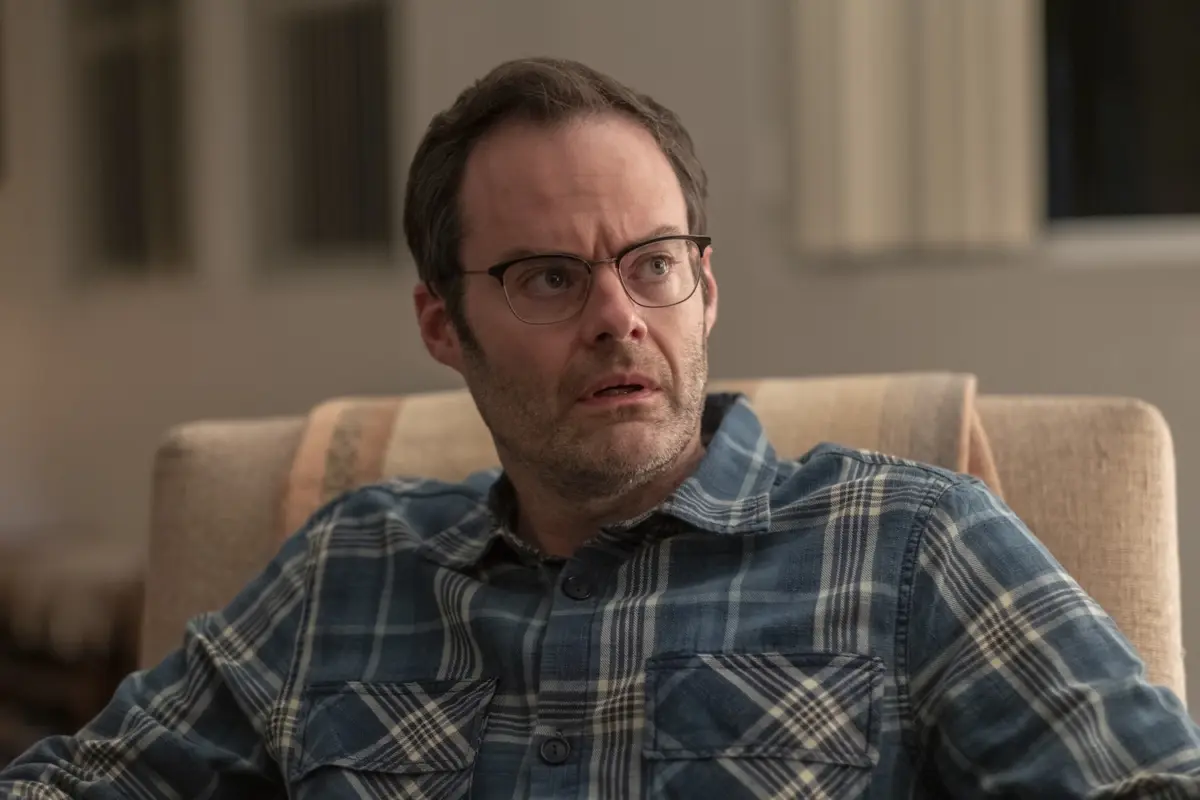
The intersection of literary prestige and high-profile cinematic adaptation has reached a striking crescendo with the expansion of the voice cast for Lincoln in the Bardo. Adapted by acclaimed author George Saunders from his Man Booker Prize-winning debut novel, the upcoming animated feature has transitioned from a modest, highly anticipated passion project headlined by a single iconic actor into an embarrassment of Hollywood riches.
Initially announced with Tom Hanks attached to voice the 16th President of the United States, the production has steadily added an unprecedented ensemble of elite cinematic talent. Recent announcements from industry trades confirm that Willem Dafoe, Jonathan Bailey, Peter Dinklage, Meryl Streep, Colman Domingo, Bill Hader, and legendary musician Tom Waits have officially joined the project.
Directed by Duke Johnson—recognized for his visionary work on the Oscar-nominated stop-motion masterpiece Anomalisa—the film aims to translate Saunders’ structurally dense, emotionally searing narrative onto the screen. Utilizing a distinctive hybrid methodology that merges stop-motion animation with live-action elements, the production seeks to capture the atmospheric ghost-world, or bardo, that serves as the crucible for Abraham Lincoln’s private grief following the 1862 death of his eleven-year-old son, Willie.
Read Also
As the casting roster continues to swell, film analysts and literary critics alike are left marveling at the sheer density of talent assembled for a single project. Far from a conventional historical biopic, Lincoln in the Bardo is shaping up to be a monumental cinematic experiment, anchored by some of the most recognizable voices in contemporary performance.
Detailed Chronology: How the Ensemble Assembled
The journey of Lincoln in the Bardo from page to screen has been characterized by deliberate, calculated announcements that have steadily elevated its industry profile. Tracing the trajectory of the film’s casting reveals a masterclass in building cinematic momentum.
Phase One: The Solo Anchor
The genesis of the film’s public profile began with a singular, commanding headline: Tom Hanks. Announced as the sole initial voice actor attached to the production, Hanks was cast to bring Abraham Lincoln to life. Given the immense emotional gravity of the role—portraying a grieving father wrestling with national tragedy while his nation tears itself apart—Hanks’ involvement immediately legitimized the adaptation, positioning it as a prestigious dramatic undertaking rather than a standard animated venture.
Phase Two: The First Wave of Spirits
For months, the project maintained a relatively quiet profile as production commenced under the direction of Duke Johnson. However, the casting floodgates opened in a significant way when industry intelligence broke that three major dramatic heavyweights had signed on:
- Willem Dafoe, celebrated for his intense, chameleon-like performances in projects like The Lighthouse, joined to voice The Reverend Everly Thomas.
- Jonathan Bailey, riding a massive wave of acclaim from Bridgerton and Wicked, secured the role of Roger Bevins III.
- Peter Dinklage, whose Emmy-winning tenure on Game of Thrones cemented his command of complex, articulate characters, was cast as Hans Vollman.
Phase Three: The Expansion to a Cacophony
The momentum accelerated exponentially with subsequent disclosures from leading trade publications. A new wave of iconic talent signed on to populate the spectral landscape of Oak Hill Cemetery, transforming the voice cast into an extraordinary masterclass of acting royalty.
Meryl Streep, universally regarded as one of the preeminent actors of her generation, joined the production with a staggering mandate: voicing no less than four distinct characters, spanning historical figures, angels, and demons. She was joined by Colman Domingo, fresh off critical plaudits for projects like The Four Seasons, who signed on to voice Thomas Havens. Comedian and auteur Bill Hader (Barry) was cast as Eddie Baron alongside one of the narrative’s spectral "Three Rakes." Finally, the most distinct tonal addition arrived with the casting of gravel-voiced musical icon Tom Waits as Jasper Randall, a former dancehall performer turned demonic entity.
Supporting Context & Metrics: Translating Saunders’ Cacophony
To understand the monumental challenge facing Duke Johnson and his creative team, one must examine the source material. Published in 2017, George Saunders’ Lincoln in the Bardo broke conventional narrative rules, earning immediate critical adoration. Reviewing the novel upon its debut, critics urged readers to surrender to its unique structural demands, describing it as a literal "cacophony of voices."
Deconstructing the Text
Saunders constructed his novel as a collage of historical documentation and pure invention. The text weaves together:
- Authentic historical records and government documents
- Period newspaper clippings and editorial reactions
- Actual diary entries and personal correspondence from 1862 Washington
- Wholly fabricated accounts from a chorus of restless spirits residing in the bardo—a Tibetan Buddhist concept of the intermediate state between death and rebirth.
In the book, the reader is almost immediately introduced to the primary human anchors of the spirit world: Hans Vollman, Roger Bevins III, and The Reverend Everly Thomas. These three gentlemen share a common trait that slowly dawns upon the reader: they are all dead, trapped in their transitionary states by earthly regrets, unfinished business, and profound sorrow.
Translating Roles to the Screen
The brilliant casting strategy behind Lincoln in the Bardo lies in matching distinctive, highly recognizable vocal profiles to the novel’s hyper-specific characters:
| Actor | Character(s) Voiced | Narrative Significance |
|---|---|---|
| Tom Hanks | Abraham Lincoln | The grieving 16th President visiting his son’s crypt. |
| Willem Dafoe | The Reverend Everly Thomas | A tormented soul wrestling with his spiritual fate. |
| Jonathan Bailey | Roger Bevins III | An exuberant, multi-eyed, multi-appendaged spirit of intense passion. |
| Peter Dinklage | Hans Vollman | A man trapped in the bardo with an eternal physical affliction. |
| Meryl Streep | Abigail Bass, Elizabeth Crawford, Angel, Demon | A versatile multi-role performance bridging historical ghosts and ethereal forces. |
| Colman Domingo | Thomas Havens | The ghost of a former slave seeking a history-changing union with Lincoln. |
| Bill Hader | Eddie Baron & One of the Three Rakes | Part of the chaotic chorus haunting the cemetery grounds. |
| Tom Waits | Jasper Randall | A former dancehall performer turned demon attempting to capture young Willie Lincoln. |
Official Statements & Production Vision
The creative vision for Lincoln in the Bardo relies heavily on the fusion of tactile, hand-crafted animation with cutting-edge cinematic storytelling. Co-producers and creative leads have emphasized that standard approaches to historical drama would fail to capture the ethereal, psychological landscape of Saunders’ novel.
According to official production synopses released via industry trades, the film’s aesthetic foundation is deeply deliberate:
"The film employs a unique blend of stop-motion animation and live action to explore one of the most intimate moments of Lincoln’s life, centering on his relationship with his recently deceased eleven-year-old son. Blending history and imagination, the story unfolds through an unforgettable ensemble of characters — living and dead, historical and invented — to explore themes of love, empathy, and the human capacity for connection in the face of unimaginable grief."
Director Duke Johnson, whose previous masterwork Anomalisa proved his capability in utilizing stop-motion to explore deep psychological states and existential loneliness, is uniquely positioned to handle this material. By avoiding pure CGI and relying instead on the tangible, physical artistry of stop-motion puppets—infused with live-action texturing—the production aims to mirror the tactile, graveyard-dirt reality of Saunders’ written world.
George Saunders himself adapted the screenplay, ensuring that the idiosyncratic rhythm, linguistic pluralism, and poignant philosophical queries of the novel remain intact. Rather than smoothing out the narrative rough edges into a traditional three-act historical film, the adaptation leans directly into the polyphonic nature of the book, allowing historical fact and spectral fiction to blur seamlessly.
Future Outlook: Expectations and Industry Impact
As production progresses, Lincoln in the Bardo stands as one of the most intriguing and ambitious animated projects currently on Hollywood’s horizon. The convergence of literary greatness, boundary-pushing stop-motion direction, and a cast of legendary performers creates a high-stakes cultural moment.
Potential Industry Implications
- Redefining Adult Animation: By treating complex, literary historical fiction as prime material for stop-motion animation targeted at mature audiences, the film challenges long-held industry biases regarding the medium.
- Vocal Performance as High Art: The meticulous curation of distinct vocal artists—ranging from Tom Waits’ gravelly cadence to Meryl Streep’s multi-character dexterity—demonstrates that voice acting in animated features can match or exceed the prestige of live-action performances.
- The George Saunders Adaptation Wave: The success or failure of this project will likely dictate how subsequent works of postmodern and formally experimental literature are translated to the screen.
While a definitive release date has yet to be formally locked in by the studios and production houses involved, the steady trickle of major casting announcements suggests that the project is marching steadily toward completion. Cinephiles, literary purists, and animation enthusiasts alike find themselves locked in a state of eager anticipation—anxious to witness how this extraordinary, star-studded cacophony of voices ultimately coalesces in the dark of the theater.


Comments
Facebook App ID not configured. Please add it in the Customizer.