
Executive Overview
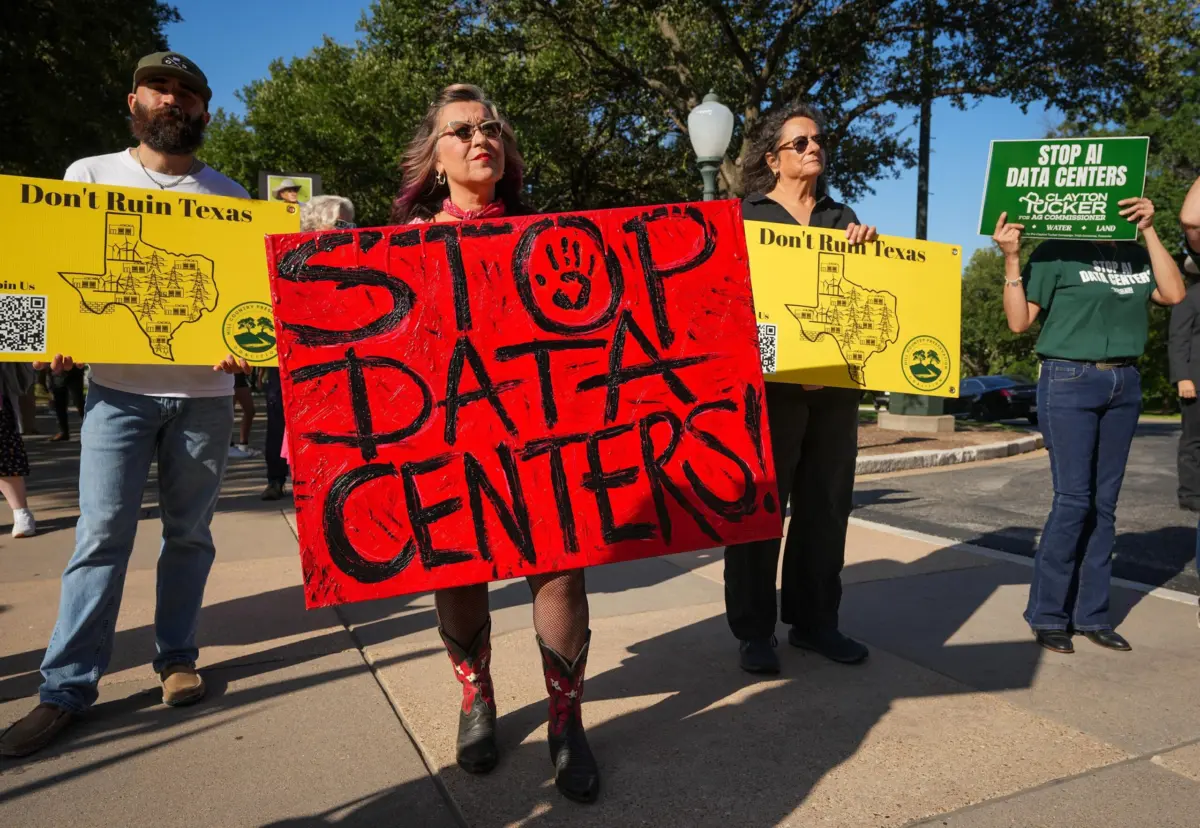
The rapid, unyielding expansion of artificial intelligence has collided head-first with the physical limits of American infrastructure, sparking a seismic political backlash that is rapidly reshaping the landscape of the upcoming midterm elections. Once heralded by politicians of every political stripe as the undisputed harbingers of economic revitalization, high-tech investment, and digital supremacy, massive data centers have suddenly transformed into radioactive political liabilities.
From the sun-baked plains of Texas to the industrial heartland of Ohio, a wave of grassroots fury has compelled a dramatic about-face among elected officials. Where governors and senators once tripped over themselves to roll out the red carpet for tech conglomerates promising billions in capital expenditures and shiny new construction jobs, they are now rushing to slam the brakes on new builds. These politicians are publicly distancing themselves from the very facilities they previously championed, responding to a groundswell of local anxiety over skyrocketing utility bills, water scarcity, environmental strain, and the existential societal questions posed by unchecked automation.
This sudden pivot—documented extensively through text and social media analyses—reveals a rare bipartisan convergence. Democrats and Republicans alike are finding themselves trapped between the unrelenting demands of the technological revolution and the fierce, protective anger of constituents who feel their neighborhoods are being pillaged to power server farms for tech billionaires. As candidates recalibrate their platforms ahead of a high-stakes election cycle, the data center controversy is testing the fundamental tenets of American governance: Are politicians meant to be delegates executing the immediate will of the people, or trustees charting a pragmatic course for the nation’s future regardless of short-term friction?
Read Also
Detailed Chronology: From Silicon Gold Rush to Political Third Rail
To understand how data centers became the ultimate political third rail, one must trace the dizzying trajectory of public sentiment over the past two years.
Phase 1: The Honeymoon of the Tech Boom (Early to Mid-2025)
Following the explosive public debut and maturation of generative AI models, the federal government and state legislatures entered a period of unbridled techno-optimism. In mid-2025, the White House aggressively signaled that technological dominance over geopolitical rivals was a top national priority. President Donald Trump initiated a sweeping second-term push designed to inaugurate a "golden age for American manufacturing and technological dominance." As part of this overarching economic strategy, the administration issued executive orders aimed at streamlining and accelerating federal permitting processes for data center infrastructure.
At the state level, leaders eagerly embraced the directive. In late 2025, Texas Governor Greg Abbott proudly stood shoulder-to-shoulder with tech executives, proclaiming the Lone Star State as the undisputed "epicenter of AI development" after securing a monumental $40 billion infrastructure investment. Similarly, Midwestern leaders—including Ohio’s then-lieutenant governor—extolled the virtues of incoming server installations, framing them as essential milestones that would cement their states as premier American tech hubs.
Phase 2: The Grassroots Awakening (Late 2025 to Early 2026)
As construction blueprints materialized into sprawling, windowless megastructures consuming vast tracks of land, the abstract promises of a digital future met the harsh, physical reality of local communities. By early 2026, the rhetoric began to curdle.
What started as localized murmurs quickly metastasized into a roaring populist revolt. Everyday citizens began noticing immediate, tangible consequences: local power grids straining under unprecedented loads, residential electricity bills creeping upward, municipal water supplies tapped to cool millions of processors, and the omnipresent rumble of heavy industrial machinery altering the character of quiet towns. This localized friction merged seamlessly with a broader, more generalized anxiety about the societal implications of AI—fears regarding job displacement, cognitive reliance, and the erosion of community integrity.
Phase 3: The Great Political Pivot (Spring to Summer 2026)
Recognizing the explosive potential of this public anger, political operatives and elected officials began executing a synchronized retreat. By February 2026, data analysis of thousands of legislative newsletters, press releases, and social media posts revealed a definitive flip in political messaging. The predominant tone shifted from glowing praise of economic opportunity to sharp, defensive warnings about corporate exploitation and resource extraction.
The climax of this defensive posture arrived when traditional bastions of business-friendly conservatism began buckling under the pressure. In Texas, Governor Abbott—facing a grueling reelection cycle—abruptly changed course. Abandoning his previous unbridled enthusiasm, Abbott instituted a statewide moratorium on new data center construction, ostensibly pending a rigorous audit of how these facilities integrate with and impact the stability of the state’s beleaguered power grid. While administration officials have avoided explicitly tying the pause to the upcoming November ballot box, the political utility of the timing is lost on no one.
Supporting Context & Metrics: Analyzing the Shift
The linguistic transformation of the American political class has been quantified by data journalists and researchers tracking digital communications. By parsing thousands of public-facing communications from federal and state lawmakers, analysts have mapped out an unmistakable shift in political survival instincts.
The analytical data paints a stark picture:
- The Republican Flips: The vast majority of congressional Republicans and state-level executives who once praised data centers for job creation now frame them through a populist, protective lens. Key battleground candidates are increasingly using rhetoric centered on preventing everyday citizens from "footing the bill" for corporate tech expansion.
- The Democratic Realignment: Democratic leaders in states like Pennsylvania (under Governor Josh Shapiro) and Illinois (under Governor J.B. Pritzker) have quietly or overtly placed limitations on new developments. Once viewed purely as union-heavy construction boondoggles, data centers are now frequently critiqued by progressive and moderate Democrats alike for transferring wealth into the hands of a microscopic elite while destabilizing local utility markets.
- The Warning Signs from Party Apparatuses: The severity of the political threat is best illustrated by internal party polling and warnings. The National Republican Senatorial Committee (NRSC) issued blunt assessments regarding vulnerable incumbents, explicitly warning that unaddressed controversies surrounding data centers could serve as an "anchor hanging around [a candidate’s] neck" in toss-up races.
This metric-driven realization proves that the backlash is not merely a localized nuisance or a fleeting news cycle. It has been codified as a top-tier electoral vulnerability, capable of swinging tight legislative majorities.
Official Statements and Divergent Philosophies
As the political class scrambles to manage the fallout, stark ideological fractures have emerged regarding how the United States should handle the physical footprint of the digital age.
The Populist and Protective Posture
The dominant consensus among mainstream politicians now leans heavily toward skepticism and defensive posturing. Lawmakers frequently argue that their primary obligation is to insulate constituents from corporate overreach. For example, congressional critics have increasingly lambasted what they characterize as "data center extraction"—a process whereby tech giants siphon public water reserves, drive up household electricity costs, and concentrate immense wealth among a handful of tech billionaires while leaving local taxpayers holding the bag.
Even within the executive branch, a fascinating ideological tension persists. President Trump has walked a complex tightrope: while championing executive actions designed to protect everyday consumers from spikes in their power bills driven by massive server loads, he has simultaneously maintained a parallel pro-growth stance. In recent social media pronouncements, the former president warned that communities hostile to data development risk "end[ing] up being backwards and poor," arguing that welcoming the digital infrastructure remains the key to unlocking low taxes and hyper-local economic prosperity.
The Geopolitical Reality Check
A small, defiant faction of lawmakers continues to buck the populist trend, arguing that political opportunism is blinding the country to harsh strategic realities. Representatives such as Missouri Republican Eric Burlison have emerged as vocal defenders of unchecked data expansion, anchoring their arguments in great-power competition.
Burlison and other tech advocates pose a blunt question to their constituents and colleagues: Who benefits when Americans turn against data infrastructure? Their answer is unequivocal: China. From this perspective, slowing down domestic AI infrastructure out of localized NIMBYism or populist outrage hands a decisive strategic victory to foreign adversaries who are racing to dominate the architecture of the 21st century.
This creates a classic political science dilemma. When constituents overwhelmingly reject a necessary evil due to immediate quality-of-life concerns, what is the proper role of an elected representative? Is the politician’s mandate to act as a pure delegate—slavishly echoing the short-term fears of the electorate—or to act as a statesman willing to absorb political damage to secure the nation’s technological future?
Future Outlook: Navigating the Digital Gridlock
As the nation barrels toward the midterms, the data center backlash offers a fascinating window into the ongoing political realignment of the United States. The traditional playbook—where the business-friendly right and the labor-conscious left maintained predictable stances on corporate investment and infrastructure—has been thoroughly upended.
In its place is a volatile populist landscape where both parties are grappling with how to reconcile the digital economy with physical human limits. Even politicians who continue to support data construction have fundamentally altered their pitch. Rather than offering unconditional praise, today’s pro-data center politicians emphasize aggressive mitigation: forcing tech giants to pay their "fair share," mandating dedicated renewable energy generation so local grids aren’t overburdened, and enacting strict environmental safeguards to protect regional water tables.
Ultimately, the data center crisis of 2026 demonstrates that the friction between technological progress and human habitability can no longer be ignored or abstracted away in Silicon Valley boardrooms. Whether politicians choose to appease local anxieties or confront them with hard truths about global competition, the physical infrastructure of the AI revolution has officially entered the electoral arena—and it is dictating the terms of engagement for the future of American democracy.





Comments
Facebook App ID not configured. Please add it in the Customizer.