

Executive Overview
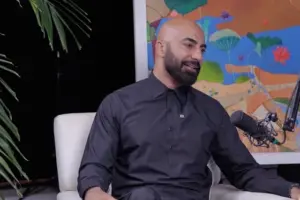
Renowned musical icon Atif Aslam has once again ignited discussions across the South Asian music landscape by offering a sharp, culturally nuanced critique of the region’s premier musical franchises, Coke Studio Pakistan and Coke Studio Bharat. In a candid interview with Mirchi UAE, Aslam dissected the structural and atmospheric differences that separate the two platforms, attributing the Pakistani edition’s enduring appeal to an elusive, authentic "jaadoo" (magic) born from artistic urgency. According to the celebrated vocalist, while Coke Studio Bharat leans toward a polished, highly commercial framework, the Pakistani iteration thrives on a raw, high-stakes creative environment that prizes individual flair and original composition over marketability.
Beyond regional comparisons, Aslam addressed one of the most polarizing modern debates in the creative industries: the integration of Artificial Intelligence (AI) into music production. Offering a pragmatic perspective, the singer conceded that while AI technology may soon master the technical replication of vocal performance, it will ultimately fail to capture the deeply personal, subjective nature of human composition. Drawing a firm line between algorithmic mimicry and lived experience, Aslam noted that songwriting remains anchored in human emotion and contextual memory.
This discourse arrives on the heels of a massive career milestone for the artist. Following the July 31 release of Subah Aye Na—his fourth studio album and his first full-length record in 18 years—Aslam is currently experiencing a profound artistic renaissance. Having recently stated that he was "sick of commercial music," his reflections on Coke Studio and AI underscore a broader, career-defining shift: a deliberate retreat from the treadmill of commercial pop production in favor of artistic authenticity and raw, unfiltered storytelling.
Read Also
Detailed Chronology: From Chart-Topping Stardom to the 18-Year Album Hiatus
To fully appreciate Aslam’s recent commentary on the soul of music and the mechanical limits of AI, one must examine the timeline of his illustrious career, which has spanned over two decades and witnessed the seismic transformation of the South Asian music industry.
The Rise of a Phenomenon (Early 2000s)
Atif Aslam burst onto the subcontinental music scene in the early 2000s as the frontman of the band Jal before launching a stellar solo career. His debut album, Jal Pari (2004), redefined contemporary Pakistani pop-rock, introducing a gritty, emotionally charged vocal delivery that resonated deeply with millions. Hits like "Aadat," "Bheegi Bheegi," and "Woh Lamhe" catapulted him to international stardom, establishing him as a crossover sensation between Pakistan and India, where his playback singing in Bollywood blockbusters cemented his legacy as a household name.
The Long Hiatus and Commercial Exhaustion (2008–2024)
Following the release of his third studio album, Meri Kahani, in 2008, Aslam stepped away from the traditional album format. For nearly two decades, the music industry shifted toward a single-driven, digital-first marketplace. During this period, Aslam maintained a relentless touring schedule and delivered massive cinematic hits. However, the treadmill of constant commercial obligations took a heavy toll. As the artist recently revealed, years of catering to commercial demands left him feeling disconnected from his artistic roots. He confessed that he had grown "sick of commercial music," recognizing a creeping homogenization in how tracks were produced for mass market consumption.
The Return: Subah Aye Na (July 31, 2026)
Breaking an 18-year silence, Aslam released his fourth studio album, Subah Aye Na, on July 31, 2026. Designed as a deliberate step away from algorithm-driven pop, the record represents a reclamation of his artistic autonomy. Subah Aye Na serves as a sonic diary, prioritizing personal expression over radio-friendly formulas. It is within this context of creative liberation that Aslam’s recent media appearances—including his insights shared with Mirchi UAE—take on profound significance, reflecting an artist who has reconnected with his craft and is unafraid to critique the commercialization of modern music.
Supporting Context & Metrics: The Coke Studio Phenomenon and the AI Shift
The Evolution of Coke Studio: Pakistan vs. Bharat
Coke Studio, originally conceived in Brazil in 2007, found its most celebrated cultural incubator in Pakistan when it launched in 2008 under the visionary production of Rohail Hyatt. The platform revolutionized the South Asian music scene by fusing traditional folk, classical, and Sufi music with contemporary rock, pop, and electronic elements. Over the years, artists like Atif Aslam have delivered definitive performances on the platform, including his legendary renditions of Tajdar-e-Haram (Season 8) and Wohi Khuda Hai (Season 12), as well as boundary-pushing pop-fusion tracks like Sajan Das Na and Go (Season 14, alongside Abdullah Siddiqui).
When Coke Studio Bharat launched in India, it aimed to replicate this magical fusion across the diverse linguistic and cultural landscapes of India. However, as Aslam pointed out, structural divergences quickly emerged.
- The Pakistani Paradigm: Characterized by a localized, tight-knit community of producers and musicians working under intense creative pressure. Aslam likened the Pakistani production process to a "do-or-die situation," where the sheer scarcity of resources relative to neighboring media markets forces artists to pour raw, unfiltered emotion into every note.
- The Indian Paradigm: Tends to reflect a more heavily structured, corporate-backed commercial framework. While boasting immense technical polish and star power, Aslam argues that this environment occasionally strips away the vital, unpolished edges that define authentic musical storytelling.
The Global AI Disruption in Music
Aslam’s foray into the debate surrounding Artificial Intelligence mirrors global anxieties within the creative sectors. According to recent industry metrics from the International Federation of the Phonographic Industry (IFPI) and various music tech analysts:
- Vocal Cloning: Generative AI models have advanced to the point where they can clone an artist’s exact vocal timbre, vibrato, and inflection within seconds, leading to a surge of unauthorized AI-generated "deepfake" tracks.
- Compositional Limitations: Despite advancements in algorithmic chord progression generation and lyric assistance (such as ChatGPT, which Aslam admitted to occasionally consulting for lyrical ideation), AI fundamentally lacks episodic memory, emotional interiority, and lived experience.
- The Human Element: Analysts emphasize that audiences continue to crave the narrative authenticity of human vulnerability—a sentiment that perfectly aligns with Aslam’s assertion that AI can replicate singing, but never the personal soul of composition.
Official Statements and Insights: Perspectives from the Artist
During his comprehensive interview with Mirchi UAE, Aslam articulated his thoughts with trademark candor, providing deep insight into his creative philosophy.
On the Intangible "Jaadoo" of Pakistani Music
Elaborating on the distinct qualities of Coke Studio Pakistan versus its international counterparts, Aslam emphasized that the difference lies in the psychological and emotional stakes of the creators:
"The compositions on both sides are strong, but the rawness that we associate with Pakistani music is often missing from the Indian version. Coke Studio Bharat leans much more heavily toward commercialism, whereas the Pakistani show places a far greater emphasis on original composition and individual flair."
He further characterized the production environment in Pakistan as a high-pressure crucible:
"It is almost a do-or-die situation for the small group of people working on a composition. That pressure leaves room for genuine personal flair, creating a certain ‘jaadoo’ [magic] that cannot simply be manufactured in a boardroom."
On the Boundaries of Artificial Intelligence in Art
Rather than dismissing technological advancements outright, Aslam adopted a pragmatic, analytical stance regarding the integration of AI into the creative process:
"Singing, as a mechanical skill, can realistically be replicated by AI. Machines can learn pitch, tone, and control with terrifying accuracy. But composition is an entirely different matter because it is deeply subjective and inextricably tied to the individual creating it."
To ground his argument in practical reality, Aslam provided a vivid hypothetical scenario:
"If I wanted to write a song about a specific person, an AI would not be able to do so meaningfully without being fed extensive, detailed data about that individual’s life, nuances, and my relationship with them. Even then, it would be a simulation of emotion, not the emotion itself."
When questioned about his own technological habits, Aslam offered an honest revelation:
"I might occasionally turn to tools like ChatGPT for help with brainstorming lyrics or finding a word, but the core soul—the lived experience that gives a song its heartbeat—must come from within."
Future Outlook: The Re-enchantment of Modern Music
As the global music industry navigates the turbulent waters of algorithmic streaming, corporate homogenization, and the rapid encroachment of generative AI, the philosophy articulated by artists like Atif Aslam serves as both a warning and a beacon of hope.
The release of Subah Aye Na demonstrates that there is a thriving, economically viable market for deliberate, uncompromising artistic integrity. By stepping away from the relentless churn of commercial singles, Aslam has proven that veteran artists do not need to succumb to algorithmic trends to remain relevant. Instead, by doubling down on emotional depth, regional authenticity, and human storytelling, creators can forge a deeper, more resilient bond with their audiences.
Looking forward, the dichotomy highlighted by Aslam between Coke Studio Pakistan and Coke Studio Bharat—as well as his measured take on artificial intelligence—signals a broader industry reckoning. As AI continues to saturate digital platforms with hyper-optimized, frictionless audio content, audiences are increasingly likely to seek out the flaws, the organic rawness, and the authentic human struggle embedded in real acoustic artistry.
Ultimately, Aslam’s insights remind us that while technology may forever alter how music is distributed and replicated, the fundamental impulse to translate human pain, joy, and memory into song remains an exclusively human domain. That "jaadoo" is something no algorithm has yet learned to code.


Comments
Facebook App ID not configured. Please add it in the Customizer.