
Executive Overview
In an era defined by ubiquitous digital distractions, relentless push notifications, and the steady erosion of deep-reading habits across demographics, the publishing industry is experiencing a quiet structural reckoning. Consumers increasingly find themselves caught in a paradox: they yearn for the immersive intellectual gratification of a well-crafted narrative, yet their daily routines are chopped into bite-sized fragments that struggle to accommodate the traditional 400-page tome. Enter Union Square & Co., an imprint of the prestigious Grand Central Publishing Group, with a calculated and timely intervention.
Beginning this September, the publisher will officially launch Singularity, an ambitious new novella program helmed by Union Square editorial director Mika Kasuga. Designed to release between 10 and 12 paperback titles per year, Singularity is positioned not merely as a new product line, but as a direct artistic and commercial response to the shifting psychographics of the modern reader. By championing the novella—a literary format historically relegated to niche anthologies or ignored by major houses favoring blockbuster heft—Singularity aims to prove that profound emotional resonance, complex world-building, and high-stakes storytelling do not require sprawling word counts.
The imprint’s debut slate reads like a masterclass in cross-genre curation, balancing literary prestige with pulp-adjacent energy. From speculative gaming-horror mashups and post-apocalyptic milestones to anti-capitalist Cosmicism and gritty supernatural noir, Singularity is casting a wide net across speculative fiction, horror, and literary character studies. While the program’s foundation will primarily rest on original, frontlist acquisitions, its inaugural launch window proudly anchors itself in celebrated genre touchstones, offering collectors and newcomers alike heavily augmented editions of beloved classics.
Read Also
Beyond the editorial vision, Singularity represents a distinct design philosophy. Each book will be printed as a high-quality paperback featuring French flaps—a tactile aesthetic choice meant to elevate the physical object, transforming it into an easily portable, artifact-like companion for the commuter, the traveler, and the digital detoxer. As major publishers grapple with how to retain readers who feel perpetually over-scheduled, Singularity’s launch marks a significant test case for whether the industry can successfully repackage literary depth into an agile, snack-sized delivery system.
Detailed Chronology: The Launch Roadmap and Inaugural Slate
The rollout of the Singularity program has been meticulously structured to establish immediate market presence this fall, before expanding into a diverse, multi-genre assault on bestseller lists throughout the spring of 2027.
Fall 2025: The Inaugural Launch Window
The imprint officially opens its doors on September 1, dropping its first two titles simultaneously. Though Singularity is fundamentally a frontlist-driven initiative, its launch anchors itself in two distinct pillars of speculative fiction, both presented in enhanced reissue editions complete with exclusive new content and archival materials:
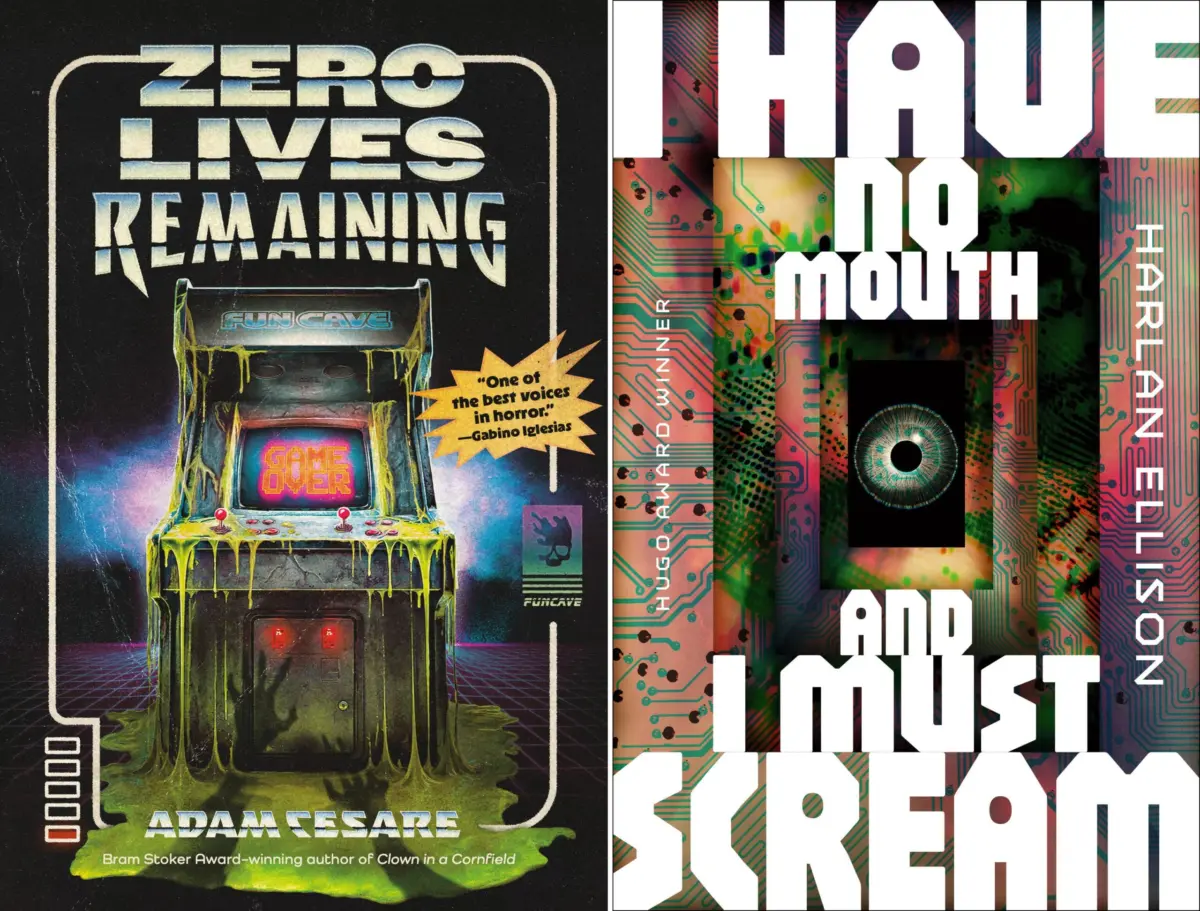
- Zero Lives Remaining by Adam Cesare: Hailed as a high-octane "gamers versus ghosts" slasher, Cesare’s novella blends retro arcade nostalgia with visceral, modern horror tropes. The Singularity edition promises to reintroduce readers to Cesare’s breathless pacing with fresh supplemental material.
- I Have No Mouth, and I Must Scream by Harlan Ellison: A monumental pillar of post-apocalyptic science fiction, Ellison’s terrifying vision of a sentient supercomputer torturing the last five surviving humans remains as chilling today as it was upon its original publication. The inclusion of this title signals Singularity’s ambition to sit comfortably alongside speculative fiction’s historical heavyweights.
The momentum continues into the late fall with a major original frontlist debut:
- November 3: The Waiter by Kwan Ann Tan: Pushing the boundaries of structural innovation, this speculative, choose-your-own-adventure–style debut is set against the backdrop of a surreal, futuristic London. Tan’s work promises to test reader agency within a compact narrative framework, blending interactive fiction mechanics with literary prose.
Spring 2027: Genre Expansion and Diverse Voices
Moving past its launch phase, Singularity’s spring 2027 calendar reveals an eclectic expansion across speculative subgenres, literary fiction, and atmospheric horror, demonstrating the immense versatility of the novella format across five key releases:
- January 5: The Psalmist by John West: Shifting away from pure speculative fiction, West’s novella offers a deeply intimate, character-driven exploration of a recovering alcoholic grappling with grace, relapse, and redemption. The inclusion of The Psalmist underscores Mika Kasuga’s commitment to ensuring the imprint balances genre thrills with hard-hitting literary realism.
- February 2: You Just Have to Ask Me by Hadeer Elsbai: Elsbai steps into the ring with a razor-sharp horror novella designed to tap into psychological terrors and societal anxieties, cementing Singularity’s dedication to contemporary horror voices.
- February 9: The Upper Tentacle by Amanda Helms: Described by the publisher as an "anti-capitalist Lovecraftian homage," Helms’s novella promises to merge the cosmic dread of the Cthulhu Mythos with sharp, satirical critiques of modern corporate structures and economic exploitation.
- March 3: Sweet Saints by Cassandra Khaw: Renowned for dark, lyrical prose, Khaw contributes a cozy fantasy novella. Sweet Saints will offer readers a warm, comforting escape without sacrificing the emotional complexity and intricate world-building that define Khaw’s bibliography.
- April 20: Shouting Distance by Cherie Priest: Rounding out the spring slate, Priest delivers what the publisher terms a "gritty supernatural southern noir." Set against swampy, atmospheric backdrops where the occult bleeds into everyday crime, Priest’s novella brings hardboiled detective fiction into direct contact with otherworldly phenomena.
Supporting Context & Metrics: The Anatomy of the Modern Novella Revival
To understand why Union Square & Co. is placing a strategic bet on the novella format, one must examine the broader socio-cultural and economic currents reshaping the publishing landscape.
For decades, the standard-length novel (roughly 80,000 to 120,000+ words) has reigned supreme as the gold standard of commercial viability. Booksellers often favored thicker spines for perceived value on shelves, and literary awards frequently tilted toward sprawling epics. However, the economic and behavioral realities of the 2020s have initiated a quiet counter-revolution.
Market research consistently highlights the squeeze on modern leisure time. As streaming services, short-form video platforms (TikTok, Instagram Reels), and mobile gaming fiercely compete for human attention, the average consumer’s continuous reading block has shrunk. A 2023 study on reading habits noted that while consumer desire to read remains robust, completion rates for long-form books have faced downward pressure due to perceived time scarcity.
The novella—traditionally defined as a work of fiction ranging from roughly 17,000 to 40,000 words—offers a structural sweet spot. It provides the narrative architecture, character depth, and thematic exploration of a full-length novel, but can be consumed in a single sitting or over the course of a weekend commuter train ride.
Furthermore, independent publishing and boutique presses have spent the last several years proving there is a voracious, underserved appetite for short-form speculative fiction. Houses like Tor.com Publishing famously built a powerhouse novella line that captured multiple Hugo and Nebula awards, proving that readers will enthusiastically pay premium trade-paperback prices for shorter works if the quality and packaging are exceptional. Union Square & Co.’s launch of Singularity represents a major traditional publishing house stepping decisively into this space, backed by corporate distribution muscle and sophisticated design aesthetics.
Official Statements: Inside the Vision of Union Square Leadership
The philosophical underpinnings of the Singularity program were forged in direct response to the digital fatigue experienced by contemporary readers. In official statements released alongside the imprint’s announcement, Union Square leadership articulated a clear mandate for the brand.
Emily Meehan, Senior Vice President and Publisher at Union Square, revealed that the initiative grew organically out of internal dialogues regarding cultural shifts in attention spans.
"The Singularity program was born out of conversations Mika and I had about reduced attention spans and the desire for a more snack-sized reading experience that doesn’t compromise depth for length," Meehan stated.
She emphasized that the imprint is designed to act as a cultural antidote to an increasingly fractured digital reality, offering readers a sanctuary of sophisticated storytelling that respects their time constraints.
"We wanted to celebrate the novella as a format and use the program as yet another platform to showcase Union Square’s commitment to create books that resonate deeply with readers—especially ones looking for accessible, sophisticated stories in our ever more digital reality," Meehan added.
Under the editorial direction of Mika Kasuga, the program is poised to execute this vision by curating a slate that refuses to box itself into a single genre ghetto. By pairing established horror icons like Harlan Ellison and Adam Cesare with fresh literary voices exploring alcoholism (The Psalmist), interactive structural experiments (The Waiter), and anti-capitalist cosmic horror (The Upper Tentacle), Kasuga is signaling that Singularity will be a playground for stylistic ambition.
Future Outlook: Can Singularity Redefine the Paperback Market?
As Union Square & Co. prepares to ship its inaugural titles this September, the broader publishing industry will be watching closely to evaluate the long-term viability of the Singularity model.
If the imprint successfully hits its target of 10 to 12 titles per year, it will rapidly amass a robust backlist of high-end, aesthetically cohesive paperbacks. The choice of French flaps—a design element featuring folded-in cover flaps typically reserved for high-end literary fiction and trade paperbacks—indicates that Union Square is marketing these books as collectible aesthetic objects, appealing directly to the BookTok and Bookstagram communities where physical book design heavily drives purchasing decisions.
The challenge for Singularity will lie in pricing elasticity and consumer perception. Novellas have historically faced consumer resistance when priced identically to full-length novels, as buyers instinctively calculate cost-per-page. By investing in premium production values, exclusive supplementary archival content, and high-profile original frontlist authors, Union Square is working proactively to reframe the value proposition: you are paying not for word count, but for conciseness, artistic density, and a portable reading experience unburdened by narrative filler.
If Singularity strikes a chord with audiences starved for high-impact, low-fatigue storytelling, it could trigger a broader wave of major-publisher investment in short-form fiction. For now, Union Square & Co. has drawn a line in the sand, betting that in an age of infinite digital noise, the sharpest blade is often the shortest one.





Comments
Facebook App ID not configured. Please add it in the Customizer.