
Executive Overview
In the high-stakes, highly structured world of children’s publishing, the creation of a picture book is traditionally bound by a linear protocol: an author conceives a manuscript, refines the text through successive editorial passes, and eventually delivers it to a publisher. Only then is an illustrator brought on board to interpret the written word through visual media.
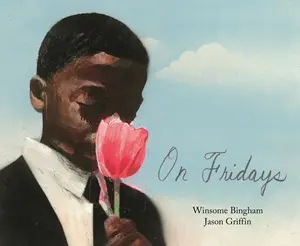
In early 2024, however, this long-standing industry standard was upended by a creative duo working under conditions of profound personal vulnerability and artistic experimentation. The result of their unorthodox collaboration is On Fridays (Holiday House/Neal Porter Books), a poignant, reverse-engineered picture book that explores themes of loss, community, and found families.
The book centers on Jamar, a young boy who regularly accompanies his mother to her workplace at an assisted living facility, where he forms deep bonds with the elderly residents—one of whom eventually passes away. But the story behind the creation of On Fridays is every bit as compelling as the narrative within its pages. Conceived while award-winning author and U.S. Army veteran Winsome Bingham was receiving inpatient treatment for severe clinical depression at a Veterans Affairs (VA) hospital in upstate New York, the project serves as a testament to the therapeutic power of art.
Read Also
Triggered by a series of abstract, playing-card-sized paintings sent by Caldecott Honor artist Jason Griffin, Bingham’s creative paralysis was shattered. Working in hospital cafeterias, on construction paper, and between therapy sessions, Bingham engineered a narrative backward from Griffin’s vibrant strokes of pink, yellow, and blue.
This article explores the anatomy of this unique collaboration, examining the convergence of military trauma, studio experimentation, editorial vision, and creative trust that brought On Fridays to life. Through detailed chronology, industry context, and exclusive commentary from the creators and editors involved, we examine how an unconventional prompt birthed a transformative work of literature.
Detailed Chronology: From a Greenpoint Studio to a VA Hospital Ward
The Catalyst in Brooklyn
The genesis of On Fridays can be traced back to the Greenpoint, Brooklyn studio of artist Jason Griffin. A Maryland native who estimates he spends between 45 and 60 hours a week immersed in what he terms "mad scientist mode," Griffin approaches his craft with an unyielding sense of play, exploration, and discovery.
In early 2024, Griffin hosted his literary agent, Elena Giovinazzo (then at Pippin Properties), in his studio to brainstorm potential future projects. Amidst the chaos of the studio, Giovinazzo’s attention was drawn to a collection of small paintings—roughly the size of playing cards—laid out across a table. Though small in scale, the pieces carried an immense emotional resonance.
"They spoke to me," Giovinazzo recalled. "They were melancholy but joyful."
Recognizing the distinct emotional cadence of the work, Giovinazzo suggested a departure from standard industry protocol. Rather than waiting for a completed manuscript to match with an illustrator, she urged Griffin to send the abstract images—featuring tulips, guitars, and expansive skies—directly to Winsome Bingham, an author with whom Griffin had previously collaborated on the acclaimed picture book The Table.
The "Black Hole" in Upstate New York
At the exact moment Giovinazzo and Griffin were formulating this idea, Winsome Bingham was navigating the darkest period of her post-military life.
A Jamaican-born Army veteran who served in Afghanistan in 1991 during Operation Desert Storm, Bingham sustained a traumatic brain injury (TBI) when she was struck with a rifle during her service. In the decades that followed, she grappled with the compounding impacts of combat-related post-traumatic stress disorder (PTSD), severe depression, and anxiety. By early 2024, these challenges had culminated in an acute crisis, landing her in a VA hospital in upstate New York for intensive psychiatric treatment.
"I hadn’t written anything in months," Bingham reflected. "I was in a black hole. I didn’t have any creativity in me."
Compounding her isolation, Bingham had extremely limited access to her iPad while hospitalized. Her creative output had ground to a complete halt, overshadowed by the daily grind of psychiatric care and trauma recovery.
The Convergence of Signs
The turning point arrived via an email forwarded by Bingham’s literary agent, Hannah Mann of Writers House. It was the first email Bingham had received in weeks. Inside were Griffin’s digital screenshots—the abstract playing-card-sized paintings of everyday objects and atmospheric wonders.
As Bingham sat in the hospital’s art therapy room processing the images, she looked up and noticed a guitar leaning against the wall directly across from her. The instrument bore a striking resemblance to the guitar rendered in Griffin’s artwork. For Bingham, who had recently explored the depths of PTSD in her Abrams picture book Missing Momma, the coincidence felt less like a chance occurrence and more like a definitive sign.
"The colors of the artwork—the pinks, yellows, and blues—were the light I needed," Bingham said. "I immediately saw something."
Writing in the Margins
Struck by a sudden jolt of inspiration that cut through her depression, Bingham began drafting On Fridays. Operating without the traditional luxury of a quiet home office or dedicated writing desk, she seized moments between clinical therapy sessions. She wrote in the hospital cafeteria, scrawling prose onto napkins, worksheets, and scraps of construction paper.
Over the span of just one week, the narrative of On Fridays crystallized. It told the story of Jamar, bridging generational divides within the walls of an assisted living facility.
For Bingham, the act of writing was nothing short of life-saving. "Getting that artwork was transformative," she noted. "It flipped something in my brain."
Supporting Context & Metrics: Redefining Picture Book Mechanics
To fully appreciate the departure represented by On Fridays, one must understand the economic and creative mechanics of the children’s publishing industry.
The Traditional Pipeline vs. Reverse-Engineering
Typically, the picture book ecosystem operates on a sequential pipeline:
- Manuscript Generation: An author spends months—sometimes years—crafting a text, ensuring tight word counts (usually under 1,000 words), rhythmic pacing, and emotional resonance.
- Submission & Acquisition: The manuscript is submitted through agents to publishing houses, where editors evaluate its commercial and artistic viability.
- Illustrator Assignment: Once acquired, the editor pairs the text with an illustrator whose visual style complements the narrative.
- Visual Interpretation: The illustrator develops storyboards, character sketches, and final art over a 6-to-18-month window.
On Fridays completely inverted steps one and three. By starting with abstract, emotion-driven visual art and generating a narrative in response to it, Bingham and Griffin engaged in a rare form of ekphrasis—literary description inspired by visual art—applied to the picture book medium.
Mental Health in the Veteran Community
Bingham’s experience highlights a broader, critical intersection between military service, psychological trauma, and creative expression. According to the Department of Veterans Affairs, millions of veterans navigate the invisible wounds of war, including PTSD and TBI. Clinical studies consistently point to art therapy, creative writing, and structured artistic engagement as vital modalities for processing trauma when traditional talk therapy reaches its limits.
For Bingham, whose creative output was restored within the sterile, clinical confines of a VA hospital, the project proves that art is not merely a commercial product, but a vital psychological lifeline.
The Evolution of Griffin’s Visual Vocabulary
Jason Griffin is no stranger to deep, collaborative storytelling. His previous work includes the acclaimed collaboration My Name Is Jason. Mine Too. with bestselling author Jason Reynolds. However, the visual demands of On Fridays required a unique synthesis of abstraction and deeply personal realism.
When Taylor Norman, editorial director at Neal Porter Books (an imprint of Holiday House), reviewed Bingham’s completed manuscript, she recognized an opportunity to deepen the visual narrative. She challenged Griffin to produce additional artwork, specifically intimate portraits of the characters inhabiting Jamar’s world.
Griffin leaned into his personal artistic traditions. Known for creating memorial portraits of deceased family members as a method of spiritual and physical immortalization, Griffin grounded the book’s character art in genuine human history.
"I was on a mission," Griffin explained. "If I was going to do portraits, they needed to come from somewhere true, from a real place."
Rather than relying purely on imagination, Griffin based the book’s character portraits on the actual family members of people in his own life, lending an authentic, ancestral weight to the pages of On Fridays.
Official Statements and Industry Perspectives
The unorthodox birth of On Fridays generated profound reactions across the publishing team, highlighting the deep mutual trust required to upend traditional publishing norms.
-
Winsome Bingham on the healing power of the project:
"I cannot talk about this book and not cry. Jason’s artwork found me when I was at my lowest point… The colors of the artwork—the pinks, yellows, and blues—were the light I needed. I immediately saw something."
-
Jason Griffin on the mechanics of creative trust:
"I call it mad scientist mode. I like to maintain a sense of play, exploration, and discovery… Trust is an important part of collaboration: to let the person have a genuine reaction and not try to control the experience."
-
Elena Giovinazzo (Agent) on the spontaneous pitch:
"Normally an artist has to wait for the right manuscript to be sent their way. We just said, ‘Well, let’s try this and see what happens.’"
-
Taylor Norman (Editorial Director, Neal Porter Books) on the synergy of the creators:
"What I love about Winsome and Jason is that they don’t settle. Winsome is an amazing force. Jason breathes out art."
Future Outlook: The Legacy of On Fridays
As On Fridays makes its way into classrooms, libraries, and family living rooms, its impact extends far beyond commercial success or critical acclaim. It serves as a living blueprint for how creative industries can support artists navigating personal crises, proving that rigid institutional processes can bend when met with radical empathy and artistic courage.
For Jason Griffin, the studio remains an unyielding engine of optimism. Describing art as his "oxygen mask," he continues to generate upwards of a dozen ideas a day, treating every canvas as a space for potential healing.
For Winsome Bingham, the book stands as both a monument to her resilience and a bridge to her community. Having navigated the black hole of severe depression, she has emerged with a story that reminds young readers and adults alike that even in moments of profound loss and isolation, community and family—whether found or biological—can offer a restorative light.
In subverting the traditional picture book model, Bingham and Griffin have not only delivered a masterclass in modern children’s literature; they have demonstrated that when art meets vulnerability, it has the power to rebuild a broken mind.


Comments
Facebook App ID not configured. Please add it in the Customizer.