
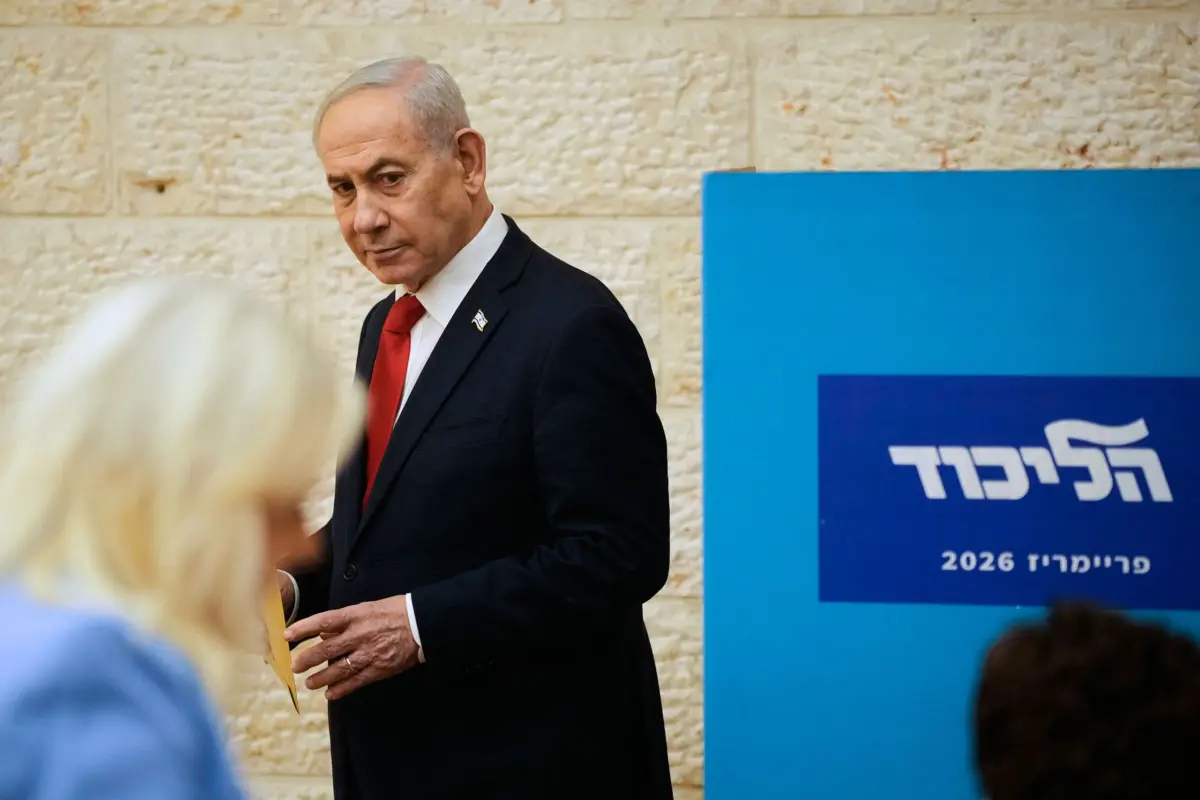
Executive Overview
An explosive investigative report published by the liberal Israeli newspaper Haaretz has sent shockwaves through Israel’s political and security establishments. Drawing from an unreleased book by veteran journalists Shlomi Eldar and Ruth Yuval, the report reveals that Sheikh Mohamed bin Zayed Al Nahyan, President of the United Arab Emirates, personally contacted Israeli Prime Minister Benjamin Netanyahu ten days prior to the October 7, 2023, Hamas attack to deliver an explicit warning of an impending, large-scale offensive.
According to the report, during a 45-minute confidential phone call, Sheikh Mohamed warned Netanyahu that Yahya Sinwar, Hamas’s leader in the Gaza Strip, was preparing a major military operation—described internally by Sinwar as a "zilzal" (Arabic for "earthquake"). Rather than passing this critical intelligence to the heads of Israel’s Defense Forces (IDF), the Shin Bet domestic security agency, or the Mossad, Netanyahu reportedly dismissed the threat, assuring the Emirati leader that Israel was fully prepared and asserting that any real volatility lay in the West Bank, not Gaza.
The revelation has reignited fiercely contested debates surrounding state accountability, strategic blindness, and executive negligence. Emerging just seven weeks before an unprecedented national election—the first since October 7, the subsequent war in Gaza, and direct military escalation with Iran—the report severely undercuts Netanyahu’s long-maintained narrative that the security establishment failed to inform him of the threat. With the political opposition forming a unified front and key media outlets framing the disclosures as a turning point, the report threatens to alter the trajectory of Israel’s upcoming vote.
Read Also
       CHRONOLOGY OF DISMISSED WARNINGS & REPERCUSSIONS

  Late Sept 2023        Late Sept 2023       Late Sept 2023          Oct 7, 2023           Present Day
  ==============        ==============       ==============          ===========           ===========
  UAE President MBZ     Netanyahu brushes    Alarmed by dismissal,   Hamas launches        Haaretz exposes call;
  warns Netanyahu of    off warning; fails   MBZ cautions CIA        devastating attack;   opposition demands
  Sinwar's "zilzal".    to alert security.   Director Burns.         intelligence fails.   PM's resignation.
Detailed Chronology
The Prelude to Catastrophe: The Late-September Phone Call
In late September 2023, approximately ten days before Hamas launched its deadly assault across southern Israel, an extraordinary diplomatic interaction took place. Sheikh Mohamed bin Zayed placed a direct, secure call to Prime Minister Benjamin Netanyahu.
During the 45-minute exchange, Sheikh Mohamed detailed intelligence gathered by Emirati networks indicating that Yahya Sinwar was finalizing plans for a massive, imminent operational strike. Sinwar had reportedly disclosed to a high-ranking official within the rival Fatah faction that Gaza was on the precipice of a "zilzal"—a seismic event designed to reshape the regional order.
The Emirati leadership viewed the information not as routine political saber-rattling, but as an actionable threat requiring immediate operational readiness by Israeli forces.
Executive Dismissal and Diplomatic Friction
Netanyahu’s reaction during the call was described by a senior adviser to the Emirati president as strikingly unconcerned. The Prime Minister reportedly told Sheikh Mohamed that Israel was "prepared for any scenario" and dismissed Gaza as a immediate threat vector. Netanyahu maintained that intelligence indicated Gaza was subdued and that Israeli security resources were properly calibrated toward the West Bank, which he characterized as the true flashpoint of unrest.
| Event / Exchange | Details & Context |
|---|---|
| Communication Channel | Direct, 45-minute secure presidential phone call |
| Key Threat Intelligence | Warning of Sinwar’s planned "zilzal" (earthquake) attack from Gaza |
| Prime Minister’s Assessment | Dismissed Gaza threat; redirected focus to West Bank volatility |
| Downstream Dissemination | Zero information shared with IDF Chief of Staff, Shin Bet, or Mossad |
| Diplomatic Escalation | UAE President alerted CIA Director William J. Burns regarding Israeli complacency |
Disturbed by Netanyahu’s cavalier response, Sheikh Mohamed took the unusual step of voicing his concerns to United States CIA Director William J. Burns. The Emirati leadership feared that Israel’s executive leadership was operating under a dangerous strategic concept—one that left the regional security architecture dangerously exposed.
The Breakdown in Intelligence Transmission
Following the conversation, Netanyahu did not brief Israel’s security chiefs. The heads of the IDF, Shin Bet, and Mossad were kept entirely unaware of the explicit warning delivered by the Emirati head of state.
This omission created a complete breakdown in the top-down flow of strategic intelligence. When tactical signals and unusual Hamas activity were detected by lower-level intelligence units in the early hours of October 7—roughly three hours before the invasion began—security chiefs evaluated those signals without the critical context of the high-level diplomatic warning provided days earlier.
Supporting Context & Metrics
Patterns of Ignored Strategic Intelligence
The disclosures in Haaretz build upon a growing body of evidence indicating that high-level warnings were repeatedly sidelined prior to October 7. Previous investigative reports revealed that Major General Abbas Kamel, then-head of Egyptian General Intelligence, had similarly reached out to Netanyahu’s office in the weeks leading up to the attack to warn of an impending explosion in Gaza.
Former Prime Minister Naftali Bennett publicly validated these findings during a national radio interview, confirming that Netanyahu had systematically ignored high-level warnings from both Cairo and Abu Dhabi. Bennett, who maintains active diplomatic ties with Sheikh Mohamed, endorsed the accuracy of the Haaretz report, reinforcing claims that the Prime Minister’s office functioned as a bottleneck that insulated political leaders from alarming intelligence realities.
                  PRE-OCTOBER 7 WARNING PIPELINE

  [Egyptian Intelligence] ---> Abbas Kamel Warning  ---
                                                       +---> [ Prime Minister's Office ]
  [Emirati Leadership]    ---> MBZ "Zilzal" Warning ---/            |
                                                                    | (Suppressed / Dismissed)
                                                                    v
                                                        [ IDF / Shin Bet Leadership ]
                                                            (Left Uninformed)
Media Reception and Cross-Spectrum Impact
Historically, investigative scoops by Haaretz—a left-leaning broadsheet known for its sharp critiques of the Israeli right—are frequently ignored by mainstream media or dismissed by government surrogates as politically motivated hit pieces. However, this revelation broke through traditional media divides:
- Ynet: Israel’s most prominent news portal prominently featured the Haaretz scoop on its homepage.
- Channel 12: Israel’s most-watched commercial television network led its prime-time broadcast with the story, characterizing the details as "jaw-dropping."
- Channel 14: The pro-Netanyahu network sought to minimize the report, framing it as an orchestrated media "festival," yet acknowledged internal concern within the Prime Minister’s inner circle.
Public Opinion and Electoral Metrics
The timing of the revelation is critical, landing seven weeks before a national election that serves as the first major referendum on Netanyahu’s governance since October 7, the Gaza war, and the military conflict with Iran.
Political analyst Dr. Dahlia Scheindlin notes that public opinion in Israel remains deeply polarized, yet tightly balanced:
                   ELECTORAL BASE PROJECTIONS

   [ Netanyahu Base (~40%) ] -------- [ Swing Voters (~10-15%) ] -------- [ Opposition Coalition (~45-50%) ]
   Rejects report as media            Vulnerable to messaging on          Views report as definitive proof
conspiracy / leftist hit governance & security failures of executive negligence- The Netanyahu Base (~40% of voters): Tends to view the report through a hyper-partisan lens, echoing arguments that media outlets and security institutions are attempting to unseat the Prime Minister.
- The Opposition and Undecided Voters: In a race where electoral victory may hinge on margins as thin as one or two percentage points, the framing of the election around executive responsibility for October 7 poses a severe threat to the ruling coalition’s survival.
Official Statements
The Prime Minister’s Office and Political Surrogates
The Prime Minister’s Office issued an immediate denial, stating unequivocally that no such conversation between Benjamin Netanyahu and Sheikh Mohamed bin Zayed took place.
Media allies of the Prime Minister launched a vigorous defense, attempting to shift the burden of responsibility entirely onto military and intelligence leadership:
"The attempt to portray a situation in which the Prime Minister is the one who needs to convey a warning to the heads of the Army and the Shin Bet—which is precisely their job—is incredibly ridiculous. There is no such thing as a direct warning from the head of another country. It simply did not happen. Full stop. It’s a cynical and crude attempt to accuse Netanyahu of what the Army chiefs are guilty of when they didn’t wake him up."
— Shimon Riklin, Political Commentator and Netanyahu Confidant
Meanwhile, Channel 14 host Yinon Magal publicly acknowledged speaking directly with Netanyahu shortly after the report broke, an exchange observers interpreted as a sign of urgent damage control within the Prime Minister’s team.
The UAE Ministry of Foreign Affairs
In response to inquiries following the Haaretz publication, the Ministry of Foreign Affairs of the United Arab Emirates issued a statement that effectively verified the underlying framework of the reporting.
While avoiding direct commentary on confidential leader-to-leader calls, the ministry stated that the UAE and Israel maintain:
"…open and direct communication channels at all levels, routinely exchanging intelligence and strategic assessments when necessary to maintain regional stability."
Co-author Shlomi Eldar further confirmed the integrity of the report during an interview with Channel 12, stating that the investigation was corroborated by three independent intelligence and diplomatic sources, alongside physical documents and audio recordings detailing the call.
                           KEY STATEMENTS OVERVIEW

  SOURCE                   POSITION / STATEMENT
  -----------------------  -------------------------------------------------------------------------
  Prime Minister's Office  Flat denial; claims no such call ever took place.
  UAE Foreign Ministry     Confirms active, direct intelligence communication channels exist.
  Shlomi Eldar (Author)    Reaffirms report based on 3 independent sources, documents, and recordings.
  Opposition Coalition     Demands answers on PM's knowledge; declares government unfit for office.
The Opposition Coalition
The report triggered an immediate reaction across the political opposition. Naftali Bennett, speaking on national radio, publicly authenticated the intelligence warning and accused Netanyahu of systemic neglect.
Shortly thereafter, leaders of all Jewish opposition parties issued an unprecedented joint statement:
"The public has the right to know: what did Netanyahu know, when did he know, why did he not inform the security establishment, and why did he not act to protect the citizens of Israel? Netanyahu and his partners in the October 7 government are unfit to continue in office."
Concurrently, political opponent Gadi Eisenkot—a former IDF Chief of Staff challenging Netanyahu in the upcoming election—launched a targeted campaign campaign centered on the issue. The campaign utilized AI-generated imagery depicting a sleeping Prime Minister alongside a timeline of unheeded intelligence warnings, accompanied by the repeated slogan: "Bibi, wake up!"
Future Outlook
Electoral Trajectory and Campaign Strategy
The emergence of direct evidence detailing high-level warnings alters the strategic calculus for the upcoming general election. For Benjamin Netanyahu, securing a campaign narrative centered on national defense, regional normalization, and military deterrence is vital. The Haaretz report forces the national discourse back to the security breakdowns of October 7—a frame that political analysts agree is deeply unfavorable to the incumbent government.
If opposition parties successfully maintain public focus on executive accountability, swing voters who previously prioritized security may shift away from the ruling Likud party. Conversely, if Netanyahu’s surrogates successfully frame the report as an establishment-driven hit job, it may consolidate his core base, maintaining the political stalemate that has characterized recent Israeli elections.
Institutional Implications and Official Commissions of Inquiry
Beyond immediate electoral consequences, the report strengthens calls for the establishment of a State Commission of Inquiry—the highest level of judicial investigation in Israel—with broad subpoena powers to review all presidential, diplomatic, and intelligence communications leading up to October 7.
                        POTENTIAL SCENARIOS & IMPACTS

  SCENARIO                  IMMEDIATE EFFECT                        LONG-TERM CONSEQUENCE
  ------------------------  --------------------------------------  -------------------------------------------
  Electoral Shift           Opposition gains swing voters focused   End of Likud-led coalition; restructuring
                            on executive accountability.            of executive security protocols.
  Base Consolidation        Right-wing base unifies behind PM,      Continued political deadlock; potential
                            viewing report as a political attack.   snap-election cycles.
  Judicial Inquiry Mandate  State Commission of Inquiry formed      Subpoena of executive call logs, diplomatic
                            with full legal powers.                 records, and intelligence files.
Should an independent judicial inquiry be established following the election, records from international heads of state, including the diplomatic logs of the Prime Minister’s Office, will likely be subject to formal audit. Such a process could establish legal and institutional precedents regarding how strategic foreign intelligence is processed, logged, and shared between the executive branch and the military command structure during times of national crisis.





Comments
Facebook App ID not configured. Please add it in the Customizer.