
Executive Overview
In the grand tapestry of speculative fiction, the line between creator and consumer has always been uniquely porous. Long before science fiction became a multi-billion-dollar global entertainment industry, it was a nascent community of writers, editors, and passionate enthusiasts who communicated via mimeographed newsletters, organized the first conventions, and championed a genre that mainstream literary circles initially dismissed.
On August 27, 2026, during the opening ceremonies of LAcon V—the 84th World Science Fiction Convention (Worldcon) held in Anaheim, California—the First Fandom Foundation presented its annual suite of awards. These honors serve as a vital cultural bridge, recognizing the individuals whose decades-long dedication to science fiction fandom laid the groundwork for modern speculative fiction culture.
The presentation of the First Fandom Hall of Fame Award, the First Fandom Posthumous Hall of Fame Award, and the Sam Moskowitz Archive Award at LAcon V highlights an ongoing, urgent mission within the science fiction community: the preservation of its own history. As the physical artifacts of the genre’s foundational era face the threats of physical decay and generational transition, the First Fandom Foundation’s work represents both a celebration of past achievements and a call to action for future preservationists.
Read Also
Detailed Chronology: The Presentation at LAcon V
The opening ceremonies of LAcon V on Thursday, August 27, 2026, marked a historic return of Worldcon to Southern California—a region deeply intertwined with the history of both literary science fiction and the cinematic empires it inspired. The choice of venue was highly symbolic; Southern California was the home of the legendary Los Angeles Science Fantasy Society (LASFS), founded in 1934, which nurtured legendary figures such as Ray Bradbury, Robert A. Heinlein, and Forrest J Ackerman.
[August 27, 2026: LAcon V Opening Ceremonies]
       │
       ├──> Opening Remarks & Welcome Address
       │
       ├──> Presentation of the First Fandom Foundation Awards
       │     ├── 1. First Fandom Hall of Fame Award
       │     ├── 2. First Fandom Posthumous Hall of Fame Award
       │     └── 3. Sam Moskowitz Archive Award
       │
       └──> Transition to the 84th Worldcon Programming & Panels
The First Fandom Foundation Awards are traditionally presented during the opening stages of Worldcon to set a tone of historical reverence. The 2026 ceremony followed this long-standing convention:
- 18:00 PDT – Opening Assembly: Attendees, professional writers, and historians gathered in the main auditorium of the Anaheim Convention Center. The atmosphere combined the high-energy excitement of a modern convention with the nostalgic solemnity of a historical society.
- 18:30 PDT – First Fandom Presentation: Representatives of the First Fandom Foundation took the stage. The presenters emphasized the dual nature of their mission: celebrating the living legends who have spent over half a century supporting the genre, while honoring those who have passed on without receiving their due recognition.
- 19:00 PDT – Adjournment to Programming: Following the presentation of the three core awards, the ceremony transitioned into the broader programming of LAcon V, with several panels over the subsequent four days dedicated to the history of fanzines, early convention-running, and physical archiving.
The Pillars of Fandom History: Award Categories Explained
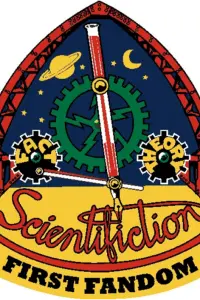
To understand the weight of these awards, one must understand the unique institution that grants them. The First Fandom Foundation grew out of "First Fandom," an organization founded in 1940 at the second Worldcon (Chicon I). Originally, membership was restricted to those who had been active in science fiction fandom prior to 1938—the year often cited as the dawn of the Golden Age of Science Fiction.
As time progressed, the foundation adapted its mission. Today, it operates as a historical preservation society, ensuring that the contributions of early fans, collectors, and grassroots publishers are not forgotten. The three awards presented at LAcon V represent the core pillars of this preservation effort.
The First Fandom Hall of Fame Award
This award is bestowed upon living individuals who have made monumental, sustained contributions to science fiction fandom over a period of at least several decades. Unlike professional awards (such as the Hugos or Nebulas) which primarily honor commercial success, the Hall of Fame Award focuses on service, community building, and the fostering of the science fiction subculture. Past recipients include legendary figures such as Jack Williamson, Forrest J Ackerman, and Ray Bradbury—individuals who maintained their love for fandom long after achieving professional fame.
The First Fandom Posthumous Hall of Fame Award
A crucial component of the foundation’s historical mission, this award recognizes those pioneers who passed away before their contributions could be formally honored, or whose historical significance has become clearer with the passage of time. Because early fandom was highly decentralized, many key figures—particularly women, international fans, and minority enthusiasts—operated in the margins of mainstream publishing. This award serves as a vital tool for correcting the historical record and ensuring that the architects of the genre’s foundations are remembered.
The Sam Moskowitz Archive Award
Named in honor of Sam Moskowitz (1920–1997), one of the most influential science fiction historians, collectors, and biographers of the 20th century, this award recognizes outstanding devotion to the preservation of science fiction history.
┌─────────────────────────────────────────────────────────┐
│              SAM MOSKOWITZ ARCHIVE AWARD                │
├─────────────────────────────────────────────────────────┤
│ • Focuses on: Archiving, physical/digital preservation  │
│ • Key assets: Fanzines, letters, early pulps, photos    │
│ • Goal: Protecting fragile physical history from decay   │
└─────────────────────────────────────────────────────────┘
The Moskowitz Award does not merely honor the act of collecting; it celebrates those who organize, digitize, and make these historical materials accessible to researchers, academics, and the public. In an era where fragile paper zines from the 1930s and 1940s are literally turning to dust, the recipients of this award are the front-line guardians of the genre’s physical heritage.
Supporting Context & Metrics: The Preservation Battle for Science Fiction’s Origins
The presentation of these awards occurs against a backdrop of a silent crisis in the speculative fiction community: the rapid deterioration of physical historical records. The early decades of science fiction fandom (roughly 1930 to 1970) were documented almost exclusively on highly acidic wood-pulp paper.

The Scale of early Fandom Publishing
During the mid-20th century, "fanzines" (fan-produced magazines) were the primary social media of the science fiction community. It is estimated that between 1930 and 1980, fans published over 100,000 individual fanzine issues. These publications contained early writings by authors who would go on to define the genre, including Isaac Asimov, Arthur C. Clarke, and Ursula K. Le Guin, alongside invaluable correspondence, artwork, and social commentary.
| Era | Primary Duplication Technology | Estimated Surviving Copies | Preservation Risk Level |
|---|---|---|---|
| 1930s–1940s | Hectograph, Mimeograph | < 15% of original print runs | Critical (Acid decay, brittle paper) |
| 1950s–1960s | Spirit Duplicator (Ditto), Mimeograph | ~ 30% of original print runs | High (Fading inks, structural instability) |
| 1970s–1980s | Photocopy, Early Offset | ~ 50% of original print runs | Moderate (Storage damage, binder degradation) |
The Archival Challenge
Archivists face three primary hurdles in preserving this history:
- Chemical Degradation: Hectograph inks fade rapidly when exposed to light, and the cheap paper stocks used during the Great Depression and World War II paper shortages are highly prone to acid decay.
- Intellectual Property and Orphan Works: Many fanzines contain works by authors who have since passed away, leaving the copyright status of these amateur publications in a legal gray area that complicates public digital archiving.
- Physical Dispersal: Countless invaluable collections remain stored in basements, attics, and garages, vulnerable to environmental damage and often discarded by heirs who do not understand their historical value.
Organizations like the First Fandom Foundation, in partnership with academic institutions such as the Eaton Collection of Science Fiction and Fantasy at the University of California, Riverside, work tirelessly to identify these at-risk collections before they are lost forever.
Official Statements and Cultural Impact
The announcement of the awards at LAcon V sparked widespread discussion among genre historians and fans alike.
In a statement reflecting on the awards, a representative of the First Fandom Foundation noted:
"Fandom is not merely a passive audience; it is an active participant in the creation of science fiction. The writers who filled the pages of the early pulps were directly influenced by the letters, reviews, and conventions organized by the fans. By honoring these pioneers, we are not just looking backward—we are acknowledging the collaborative engine that made science fiction the dominant cultural force it is today."
Prominent science fiction historian and fan-archivist Cheryl Morgan commented on the significance of the Sam Moskowitz Archive Award in the digital age:
"The work of physical preservation is often thankless, expensive, and dusty. It involves sorting through boxes of uncatalogued paper in damp basements. Yet, without the dedicated collectors and archivists honored by the Moskowitz Award, our understanding of the genre’s history would be full of blank spaces. They are the ones who ensure that the voices of the past remain audible to the scholars of the future."
Future Outlook: Redefining Fandom Legacy in the 21st Century
As the First Fandom Foundation looks to the future, it faces an inevitable demographic transition. The original generation of fans—those who were active before and during World War II—has almost entirely passed away. This reality has forced the foundation to evolve.
[Evolution of Fandom Eras]
 1930s-1940s: "First Fandom" (Pioneers of the pulp era)
       │
       ▼
 1950s-1970s: "Classic Fandom" (Rise of worldcons, offset zines, early filk)
       │
       ▼
 1980s-1990s: "Media Fandom" (Star Trek, Star Wars, early internet groups)
       │
       ▼
 2000s-Present: "Digital Fandom" (Social media, globalized online communities)
To remain relevant, the foundation is expanding its scope to honor the pioneers of "Classic Fandom" (the 1950s and 1960s) and "Media Fandom" (the 1970s and 1980s), recognizing that the spirit of grassroots community building remains the same, even as the technologies change.
Furthermore, the future of fandom preservation is increasingly digital. Initiatives like the Fanac History Project and various university-backed digitization efforts are working to create searchable, high-resolution digital archives of early science fiction history. The First Fandom Foundation’s awards serve as a vital spotlight, drawing attention to these projects and encouraging families of late collectors to donate materials to institutional archives rather than discarding them.
In an era dominated by corporate franchises and algorithmically generated content, the First Fandom Foundation Awards at LAcon V remind the speculative fiction community of its roots: a small, passionate group of dreamers who, armed with nothing more than cheap paper, purple ink, and boundless imagination, built a universe.

Comments
Facebook App ID not configured. Please add it in the Customizer.