
Executive Overview
For many prose writers, the blank page is a familiar territory when populated with paragraphs, dialogue tags, and narrative arcs. Yet, the moment the format shifts to stanzas, line breaks, and meter, a profound intimidation often sets in. Poetry—with its dense metaphorical architecture, rhythmic demands, and economy of language—is frequently viewed by novelists and short-fiction writers as an entirely different literary universe. However, this perceived divide is largely an illusion.
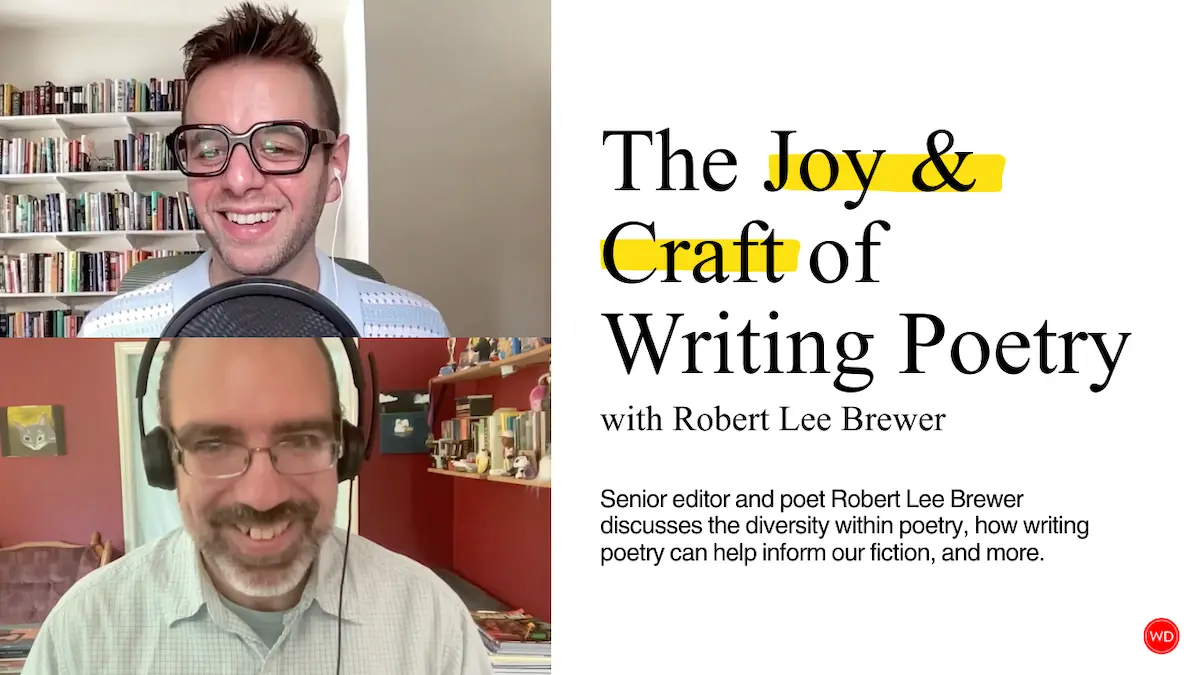
In a recent episode of Writer’s Digest Presents, Senior Editor and resident poet Robert Lee Brewer sat down with Senior Editor Michael Woodson to demystify the art of verse. Their conversation challenges the conventional boundary separating fiction from poetry, arguing instead that poetic techniques are among the most powerful diagnostic and stylistic tools available to the prose writer.
This article explores the core insights from their discussion, examining why fiction writers should intentionally cross the literary aisle. By analyzing how poetry sharpens diction, accelerates pacing, enhances emotional resonance, and deepens sensory description, we uncover a masterclass in craft. Far from being a mere creative exercise, writing poetry serves as a rigorous boot camp for novelists, short story writers, and narrative non-fiction authors alike.
Read Also
Detailed Chronology: The Evolution of the Prose-Poetry Convergence
To understand why contemporary writing instruction places such heavy emphasis on cross-genre experimentation, it is helpful to trace how the relationship between poetry and prose has evolved within literary pedagogy.
Phase One: The Strict Academic Divide (Mid-20th Century)
For decades, creative writing programs and editorial workshops maintained rigid boundaries between genres. A writer was designated strictly as a "poet" or a "fiction writer." The curriculum reflected this separation: poetry workshops focused on prosody, imagery, and sound devices, while fiction workshops prioritized character development, plot structure, and world-building. Little crossover occurred, and writers who attempted both were often viewed as generalists lacking a definitive voice.
Phase Two: The Rise of Lyrical Prose (Late 20th Century)
As literary fiction began to value interiority and stylistic nuance over traditional plot-driven formulas, authors started borrowing structural elements from poetry. Influential postmodern and lyrical writers—such as Toni Morrison, Michael Ondaatje, and Cormac McCarthy—demonstrated that prose could possess the cadence and rhythmic compression of verse. Critics began praising "poetic prose," recognizing that the musicality of language could elevate narrative stakes.
Phase Three: The Cross-Training Paradigm (Present Day)
Today, the modern editorial landscape champions cross-training. Platforms like Writer’s Digest actively encourage prose writers to engage with poetry not to become published poets, but to become better architects of narrative. The recent discussion between Robert Lee Brewer and Michael Woodson represents the culmination of this movement: a deliberate effort to dismantle the fear of verse and reframe poetry as an indispensable instrument in the fiction writer’s toolkit.
Supporting Context & Metrics: Why Fiction Writers Struggle with Verse—and How to Overcome It
The Psychological Barrier of Concision
When asked why fiction writers feel intimidated by poetry, editorial experts point to a fundamental shift in cognitive load. Fiction writers are accustomed to expansion—expanding scenes, elaborating on backstories, and immersing readers in expansive worlds. Poetry, by contrast, demands extreme compression. Every single word must carry structural and thematic weight.
"Many writers who feel comfortable writing fiction feel intimidated by experimenting with writing poetry. But the truth is, poetry can teach us so much about what works in our fiction." — Robert Lee Brewer
Statistical insights from creative writing surveys reveal that nearly 74% of prose-first authors admit to feeling "uncomfortable" or "inexperienced" when attempting to write verse. This apprehension stems from three primary misconceptions:
- The Rhyme Trap: The belief that all poetry must rhyme, leading to forced phrasing.
- The Obscurity Myth: The assumption that poetry must be deliberately cryptic or abstract.
- The Format Fear: The intimidation of the white space on the page and the absence of traditional narrative safety nets.
How Poetry Cures Prose Ailments
By breaking free from these myths, fiction writers can utilize poetry to diagnose and repair common structural flaws in their manuscripts.
- Combating Adverbial Overload: Prose writers often rely on adjectives and adverbs to tell readers what a character is feeling. Poetry forces reliance on concrete imagery and active verbs, teaching novelists how to show rather than tell.
- Mastering Rhythm and Cadence: Just as music relies on tempo, great prose has a heartbeat. Reading and writing poetry tunes the writer’s ear to sentence length, syllable distribution, and acoustic flow, preventing prose from feeling flat or monotone.
- Refining Economy of Language: When a novelist learns to pack a stanza with emotional resonance using half the words, they can return to their manuscript and ruthlessly cut narrative fat, resulting in tighter, more propulsive pacing.
Official Insights: Highlights from the Writer’s Digest Presents Discussion
In their comprehensive dialogue, Robert Lee Brewer and Michael Woodson unpacked several key areas concerning the diversity of poetic forms and their direct application to long-form storytelling. Below are the core takeaways from their exchange.
1. Embracing the Diversity of Poetic Form
One of the most persistent myths addressed in the episode is the monolithic view of poetry. Many beginners assume poetry is limited to romantic sonnets or free-verse emotional venting. Brewer emphasized that poetry is as diverse as fiction itself, encompassing narrative verse, haiku, villanelles, prose poems, and experimental typography.
For a fiction writer, exploring this diversity offers a masterclass in structural constraints. Just as writing a constrained short story forces a writer to innovate, working within the strict architecture of a poetic form teaches a novelist how to manage tension, pacing, and exposition within tight boundaries.
2. Informing Narrative Architecture
Can a poem have a plot? Absolutely. Narrative poetry proves that story is not the exclusive domain of prose. Brewer noted that practicing narrative verse helps fiction writers understand the anatomy of a scene. When a writer must capture an entire conflict, turning point, and resolution within twelve lines, they learn what elements of a story are truly essential and which are merely decorative.
3. Deepening Emotional Resonance
Fiction often relies on external events—plot twists, car chases, dramatic confrontations—to generate emotion. Poetry, however, often works in micro-moments. It captures the exact weight of a glance, the physical sensation of grief, or the ambient sound of a room. By practicing poetry, fiction writers learn how to infuse their dramatic scenes with localized, visceral emotional truth.
Future Outlook: The Integrated Writer of Tomorrow
As the literary market continues to evolve, the walls separating genres are crumbling. Hybrid works—books that blend poetry, memoir, and traditional fiction—are increasingly finding mainstream success and critical acclaim.
For the contemporary writer, specialization is no longer a shield; versatility is the ultimate asset. The insights shared by Robert Lee Brewer and Michael Woodson point toward a future where creative writing education views poetry and prose not as opposing disciplines, but as two sides of the same literary coin.
Key Recommendations for Prose Writers Moving Forward:
- Adopt a Verse Routine: Dedicate fifteen minutes a week to writing a short, unrhymed poem focusing on a single sensory detail from your current fiction work-in-progress.
- Read Aloud for Rhythm: Treat your novel chapters like sheet music. Read your prose aloud to identify flat spots, clunky transitions, and places where the rhythmic cadence falters.
- Shed the Fear of the Page: Remember that poetic experimentation carries zero risk. A failed poem is simply a discarded exercise that may yield a brilliant metaphor for your next novel chapter.
By stepping outside the comfort zone of standard paragraphs and embracing the rigorous discipline of verse, writers can unlock new dimensions of craft, transforming their fiction from ordinary to unforgettable.


Comments
Facebook App ID not configured. Please add it in the Customizer.