
Executive Overview
In the expansive landscape of modern dark fantasy and cinematic horror, few names command the singular reverence and visionary authority of Guillermo del Toro. Over a career spanning decades, the Mexican auteur has systematically carved out a distinctive aesthetic vocabulary defined by clockwork machinery, gothic melancholy, and breathtaking practical creature effects. Yet, for all his cinematic triumphs—ranging from the fairytale menace of Pan’s Labyrinth to the epic monster-battles of Pacific Rim—one shadow looms larger than any other over del Toro’s career: his long-gestating, ultimately stalled pursuit of H.P. Lovecraft’s monumental cosmic horror novella, At the Mountains of Madness.
During a wide-ranging and deeply engaging Reddit Ask Me Anything (AMA) session, del Toro once again opened the vault to discuss his personal philosophy on filmmaking, the current state of the industry, and the perennial challenges of translating weird fiction to the silver screen. When pressed by a community member regarding which Lovecraftian tales he would most like to bring to life outside of his legendary passion project, del Toro bypassed simple fan-service wish-listing. Instead, he offered a masterclass in adaptation theory.
According to del Toro, the inherent properties of Lovecraft’s prose—specifically his reliance on evocative, wide-open adjectives and unnameable dread—make direct film translation a cinematic tightrope walk. By analyzing why certain spiritual successors outshine literal adaptations, del Toro illuminated a broader conversation about visual style, pacing, and the unique hurdles of cinematic cosmic horror. This report examines del Toro’s insights from the AMA, evaluates his wishlist of prospective Lovecraftian adaptations, investigates the lineage of cinematic cosmic horror, and explores what these revelations mean for the future of the genre.
Read Also
Detailed Chronology: The Quest for At the Mountains of Madness
To fully understand del Toro’s commentary on Lovecraftian adaptation, one must trace the historical weight of his relationship with the material. The journey of At the Mountains of Madness is one of Hollywood’s most notorious modern "what-ifs."
Development Hell and the Universal Pictures Era
For well over a decade, del Toro and his production team—bolstered by executive producer James Cameron—pushed to bring Lovecraft’s 1936 novella to theaters with an unprecedented budget. The project reached an advanced stage of pre-production at Universal Pictures in the early 2010s. Concept art had been drawn, stunning animatronics and maquettes were designed by Industrial Light & Magic and Legacy Effects, and scouting had begun.
However, the production collided with an immovable studio wall: budget and rating constraints. Universal was hesitant to commit a reported $150 million production budget to an R-rated, big-budget cosmic horror film that did not feature a traditional happy ending or conventional romantic subplots. Del Toro steadfastly refused to compromise on the R-rating, arguing that softening the visceral, existential terror of the Elder Things and the Shoggoths would betray the integrity of the source material. Consequently, the studio pulled the plug, sending At the Mountains of Madness into an indefinite purgatory of development hell.
The Shift Toward Streaming and Creative Resurgence
In the years following the collapse at Universal, the cinematic landscape shifted dramatically. The rise of prestige streaming platforms like Netflix offered new avenues for high-risk, high-budget genre storytelling. Del Toro successfully partnered with Netflix on projects like Guillermo del Toro’s Cabinet of Curiosities, proving that atmospheric, high-concept horror could find a massive, appreciative audience on the small screen.
It was within this context of renewed digital exploration that del Toro participated in his extensive Reddit AMA. Engaging directly with fans, the director demonstrated that while his passion for At the Mountains of Madness remains undimmed, his perspective on how to tackle Lovecraftian horror has evolved into a nuanced critique of narrative form, runtime, and the limitations of visual precision in cinema.
Supporting Context & Metrics: The Mechanics of Cosmic Horror
Adapting H.P. Lovecraft is widely considered a fool’s errand within the film industry. The author’s works are fundamentally built upon the premise that human language—and human comprehension—collapses in the face of non-Euclidean geometry, incomprehensible alien histories, and entities so vast that human existence is rendered utterly insignificant.
The Problem of Precision
As del Toro articulated during his AMA, Lovecraft relies heavily on vague, atmospheric descriptors: words like eldritch, cyclopean, squamous, and non-Unaltered. These linguistic choices force the reader’s imagination to fill in the blanks with their own personalized terrors.
"I think it’s hard to adapt Lovecraft, because he uses adjectives that are very open," del Toro explained. "So you’ve got to co-director, so to speak, every image. And when you make them into film, they become very precise."
When a filmmaker commits a monster to celluloid or digital pixels, the mystery evaporates. The unseen becomes seen, and the terrifyingly ambiguous transforms into a tangible physical object—a physical transformation that can occasionally diminish the existential dread intrinsic to the text.
The Medium and the Metre: Feature Films vs. Television
Compounding the aesthetic challenge is the structural nature of Lovecraft’s bibliography. The majority of his stories are short stories or novellas rather than sprawling epics. Del Toro noted this structural mismatch directly:
"Most of his stories, by virtue of their length, are better adapted to one-hour television programs or 30-minute television programs."
This observation aligns with modern anthology formats, where concise narratives can maintain high tension without stretching thin across a traditional feature-length runtime. Yet, paradoxically, del Toro maintains that certain expansive works—most notably At the Mountains of Madness—demand the grand, sweeping canvas of a feature film to properly capture the monumental scope of Antarctica’s alien ruins.
Official Statements: Guillermo del Toro’s Lovecraftian Canon
Rather than pointing exclusively to literal adaptations of Lovecraft’s bibliography, del Toro used the AMA to highlight the films he considers the truest spiritual expressions of the author’s philosophy. His curated list offers a masterclass in genre lineage:
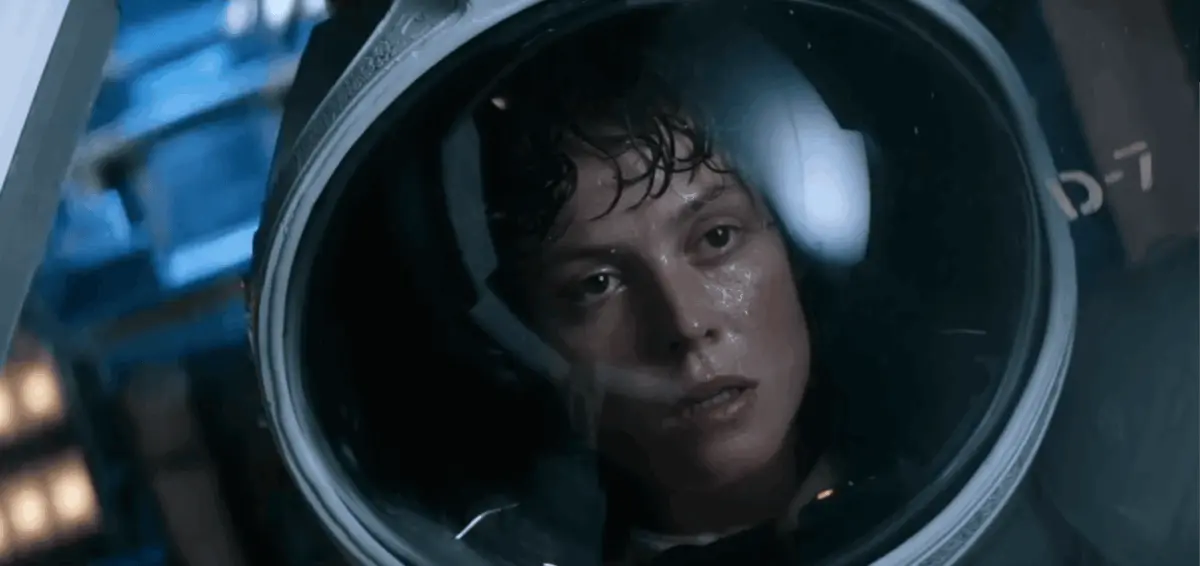
- Ridley Scott’s Alien (1979): Declared by del Toro as "basically Mountains of Madness." The film mirrors Lovecraft’s themes of deep-space exploration, the discovery of a petrified alien pilot (the Space Jockey), and the unleashing of an ancient, hostile biological entity that defies human understanding.
- John Carpenter’s The Thing (1982): While not directly derived from a Lovecraft text, Carpenter’s masterpiece is championed by del Toro for its "Lovecraftian makeup effects language" and its claustrophobic setting of isolated arctic researchers uncovering an ancient, shape-shifting horror.
- John Carpenter’s In the Mouth of Madness (1994): An overt homage to Lovecraftian tropes, focusing on reality-bending madness and a missing horror author whose books rewrite the physical world.
- Stuart Gordon’s Dagon (2001): A direct adaptation blending elements of The Shadow Over Innsmouth and Dagon, praised for its unbridled, visceral genre energy.
- Dan O’Bannon’s The Resurrected (1991): An underrated, direct cinematic adaptation of Lovecraft’s The Case of Charles Dexter Ward, celebrated by del Toro for its unhinged commitment to dark, macabre science fiction.
The Ultimate Wishlist
When specifically asked which Lovecraft stories remain on his personal adaptation wishlist, del Toro outlined a targeted trio:
- The Thing on the Doorstep (frequently misremembered or cited by the director as The Thing On the Threshold)
- The Shadow Over Innsmouth
- The Outsider
While he envisions At the Mountains of Madness as a high-budget theatrical feature, del Toro suggested that tales like The Outsider—with its ingenious structural twist where the true nature of the protagonist is withheld until the final terrifying image—would be intoxicating to translate to screen if a director could maintain its unique narrative framing.
Future Outlook: Can Cinematic Cosmic Horror Finally Conquer Hollywood?
The insights shared by Guillermo del Toro during his Reddit AMA arrive at a fascinating cultural crossroads for horror cinema. As audiences grow increasingly fatigued by predictable franchise reboots and jump-scare-heavy supernatural thrillers, the appetite for sophisticated, atmospheric, and deeply unsettling intellectual horror is on the rise.
The Blueprint for Future Adaptations
Del Toro’s analysis provides a clear roadmap for filmmakers brave enough to tackle Lovecraft in the 21st century:
- Embrace the Spirit Over the Letter: As proven by Alien and The Thing, spiritual adaptations that capture the psychological weight of existential insignificance often succeed where rigid page-to-screen translations fail.
- Respect the Format: Directors must match narrative length to medium—deploying tight, serialized anthology formats for short stories while reserving massive, widescreen spectacles for epic novellas like At the Mountains of Madness.
- Guard the Tone: Insisting on uncompromised creative visions—such as maintaining R-ratings and relying on tactile, practical effects language—ensures that the visceral dread of the cosmic unknown remains intact.
Will Del Toro Ever Make At the Mountains of Madness?
The ultimate question resting on the minds of cinephiles worldwide is whether industry conditions will ever align to let del Toro build his antarctic expedition. With the director continuing to champion mature fantasy and horror across multiple distribution models, the door remains cracking open. Whether through the backing of a visionary streaming studio or an unexpected theatrical renaissance, the prospect of del Toro finally bringing the Shoggoths to the big screen remains the holy grail of modern horror filmmaking.
Until that day arrives, del Toro’s reflections serve as both an intellectual validation of Lovecraft’s enduring literary legacy and a vital reminder that the true terror of the cosmos lies not in what is fully shown, but in the vast, unfathomable darkness that waits just beyond the edges of human perception.





Comments
Facebook App ID not configured. Please add it in the Customizer.