By Global Investigative Desk Published: September 16, 2026 Estimated Reading Time: 12 minutes
Executive Overview
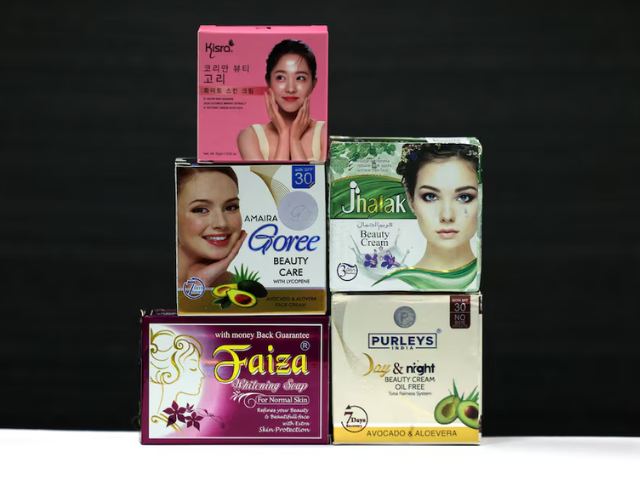
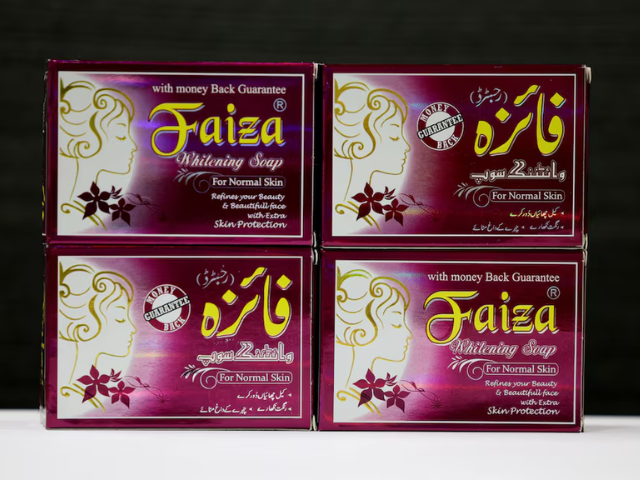
Despite decades of concerted international regulatory pressure, public health advocacy, and corporate policy restrictions, illegal skin-bleaching products laced with toxic levels of mercury continue to circulate freely across the globe. A comprehensive international review conducted by Reuters reveals that more than 20 banned cosmetics containing hazardous chemical agents remain readily available to consumers through third-party marketplaces operated by some of the world’s largest e-commerce titans, including Amazon, Temu, and TikTok Shop.
Operating in a multi-billion-dollar global market fueled by colorism and the demand for rapid cosmetic results, illicit vendors have grown increasingly sophisticated. When platforms manage to scrub a specific dangerous item from their virtual shelves, unscrupulous sellers frequently bypass automated moderation algorithms by relisting the exact same formulations under obscured names, altered brand titles, or modified product images.
While Amazon, Temu, and TikTok maintain strict corporate policies explicitly prohibiting the sale of mercury-infused cosmetics, enforcement remains inconsistent and reactive. The persistence of these toxic goods highlights a systemic vulnerability in the governance of cross-border e-commerce: third-party marketplace business models that historically shield digital platforms from liability regarding the physical safety of the goods they distribute. As health agencies sound the alarm over permanent neurological and renal damage, experts argue that fundamental shifts in platform accountability and regulatory enforcement are urgently required to stem the flow of this chemical threat.
Detailed Chronology: The Cat-and-Mouse Game of Digital Enforcement
The Global Crackdown and the Minamata Convention
The international community formally recognized the severe public health threat posed by heavy metals over a decade ago. In 2013, more than 150 nations signed the Minamata Convention on Mercury, a landmark treaty designed to protect human health and the environment from the anthropogenic emissions and releases of mercury and mercury compounds. Under this treaty, the manufacture, export, and import of a wide array of mercury-added products—including cosmetics, soaps, and topical creams—were explicitly outlawed.
The World Health Organization (WHO) has repeatedly classified mercury as a catastrophic public health hazard. When applied topically, mercury inhibits the body’s melanin production, artificially lightening the skin. However, chronic absorption leads to systemic accumulation, causing irreversible damage to the kidneys, central nervous system, and brain. Despite these established dangers, enforcement mechanisms have consistently lagged behind the ingenuity of black-market cosmetic manufacturers.
The E-Commerce Migration and Evading Detection
As brick-and-mortar storefronts faced stricter inspections, the illicit trade migrated heavily to digital ecosystems. By the early 2020s, global online marketplaces became the primary distribution hubs for underground cosmetic lines originating largely from South Asia, Mexico, and the Philippines.
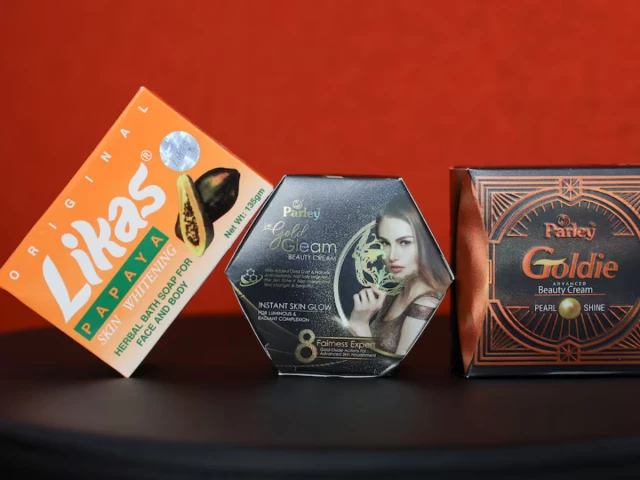
Despite public commitments from tech giants to purge these items, investigations throughout the mid-2020s demonstrated that detection systems remain easily bypassed. By September 2026, Reuters journalists testing platforms across multiple continents uncovered widespread availability of banned items. A London-based journalist successfully purchased restricted goods across Amazon’s UK, French, Belgian, and Indian web portals. Simultaneously, a US-based journalist easily secured Pakistani-manufactured Parley Beauty Creams via Temu and TikTok Shop, Mexican bleaching creams on TikTok, and Philippine-made bleaching soaps on Amazon.
Sellers have adapted their tactics to evade automated AI content moderators. For instance, in August 2026, an Amazon third-party merchant in India listed a notorious product flagged by the US Food and Drug Administration (FDA) under the altered title “Beauty Brightening Cream” instead of its actual name, “Chandni.” To further avoid keyword flags, the seller deliberately blurred out the brand name on the accompanying product packaging photograph.
Similarly, European authorities caught onto parallel evasions. On August 28, 2026, French consumer safety watchdogs issued an urgent national recall for an item titled “Advanced Beauty Cream – Pearl Shine – Parley Goldie.” Despite the formal public warning, the exact same product remained active and purchasable on Amazon’s Belgian storefront days later.
Supporting Context & Metrics: The Economics and Toxicity of Mercury Cosmetics
The Price-to-Performance Trap
The enduring market resilience of mercury-laden cosmetics is driven by a straightforward economic and biochemical reality: speed and affordability.
Legal skin-brightening agents—such as kojic acid, alpha-arbutin, and vitamin C—work gradually by safely regulating melanin synthesis. They are also comparatively expensive to produce and stabilize. A comprehensive 2021 study conducted by Boston University found that legal cosmetic products containing kojic acid retailed at an average of $24.89 per ounce.
In stark contrast, illegal mercury-infused alternatives identified by investigators in the United States retailed for a mere $6.50 per ounce. Furthermore, while legal agents require weeks or months to yield noticeable changes, inorganic mercury compounds produce visible skin-lightening effects within days.
"Mercury gives you lightening effects within days, far faster than legal agents like kojic acid or arbutin," explains Winston Morgan, a professor of toxicology, equity, and inclusive practice at the University of East London’s School of Health, Sport and Bioscience. "Mercury is also relatively cheap, easy to formulate into creams and stable."
Quantifying the Toxic Load
Regulatory bodies around the world enforce strict safety thresholds for heavy metals in personal care goods:
The World Health Organization (WHO): Maintains that there is no known safe exposure level for mercury.
The US Food and Drug Administration (FDA): Restricts total mercury content in cosmetics to a maximum limit of 1 part per million (ppm).
Illegal formulations routinely shatter these safety ceilings. Toxicological evaluations cited by Professor Morgan indicate that illicit creams frequently contain staggering concentrations ranging from 10 to 100,000 milligrams per liter of mercury. Independent laboratory testing conducted by agencies such as the UK Office for Product Safety and Standards (OPSS) and the US FDA has repeatedly verified these extreme contamination levels in seized retail samples, confirming that consumers are routinely exposed to thousands of times the legal limit.
Official Statements and Corporate Responses
Faced with mounting investigative scrutiny and legal pressures, leadership teams across Amazon, Temu, and TikTok Shop have defended their safety protocols while pledging tighter oversight.
Amazon
As the world’s largest online retailer, Amazon has faced persistent regulatory actions regarding hazardous third-party listings. Notably, the company settled a major lawsuit in California in 2025 concerning the pervasive sale of mercury-containing skin-lightening items on its platform.
In response to current findings, an Amazon spokesperson emphasized that the company employs rigorous proactive controls to maintain a compliant marketplace. These measures purportedly include mandatory seller verification, pre-listing compliance documentation, and third-party laboratory safety testing.
"We are constantly refining those controls, suspending evasive sellers, and working actively with regulators, government agencies, and international partners to update our restricted-product lists as we enhance our compliance framework," an Amazon representative stated. However, the company declined to comment on specific listings identified during the investigation.
TikTok Shop
TikTok’s expanding e-commerce arm has increasingly become a target for underground beauty vendors. The platform’s official commercial guidelines explicitly prohibit the sale of any items that "aim to bleach, whiten, lighten, or reduce overall melanin in the skin."
A TikTok spokesperson reiterated the platform’s zero-tolerance policy, confirming that automated and manual moderation teams are actively removing non-compliant listings and taking punitive measures against offending merchants.
Temu
Temu defended its supply chain integrity by committing to immediate audits following external alerts.
"Appropriate action will be taken should a listing be found to violate any applicable laws and, consequently, our platform rules," a Temu spokesperson noted, promising swift removal of identified non-compliant goods.
Regulatory and Public Health Authorities
Public health advocates and government officials emphasize that corporate self-policing is proving insufficient without aggressive external oversight.
The US Food and Drug Administration (FDA): Reaffirmed that combatting fraudulent and toxic cosmetics remains a top operational priority. The agency confirmed it has issued formal warning letters to international manufacturers and distributors, though cross-border jurisdiction complicates enforcement.
The World Health Organization (WHO): Expressed deep concern over the shift toward borderless e-commerce. A WHO spokesperson noted that digital platforms make regulatory oversight exceptionally difficult, calling for standardized international regulations and deeper cooperation between national governments and marketplace operators.
French Consumer Safety Directorate: Emphasized that online vendors hold legal responsibility under European Union law to proactively withdraw and recall unsafe merchandise. "Its presence is intentional and has the function of blocking the synthesis of melanin… Products identified as non-compliant and unsafe are effectively reported to the platforms or companies concerned," French officials stated.
Future Outlook: Can Digital Marketplaces Be Secured?
The ongoing trade in mercury-laced cosmetics highlights a foundational policy debate regarding the legal liability of digital platforms. For decades, major tech firms operated under a legal shield asserting that they merely acted as passive hosting infrastructure for independent third-party vendors, absolving them of direct responsibility for the physical safety of cataloged items.
Legal experts argue this model is increasingly untenable. Rachel Doughty, an attorney at Greenfire Law—who spent a decade litigating against Amazon over toxic cosmetic sales—points out that business models prioritizing rapid inventory scaling over strict vendor vetting continue to create systemic safety gaps.
"Part of the problem is the business models of these platforms," Doughty noted. "Their position for a long time was that they were just a platform and they weren’t responsible for what third-party sellers posted on their websites. Furthermore, these laws are still not well enforced by public agencies on a global scale."
Path Forward
To effectively eradicate mercury-laced cosmetics from the digital marketplace, public health advocates and legal scholars recommend a multi-pronged strategy for the future:
Mandatory Algorithmic and Visual AI Screening: Platforms must upgrade image-recognition software to detect blurred brand names, modified typography, and recurring packaging patterns associated with banned goods.
Strict Identity Verification for Third-Party Sellers: Implementing immutable digital identity checks and requiring verifiable domestic corporate registration can deter anonymous overseas actors from cycling through fraudulent seller accounts.
Harmonized International Penalties: Establishing cross-border legal frameworks that impose severe financial penalties on e-commerce giants for repeated safety violations will incentivize platforms to invest more robustly in human and automated moderation.
Public Health Campaigns: Counteracting the socio-cultural pressures driving the demand for skin-lightening products requires sustained educational outreach, particularly within diasporic and regional communities across Asia, Africa, and the Caribbean where colorism heavily influences consumer behavior.
Until these systemic reforms are universally enacted, the virtual marketplace will likely remain a fertile ground for illicit vendors, leaving unsuspecting consumers vulnerable to severe, irreversible health risks wrapped in deceptive packaging.







Comments
Facebook App ID not configured. Please add it in the Customizer.