
Executive Overview
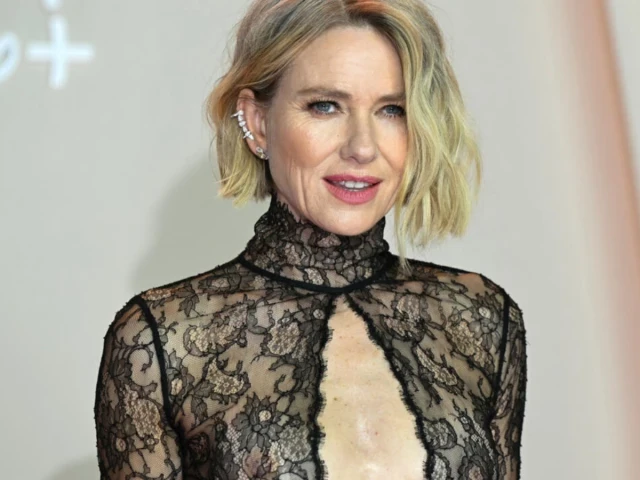
Against the cinematic backdrop of northern Spain’s picturesque coastal enclave, the San Sebastian International Film Festival has once again cemented its status as a premier global stage for cinematic excellence. On a sun-drenched Saturday, British actress Naomi Watts stood before an international assembly of critics, filmmakers, and fans to accept the prestigious Donostia Award—the festival’s highest individual honor. At 57, Watts received the accolade not merely as a retrospective nod to a storied career, but as a vibrant celebration of an artist actively rewriting the rules of longevity, representation, and artistic risk in contemporary cinema.
In her keynote address and subsequent press engagements, Watts articulated a philosophy that has defined her nearly forty-year trajectory in the entertainment industry: an unwavering appetite for complex, psychologically demanding roles that challenge societal norms and invite audiences to examine the darker, more intricate corners of the human psyche. Rising from the arduous trenches of television guest spots and independent bit-parts to international superstardom via David Lynch’s surrealist masterpiece Mulholland Drive, Watts has systematically dismantled the industrial barriers that historically truncated women’s careers upon reaching their fourth decade.
This report provides an exhaustive examination of Watts’s monumental career milestone at San Sebastian. It explores the foundational moments of her rise to prominence, analyzes her fierce advocacy for natural aging within an industry historically obsessed with eternal youth, contextualizes her work alongside the festival’s wider competitive slate, and projects the trajectory of a performer who refuses to slow down.
Read Also
Detailed Chronology: From Indie Struggle to Global Iconography
To fully appreciate the gravity of Naomi Watts receiving the Donostia Award alongside cinematic titans such as Gregory Peck, Robert De Niro, Al Pacino, Meryl Streep, and Penélope Cruz, one must trace the winding, often grueling chronology of her ascent.
The Formative Years and the Illusion of the "Expiry Date"
Born in Shoreham, England, and relocating to Australia during her youth following the tragic death of her father, Watts cultivated an early passion for performance. Yet, the road to recognition was far from meteoric. Throughout the late 1980s and 1990s, Watts navigated the precarious landscape of casting calls, recurring rejections, and low-budget productions.
During the early stages of her career, the institutional narrative surrounding actresses was unforgiving and openly discriminatory. As Watts candidly revealed during her press conference in San Sebastian, industry gatekeepers explicitly warned her of an impending professional cliff. "I was told at the beginning that I better get my skates on because it all finishes at the age of 40," Watts reflected, recalling the pervasive ageism that dictated Hollywood casting offices three decades ago.
Despite these warnings, Watts persevered, picking up critical acclaim in Australian independent cinema—most notably in John Duigan’s Flirting (1991)—before taking the perilous leap to Los Angeles.
The Lynchian Breakthrough: Mulholland Drive (2001)
The defining inflection point of Watts’s career arrived when visionary auteur David Lynch cast her as Betty Elms/Diane Selwyn in the neo-noir psychological thriller Mulholland Drive. Initially conceived as a television pilot before being rescued and reimagined as a feature film, the project required an actress of extraordinary range, capable of pivoting from wide-eyed Hollywood hopeful to a deeply fractured, paranoid soul consumed by jealousy and guilt.
Watts delivered a masterclass in psychological duality. Her performance was universally lauded by critics as one of the finest cinematic turns of the 21st century. It instantly catapulted her from relative obscurity into the upper echelon of international dramatic talent, proving that her unique brand of vulnerability and intensity commanded the global stage.
Critical Acclaim and Academy Recognition
Following Mulholland Drive, Watts systematically diversified her portfolio, avoiding the trap of typecasting. She demonstrated her commercial viability and visceral intensity in Gore Verbinski’s supernatural horror smash The Ring (2002), which grossed over $249 million worldwide.
Simultaneously, she pursued high-art, emotionally grueling character studies that earned her critical validation at the highest levels:
- 21 Grams (2003): Directed by Alejandro González Iñárritu, Watts portrayed Cristina Peck, a grieving mother shattered by a tragic accident. Her raw, unvarnished portrayal earned her her first Academy Award nomination for Best Actress.
- The Impossible (2012): Chronicling the harrowing survival of a family caught in the 2004 Indian Ocean tsunami, director Juan Antonio Bayona’s feature demanded profound physical and emotional endurance from Watts, securing her a second Academy Award nomination.
Supporting Context & Metrics: The Evolution of Industry Demographics and the San Sebastian Legacy
Watts’s receipt of the Donostia Award occurs against a rapidly shifting industrial and cultural landscape. Analyzing the metrics of her career alongside broader shifts in Hollywood reveals a significant transformation in how older female actors are perceived, cast, and compensated.
The Donostia Award: An Elite Roster
Established in 1986, the San Sebastian Film Festival’s Donostia Award pays tribute to major figures in the film world for their lifetime contributions and career achievements. By bestowing this honor upon Watts at age 57, the festival acknowledges an artist at the height of her creative powers rather than at the twilight of her career.
Previous recipients read as a veritable pantheon of cinematic royalty:
| Year Range | Notable Donostia Recipients |
|---|---|
| 1980s – 1990s | Gregory Peck, Lauren Bacall, Vittorio Gassman, Bette Davis, Susan Sarandon, Catherine Deneuve |
| 2000s | Robert De Niro, Meryl Streep, Al Pacino, Michael Douglas, Susan Sarandon, Willem Dafoe |
| 2010s – Present | Denzel Washington, Ethan Hawke, Johnny Depp, Penélope Cruz, Sigourney Weaver, Javier Bardem, Naomi Watts |
Shifting Tides: Aging, Natural Aesthetics, and Industry Demographics
Watts has emerged as a leading cultural voice advocating for natural aging. For decades, the beauty and film industries enforced rigid, youth-centric paradigms that marginalized women past their childbearing years. However, recent data from organizations like the USC Annenberg Inclusion Initiative suggests a gradual, hard-fought shift in storytelling paradigms.
Audiences are increasingly demanding nuanced, multi-dimensional narratives centered on mature women navigating complex personal and professional landscapes. Watts’s continued viability as both a leading lady and an executive producer demonstrates that the commercial lifespan of female talent has expanded exponentially. Her willingness to embrace gray hair, dynamic physical realities, and complex psychological flaws has positioned her as a beacon for generational change.
Official Statements and Press Insights
During her extensive interactions with the international press corps at San Sebastian, Naomi Watts offered profound reflections on her journey, the state of the industry, and her persistent artistic ambitions.
"It feels like such an incredible honour to get this award at this point in my life," Watts told journalists gathered in the northern Spanish coastal city. "I’ve been working hard for the last nearly four decades and had the fantastic opportunity to work with cinema greats."
Addressing the core motivation that continues to fuel her career, Watts emphasized that accolades are secondary to the transformative power of storytelling:
"I continue to try and do interesting things with my work, to shift thinking, alter narratives and help the human psyche be understood better."
Reflecting on the stark contrast between the industry’s warnings during her youth and the reality she experiences today, she noted:
"I was told at the beginning that I better get my skates on because it all finishes at the age of 40 and here we are today. I’m in my late 50s now. I do think things have changed."
Festival Context: San Sebastian’s 2024 Slate
Watts’s presence added considerable star power to a robust and diverse competition lineup at the San Sebastian Film Festival, which once again proved its mettle as a launchpad for major international cinema.
Alongside the celebratory events honoring Watts, festival attendees and critics scrutinized a fiercely competitive slate of cinematic offerings:
- Les Misérables Adaptation: French filmmaker Fred Cavayé brought a fresh, visceral directorial vision to Victor Hugo’s timeless 1862 literary masterpiece, exploring themes of justice, redemption, and institutional corruption in 19th-century France.
- Ashes (Cenizas): Mexican director and actor Diego Luna presented his latest directorial effort, diving deep into the complexities of human relationships, memory, and geographic displacement within contemporary Latin America.
The juxtaposition of these ambitious international projects with the celebration of Watts’s career underscored the festival’s overarching theme: cinema as an evolving medium uniquely equipped to probe the depths of the human condition across generations and geographies.
Future Outlook: The Next Chapter for Naomi Watts
As the champagne flutes are cleared in San Sebastian and the festival draws to a close, Naomi Watts shows no signs of slowing down. Her trajectory points toward an increasingly eclectic mix of high-end television, risk-taking independent film, and active creative control behind the scenes as a producer.
The myth that an actress’s career expires at forty has been thoroughly dismantled by trailblazers like Watts, who continue to command the screen with authority, depth, and unapologetic authenticity. By refusing to conform to outdated industry molds, Watts has not only secured her legacy alongside cinema’s greatest icons but has also paved a clearer, more equitable path for the generations of performers who follow in her footsteps.
As she looks toward her next four decades in the arts, one thing remains certain: Naomi Watts’s relentless appetite for challenging the status quo will continue to illuminate the darkest, most profound corners of the human story.





Comments
Facebook App ID not configured. Please add it in the Customizer.