
Executive Overview
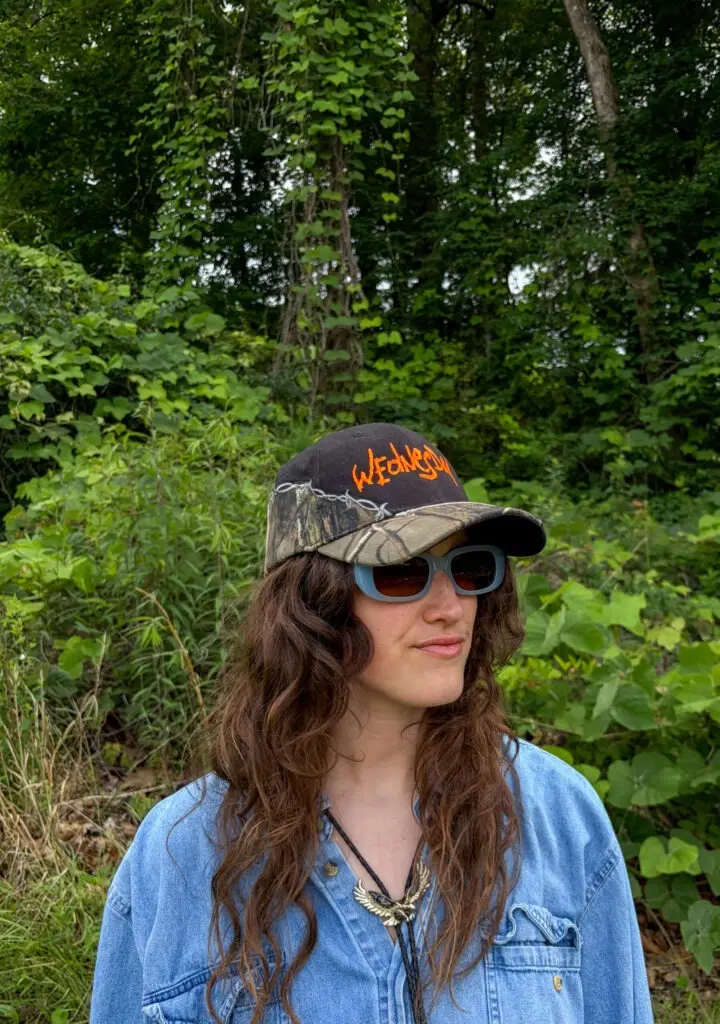
In contemporary American poetry, few voices manage to weave the mundane domestic textures of everyday life with the sprawling, often uncomfortable intersections of gender identity, ecological observation, and the limits of language quite like Anna Drasko. Based in East Tennessee, Drasko has rapidly built a reputation for verse that interrogates the boundaries of the self, challenging traditional notions of embodiment and performance. Their latest work, the evocative and darkly humorous poem "Maker," has been officially selected as the Missouri Review Poem of the Week, drawing critical attention to Drasko’s distinctive poetic style.
Drasko’s work—which has previously graced the pages of esteemed literary publications such as Chestnut Review, phoebe, and Good River Review—brings a fresh, unflinching perspective to contemporary verse. Holding degrees from the University of Pennsylvania and Penn State, Drasko infuses academic precision with a raw, visceral engagement with the natural world. "Maker" serves as a masterclass in modern ars poetica, using domestic metaphors, feral landscapes, and linguistic self-correction to map out an evolving identity that resists easy categorization.
This report provides a comprehensive examination of "Maker," exploring its thematic underpinnings, the biographical and ecological landscape that birthed it, the intricacies of its author’s note, and the broader cultural implications of its publication. Through a rigorous breakdown of the poem’s structure, text, and accompanying commentary, we examine how Drasko continues to redefine what it means to create—and to be created.
Read Also
Detailed Chronology and Literary Context
The journey of "Maker" from a fleeting backyard observation to a nationally recognized piece of poetry reflects the gradual, often messy process of artistic and personal evolution that Drasko chronicles in their work.
The East Tennessee Backdrop
To understand "Maker," one must first understand the landscape of East Tennessee where Drasko resides. Living in close proximity to a highway guardrail—where the relentless blur of modern commuter traffic meets the relentless sprawl of invasive kudzu vines—provides a stark visual and auditory backdrop. By June of each year, the kudzu blankets and suffocates native flora, creating a landscape that is simultaneously choked by human infrastructure and fiercely, wildly alive.
It is within this liminal space between human noise and untamed wilderness that Drasko observes the nocturnal and crepuscular rhythms of local fauna: turkeys, stray cats, red-tailed hawks, groundhogs, deer, and neighboring dogs running loose. This friction between the domestic and the wild sets the stage for the poem’s central inquiries.
The Spark of Creation
The genesis of "Maker" occurred on a specific day marked by two seemingly disparate events: watching a neighbor’s dog, Dolly, chase a wild turkey up into the branches of a tree, and checking on a neglected sourdough starter fermenting in the back of the refrigerator.
Until that moment, Drasko admits they had never realized wild turkeys possessed the capacity for such vertical flight, watching in quiet awe as the bird bypassed earthly limitations to reach a "branch in the sky." Simultaneously, the rotting sourdough starter—developing colorful layers of pink, black, and green mold week after week—served as a grotesque, fascinating monument to abandoned domesticity. Drasko stopped baking bread around the same period they transitioned away from womanhood, casting off the societal expectations tied to traditional domestic labor.
Publication and Critical Recognition
Following its completion, "Maker" found a home in the prestigious Missouri Review, which selected it for its coveted Poem of the Week feature. This recognition places Drasko alongside some of the most dynamic contemporary poets working today, cementing their status as a rising literary force. The poem’s publication online has sparked conversations across literary circles regarding its subversive use of domestic tropes, its brilliant self-correction mid-stanza, and its profound meditation on queer embodiment.
Text of the Poem: "Maker" by Anna Drasko
My mouth is a basket of tricks, I’ll chew
& spit before thinking better of it. Memory
announced itself mid gnash as the flesh
of a stale peanut thinned between
two or three teeth, visiting the years
I let dough knead deep
in nails & pry the goo from half moons
just to hear the clustered bubbles of crust
tell me what they know. Maybe it made sense
once, but the starter is now rotting
in my fridge. There was never a time
I found it easy to make
something. The two turkeys
in the tree, I never knew they could make it
that high. My neighbor’s dog
chased one through the kudzu & it flew
to a branch in the sky—Dolly
wanders when the wild garlic blooms.
I texted, Dolly’s loose again. She’ll make
her way home, but on nice days
she takes her time about it. I like to sit in glass
tipped leaves & watch the turkeys
hiding from Dolly & remember how I made
everyone believe making bread suited me,
they like it when a woman
makes something they can eat. She : )
is such : ) a great : ) baker : ). I have yet to solve
my body. No, it’s not solved,
they’re not solved,
but magnified. Language is still
in the making, usually saying
more & less than its meaning.
Supporting Context, Thematic Analysis & Metrics
"Maker" operates on multiple levels simultaneously: as a narrative of rural domesticity, a critique of gendered expectations, and a profound metatextual exploration of poetic creation (ars poetica).
Deconstructing Domestic Labor and Gender Performance
At the heart of "Maker" is an interrogation of the performance of womanhood, particularly through the lens of domestic nourishment. Drasko reflects on the years spent kneading bread, allowing dough to lodge beneath fingernails ("the goo from half moons"), playing the role that society prescribed: "they like it when a woman / makes something they can eat."
The inclusion of sarcastic emoticon-laden praise—"She : ) is such : ) a great : ) baker : )."—highlights the hollowness of these gendered performances. The forced smiles of digital communication underscore how confining and automated traditional gender roles can feel. Abandoning bread-making ("the starter is now rotting / in my fridge") directly parallels Drasko’s abandonment of "womanhood"—a shedding of identity that, rather than feeling like a loss, felt entirely correct and liberating.
Embodiment and the Unsolved Self
One of the most powerful movements in the poem occurs near its conclusion, where Drasko addresses the physical vessel of the self:
I have yet to solve
my body. No, it’s not solved,
*they’re not solved,
but magnified.
This mid-stream grammatical correction—shifting from singular pronouns to the nonbinary plural they—is a brilliant stylistic choice. It mirrors the messy, real-time evolution of gender identity. The body is not a puzzle to be solved, fixed, or definitively answered; rather, it is "magnified," lived in, and constantly renegotiated.
The Limits and Powers of Language
As an ars poetica, "Maker" questions the utility of language itself. Drasko notes that language is "still / in the making," perpetually falling short of or overshooting absolute truth. Just as a rotting sourdough culture transforms unpredictably, language decays, mutates, and refuses to stay contained within rigid definitions. When attempting to articulate experiences of gender, trauma, or existence in a fractured ecosystem, standard lexicons often fail, forcing the writer to forge new semantic pathways.
Official Statements and Author’s Insight
In their accompanying Author’s Note, Drasko offers invaluable context regarding the environmental and psychological pressures that shaped "Maker":
"This poem began in my backyard, where we share a guardrail with the highway, and the invasive kudzu vine suffocates every native plant by June. Amid the cars blurring by, I spend nights watching the turkeys, cats, hawks, groundhogs, the occasional deer, and my neighbors’ loose dogs. Despite the pollution, everything is so alive. No matter what the conditions, life still unfolds.
I didn’t know turkeys could fly until I saw Dolly chase one up into that tree, and that same day, I checked on my sourdough starter with its layers of pink and black and green that had been rotting in my fridge for months. I enjoyed watching the mold multiply week after week in new colors as I stopped making bread around the same time I left being a ‘woman’ behind. It was an abandonment that felt right.
This poem turned toward Ars Poetica as I pressed up against the limits of language, which happens often when I try to put words to my experiences of gender, or to anything."
This statement illuminates the profound resilience threaded throughout Drasko’s work. Even within polluted environments choked by invasive species and roaring highway traffic, nature persists. Similarly, despite the rigid confines of societal expectations and the limitations of human speech, identity and art find a way to mutate and flourish.
Future Outlook: The Rising Prominence of Anna Drasko
The selection of "Maker" as the Missouri Review Poem of the Week marks an important milestone in Anna Drasko’s literary career. With degrees from institutions as rigorous as the University of Pennsylvania and Penn State, Drasko combines high intellectual engagement with a deeply grounded, visceral connection to the American South.
As readers and critics look toward the future, anticipation is building for a potential full-length poetry collection from Drasko. Their ability to merge ecological observation with pressing contemporary dialogues surrounding trans and nonbinary existence positions them as an essential voice in twenty-first-century American letters.
"Maker" proves that poetry does not need to provide neat resolutions. Instead, by embracing the rot of old molds, the wild flights of backyard turkeys, and the constant reshaping of pronouns and language, Drasko invites readers into a space where identity is an ongoing, beautiful act of creation.

Comments
Facebook App ID not configured. Please add it in the Customizer.