

Executive Overview
In the contemporary literary landscape, few voices marry the intimate mechanics of domestic life with the stark socio-political realities of marginalized existence quite like David Eileen. On September 21, 2026, The Missouri Review designated Eileen’s evocative work, “Sonnet with Beautiful Lies,” as its Poem of the Week. Living and writing from the mountainous terrain of Virginia—surrounded by a partnership and an abundance of tomato plants—Eileen has cultivated a distinct lyrical identity that has previously graced the pages of prestigious literary journals such as The Atlantic, Black Warrior Review, and Prairie Schooner.
“Sonnet with Beautiful Lies” is far more than a meditation on romantic devotion and the creeping advance of age. Through a careful interrogation of form, body, and vulnerability, Eileen confronts the pervasive anxieties of aging while layering them with the constant, insidious backdrop of systemic violence and erasure targeting trans and queer communities. This feature article explores the mechanics of Eileen’s prize-winning poem, examines the author’s insightful commentary on the intersections of trans survival and aging, and situates the work within the broader currents of contemporary American verse.
Detailed Chronology & Context: The Making of a Literary Voice
The Trajectory of David Eileen
David Eileen’s emergence as a vital force in contemporary poetry is rooted in a career defined by unflinching emotional honesty and stylistic precision. Operating from a rural sanctuary in Virginia, Eileen balances the quiet rhythms of domesticity—tending to a sweetheart and an overflowing garden—with the rigorous demands of a national literary presence.
Read Also
Over the years, Eileen’s poetry and prose have found homes in some of the nation’s most selective literary publications. Works featured in The Atlantic, Prairie Schooner, and Black Warrior Review have established a reputation for verse that is simultaneously grounded in physical reality and elevated by philosophical inquiry. The selection of “Sonnet with Beautiful Lies” by The Missouri Review marks another significant milestone in Eileen’s growing bibliography, bringing heightened visibility to a poet who masterfully employs traditional forms to contain and communicate untraditional, urgent lived experiences.
The Anatomy of the Poem
At its core, “Sonnet with Beautiful Lies” destabilizes traditional notions of monumentality and permanence. The poem opens with a striking rejection of idealization:
We should not reify each other; there’s naught divine between us
& anyway, that human form of yours put down in stone would only
intimidate museum patrons for forever. Scare off donors.
By immediately subverting the tropes of classical romantic poetry—refusing to cast the beloved as a god or an untouchable artifact—Eileen grounds the relationship in the mundane, beautiful, and fading reality of human flesh. The progression of the poem moves fluidly through shared memories, arguments that function like narrative pacing ("character development, / comic relief, repetition that deepened our themes"), and the shared physical markers of growing older.
The imagery deepens as the speaker addresses the inevitability of graying hair, matching age spots, and the metaphorical weight of a shared lifetime:
…I know you remember each moment we shared just as each drop
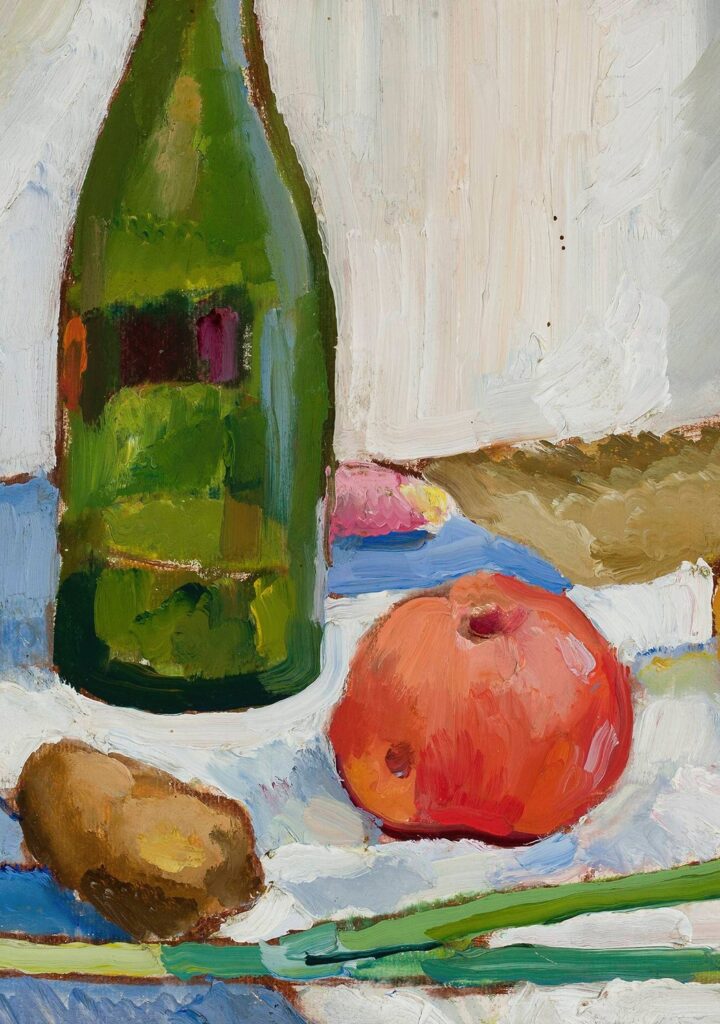
of wine remembers the green of the dark bottle, then all the light coming
through the convex crystal vista it rocked up & down before it met you.
The poem concludes with a domestic, tactile metaphor that captures both the irritation and the essential necessity of purposeful living:
In our lifetime, there was purpose & I knew it. It felt like the tongue in my shoe or the tongue
in my mouth: perfectly functional. Easy to ignore but when bent wrong,
just the worst pain of my life. I always knelt down quick to fix it.
Supporting Context & Metrics: The Weight of Visibility and Aging
To fully appreciate “Sonnet with Beautiful Lies,” readers must understand the complex matrix of identities and fears that inform Eileen’s writing process. In the author’s own notes accompanying the publication, Eileen opens up about the intersection of universal aging anxieties and the distinct vulnerabilities faced by trans and queer individuals.
The Dual Realities of Aging and Survival
Aging is a universal human preoccupation, typically marked by societal anxieties over loss of vitality, physical decline, and mortality. However, for transgender and queer poets, this baseline fear is complicated by a historical and contemporary landscape fraught with physical violence, legislative targeting, and systemic erasure.
Eileen notes that these fears are not abstract; they are intimately tied to daily rituals:

"We both study ourselves in the mirror for new lines, applying retinol at night after hormone shots; we both think too hard about the bathroom we’ll use, even in museums full of queer art."
This juxtaposition—applying anti-aging treatments alongside hormone replacement therapy, navigating the simple act of using a public restroom while surrounded by queer art—highlights the hyper-vigilance required just to exist safely in public and private spaces. The body, therefore, becomes a site of both political tension and profound tenderness.
The Function of Form
The choice of the sonnet—a rigid, historically freighted poetic form—is far from accidental. In Eileen’s hands, the strict constraints of the sonnet act as a structural anchor. It provides a container for chaos, fear, and the unyielding insistence on a future:
"The rigid form of a sonnet shores up my stubborn insistence on what none of us are promised: companionship & time to deepen it fearlessly."
Rather than stifling the emotional resonance, the formal boundaries of the sonnet sharpen the poem’s edge, allowing the speaker to wrestle with mortality within a secure, time-tested architectural space.
Official Statements and Author Insights
In reflections shared alongside the poem’s release, David Eileen elaborated on the emotional and philosophical underpinnings of “Sonnet with Beautiful Lies,” shedding light on the titular "beautiful lies" and what they ultimately reveal.
On the "Beautiful Lies" and Half-Truths
Addressing the poem’s conclusion, Eileen explained that the work ends with a deliberate ambiguity—a lie that functions as a profound half-truth:
"It ends with a beautiful lie that is really a half-truth: there have been times when (maybe after hesitation) I have reached down deep to adjust a bent-up sense of purpose. I felt better afterward, like if I’m really to be given the rest of my life, I won’t have to dread living it."
This reconciliation with purpose is central to Eileen’s vision. The pain of a "bent-up" life—whether caused by systemic oppression, internal aging anxieties, or the friction of human relationships—can be remedied through deliberate, loving care. By kneeling down to fix the shoe, by adjusting one’s footing, the speaker chooses agency over dread.
Future Outlook: The Ongoing Evolution of Contemporary Verse
The recognition of David Eileen’s work by The Missouri Review underscores a broader, welcome shift in contemporary American poetry: a growing appetite for work that refuses to separate political reality from intimate lyricism. As conversations surrounding trans rights, bodily autonomy, and queer joy continue to occupy the cultural forefront, poets like Eileen provide an essential vocabulary for survival and resilience.
What Lies Ahead for Readers
For those captivated by “Sonnet with Beautiful Lies,” Eileen’s digital footprint offers ongoing engagement. Readers can subscribe to the author’s periodic dispatches—affectionately termed "e-pistles"—via the official website, david-eileen.com, which serves as a centralized hub for past publications in major literary outlets.
Furthermore, The Missouri Review’s ongoing Poem of the Week series continues to spotlight boundary-pushing writers, pairing brilliant contemporary poetry with curated visual art—such as Zygmunt Waliszewski’s Still life with a green bottle featured alongside Eileen’s work. As Eileen continues to cultivate tomatoes in the Virginia mountains and craft verse that balances the domestic with the monumental, the literary community watches with keen anticipation for what this singular voice will offer next.
Suggested Content & Further Reading
Readers interested in exploring similar lyrical trajectories within The Missouri Review’s recent features may also wish to explore:
- “Cannon Beach” by Lucy Biederman (September 28, 2026) – A striking exploration of narrative prose and poetry by the author of The Walmart Book of…
- “Ataxia” by Christine Marshall (September 14, 2026) – A poignant contribution from the acclaimed author of poetry collections Match and Night, whose work has frequently appeared in Best American Poetry and Agni.





Comments
Facebook App ID not configured. Please add it in the Customizer.