
Executive Overview
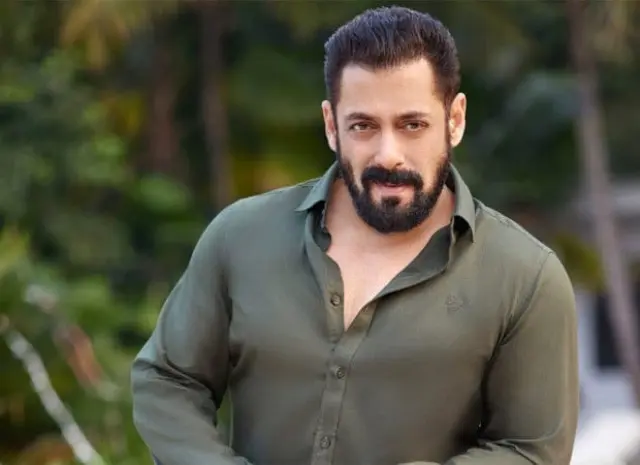
In a resounding display of enduring star power and unmatched television presence, Bollywood icon Salman Khan has been crowned India’s favorite reality show host. According to a comprehensive public preference poll conducted by Variety India, Khan eclipsed a formidable lineup of contemporary Indian television and cinematic heavyweights, including blockbuster filmmaker Rohit Shetty, celebrated director Farah Khan, versatile actor-host Riteish Deshmukh, and acclaimed filmmaker-presenter Karan Johar.
The survey, designed to capture audience sentiment across major social media demographics, saw Khan command an unprecedented share of the vote. On Instagram, the actor secured a staggering 79% of total user preferences, leaving his nearest competitor trailing by a massive margin. YouTube voters similarly echoed this sentiment, awarding Khan 64% of the vote.
This latest accolade arrives at a particularly dynamic juncture in Khan’s illustrious career. While maintaining his crown as the undisputed king of Indian reality television through his long-standing association with the Bigg Boss franchise—now entering its milestone 20th season—Khan continues to exert significant influence on the silver screen. Recent cinematic ventures, including the action-packed drama Sikandar and the politically charged war epic Maatrubhumi: May War Rest in Peace, highlight a multi-hyphenate talent who seamlessly bridges the gap between serialized television and blockbuster cinema.
Read Also
This report delves deep into the metrics of the Variety India poll, evaluates the competitive landscape of Indian reality television hosting, and examines the broader career trajectory of a performer who has defined the contours of South Asian entertainment for over three decades.
Detailed Chronology
The Genesis and Execution of the Variety India Poll
The entertainment landscape in India has undergone a seismic shift over the past decade, driven by the proliferation of streaming platforms, digital content creators, and the hyper-expansion of social media engagement. Recognizing this evolution, Variety India initiated a public sentiment survey to determine which cinematic or television personality truly commands the loyalty of modern Indian audiences when stepping into the high-stakes arena of reality television hosting.
The poll pitted some of the most recognizable faces in the entertainment industry against one another, establishing a direct head-to-head metric based on viewer affinity. The contenders represented a diverse cross-section of Indian pop culture:
- Salman Khan: The veteran anchor of Bigg Boss.
- Rohit Shetty: The high-octane director and stunt-master steering Khatron Ke Khiladi.
- Farah Khan & Riteish Deshmukh: The dynamic co-hosting duo steering the gripping reality format Lock Upp: Sach Ya Sazaa.
- Karan Johar: The quintessential talk-show titan and master ceremonies steering The Traitors Season 2.
The digital ballot boxes were opened across Variety India’s primary social media ecosystems—specifically Instagram and YouTube—platforms renowned for their active, vocal, and highly engaged user bases. Over the course of the voting window, hundreds of thousands of digital ballots were cast, culminating in a data set that highlights a clear hierarchy in the minds of the Indian viewing public.
The Voting Results and Immediate Aftermath
As the digital polls closed, the results painted a portrait of a populace deeply loyal to established television veterans, with Salman Khan emerging not merely as a winner, but as a statistical outlier.
On Instagram—a platform heavily favored by younger demographics and casual pop-culture consumers—Khan’s dominance was absolute. He captured 79% of the aggregate vote. To put this figure into perspective, his closest rival, Rohit Shetty, secured 19%. The remaining contenders were relegated to statistical margins: the collaborative pairing of Farah Khan and Riteish Deshmukh managed just 2%, while Karan Johar garnered 1%.
When the ballot shifted to YouTube—a space often characterized by longer-form content consumption and highly opinionated viewer communities—the dynamics shifted only slightly in terms of distribution, while Khan’s supremacy remained entirely unchallenged. Here, Khan secured 64% of the vote. Rohit Shetty maintained his position as the primary runner-up with 19%. However, Karan Johar experienced a modest surge within this specific digital ecosystem, claiming 10% of the vote, while Farah Khan and Riteish Deshmukh jointly accounted for the remaining 8%.
The release of these metrics immediately ignited widespread discussions across entertainment forums, trade circles, and social media fan clubs, validating the immense commercial and cultural capital that Khan continues to wield.
Supporting Context & Metrics
Comparative Analysis of the Contenders
To fully appreciate the magnitude of Salman Khan’s victory, one must analyze the heavyweights against whom he competed. Each contender brings a distinct flavor, professional background, and audience demographic to the reality television space:
| Host(s) | Associated Reality Franchise | Instagram Vote Share | YouTube Vote Share |
|---|---|---|---|
| Salman Khan | Bigg Boss (Season 20) | 79% | 64% |
| Rohit Shetty | Khatron Ke Khiladi (Season 15) | 19% | 19% |
| Karan Johar | The Traitors (Season 2) | 1% | 10% |
| Farah Khan & Riteish Deshmukh | Lock Upp: Sach Ya Sazaa | 2% | 8% |
Rohit Shetty: The Action Maestro
Securing a consistent second place across both platforms (19% on both Instagram and YouTube), Rohit Shetty stands as the primary challenger to Khan’s reality television crown. As the face of Khatron Ke Khiladi 15 (the Indian adaptation of Fear Factor), Shetty brings a distinct brand of physical bravado, directorial authority, and high-stakes cinematic adrenaline to the small screen. His ability to connect with contestants and audiences through a combination of tough-love mentorship and high-octane spectacle has earned him a fiercely dedicated following, particularly among fans of action-oriented programming.
Karan Johar: The Master of Drama and Intimacy
Karan Johar’s performance in the poll—hovering at 1% on Instagram but jumping to a respectable 10% on YouTube—reflects his unique positioning within the industry. Known globally for his sophisticated talk shows and glamorous cinematic aesthetics, Johar’s foray into tactical reality formats like The Traitors Season 2 showcases his versatility. While his high-fashion sensibilities and conversational dexterity appeal deeply to niche digital communities (explaining his stronger showing on YouTube), he struggles to match the mass-market grassroots penetration enjoyed by figures like Khan and Shetty.
Farah Khan and Riteish Deshmukh: The Collaborative Duo
Securing 2% on Instagram and 8% on YouTube, the collaborative hosting pairing of Farah Khan and Riteish Deshmukh for Lock Upp: Sach Ya Sazaa brought together two distinct entertainment veterans. Farah Khan’s razor-sharp wit and decades of Bollywood choreography experience, combined with Riteish Deshmukh’s affable comedic timing and regional cinematic success, make for an entertaining dynamic. However, the data suggests that dual-host formats may face challenges in establishing the singular, commanding narrative voice that audiences typically look for in a dominant reality anchor.
The Bigg Boss Phenomenon and Khan’s Longevity
At the core of Salman Khan’s landslide victory is his symbiotic relationship with Bigg Boss, India’s premier voyeuristic reality television juggernaut. Having taken over hosting duties from Season 4 in 2010, Khan has presided over the show for more than fifteen consecutive years.
This longevity is virtually unprecedented in the history of global television programming. Where international iterations of similar formats (such as Big Brother) frequently rotate hosts to stave off fatigue, Khan’s presence has become inextricably linked to the DNA of the Indian franchise. His weekly interventions—famously broadcasted as Weekend Ka Vaar—serve as cultural touchstones. During these episodes, Khan transitions effortlessly between a stern moral arbiter, an empathetic counselor, and an unfiltered critic of human behavior within the house. It is this unique authority that endears him to millions, transforming him from a mere master of ceremonies into an institutional pillar of Indian households.
Official Statements and Industry Reactions
While public polls reflect consumer sentiment, the broader entertainment industry has been quick to analyze the underlying currents that make figures like Salman Khan enduringly bankable. Trade analysts and television executives point to a combination of authenticity, accessibility, and unscripted spontaneity as the primary drivers behind Khan’s high approval ratings.
In recent industry roundtables discussing the future of linear television versus streaming content, media strategists noted that reality television relies heavily on the "trust factor." A network executive, speaking on condition of anonymity regarding viewer engagement metrics, observed:
"In an era where audiences are increasingly skeptical of curated personas and highly stylized digital content, reality television demands a host who possesses absolute authenticity. Salman Khan does not play a character on weekends; he brings his authentic, unfiltered self to the stage. Viewers sense that transparency, and it builds a level of trust that scripted media simply cannot replicate."
Furthermore, digital analysts monitoring the Variety India poll noted that the sheer volume of engagement—with Khan securing nearly four-fifths of the total vote on Instagram—demonstrates that traditional Bollywood superstardom, when paired with the right television vehicle, remains entirely immune to audience erosion. Despite the rise of hyper-localized digital influencers and OTT-native stars, legacy cinematic icons who successfully pivot to television continue to command the highest echelons of public affection.
Future Outlook
As the Indian entertainment industry looks toward the horizon, the implications of the Variety India poll extend far beyond a momentary social media victory. They offer a predictive roadmap for how production houses, streaming networks, and television broadcasters will structure their talent acquisitions in the years to come.
The Evolution of Indian Reality TV
The commanding lead established by Salman Khan and Rohit Shetty underscores a consumer preference for hosts who project authority, physical presence, and emotional gravity. As formats become increasingly complex—incorporating psychological warfare, high-risk physical stunts, and immersive social experiments—the role of the host is evolving from a mere announcer to a central narrative anchor. Future reality formats are expected to lean even more heavily into marquee talent, leveraging established cinematic names to guarantee baseline viewership in an increasingly fragmented media landscape.
Salman Khan’s Upcoming Slate
For Khan himself, the accolade arrives as his professional calendar remains exceptionally robust. Having recently headlined the action drama Sikandar alongside Rashmika Mandanna, Khan continues to prove his viability as a box-office draw. Furthermore, the theatrical release of his war drama Maatrubhumi: May War Rest in Peace (formerly titled Battle of Galwan), which explores the tense geopolitical realities of the 2020 Galwan Valley clash between Indian and Chinese forces, signals a deliberate turn toward substantive, patriotic, and high-stakes cinematic narratives.
Balancing these intensive cinematic commitments with his continuous stewardship of Bigg Boss Season 20, Khan shows no signs of slowing down. As he enters his sixteenth year at the helm of India’s most-watched reality show, his status as the undisputed titan of television hosting appears not only secure, but fundamentally unchallenged.
The Variety India poll serves as both a celebration of his past achievements and a definitive statement on his current standing: in the hearts and minds of the Indian viewing public, Salman Khan remains in a league of his own.


Comments
Facebook App ID not configured. Please add it in the Customizer.