
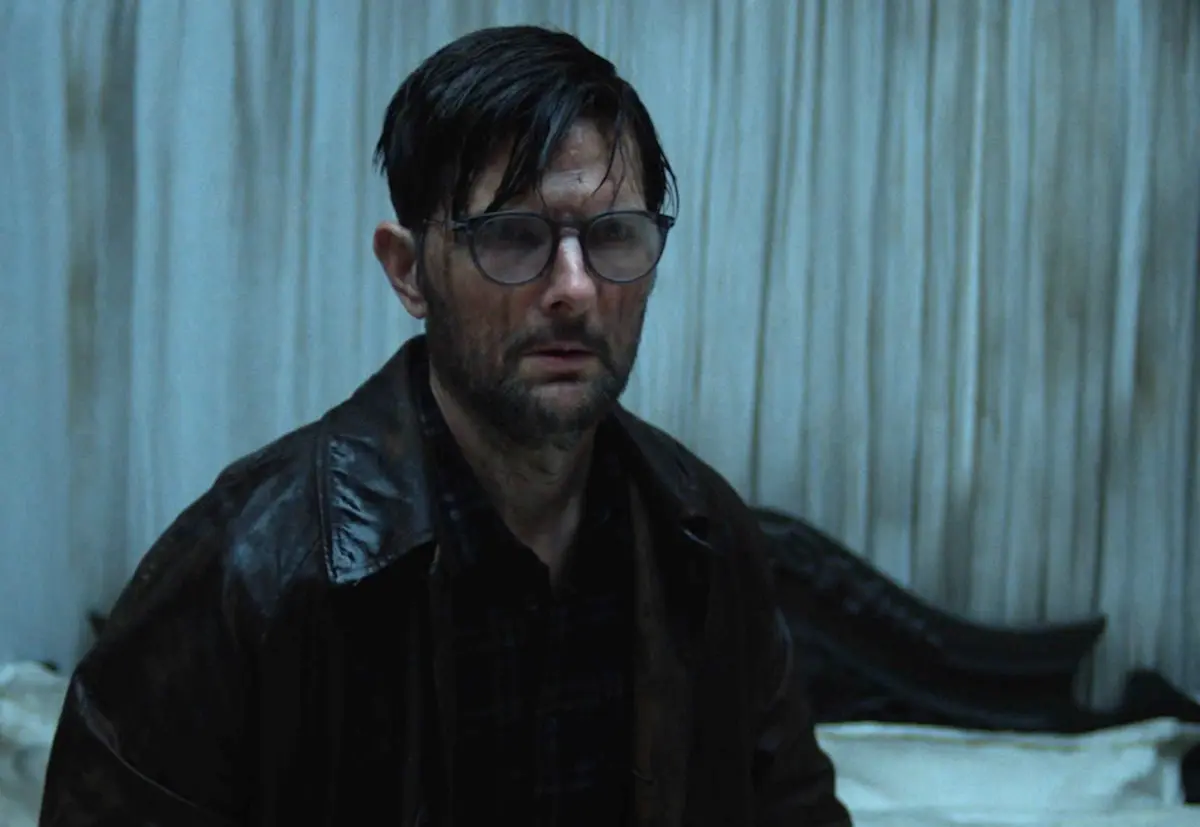
The landscape of contemporary folk horror is poised for a significant expansion with the upcoming streaming release of Damien McCarthy’s Hokum. Scheduled to premiere on Hulu on October 10, 2026, just in time for the traditional "spooky season," the film represents a critical milestone in the writer-director’s career. Following the widespread critical acclaim and audience resonance of his previous features, Caveat (2020) and Oddity (2024), McCarthy returns with a narrative that defies simple categorization, blending traditional Irish folklore with psychological dread, dark humor, and visceral unease.
At its core, Hokum is ostensibly a haunted hotel story, yet it quickly subverts genre tropes to explore deeper themes of grief, generational trauma, and the blurred lines between reality and superstition. The film stars Emmy Award-nominee Adam Scott as Ohm Bauman, a cynical, weary novelist who travels to a remote, windswept Irish inn once frequented by his late parents. His initial, melancholic mission—to scatter their ashes—fractures as he confronts an unsettling local ecosystem defined by arcane rituals, an omnipresent witch, strained human dynamics, and, memorably, a single dead goat.
As McCarthy’s third feature, Hokum solidifies his reputation as one of modern horror’s most distinct voices. By eschewing cheap jump scares in favor of atmosphere, tactile dread, and philosophical ambiguity, McCarthy has crafted a work that demands both analysis and visceral engagement. This comprehensive report examines the genesis of Hokum, its thematic placement within McCarthy’s growing cinematic canon, the nuances of its production and cast, critical reception thus far, and its strategic placement in the streaming market ahead of its October 2026 debut on Hulu.
Read Also
Detailed Chronology: From Concept to Streaming Premiere
The trajectory of Hokum reflects Damien McCarthy’s methodical approach to filmmaking, where each project builds organically upon the lessons and stylistic breakthroughs of its predecessor.
Phase One: The Foundation (Caveat and Oddity)
To understand the significance of Hokum, one must trace McCarthy’s directorial evolution. With his 2020 debut, Caveat, McCarthy established a signature aesthetic: claustrophobic framing, intricate puzzle-box narratives, and a reliance on tangible, handcrafted practical effects rather than digital augmentation. The film garnered strong independent notice for its nail-gun-toting toy rabbit and its suffocatingly eerie basement sequences.
This momentum culminated in Oddity (2024), which cemented McCarthy’s international standing. Oddity captivated festival audiences and horror critics alike with its cursed wooden man-man artifact, brilliant tonal control, and relentless tension. The overwhelming critical success of Oddity provided McCarthy with the creative capital and expanded resources necessary to embark on Hokum, allowing him to scale up his vision while retaining the indie-horror grit that defined his early work.
Phase Two: Production and the Casting of Adam Scott
Entering pre-production under a veil of secrecy typical of McCarthy’s projects, Hokum generated industry-wide buzz when it was announced that American actor Adam Scott—best known for his critically lauded work in Severance, Party Down, and Parks and Recreation—would anchor the film. Scott’s casting introduced a compelling meta-textual dynamic: an internationally recognized comedic and dramatic actor stepping directly into the claustrophobic, rain-slicked world of Irish folk horror.
Filming took place on location in Ireland, utilizing remote, authentic rural landscapes and historic structures to evoke the tactile desolation required by the script. McCarthy wrote and directed the feature, working closely with his core technical teams to ensure that the lighting, sound design, and set decoration maintained the claustrophobic intimacy of his previous two films, even as the narrative scope broadened to encompass the eccentric locals and folkloric weight of the Irish countryside.
Phase Three: Festival Run and Theatrical Window
Following its completion, Hokum pursued a specialized festival and theatrical release strategy. Eschewing the hyper-commercialized, wide-studio multiplex blitz, the film targeted curated genre festivals and select independent cinemas. This rollout allowed word-of-mouth among horror aficionados to build organically, mirroring the trajectory of Oddity. Critics praised the film’s refusal to pander to modern horror conventions, highlighting its unique blend of pitch-black comedy and bone-chilling folklore.
Phase Four: The Hulu Streaming Debut (October 10, 2026)
The final milestone in the film’s current chronology is its transition to the home viewing market. Hulu’s acquisition of Hokum ensures that the film will reach a vast, global audience. Set for release on October 10, 2026, the streaming premiere capitalizes on the seasonal surge in horror viewership, positioning Hokum as a marquee title for the platform during the autumn release window.
Supporting Context, Thematic Analysis & Metrics
To fully appreciate Hokum, one must examine the specific cultural and structural frameworks that inform Damien McCarthy’s storytelling.
The Folklore of the Everyday
Irish horror has undergone a profound renaissance in recent years, with filmmakers turning away from conventional Hollywood tropes to mine the deep, often terrifying well of Celtic mythology and rural isolation. McCarthy’s approach in Hokum is distinct because he avoids overt exposition. Instead of lecturing the audience on ancient curses, he embeds the supernatural into the mundane textures of daily rural life.
The inclusion of a witch, rustic superstitious practices, and bizarre local customs (encapsulated by the infamous dead goat) functions not merely as window dressing, but as an externalization of Ohm Bauman’s internal decay. Bauman arrives at the inn burdened by grief and modern cynicism; the ancient forces of the valley do not care for his literary credentials or his metropolitan alienation. They simply consume him.
Critical Reception and Philosophical Ambiguity
Early reviews from outlets such as Reactor Mag have highlighted the film’s thematic depth. As critic Leah Schnelbach noted in her review, Hokum excels precisely because it refuses to offer neat, comforting explanations:
"Sometimes monsters just ARE. Sometimes things that seem like monsters to our human eyes are actually beautiful. Maybe the supernatural elements are ‘real’ and maybe they aren’t—it doesn’t matter when the story’s good enough. And that’s what Hokum is doing."
This thematic ambiguity places Hokum in conversation with elevated folk horror masterpieces like The Wicker Man or A Field in England. The film posits that terror does not necessarily stem from malicious entities hiding in the dark, but from the terrifying realization that human beings—and the natural world—operate according to rules we can neither predict nor control.
Cast and Crew Metrics
While Adam Scott commands the screen as the grumpy novelist Ohm Bauman, the supporting ensemble is a masterclass in contemporary Irish character acting. The production features stellar performances from:
- Peter Coonan
- David Wilmot
- Florence Ordesh
- Will O’Connell
- Michael Patric
Furthermore, internet and fan culture surrounding the film has playfully latched onto a very specific, singular production detail: one (1) dead goat, which has already cemented itself as an iconic visual motif in early promotional materials and fan discussions.
Official Statements and Industry Insights
In interviews leading up to the release, Damien McCarthy has been characteristically coy regarding the specific narrative twists of Hokum, preferring to let the atmosphere speak for itself. However, discussions surrounding the project have shed light on his collaborative process with Adam Scott.
Scott, stepping outside his traditional comedic and prestige-drama comfort zones, has noted in promotional panels that the physical and psychological demands of shooting in remote Irish locations added an authentic layer of exhaustion and disorientation to his performance. Playing Ohm Bauman—a man dragged kicking and screaming out of his intellectual ivory tower and into a folkloric nightmare—required a delicate balance of cynicism and vulnerability.
Industry analysts have noted that Hulu’s aggressive acquisition of prestige indie horror titles like Hokum signals a broader shift in streaming strategies. Platforms increasingly recognize that horror fans represent one of the most engaged, vocal, and reliable subscriber demographics. By securing an October 10 release date, Hulu is directly targeting the seasonal spike in horror consumption, ensuring maximum platform engagement.
Future Outlook: The Ascendancy of Damien McCarthy
As Hokum prepares for its October 10, 2026 streaming debut, the broader implications for Damien McCarthy’s career are profound. With three features (Caveat, Oddity, and now Hokum) under his belt, McCarthy has constructed a remarkably cohesive and critically lauded filmography. He is no longer merely an exciting voice in independent Irish cinema; he is an international auteur shaping the global horror conversation.
The success of Hokum on Hulu will undoubtedly open doors to even larger budgets and wider international distributions. Yet, the true test of McCarthy’s career will be whether he can maintain the handcrafted, artisanal dread that made Caveat and Oddity cult sensations. If Hokum is any indication, McCarthy’s transition into larger-scale productions has only sharpened his blade.
For horror enthusiasts, the upcoming streaming release offers an unmissable opportunity to dive back into McCarthy’s twisted imagination. Whether viewers tune in for Adam Scott’s powerhouse performance, the intricate Irish folk lore, or simply to witness the cinematic journey of the infamous dead goat, Hokum promises to be one of the definitive genre conversations of the autumn season.

Comments
Facebook App ID not configured. Please add it in the Customizer.