
Executive Overview
The global fashion landscape is undergoing a profound structural evolution. For decades, the industry’s engagement with South Asia was largely transactional, viewing the region primarily as a vast atelier of artisanal craftsmanship, textile production, and traditional embroidery to be harvested for Western houses. Today, that paradigm has been definitively dismantled. South Asian representation is no longer confined to the margins, nor is it tokenized by a singular, monolithic aesthetic. Instead, it sits at the absolute epicenter of international style, commanding center stage across the covers, runways, and editorial spreads of the world’s most influential fashion institutions, most notably Vogue.
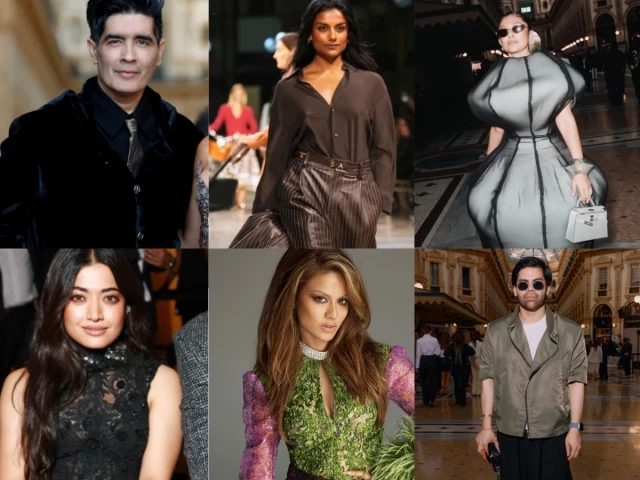
A recent watershed moment captured across Vogue’s international digital ecosystem brought together six distinct luminaries: Manish Malhotra, Rashmika Mandanna, Simone Ashley, Natasha Poonawalla, Dhruv Kapoor, and Jaya Raheja. Far more than a mere roster of high-profile names, this coalition serves as a cross-section of a changing global order. Together, they reflect the multi-dimensional breadth of South Asian influence in contemporary culture—spanning elite couture, cross-border cinematic stardom, high-society patronage, avant-garde design, and emerging creative direction.
What distinguishes this new era is the complete erasure of a single, uniform definition of South Asian representation. The narrative has shifted from one of passive inspiration to active authorship. South Asian designers, actors, tastemakers, and entrepreneurs are no longer just participating in the global fashion economy; they are actively dictating its terms, challenging historic biases, and rewriting the vocabulary of modern luxury.
Read Also
Detailed Chronology: The Ascendancy of South Asian Voices in Global Fashion
The journey of South Asian influence within the upper echelons of international fashion has been marked by strategic milestones, incremental breakthroughs, and a recent, accelerated leap onto the global stage.
[1990s-2000s] ──> [2005-2020] ──────────────> [2021-2024] ────────────────> [2025-2026]
Bollywood      ──> Establishment of          ──> Global Cinematic        ──> Paris Haute Couture
Costuming          Eponymous Labels              Breakthroughs             & Global Institutional
(Manish Malhotra)  (Couture & Domestic Growth)   (Simone Ashley, etc.)     Milestones
The Foundations: From Bollywood Costuming to Independent Couture
In the closing decades of the twentieth century, Indian fashion was largely viewed through a domestic lens. Pioneers like Manish Malhotra, who began his career in the early 1990s as a visionary costume designer for Bollywood, recognized early on that cinema was India’s most powerful cultural export. By bridging the gap between silver-screen glamour and wearable couture, Malhotra transformed the visual language of Indian film. When he established his eponymous label in 2005, it marked the beginning of a concerted effort to institutionalize Indian design, shifting it from bespoke tailoring to structured luxury houses capable of competing on an international scale.
The Cross-Border and Western Breakthroughs (2020–2024)
As digital platforms collapsed geographic boundaries, regional talents gained unprecedented access to global audiences. Actresses like Rashmika Mandanna began crossing linguistic and regional borders within India, cultivating massive pan-Asian and international followings that caught the attention of global luxury conglomerates. Simultaneously, Western entertainment experienced a long-overdue reckoning with diversity. The 2022 breakout of British-Indian actress Simone Ashley as the romantic lead in Netflix’s global juggernaut Bridgerton shattered traditional casting glass ceilings, immediately positioning her as a formidable presence on the international fashion circuit, from the Met Gala to Vogue World.
Institutional Validation: The 2025–2026 Milestones
The years 2025 and 2026 represent a tipping point of institutional validation. Natasha Poonawalla cemented her status as a global fashion insider by executing high-profile sartorial masterclasses, such as pairing historical Parsi Gara textiles with contemporary couture at the Met Gala. Concurrently, the vanguard of Indian design achieved unprecedented recognition; most notably, Manish Malhotra made his historic debut on the official Paris Haute Couture Week calendar, bringing indigenous techniques like zardozi and resham directly into the heart of the European establishment.
Supporting Context & Metrics: The Shift in the Luxury Ecosystem
To understand the weight of this cultural shift, one must analyze the broader economic and demographic realities driving it. The luxury market is undergoing a seismic demographic pivot toward the East, with South Asia—led by India’s booming economy and surging ultra-high-net-worth individual (UHNWI) population—emerging as one of the most critical growth sectors for high-end fashion houses.
The Democratization of Design vs. Heritage Preservation
The modern South Asian fashion ecosystem operates on a dual track:
- The Grand Couturiers: Figures like Manish Malhotra who scale traditional craftsmanship, employing tens of thousands of artisans to preserve ancient textile arts while giving them a contemporary, global silhouette.
- The Avant-Garde Vanguard: Designers like Dhruv Kapoor who reject the expectation that Indian fashion must look inherently "traditional." This younger generation utilizes sustainable practices, gender-fluid silhouettes, and futuristic tailoring to appeal to a borderless, Gen-Z demographic.
| Dimension | Historic Paradigm (Pre-2015) | Contemporary Paradigm (2026) |
|---|---|---|
| Primary Role of South Asia | Atelier, sourcing hub, and supplier of raw embroidery. | Creative authorship, global consumption market, and trendsetter. |
| Aesthetic Framework | Monolithic reliance on bridalwear, heavy gold, and conventional saris. | Pluralistic: ranging from avant-garde streetwear to high Paris couture. |
| Media Representation | Tokenistic appearances in Western-centric publications. | Multi-generational representation spanning acting, curation, and design. |
Industry data indicates that international luxury brands are increasingly tailoring their collections, marketing campaigns, and global ambassador portfolios to reflect this demographic reality. Vogue’s deliberate curation of figures spanning Malhotra, Mandanna, Ashley, Poonawalla, Kapoor, and Raheja underscores a strategic editorial acknowledgment: the future of luxury is decentralized.
Official Statements & Industry Perspectives
The structural transformation of South Asian representation is best articulated through the voices of those shaping its trajectory.
Manish Malhotra on the evolution of Indian aesthetics on the global stage:
"For a long time, Indian craftsmanship was viewed purely as decorative—something used to embellish a garment, rather than being the structural heart of the design itself. Taking our traditional techniques—whether it is intricate zardozi, delicate resham, or hand-applied crystal work—and presenting them on the global runways of Paris is not just about showcasing a collection; it is about establishing that Indian luxury stands on equal footing with any heritage house in Europe."
Simone Ashley on the cultural responsibility and joy of visibility:
"Representing Indian women on a global scale has been an incredible joy, but it also comes with a deep sense of responsibility. When I walk onto a set, attend Vogue World, or step onto a red carpet, I am acutely aware that there are young girls watching who finally see someone who looks like them occupying spaces that were previously closed off. While we have made monumental strides, there is still substantial room for systemic progress to ensure diversity isn’t just a trend, but a permanent baseline."
Rashmika Mandanna on navigating regional identity within a globalized media landscape:
"My career has taught me that audiences today do not want to be boxed into narrow regional definitions. We are multilingual, we cross borders effortlessly, and our identities are multi-layered. Fashion allows us to express that complexity without saying a single word. When we wear contemporary or traditional designs on international stages, we are telling the world that our culture is dynamic, living, and infinitely adaptable."
Natasha Poonawalla on bridging heritage with international high fashion:
"True style is about narrative depth. Integrating historical textiles—such as vintage Parsi Gara saris—into contemporary international creations for platforms like the Met Gala is my way of honoring heritage while proving that South Asian history is high fashion. We do not need to wear ‘costumes’ to celebrate our roots; our craftsmanship can seamlessly converse with the most avant-garde Western tailoring."
Future Outlook: The Next Decade of South Asian Influence
As we look toward the next decade, the trajectory of South Asian influence in global fashion points toward total integration and decentralization. The days of treating South Asian markets and talents as secondary considerations are officially over.
1. Institutional Permanence
The successful incursions of South Asian designers into European fashion capitals—exemplified by Malhotra’s Paris calendar debut—will pave the way for a regularized presence of non-Western houses in Milan, Paris, London, and New York. International conglomerates will increasingly invest in or partner with South Asian luxury labels, recognizing that the future of high-end consumption relies heavily on authentic cultural exchange.
2. Generational Diversification
The inclusion of emerging voices like Jaya Raheja alongside global icons signals a mature ecosystem. Representation will no longer be carried by a handful of breakthrough actors or veteran designers. Instead, it will feature a dense, interconnected network of stylists, photographers, creative directors, entrepreneurs, and models who ensure that South Asian perspectives are woven into every tier of the creative process.
3. Redefining the Visual Lexicon
Ultimately, the most enduring legacy of this new era will be the liberation of South Asian aesthetics from a single visual trope. While the richness of bridalwear, heritage saris, and ancestral craftsmanship will always remain a pillar of pride, they will exist alongside futuristic streetwear, minimalist tailoring, and experimental couture.
South Asian influence at Vogue and across the wider global fashion landscape is no longer about asking for a seat at the table. It is about realizing that the table itself is being redesigned from the ground up—with South Asian talent helping to draft the blueprints.


Comments
Facebook App ID not configured. Please add it in the Customizer.