
Executive Overview
In the sprawling, often glittery universe of South Asian fashion, few names resonate with the commanding presence of Hassan Sheheryar Yasin—universally known simply as HSY. Known affectionately across households as the "King of Couture," HSY has spent decades defining the aesthetic boundaries of Pakistani high fashion, television, and entertainment. However, behind the tailored suits, the flashing cameras on the red carpet, and the accolades of a celebrated career lies a narrative of profound resilience, psychological tribulation, and remarkable triumph.
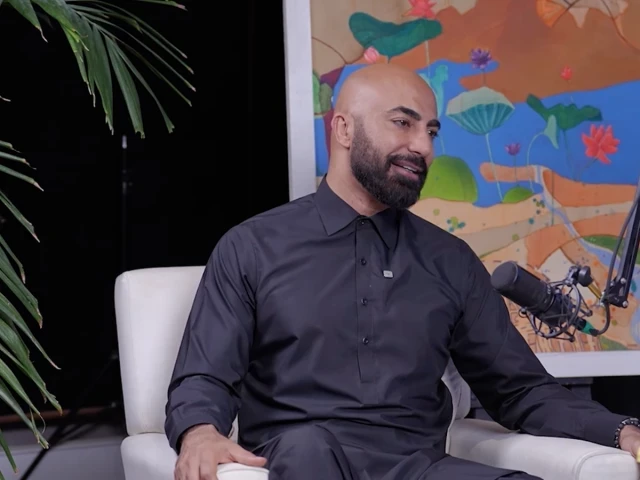
In a raw, soul-baring appearance on the FWhy Podcast hosted by pioneering fashion icon Frieha Altaf, HSY stripped away the polished veneer of celebrity to reveal the foundational traumas that forged his character. From battling total blindness for nearly a year following a harrowing car accident to enduring a fractured, nomadic childhood dictated by his parents’ divorce, the designer offered a masterclass in human perseverance. His story is not merely one of aesthetic success; it is a testament to the unyielding sacrifices of a single mother, the dignity of labor, the complexities of familial reconciliation, and an upcoming strategic pivot into the mass-market ready-to-wear sector. This profile explores the defining chapters of HSY’s life, synthesizing his candid revelations into a comprehensive look at the man behind the brand.
Detailed Chronology: From Shattered Vision to the Runway
The Eclipse of Light: A Year in Total Darkness
Long before he was draping Pakistan’s elite in magnificent couture, HSY faced a trial that threatened to permanently rob him of his creative medium: his sight. The incident, unfolding during a routine Ramadan evening, forever altered his sensory perception of the world.
Read Also
Recalling the fateful night, HSY explained that he and his best friend had ventured out during a fast to procure food. As they drove back under the auditory backdrop of the azaan (call to prayer), a sudden mechanical failure—steam venting from a bag and violently obscuring the vehicle’s windshield—blinded the driver. In a fraction of a second, the car swerved off the road. While the physical impact was managed, the physiological shock triggered a catastrophic trauma to HSY’s eyes, plunging him into total darkness in both eyes.
[The Accident] ---> [Trauma/Steam Blockage] ---> [Car Swerves off Road] ---> [Complete Vision Loss in Both Eyes]What followed was a harrowing, nearly year-long battle with blindness. Stripped of his primary sense, HSY experienced a profound psychological descent into depression, yet this sensory deprivation forced his other faculties to sharpen in compensation.
"When your eyes go, your other senses grow," HSY reflected during the podcast. "I used to hear my mom crying from four rooms away as if she was near me."
Salvation eventually arrived through the Layton Rahmatulla Benevolent Trust (LRBT), a renowned eye-care non-profit in Pakistan. Choosing to surrender himself entirely as a clinical case, HSY underwent a grueling regimen of 14 separate surgical procedures. The interventions were successful, restoring his sight and forging a lifelong bond with the institution. Today, HSY serves as a global ambassador for eye hospitals, utilizing his platform to advocate for vision care accessibility for underprivileged populations.
A Nomadic Childhood and the Architectural Influence of a Single Mother
Born in Islamabad into a pedigree family with deep-rooted connections to both the nation’s political apparatus and the armed forces, HSY’s early life stability was short-lived. When he was just two years old, his parents divorced, triggering a massive upheaval.
His mother, having previously lived a life of ease and relative luxury, was forced to make a harrowing escape, relocating with young Hassan to the bustling, unforgiving concrete jungle of New York City. The transition from elite domestic comfort to immigrant survival in America was brutal. To keep a roof over their heads and put food on the table, HSY’s mother discarded social conventions and took on whatever labor she could secure.
- The Multi-Job Survival Strategy: HSY’s mother worked up to four jobs simultaneously, laboring as a babysitter, gas station attendant, corporate secretary, and retail store clerk.
- The Sibling Separation: Adding to the familial trauma, HSY was separated from his older sister when he was roughly four or five years old (while she was nine or ten). Sent away to England, the siblings spent eight formative years apart, leaving young Hassan to navigate much of his early development in isolation.
- Autodidactic Independence: Deprived of traditional paternal guidance or a stable nuclear family structure, HSY learned life’s mechanics through sheer observation. "I didn’t necessarily remember learning from a specific person," he noted. "It was like learning on the job. I used to see my friends shave, so I would start shaving. If there was a way to eat, I’d learn it."
Watching his mother transition from a life of privilege to a tireless warrior working multiple jobs instilled in him an unshakeable work ethic. She became his ultimate hero, teaching him that no honest labor diminishes human dignity.
Supporting Context & Metrics: The Economics of Grit
HSY’s journey to the upper echelons of fashion was paved with economic precarity and a willingness to perform manual labor that would shock contemporary luxury consumers.
The Ledger of Early Labors
Before his name became synonymous with bridal extravagance, HSY was a young man hustling for survival in Lahore and beyond. His economic footprint in his youth illustrates a profound disconnect from the silver-spoon narrative often associated with the creative class:
- English Tutor at 15: Knocking on strangers’ doors in Lahore to offer private English language instruction.
- Retail Cashier & Manual Laborer: Working checkout counters, shifting timber, and relying on cheap rickshaw rides where earning a mere 30 rupees felt like a monumental financial victory.
- The Mother’s Mirror: Reflecting on these humble beginnings, HSY emphasized that he never felt degraded by his lower-tier jobs because his mother’s tireless work ethic commanded absolute respect, regardless of whether she was tutoring or clerking in a store.
The Anatomy of the Breakthrough
When HSY turned his sights toward fashion, the industry was an insular, tightly guarded oligarchy. Lacking institutional connections or financial backers, he relied on audacity and direct-to-consumer guerrilla marketing tactics.
[Handwritten Letters Sent to 7 Magazines]
              |
              v
[5 Major Publications Feature His Work]
              |
              v
[Icing on the Cake: Calls from Icons Tahira Syed & Babra Sharif]
By manually writing letters to the roughly half-dozen print fashion publications operating in Pakistan at the time, he gambled his fledgling career on a bold ultimatum: "You don’t know me. I’m sending you some work. If you can print them, I’ll be a big designer in Pakistan."
The gamble yielded unprecedented dividends. Five of the seven magazines accepted his editorial submissions, instantly catapulting him into the visual lexicon of the country and prompting validation calls from legendary cultural icons like Tahira Syed and Babra Sharif.
Official Statements & Complex Relationships
Navigating the Shadow of Paternity
Perhaps the most emotionally poignant segment of HSY’s interview dealt with his estranged relationship with his father. Describing the dynamic as deeply complicated, HSY revealed that his father played virtually no role in his upbringing, financial support, or educational development after the early divorce.
When HSY returned to Pakistan at the age of 16, his father extended an invitation to live with him. HSY refused, choosing instead to remain aligned with the mother who had sacrificed everything for him. For decades, the rift remained absolute.
However, life presented a dramatic moral test when HSY was in his mid-30s. His father suffered a debilitating stroke, which left him paralyzed, financially destitute, and completely incapacitated. True to her extraordinary character, it was HSY’s mother who bridged the divide:
"My mom told me, ‘Maybe he hasn’t done anything for you, but he is your father and you’ll regret it later for not helping him. So thank Allah that you can help him.’"
Heeding his mother’s counsel, HSY quietly supported his father financially and medically for 15 grueling years. This act of radical forgiveness transformed his worldview, leaving him with a mature, philosophical realization: "In those years I gained the understanding that each person doesn’t have everything, and every human being isn’t perfect or capable of being a father."
Future Outlook: Restructuring and the Ready-to-Wear Horizon
As HSY looks toward the next chapter of his storied career, his focus shifts from personal retrospection to industry-wide reform and commercial expansion.
Stepping Into Mass Markets: The Ready-to-Wear Venture
While HSY remains the undisputed titan of Pakistani couture—famed for opulent bridal wear and elaborate runway spectacles—he recognizes the shifting tectonic plates of global fashion consumption. During the podcast, he officially announced plans to launch an entirely separate, standalone ready-to-wear brand.
"I’m about to launch a ready-to-wear brand, and I’m excited about it. It’s going to be separate from HSY. I’ve always been into couture, but ready-to-wear is a space that also requires direction," he stated.
This strategic diversification aims to capture a younger, more dynamic demographic that values accessible luxury and daily wearability over heavy, traditional bridal ensembles.
Reclaiming Discipline in Pakistani Fashion
Beyond his commercial ventures, HSY sounded a cautionary note regarding the current disarray within Pakistan’s fashion landscape. Drawing from decades of frontline experience, he issued a call to action for industry stakeholders to restore operational discipline, structured fashion weeks, and rigorous scheduling.
"There need to be the right shows," HSY asserted. "I feel like right now everything is all over the place. We need to bring things back and bring people down to a schedule."
Conclusion: The Complete Human Experience
Ultimately, Hassan Sheheryar Yasin’s journey transcends the glitz of the runway. His life is a mosaic of profound contrasts: total blindness followed by miraculous recovery; a fractured royal upbringing superseded by immigrant hustle in New York; and the bitter pill of paternal abandonment sweetened by the grace of forgiveness. By refusing to sanitize his past, HSY offers a powerful blueprint for authenticity in an industry frequently obsessed with superficial perfection.
In his own concluding words: "If people are judging you, don’t judge them. I think you should tell people every single thing about you. You’re a whole human being of experiences."




Comments
Facebook App ID not configured. Please add it in the Customizer.