
Executive Overview
The American progressive movement is undergoing a profound structural metamorphosis. For millennials who came of age during the tumultuous political landscape of the late 2010s, the path to political engagement was frequently forged in the fires of climate activism, economic inequality protests, and sweeping progressive ideological crusades. Yet, as the mid-2020s unfold, a notable cohort of these once-radical activists is pivoting toward granular, hyper-local issues that offer immediate, tangible resonance with everyday voters.
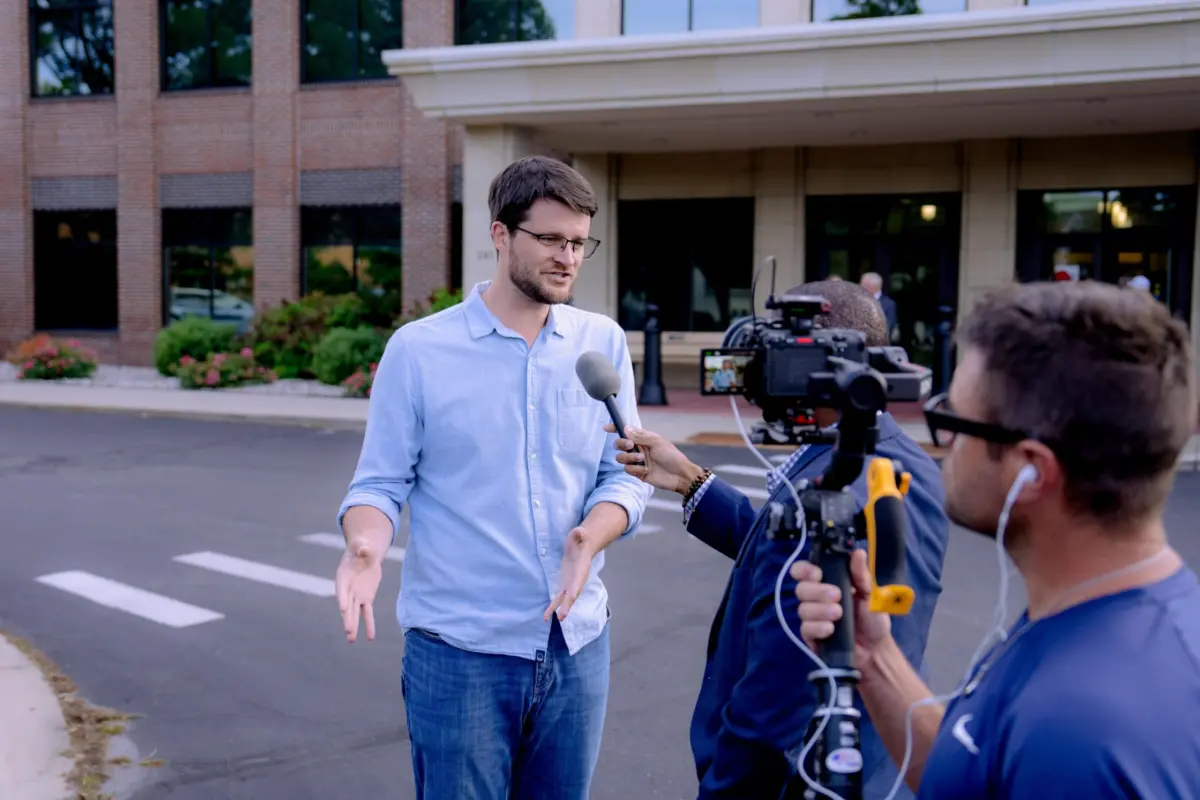
A prime exemplar of this generational shift is William Lawrence, a Democratic congressional candidate running in Michigan’s Lansing-area Seventh Congressional District for the 2026 midterms. Not long ago, Lawrence was cutting his teeth as a co-founder of the Sunrise Movement, a national youth-led organization dedicated to treating climate change as an existential emergency on par with wartime mobilization. Today, Lawrence’s campaign anchors itself around pragmatic, kitchen-table concerns: the skyrocketing cost of housing, the unchecked expansion of energy-guzzling data centers, and the pervasive economic anxiety gripping middle-class households.
This evolution from global existentialism to localized pragmatism raises critical questions about the trajectory of the modern left. In an era defined by overlapping crises—colloquially termed a "polycrisis"—voters frequently experience issue fatigue, wondering how political movements can pivot seamlessly from climate change to housing affordability, and subsequently to regulating artificial intelligence and data centers, without ever fully resolving the prior emergencies.
Read Also
In a recent, wide-ranging interview for Vox’s podcast and video series America, Actually, host Astead Herndon sat down with Lawrence to dissect this ideological pivot. Their conversation illuminates the broader tension within the Democratic Party: balancing the necessity of visionary, systemic reform with the immediate, visceral demand for economic relief and personal agency.
Detailed Chronology: From Sunrise to the Seventh District
To understand William Lawrence’s current political posture, one must trace the trajectory of the youth climate movement that captured the national imagination nearly a decade ago.
The Rise of the Sunrise Movement (2018–2020)
In 2018 and 2019, organizations like the Sunrise Movement emerged as formidable forces within American politics. Aligning closely with progressive champions in Congress—such as Representatives Alexandria Ocasio-Cortez and Rashida Tlaib—these activists sought to fundamentally reshape the Democratic Party platform. Their twin goals were clear: elevate a populist standard-bearer in the mold of Senator Bernie Sanders and force the party apparatus to aggressively embrace sweeping legislative frameworks like the Green New Deal.
Lawrence was at the forefront of this wave. As a co-founder and organizer, his days were consumed by the looming specter of ecological collapse. The strategy was unapologetically ambitious: leverage moral urgency to mobilize millions of young Americans, shift the Overton window, and demand federal legislation commensurate with the scale of the climate crisis.
The Legislative Reality and the Biden Administration (2021–2024)
When the Biden-Harris administration took office in 2021, the climate movement achieved unprecedented access to the levers of federal power. Lawrence points to the critical, yet often overlooked, Bernie-Biden policy task forces as a vital mechanism that brought progressive constituencies to the table during the formation of the administration’s early agenda.
This coalition-building culminated in negotiations over the Build Back Better Act. For climate activists, the bill represented a monumental opportunity to enact generational investments in green infrastructure and sustainable jobs. However, the legislative sausage-making exposed the harsh limits of progressive leverage in a narrowly divided United States Senate. Facing staunch opposition from conservative Democratic Senators Joe Manchin of West Virginia and Kyrsten Sinema of Arizona, the expansive Build Back Better framework was repeatedly pruned until it emerged in a drastically altered form: the Inflation Reduction Act (IRA).
While the IRA ultimately represented the largest federal investment in green energy and manufacturing in U.S. history—pumping billions into manufacturing and sustainability initiatives across districts like Lawrence’s in Michigan—it fell woefully short of what activists originally demanded. Lawrence acknowledges that the legislation represented perhaps "5 percent or 10 percent of what we need in scope."
Furthermore, the macro-consequences of these compromises quickly manifested. Despite historic green investments, the broader American electorate continued to grapple with acute economic instability, persistent inflation, and energy market volatility. When global supply chains fractured and energy security was threatened—symbolized by geopolitical choke points and volatile fossil fuel markets—ordinary citizens failed to feel the promised relief in their pocketbooks. According to Lawrence, this disconnect directly contributed to the erosion of the broader Democratic coalition and the eventual defeat of the party in the 2024 presidential election.
Supporting Context & Metrics: The Anatomy of a Polycrisis
Lawrence’s transition from a macro-climate organizer to a localized congressional candidate reflects a broader sociological and political reality: the fracturing of the post-World War II social, economic, and political compact.
The Shift Toward Hyper-Local Advocacy
Following the COVID-19 pandemic, Lawrence returned home to Michigan with a desire to put down roots in the community that raised him. Engaging in local organizing quickly disabused him of the notion that national, abstract slogans—even one as inspiring as the Green New Deal—could easily galvanize populations facing immediate, crushing personal hardships.
As Lawrence notes, telling an overburdened renter that they must prioritize a decades-long climate timeline ignores the immediate panic of a looming eviction notice. "People know that [climate change] is an issue," Lawrence explained to Herndon, "but they’re like, ‘I’ve gotta pay rent at the end of the month.’"
This realization forced a strategic recalculation. Effective grassroots organizing requires meeting people where they are, listening to their daily struggles, and identifying friction points that transcend traditional ideological divides. In communities across Michigan—spanning urban centers like Lansing, rural towns, and suburban enclaves—housing affordability emerged as the ultimate unifier. Whether young or old, liberal or conservative, constituents universally agreed upon a singular, frustrating truth: rent is excessively high, and homeownership has slipped out of reach.
Data Centers and Cross-Ideological Coalitions
In his 2026 congressional bid, Lawrence has strategically leaned into issues that directly affect the daily lives and regional environment of Michigan’s Seventh District, most notably the proliferation of data centers.
Driven by the artificial intelligence boom, technology conglomerates have rushed to construct massive data-storage and processing facilities across the American heartland. These facilities consume staggering amounts of electricity and water, frequently straining local municipal grids, driving up utility rates for residential consumers, and altering community landscapes with minimal local input.
For Lawrence, opposition to unregulated data center expansion is not merely an environmental niche; it is a potent populist wedge. It serves as a rare, cross-ideological battleground where regular voters across the political spectrum can unite against the concentrated corporate power of Silicon Valley—power that Lawrence argues has been actively enabled by incumbent politicians like Republican Representative Tom Barrett and Donald Trump.
Official Statements and Interview Insights
The dialogue between Astead Herndon and William Lawrence cuts to the heart of modern progressive disillusionment. Below are key excerpts and contextual analyses from their exchange on America, Actually.
On the Legacy of the Climate Movement
Reflecting on the grueling legislative battles of the early 2020s, Lawrence evaluated the successes and failures of the youth climate movement with candid introspection:
"I think Build Back Better was a success in coming to the table and negotiating, from the Green New Deal to Build Back Better, and then what we ended up with was the Inflation Reduction Act… At the time… I know how hard it was to get here. I’m tremendously proud of the work that I did and so many others did."
However, Lawrence was quick to contextualize the limitations of those legislative victories against the backdrop of persistent economic volatility:
"Obviously, we still have a very volatile economy. We still lack energy security… And ultimately, it wasn’t enough for the Biden-Harris administration to be able to win reelection, because people didn’t feel it enough in their pocketbooks."
On the 2024 Election and Democratic Defeat
When asked whether he was surprised by Donald Trump’s victory in Michigan in 2024, Lawrence offered a blunt "No," attributing the outcome to a failure of economic delivery and profound moral fractures within the progressive coalition:
"We hoped to deliver more through the Biden-Harris administration than we ultimately did through Build Back Better. We didn’t deliver as much to relieve the economic anxiety that people were feeling. And then I do believe that the war and the genocide in Gaza and our blank check to allow that to happen with our money and our tax dollars destroyed the Democratic coalition that had been assembled from 2017 through 2020 for the purpose of beating Trump."
On the Issue-Hopping Dilemma
Addressing Herndon’s pointed critique regarding the modern left’s tendency to pivot from one urgent crisis to another—from climate change to housing, and now to anti-AI and data center regulation—without fully resolving previous ones, Lawrence embraced the concept of the "polycrisis":
"Some have called it a polycrisis — overlapping crises. That’s the reality of the time. It seems like everything is unraveling, and it is because the whole social, economic, political compact is being renegotiated, not just in this country, but on a global stage. I don’t think it serves us to lie about that."
Lawrence emphasized that despite the pervasive feeling of "falling through midair" due to the erosion of traditional legal, constitutional, and economic protections, the fundamental through line of his activism has not changed:
"I believe in the agency of regular people taking charge of our own lives and working together to build a better future. That’s what I learned as an organizer, and that’s what gave me hope actually, at a time when I was doomer-ing in my younger years."
Future Outlook: The 2026 Midterms and Beyond
As William Lawrence campaigns for Michigan’s Seventh Congressional District in the 2026 midterms, his political trajectory serves as a clinical case study for the next generation of American progressive leaders.
The ideological arc from global climate radicalism to hyper-local economic populism highlights a sobering realization: abstract existential threats, while scientifically valid and morally urgent, struggle to sustain broad electoral coalitions when voters are burdened by immediate, acute economic distress. By anchoring his platform in tangible, localized fights—such as reining in unchecked data center expansion, lowering housing costs, and challenging entrenched corporate monopolies—Lawrence is attempting to bridge the gap between visionary systemic critique and the immediate demands of working-class survival.
Whether this pragmatic pivot will resonate deeply enough to flip a competitive congressional seat remains to be seen. However, Lawrence’s journey underscores a broader truth for the American left: if progressive movements are to regain durable political dominance, they must master the art of translating grand systemic visions into immediate, practical victories that people can tangibly feel in their pocketbooks and communities.


Comments
Facebook App ID not configured. Please add it in the Customizer.