
Executive Overview
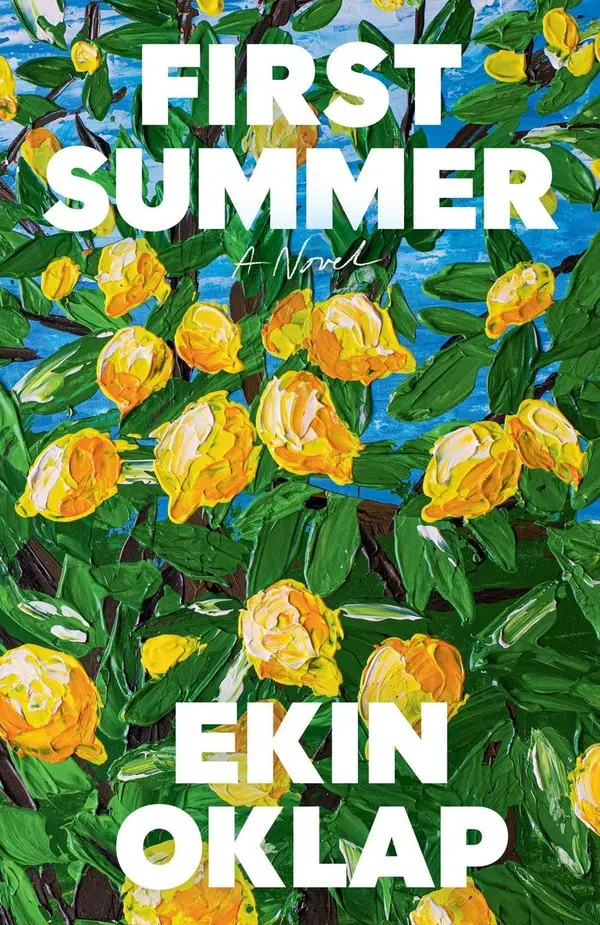
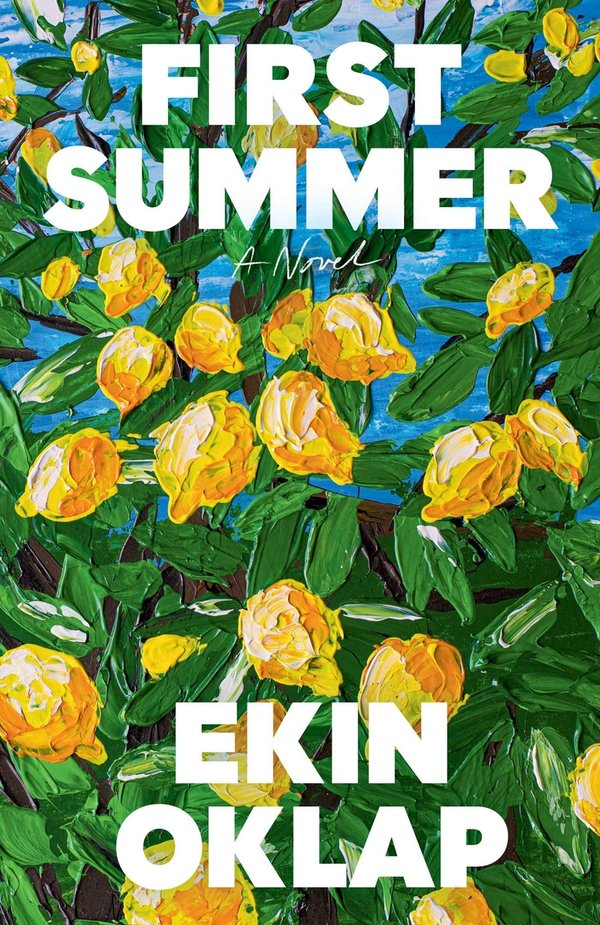
Ekin Oklap, widely recognized for her award-nominated translations of international literature—most notably the works of Turkish Nobel laureate Orhan Pamuk—has transitioned into original fiction with her debut novel, First Summer. Published to critical anticipation, the novel marks a significant shift for Oklap, offering an intricate, deeply felt exploration of adolescent intimacy, first love, and the lingering echoes of early emotional loss.
First Summer follows a unnamed female narrator during a hazy, formative season defined by her intense connection with Clara, a enigmatic new neighbor who moves in across the street. Through spent days lounging in lush yards, reading, and sharing vulnerabilities, the two teenage girls forge a profound connection that blurs the boundaries between friendship, romantic awakening, and personal identity. Intertwined with this central narrative are enigmatic, sci-fi-inspired vignettes depicting a childhood heroine—a structural mechanism that mirrors the characters’ internal emotional worlds and illustrates how fiction functions as a sanctuary during moments of profound transformation.
In an in-depth conversation with literary journalist Marisa Wright, Oklap dissects the psychological mechanics of adolescence, the therapeutic utility of storytelling, and how years of translating complex prose served as a masterclass in rhythm, cadence, and linguistic economy. The novel stands as an evocative meditation on how early emotional benchmarks mold the adult psyche long after youth has receded.
Read Also
Detailed Chronology
The Creative and Professional Evolution of First Summer
+-----------------------------------------------------------------------------------+
|  PHASE 1: Translation Masterclass                                                 |
|  - Oklap builds international recognition translating major authors (Orhan Pamuk)|
|  - Develops rigorous sensitivity to rhythm, economy, and linguistic cadence       |
+-----------------------------------------------------------------------------------+
                                         │
                                         ▼
+-----------------------------------------------------------------------------------+
|  PHASE 2: Conceptualization & Personal Anchors                                     |
|  - Draws upon personal memories of Aegean Turkish summers and childhood stories   |
|  - Formulates core themes: adolescent isolation, mirror-identities, first grief   |
+-----------------------------------------------------------------------------------+
                                         │
                                         ▼
+-----------------------------------------------------------------------------------+
|  PHASE 3: Structural Design & Vignette Integration                                |
|  - Weaves parallel sci-fi interludes as emotional processing tools for characters |
|  - Subverts youth archetypes via characters like Old Mrs. Dickey                   |
+-----------------------------------------------------------------------------------+
                                         │
                                         ▼
+-----------------------------------------------------------------------------------+
|  PHASE 4: Publication & Critical Reception                                       |
|  - Release of 'First Summer' to acclaim for spare, musical prose                  |
|  - Critical recognition of Oklap's seamless transition from translator to novelist |
+-----------------------------------------------------------------------------------+
Phase 1: Mastery of Translation and Prose Cadence
Before embarking on her debut novel, Oklap established her literary reputation as a translator capable of handling complex prose structures. Her work translating Orhan Pamuk required an extraordinary dedication to sentence-level precision, syntactical rhythm, and cross-cultural tone. This extensive background cultivated Oklap’s meticulous approach to prose, training her ear to prioritize word economy without sacrificing emotional resonance.
Phase 2: Formulating the Novel’s Core Narrative Framework
In developing First Summer, Oklap sought to explore the heightened vulnerability of teenage interiority. Drawing upon universal psychological experiences—the feeling of social alienation, the search for a kindred spirit, and the sanctuary of storytelling—Oklap structured the novel around a single summer. This timeframe served as a compressed, hyper-intense vacuum in which two young women experience both the pinnacle of connection and the sharp pain of unexpected separation.
Phase 3: Drafting, Parallel Realities, and Subverting Tropes
During the writing process, Oklap introduced speculative, sci-fi-like interludes scattered throughout the main story. These brief passages act as a secondary thematic layer, reflecting the characters’ subconscious desires and fears. Simultaneously, Oklap drew on personal childhood memories—including summers along the Aegean coast of Turkey—to craft key supporting characters, such as Old Mrs. Dickey, subverting traditional neighborhood archetypes into symbols of radical acceptance and unconditional support.
Phase 4: Publication and Critical Dialogue
Upon release, First Summer garnered praise for its spare yet vivid prose style and nuanced handling of adolescent love and heartbreak. The literary community noted how Oklap’s background as a translator enriched her novelistic debut, resulting in a text that reads with the musical precision of translated world literature while maintaining an intimate, universal emotional core.
Supporting Context & Metrics
The Psychological Architecture of Adolescent Intimacy
The narrative foundation of First Summer rests upon the psychological phenomenon of "mirroring" during early adolescence. When the narrator encounters Clara, she experiences an immediate relief from isolation—a moment described in the novel as finding someone who can hold you in their mind and understand you in their heart.
Psychological literature frequently emphasizes that adolescent identity formation relies heavily on peer validation and deep interpersonal relationships. Oklap’s novel maps this trajectory with precision:

- The Antidote to Social Alienation: In adolescence, perceived social failures—such as sharing a personal anecdote only to receive unfeeling laughter—can instill a deep sense of shame. Finding a "mirror-person" reverses this trauma, replacing isolation with mutual validation.
- The Baseline of Emotional Loss: Formative heartbreaks frequently establish an emotional baseline for adult life. As Oklap’s narrator reflects, early periods of intense grief become the benchmark against which all future sorrows are measured.
- The Dual Perspective of Nostalgia: First Summer operates simultaneously on two temporal planes: the immediate, unfiltered passion of the teenage experience, and the reflective, analytical distance of the adult narrator looking back through memory.
                      +---------------------------------+
                      |     ADOLESCENT ISOLATION        |
                      | (Fear of ridicule, alienation)  |
                      +---------------------------------+
                                       │
                                       ▼
                      +---------------------------------+
                      |    THE "MIRROR" CONNECTION      |
                      |  (Mutual understanding, trust)  |
                      +---------------------------------+
                                       │
                                       ▼
                      +---------------------------------+
                      |      FORMATIVE HEARTBREAK       |
                      |  (First experience of sorrow)   |
                      +---------------------------------+
                                       │
                                       ▼
                      +---------------------------------+
                      |     ADULT EMOTIONAL BASELINE    |
                      | (Benchmark for future recovery) |
                      +---------------------------------+
Craft Mechanics: Translation as Stylistic Rigor
Oklap’s background as a literary translator and agent directly influenced the stylistic execution of First Summer. Her prose relies on deliberate pacing, subtle repetition, and rigorous economy of phrasing.
| Craft Metric | Application in Translation | Application in First Summer |
|---|---|---|
| Word Economy | Stripping extraneous words while preserving original intent. | Crafting concise, spare sentences that avoid melodramatic overload. |
| Rhythm & Musicality | Reading aloud to match source-text cadence in a new language. | Balancing syntax to ensure sentences flow naturally and comfortably for the reader. |
| Subtext & Ambiguity | Navigating cultural nuances and untranslatable concepts. | Leaving speculative sci-fi vignettes open to reader interpretation. |
| Character Interiority | Maintaining fidelity to complex narrator perspectives. | Honoring the unfiltered intensity of teenage emotions without adult condescension. |
The Symbolism of Summer and Water
Summer acts as a crucial catalyst in coming-of-age literature. It strips away the structured routines of the school year and places characters into liminal spaces. In First Summer, heat and water function as primary symbolic motifs:
- Liminal Spaces: Swimming in local lakes forces characters out of their daily uniforms and societal roles, positioning them between childhood vulnerability and adult self-awareness.
- Sensory Intensification: The contrast between oppressive summer heat and cool water mirrors the emotional shifts between intense isolation and the relief of intimate connection.
- Transience: By definition, summer is bounded by time. The knowledge that the season must end creates a lingering tension, reminding the reader that the intense intimacy formed within it is inherently fragile.
Official Statements
Ekin Oklap on Literary Craft, Memory, and Adolescence
During her conversation with Marisa Wright for Electric Literature, Ekin Oklap offered key insights into her creative choices, the relationship between translation and original writing, and the psychological impact of youthful experiences.
+-----------------------------------------------------------------------------------+
|                               KEY QUOTATION HIGHLIGHTS                            |
+-----------------------------------------------------------------------------------+
|  "I think the kernel of deep friendship is being understood."                     |
|                                                                                   |
|  "Adolescence is so intense that I don’t think it ever really leaves you."        |
|                                                                                   |
|  "I want the writing to feel like an open gate that I can walk through."          |
+-----------------------------------------------------------------------------------+
On Loneliness and the Nature of Friendship
Oklap explored the central drive behind the bond between her protagonist and Clara, arguing that true friendship is root-level recognition:
"Loneliness can arise for many different reasons, but I think a significant part of loneliness is the feeling of not being understood. It’s a feeling like no one understands the way you think, your sense of humor, your fears, your hopes, or your dreams. To find someone who understands you can be an antidote to loneliness.
There’s a moment where the narrator describes trying to join a conversation at school… she’s shared something vulnerable, and instead of hearing, ‘I understand that,’ she hears, ‘That’s ridiculous.’ By contrast, when she finds this mirror-person in Clara, she can share those things and get the response she hopes for… More than romantic love, I think the kernel of deep friendship is being understood."
On Accessing Adolescent Interiority
Addressing how she preserved the immediate intensity of teenage emotions without allowing adult hindsight to dismiss them, Oklap noted:
"Adolescence is so intense that I don’t think it ever really leaves you. Just as developmental psychologists talk about early childhood shaping the rest of your life, I imagine adolescence does too… The experience stays with you. The way life felt then colors the way you experience life as an adult. Hopefully, as adults, we acquire the ability to recognize why we’re reacting to something… But we’re still experiencing the feeling. So while adolescence is far away chronologically, it’s also something you’re carrying with you all the time."
On Translation, Sentence Rhythm, and Musicality
Oklap explained how translating world literature trained her eye for prose precision and sentence rhythm:
"What translation has definitely given me is a habit of thinking carefully about every single word… One thing translation has made me think about constantly is rhythm… At one point, there was a sentence that ended with something like ‘vanished instantly.’ Technically, that’s redundant… But when I read the sentence aloud, I felt it needed one more word. The rhythm required it… My own taste as a reader is for prose that feels like it’s carrying me along rather than requiring me to carry it. I want the writing to feel like an open gate that I can walk through."
On Narrative Ambiguity and Storytelling as Armor
Discussing the speculative sci-fi vignettes woven throughout the novel, Oklap highlighted the comforting power of fiction:
"As a child and teenager, I would reimagine stories I loved and construct elaborate alternative narratives in my head. I remember accidentally watching a scary movie as a teenager and then being unable to sleep for a week. To comfort myself, I would invent stories in my head every night… That idea—that stories can provide immediate comfort and a way of reshaping reality—feels very personal to me… Stories can also offer a way out of loneliness. They can show that someone else—even a fictional someone—is experiencing what you’re experiencing."
On Youthful Sorrow and Emotional Recovery
Reflecting on the novel’s climax and the long-term impact of first heartbreak, Oklap offered a balanced perspective on youth and resilience:
"From a detached perspective, adolescence feels like a time when you have everything to lose. But in reality, it’s almost the opposite. You’re at the very beginning of your life. You haven’t yet built much… When something devastating happens, it feels like the end of the world. But it isn’t the end of the world. You still have your whole life ahead of you… What I can say is that first experiences of profound sadness or depression are memorable because they can come as such a shock. You remember discovering that kind of darkness for the first time."
Future Outlook
The Evolution of Oklap’s Dual Literary Career
The critical arrival of First Summer marks a milestone in Ekin Oklap’s artistic career, establishing her as a distinct voice in contemporary fiction alongside her accomplished work as a translator. Her ability to synthesize cross-cultural literary traditions with precise emotional observation positions her uniquely within contemporary international literature.
                           +----------------------------------+
                           |    EKIN OKLAP'S LITERARY ROAD    |
                           +----------------------------------+
                                            │
                      ┌─────────────────────┴─────────────────────┐
                      ▼                                           ▼
          +-----------------------+                   +-----------------------+
          | TRANSLATION PRACTICE  |                   |   ORIGINAL FICTION    |
          | Continues to bridge   |                   | Expands exploration   |
          | global literature,    |                   | of emotional memory,  |
          | maintaining syntactic |                   | narrative rhythm,     |
          | rigor and cadence.    |                   | and interiority.      |
          +-----------------------+                   +-----------------------+
Implications for Coming-of-Age Fiction
First Summer contributes to a growing trend in modern coming-of-age literature that moves past simplified, nostalgic depictions of youth. By treating adolescent interiority with intellectual gravity, Oklap’s work demonstrates how early relationships serve as structural pillars for adult identity.
Furthermore, Oklap’s deliberate use of speculative subplots offers a model for future authors seeking to represent complex interior states through non-linear, hybrid storytelling techniques. By showing how young people use self-constructed myths to navigate real-world isolation, First Summer affirms that the fiction we consume and create in our early years is not mere escapism, but a necessary strategy for emotional survival.
As First Summer reaches wider international audiences, Oklap’s transition from translator to novelist stands as a testament to the power of precise, rhythmically conscious prose—proving that when language is handled with extreme care, it can bridge the gap between deep personal isolation and lasting human connection.





Comments
Facebook App ID not configured. Please add it in the Customizer.