
Executive Overview
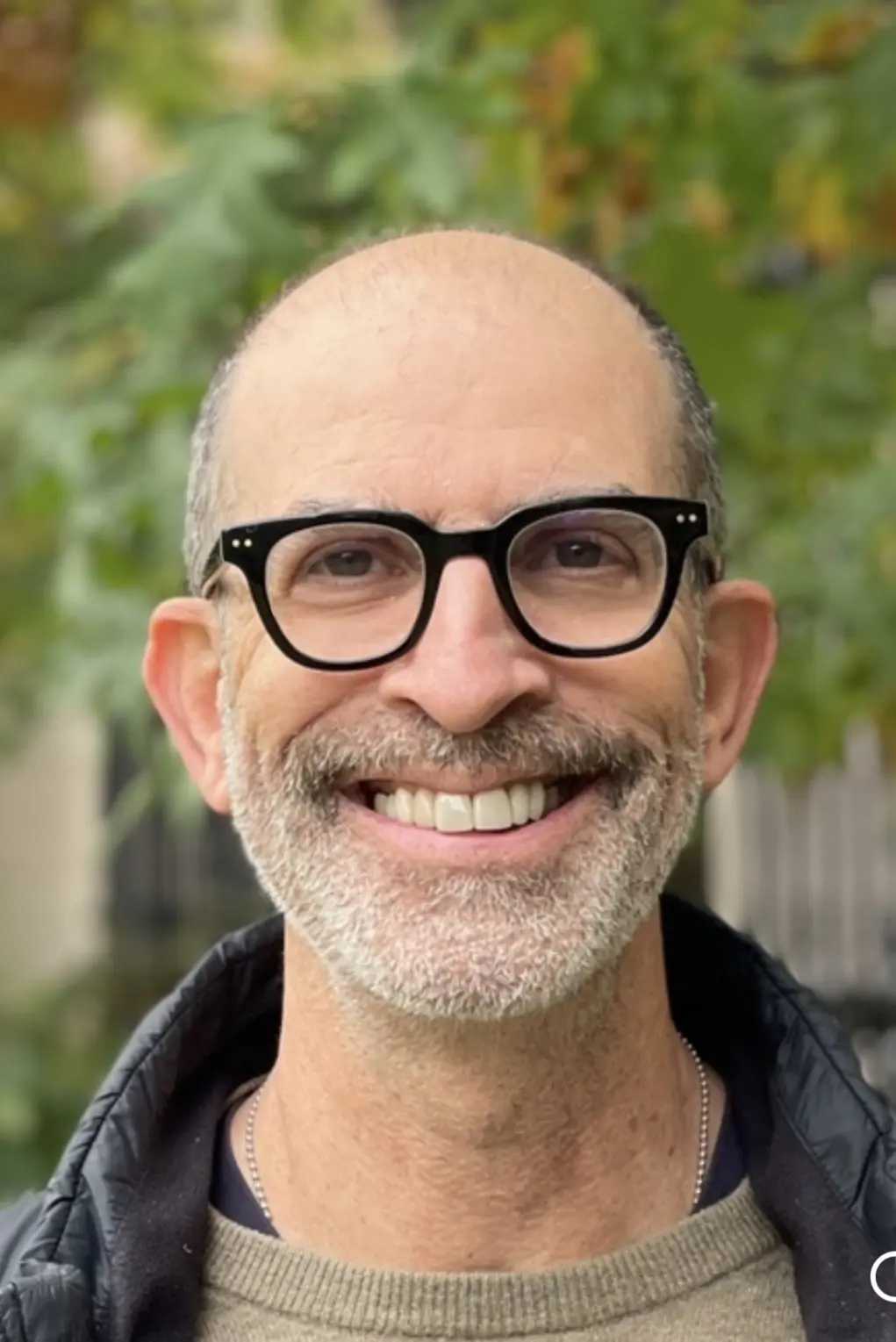
In the literary and cultural landscape, unexpected intersections often yield profound insights. Such is the case with "Deep Background," a finalist essay for the prestigious Perkoff Prize, penned by veteran comedy writer Douglas Abeles and published in The Missouri Review’s online prose anthology, BLAST. Abeles—best known for a decade of shaping the razor-sharp political and cultural satire of Saturday Night Live’s "Weekend Update"—reflects on his unexpected second act as a background actor on the set of the hit Apple TV+ workplace thriller, Severance.
For Abeles, stepping onto the modernist, mirrored-glass campus of the former Bell Labs in Holmdel, New Jersey—which doubles as the chilling headquarters of Lumon Industries—is more than just a day job. It serves as a living metaphor for life after a catastrophic medical event. Having suffered a debilitating stroke in June 2021 that left him with severe short-term memory deficits, visual impairment, and a fundamentally altered relationship with his own identity, Abeles finds an uncanny parallel between his neurological reality and the premise of Severance. In the series, employees voluntarily undergo a surgical memory split, dividing their consciousness between their working lives and their personal lives.
This deep-dive journalistic feature explores Abeles’s journey: from the terrifying morning his stroke unfolded in a Manhattan apartment, through the grueling labyrinth of medical procedures and failed attempts at traditional re-entry into the workforce, to his poignant, transformative realization under the soaring skylights of the Severance set.
Read Also
Detailed Chronology: From the Writer’s Room to the Medical Emergency
A Career Built on Wit
Before the events of June 2021, Douglas Abeles inhabited a fast-paced, high-stress, yet intellectually stimulating world. For ten years, from 2001 to 2011, he served as a writer and producer for Saturday Night Live’s iconic "Weekend Update" segment, crafting topical comedy alongside luminaries like Tina Fey, Amy Poehler, Jimmy Fallon, and Seth Meyers. His tenure earned him an Emmy Award, multiple Writers Guild of America awards, and a Peabody Award.
After leaving late-night television, Abeles pivoted to screenwriting. At the time of his medical emergency, he was actively working on a dark comedy appropriately titled The Obituary Writer—a stroke of gallows humor that became unsettlingly prophetic given his subsequent brush with mortality.
The Stroke of June 6, 2021
The crisis arrived unannounced on a Sunday morning. Alone in his Manhattan apartment, Abeles was trimming his beard in front of the bathroom mirror when an overwhelming wave of dizziness struck. The room began to spin violently, the floor appearing to drop away as if on an anti-gravity carnival ride.
"Without warning, a black cloud descended," Abeles recalls in his essay. "My field of vision ebbed from my periphery like the shrinking picture on an old-timey TV set after it’s been turned off, reducing to a single point of light before going all black."
Demonstrating a remarkable, dark comedic presence of mind even in crisis, Abeles dropped to his knees to brace against the sink, preventing a dangerous fall against the bathtub. He even closed the toilet lid so that, should he perish, he wouldn’t die in a manner reminiscent of Elvis Presley. When the black curtain momentarily retreated, he maintained consciousness long enough to reach out for help.
His 19-year-old son, Bennett, who lived in a separate apartment in the same building, rushed down to administer first aid, followed swiftly by a 9-1-1 call.
Emergency Interventions and Hidden Diagnoses
Transported to the New York Presbyterian Emergency Department, Abeles faced the terrifying speed of acute medical protocol. Confronted by a young physician, he was asked to sign off on TPA—a high-risk, clot-busting drug capable of preventing permanent brain damage or causing death. He consented without hesitation.
Subsequent neurological evaluations revealed a complex web of pre-existing vulnerabilities:
- MTHFR Gene Mutation: A somewhat rare genetic mutation (methylenetetrahydrofolate reductase) that thickens the blood, predisposing the patient to clotting and showing evidence of prior, undetected minor strokes.
- Patent Foramen Ovale (PFO): A congenital hole in the heart that allowed thickened blood to backwash into pumping chambers, forming clots capable of traveling directly to the brain.
- Homonymous Hemianopsia: Permanent loss of the upper-right visual quadrant in both eyes.
Following intensive care and subsequent outpatient procedures—including a minimally invasive PFO closure involving a catheter-guided patch—Abeles embarked on a grueling regimen of physical, vestibular, occupational, and cognitive therapies.
Supporting Context & Metrics: The Mechanics of Recovery and Re-Entry
The Struggle for Cognitive Cohesion
While cognitive tests and crossword puzzles confirmed that his fundamental intellect and core personality remained intact, Abeles’s short-term memory was severely compromised. Simple tasks became monumental hurdles. Basic recall of friends, first cousins, and medical practitioners vanished.
Attempting to return to the workforce proved equally daunting. A compassionate friend, attorney Merrill, offered him a position drafting O-1 immigration law letters in Midtown Manhattan. However, the learning curve was insurmountable.
- The Post-it Note Strategy: To cope with memory failures, Abeles covered the interior of his office cubicle in colorful Post-it notes containing basic instructions, transforming his workspace into the visual equivalent of an exotic bird’s plumage.
- The Severance Parallel: His experience mirrored that of Severance character Helly R, who struggles to comprehend the incomprehensible numbers matrix of Lumon’s Macrodata Refinement department.
- The Exit: After three months, Merrill was forced to let him go—an outcome that brought Abeles a profound sense of relief rather than despair.
Finding Solace in Background Acting
Faced with dwindling savings and a brain unable to manage complex, multi-step professional assignments, Abeles followed a friend’s advice and turned to background acting in film and television.
For a man accustomed to the rigorous intellectual output of late-night television, standing around on a set for hours doing nothing might have once seemed unthinkable. Post-stroke, however, it was the ideal vocation. It demanded no short-term memory retention, no complex drafting, and no social small talk. It simply required physical presence.
Official Statements & Industry Reception
The publication of "Deep Background" in The Missouri Review’s BLAST anthology has drawn significant critical acclaim, positioning Abeles not only as a master of comedic timing but as a deeply reflective voice in contemporary personal essay writing.
"Douglas Abeles’s work captures the intersection of pop culture and human vulnerability with rare precision," notes the editorial board of The Missouri Review. "By filtering a profound personal trauma through the lens of a popular dystopian workplace drama, he creates a narrative that is at once deeply specific and universally resonant."
Literary critics have lauded the essay for avoiding the clichéd tropes of inspiration porn. Instead, Abeles confronts the unvarnished realities of neurological damage: the sudden flashes of disproportionate rage, the depressive withdrawals at social gatherings, and the grief of losing portions of one’s cognitive self.
Future Outlook: Redefining Wholeness
On the Set of Severance Season Two
Abeles’s assignment as "Lumon Worker #99" on the set of Severance brought him full circle. Dressed in a conservative business suit reminiscent of a 1960 political campaign volunteer, outfitted with a laminated Lumon ID bearing his own photograph, and moving in precise, choreographed patterns across the magnificent, opera house-like atrium of the former Bell Labs building, he found himself embedded within the very aesthetic of memory fragmentation.
Threading through a loose J-pattern alongside fellow extras while avoiding eye contact with star Adam Scott, Abeles experienced a quiet epiphany.
A New Definition of Self
The stroke left Abeles "severed" from his past self—missing large chunks of memory and struggling with the disorientation of a lifelong New Yorker unable to navigate familiar subway exits. Yet, his time on set catalyzed a psychological breakthrough.
He realized that the "wholeness" he sought would not be found in a miraculous return to his pre-stroke capabilities. Those capabilities may never return in full. Instead, true recovery required forging a new definition of self—one that gracefully encompasses both his cognitive capacities and his limitations.
"Then, for the first time since my stroke, I stopped myself from a boilover," Abeles writes, reflecting on an incident outside a Queens costume fitting. "I took a breath and calmed myself. And then I made a choice: to accept that being lost, being momentarily disoriented, was okay. This was part of my life now. This was who I am."
As the assistant director’s voice echoes across the sunlit atrium—calling “Standby! Rolling! Background!”—Abeles steps forward into a shaft of angled sunlight. Though momentarily blinded, he walks onward with absolute confidence, knowing that light and clarity always return on the other side.



Comments
Facebook App ID not configured. Please add it in the Customizer.