In the contemporary literary landscape, few voices capture the friction between human observation and ancient topography quite with the precision of poet Kathleen Winter. On July 13, 2026, Winter’s evocative and unsentimental poem "Iveragh" was featured as the Poem of the Week, drawing critical acclaim for its stark imagery, deep historical consciousness, and grounded refusal of romanticized pastoral tropes.
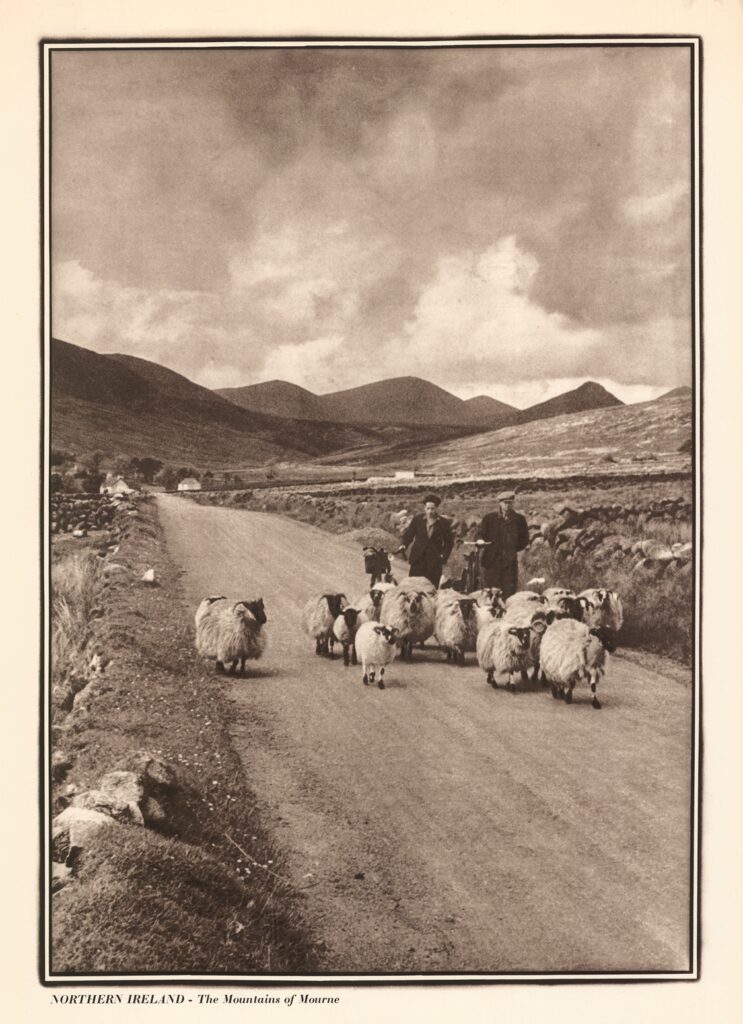
Named after the largest peninsula in southwest Ireland, located in County Kerry, "Iveragh" serves as a microcosm of Winter’s broader poetic project: an exploration of place, ancestral tethering, and the quiet endurance of non-human life against the relentless tides of time and language. Written during one of her multiple prestigious residencies in the Irish Republic, the poem strips away the glossy veneer typically found in tourist-driven depictions of the Irish countryside. Instead, it offers readers a tactile, visceral encounter with the landscape—anchored, memorably, by the ubiquitous sheep that dot the limestone cliffs, creatures described not as pastoral decorations, but as ancient witnesses to history, "thicker and heavier than expected."
This feature not only highlights Winter’s growing corpus of celebrated work—including her award-winning collections Transformer (2020), I will not kick my friends (2018), and Nostalgia for the Criminal Past (2012), alongside her forthcoming 2027 collection Serial Fabulist from Texas Review Press—but also underscores the enduring vitality of the Poem of the Week platform as a space for showcasing world-class contemporary verse.
Detailed Chronology: The Genesis and Evolution of "Iveragh"
To understand the weight and texture of "Iveragh," one must trace the trajectory of Kathleen Winter’s engagement with the landscapes of Western Europe, specifically Ireland and France. Winter’s poetic journey toward this piece is characterized by a deliberate, methodical immersion in the environments she seeks to document.
Rooted in Residency: The Irish Republic Fellowships
Winter’s artistic output has long been bolstered by international writing fellowships, a testament to her standing in the global literary community. Over the years, she has been granted residencies at the Maison Dora Maar in France, the Cill Rialaig Project in Ireland, the James Merrill House, the Heinrich Böll Cottage, and the Sewanee Writers’ Conference.
It was her Irish residencies—catalyzed by a personal family background in the country—that laid the structural and emotional groundwork for "Iveragh." Immersed in the linguistic richness and rugged terrain of the Irish Republic, Winter found herself irresistibly drawn to the natural world. However, her relationship with the landscape avoided the trap of immediate pastiche.
The Composition Timeline
"Iveragh" emerged as one of the final pieces written for a comprehensive manuscript that bridges Winter’s experiences in Ireland and France. Reflecting on her creative process, Winter notes that her fascination with the sheep-covered hillsides of County Kerry began during her very first trip to the region in 2016. For a decade, these ubiquitous animals lingered in her creative consciousness, demanding articulation.
Unlike many contemporary poets who approach rural landscapes with an idealized lens, Winter spent years observing the realities of agrarian life in Kerry. The poem was refined during her time engaging with the local culture—a culture defined by what she describes as an "abiding interest in language and literature." By 2026, the poem had matured into a polished meditation on antiquity, eventually finding a prominent home as a celebrated weekly feature.
Kathleen Winter’s selection as Poem of the Week is the latest accolade in a career marked by critical validation, prestigious prizes, and wide publication in top-tier literary journals. Based in Sonoma, California, Winter has steadily built a reputation as a master of tight, muscular verse that balances intellectual rigor with sensory immediacy.
Critical Accolades and Published Works
Winter’s bibliography includes several landmark collections that have shaped contemporary American poetry:
Nostalgia for the Criminal Past (Elixir, 2012): Winner of the Antivenom Prize, this early collection established Winter’s voice—one marked by psychological depth and historical inquiry.
I will not kick my friends (Elixir, 2018): Winner of the Elixir Prize, this collection showcased her tonal range, moving fluidly between vulnerability and sharp wit.
Transformer (Word Works, 2020): Winner of the Hilary Tham Capital Collection Award, Transformer cemented her status as a poet capable of profound structural and thematic transformations.
Serial Fabulist (Texas Review Press, set for 2027): Her highly anticipated upcoming collection promises to expand further upon her fascination with narrative, myth, and landscape.
Journalistic Presence and Major Awards
Winter’s individual poems have appeared in many of the English-speaking world’s most prestigious literary magazines and reviews, including The New Republic, The New Statesman, Cincinnati Review, Yale Review, Poetry London, The Adroit Journal, and Michigan Quarterly Review.
Her shelves are further crowded by distinguished honors, such as:
The Poetry Society of America’s The Writer Magazine/Emily Dickinson Award
The Rochelle Ratner Memorial Prize
The Ralph Johnston Fellowship
These metrics paint a picture of a poet operating at the height of her powers, whose work is continuously vetted and celebrated by the most rigorous arbiters of contemporary literature.
Official Statements and Poetic Analysis: Deconstructing "Iveragh"
The Author’s Perspective
In her official author’s note accompanying the feature, Winter sheds light on her deliberate artistic choices:
"Iveragh is the largest peninsula in southwest Ireland, in County Kerry. The poem is one of the last I wrote for a manuscript associated with Ireland and France… Though I’m a shameless gazer at sheep-covered landscapes, in ‘Iveragh’ I aimed for an unsentimental, non-touristic approach. Since my first trip to County Kerry in 2016, I can’t seem to shake the temptation to write about these ubiquitous animals and their surroundings."
This commitment to an "unsentimental, non-touristic approach" is precisely what elevates the poem from mere nature writing to philosophical inquiry.
Textual Analysis of "Iveragh"
Winter opens the poem with a jolt of defamiliarization. The sheep are immediately stripped of their pastoral cuteness:
The sheep are not light. They’re like custard inside eclairs, thicker and heavier than expected. Instead of a stripe of chocolate, their backs each bear a splash of paint. Shy, they do what they can to avoid being eaten. It’s not much.
By comparing the livestock to "custard inside eclairs" and noting the pragmatic "splash of paint" used by farmers instead of decorative flair, Winter grounds the reader in physical reality. The sheep are economic units, living organisms, and targets of consumption, rather than symbols of pastoral serenity.
As the poem progresses, the perspective broadens geographically and temporally. The sheep merge with the physical geology of the land:
In the wind they hunker like larger limestone rocks: redundant, repetitive, fungible, too small to be boulders, bereft of language, or so we say.
The phrase "or so we say" is critical. It introduces a sharp critique of human anthropocentrism—our arrogant assumption that language is the sole metric of consciousness and historical witness. Winter quickly corrects this human bias in the subsequent stanzas, reminding readers that the sheep possess an ancient lineage that dwarfs human habitation:
Of course the sheep know this land better than we do, having lived here longer. Before they modeled for Georgian porcelain, they were a vivid currency for the Church, the gentry, even the poor.
In the poem’s breathtaking conclusion, Winter elevates the sheep from farm animals to primordial entities that predated human civilization itself:
Like bog-wood and the Irish elk, their presence preceded language. When the gatherers arrived, when they gathered to hunt, sheep watched from the cliffsides, their black mouths ceaselessly grinding like a troubled sleeper almost awake before the last day’s dawn.
Here, the mechanical, rhythmic grinding of the sheep’s jaws connects them to the deep time of the earth. They are the sleepless watchers of history, standing on the cliffsides as human societies rise, fall, trade in currency, and invent languages.
Future Outlook: Looking Toward 2027 and Beyond
The feature of "Iveragh" as Poem of the Week serves as a timely reminder of Kathleen Winter’s enduring significance in American and international letters. As the literary community digests her recent work, attention is already turning toward the horizon.
With her upcoming poetry collection, Serial Fabulist, slated for publication by Texas Review Press in 2027, readers and critics alike are eager to see how Winter continues to synthesize her transatlantic experiences, her keen eye for the ecological details of the natural world, and her mastery of linguistic nuance.
Furthermore, platforms like the Poem of the Week continue to play a vital role in bridging the gap between rigorous literary journals and a broader, digitally engaged readership. By spotlighting pieces like "Iveragh"—works that demand close reading, ecological awareness, and historical reflection—these platforms ensure that contemporary poetry remains a vibrant, challenging, and essential art form.
As Kathleen Winter continues her work in Sonoma, California, drawing upon memories of the limestone cliffs of County Kerry, the French countryside, and the deep, silent witnesses of the natural world, her pen remains as sharp, heavy, and vital as the landscape she so masterfully renders on the page.



Comments
Facebook App ID not configured. Please add it in the Customizer.