
Executive Overview
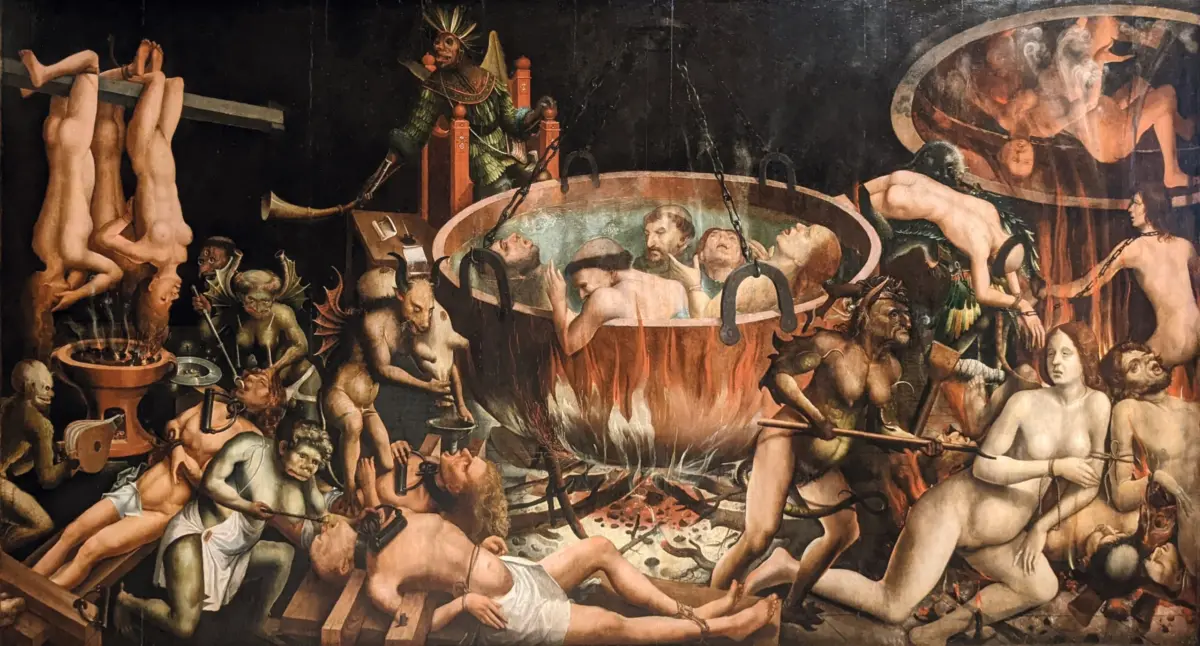
A months-long investigation into the British Empire’s subterranean expansion reveals a systematic, state-sanctioned labor pipeline relocating thousands of destitute British orphans and workhouse children directly into the underworld colony known colloquially as Hell. Transported via the massive vertical shaft at Astley Deep Pit—familiarly termed "The Drop"—caravans of young girls and female ward infants are being deployed to supply labor for domestic estates, plantations, and municipal centers in the newly settled territories of Alexandra, Vespers, and Scortatus.
Operating under the auspices of philanthropic organizations such as Barnardo’s Home for Orphans and Destitute Children alongside municipal poor relief authorities, this migration program relies on a calculated reclassification of the underworld. Rather than treating Hell as a realm of metaphysical damnation, imperial authorities, venture capitalists, and colonial planners have framed the territory as merely another resource-rich frontier within the Crown’s domain.
However, field observations along the uncompleted railway corridors terminating at the outpost of Dog Pit indicate severe psychological trauma among transiting wards, precarious infrastructure, and unregulated encounters with native infernal organisms. While Protestant colonial administrators maintain that the enterprise is a secure and economically vital endeavor, testimonies gathered from child migrants and frontier workers expose a stark reality of systemic exploitation, ideological division, and unaccountable corporate-state overreach.
Read Also
Detailed Chronology
[Phase I: Domestic Processing]
  └─ Selection at Liverpool/Brownlow Hill Workhouses & Catholic Orphanages
       │
[Phase II: The Descent]
  └─ Transfer to Astley Deep Pit → Lowering via "The Drop" Elevator Shaft
       │
[Phase III: Rail Transit]
  └─ Travel through artificial stone canyons towards Dog Pit Terminus
  └─ Documented sighting of native infernal fauna along trestle bridges
       │
[Phase IV: Frontier Staging]
  └─ Arrival at Dog Pit → Transfer to Oxcart Logistics Network
  └─ Processing by Barnardo's Agents for final dispatch to Alexandra/Vespers
Phase I: Domestic Collection and Assembly
The labor pipeline originates within urban poorhouses and parochial orphanages across Great Britain, notably the Brownlow Hill Workhouse in Liverpool and various Catholic institutional asylums. Indigent children, predominantly female orphans aged eight to sixteen, are selected by municipal poor law guardians under the pretext of overseas apprenticeship and domestic placement.
Phase II: The Descent at Astley Deep Pit
Selected wards are transported by rail to the industrial complex at Astley Deep Pit. Here, the infrastructure transitions from surface-level rail to "The Drop"—a colossal, steam-powered industrial lift system engineered to penetrate the Earth’s crust down to the upper perimeter of the subterranean continent. Eyewitness accounts describe a rapid, high-friction descent down a vertical rock shaft, where domestic laws effectively cease to apply once the lift passes beyond surface jurisdiction.
Phase III: Subterranean Railway Transit
Upon reaching the base of the shaft, migrants are loaded into passenger carriages operated by imperial rail contractors. The route cuts through artificial canyons and blasted basalt walls towards the interior plateaus.
- Geological Trajectory: The tracks pass through synthetic passes carved out by British military engineers, traversing black and brown stone strata discolored by iron rust, sulfur, and organic mildews.
- Atmospheric Conditions: Passengers encounter an opaque, mustard-yellow haze, a perpetual sunless sky, and extreme ambient heat.
- Infernal Fauna Observation: During a recent transit across a high wooden trestle bridge spanning a dry alluvial gorge, passengers reported sighting a large indigenous entity. Described as possessing a black, beetle-like torso, vestigial bat wings, human-like hands, and a pale, expressionless facial structure, the sighting confirms that native species continue to inhabit the terrain immediately adjacent to active rail corridors.
Phase IV: Terminus Disembarkation at Dog Pit
The rail journey currently terminates at Dog Pit, a dusty frontier encampment situated in the rocky foothills short of the provincial capital at Alexandra. Because permanent track-laying remains incomplete, transiting wards are offloaded onto unpaved platforms built from recycled railway ties. At this junction, children are processed by administrative chaperones before being loaded into oxcarts for the multi-day overland journey to regional distribution centers, such as the Female Factory in Vespers.
Supporting Context & Metrics
Demographic and Institutional Profile of Transited Wards
| Metric / Category | Data / Observed Characteristics | Institutional Source |
|---|---|---|
| Primary Age Demographic | 8 to 17 years old (Female majority) | Workhouse Registers / Barnardo’s |
| Primary Origins | Liverpool, Manchester, Urban Poor Law Unions | Brownlow Hill, Catholic Asylums |
| Religious Affiliation | Mixed: Roman Catholic, Various Protestant | Parochial Charity Boards |
| Target Destinations | Alexandra, Vespers, Scortatus Plantations | Colonial Female Factories |
| Primary Employment | Domestic service, kitchen labor, agricultural ties | Imperial Colonial Board |
Theological and Ideological Fractures
The migration program has exposed deep ideological fractures among the transiting youth, largely dictated by their religious and socio-economic backgrounds:
- The Imperial Utilitarian Perspective: Wards raised within mainstream Protestant institutions generally view the transition through an imperial framework. Informed by colonial propaganda, these children assess the underworld as equivalent to traditional settler colonies such as Canada, Australia, or the Cape Colony—a rough frontier where labor yields eventual assimilation.
- The Metaphysical Damnation Perspective: Conversely, Catholic wards, particularly those exposed to orthodox doctrinal teaching, interpret the transit as a literal passage into eternal damnation. Field interviews reveal high levels of quietism, fatalism, and acute anxiety among these wards, who perceive their displacement as a divine abandonment despite having committed no individual transgressions.
- The Secular Realist Perspective: A third group, comprised primarily of second-generation Irish-English youth shaped by urban workhouses, views the endeavor through the lens of class struggle and anti-imperial sentiment. Rejecting both colonial optimism and religious fatalism, these individuals regard the underworld as an extension of British industrial exploitation, noting that the economic motives driving subterranean expansion mirror the forces that impoverished their families on the surface.
       [Ideological Frameworks Among Transiting Youth]
                             │
     ┌───────────────────────┼───────────────────────┐
     ▼                       ▼                       ▼
[Utilitarian / Settler]  [Doctrinal / Fatalist]  [Secular / Class Realist]
 View: Standard Colony   View: Eternal Damnation View: Industrial Exploitation
 Bias: Protestant Wards  Bias: Catholic Wards    Bias: Urban Irish Diaspora
Infrastructure and Environmental Conditions
The physical infrastructure supporting the underworld colony remains rudimentary and hazardous. The climate at the Dog Pit railhead is defined by extreme thermal conditions, airborne particulate matter (sand, red dust, and coal residue), and inadequate sanitation.
Logistical hubs suffer from significant refuse accumulation, foul drainage, and proximity to unmonitored wilderness areas. The labor force constructing the rail lines consists heavily of impoverished European men, transient laborers, and indentured workers operating under harsh penal or financial contracts.
Official Statements
Statement from Colonial Administrative Chaperones
Mr. Quarington, an official representing Barnardo’s Home for Orphans and Destitute Children stationed at the Dog Pit terminus, emphasized the administrative legitimacy and protective mandate of the program during an on-site interview:
"Our purpose here is strictly philanthropic and protective. These young girls are being removed from the squalor, overcrowding, and moral hazards of the Northern workhouses to be given honest, structured employment in a developing territory.
While the environment is admittedly rugged and the infrastructure still under construction, the administration is fully committed to their welfare. Dog Pit is merely a temporary staging ground. Once relocated to Alexandra, these children will enter secure domestic placements. It is a orderly, legal, and necessary civilizing mission."
Statement from Transiting Ward (Bridget, Age 15)
Bridget, a ward formerly of the Brownlow Hill Workhouse in Liverpool, offered a critical assessment of the administrative narrative, citing family history and personal objectives:
"They tell us this is just another colony, no different than Australia or Canada. But anyone with eyes can see what it is. The English spent years driving my family out of Ireland into the Liverpool slums, and now that they have no use for us there, they drop us down a hole in the ground to clean floors and boil potatoes for their settlers.
They think we don’t know where we are. My brother Sam came down here before me—he went farther in, down toward the Seventh Circle before he died. The authorities call this land an economic opportunity, but it is just a larger workhouse with a yellow sky. I am not here to settle down or build a life for their Empire; I am here to find where they took my brother."
Statement from Transiting Ward (Maureen, Age 14)
Maureen, a Catholic orphan transported from a church-run asylum, expressed the severe theological dread experienced by a subset of the migrants:
"The sisters taught us about the purview of God’s mercy. Once you pass down the shaft, you are leaving that mercy behind. The other girls say it is just rocks and dirt, but it feels like Hell because it is Hell.
We did not choose this suffering, but we are made to bear it. I keep my rosary because God is still God, even if we have been sent beyond His reach. The government calls it a factory and a colony, but it is damnation all the same."
Direct Testimonies from Rail Operations Personnel
A transit laborer employed by the rail contractor at the Dog Pit terminus provided a blunt assessment of the outpost’s character:
"The gents in London can print whatever they like in the papers about imperial destiny and civilizing the frontier. But if you want the truth of it on the ground: if Hell had an backside, Dog Pit is precisely where you’re standing. It’s heat, dust, flies, and desperation, built on the backs of men who have nowhere left to go and children who had no say in coming."
Observations from Press Representatives
Felix Klier, an independent continental photographer contracting for The Times of London, noted the disparity between public imagery and actual conditions while documenting the transit:
"The photographs published in the London journals will show washed-out, quiet little figures in matching frocks standing neatly beside the carriages. The camera captures the outline, but it eliminates the color, the unbearable heat, the reek of coal oil and decay, and the flies.
The readers in the capital will look at these images over breakfast, review the stock prices for subterranean mining ventures on the facing page, and feel entirely satisfied that order reigns. They cannot comprehend the reality of this place from a newsprint image; they will only understand it if they end up here themselves."
Future Outlook
Planned Expansion of Subterranean Infrastructure
Despite environmental hazards and public criticism from humanitarian bodies, the Colonial Office and its commercial partners plan to accelerate subterranean development over the next fiscal quarter:
- Rail Extensions: Contractors intend to complete the remaining rail track from Dog Pit through to Alexandra by the end of the year, bypassing the volatile oxcart transit route.
- Surveying Deeper Circles: Military survey teams and geological engineers are currently mapping routes toward lower subterranean tiers, including the Seventh Circle perimeter, to assess mineral rights, forestry resources, and industrial viability.
- Increased Ward Cargoes: The Department of Poor Law Administration has signaled intent to increase the monthly quota of workhouse juvenile transports, citing the need to meet expanding domestic labor shortages in regional capital centers.
[Current & Projected Infrastructure Network]

Astley Deep Shaft ("The Drop")
      │
      ▼
[ Upper Rail Corridor ] ──► Dog Pit Terminus (Current Railway Line End)
                                  │
                                  ├─► [ Oxcart Relay ] ──► Vespers / Alexandra
                                  │
                                  └─► [ Projected Rail Line ] ──► Seventh Circle (Survey Phase)
Institutional and Human Risks
The rapid expansion of the Astley Deep pipeline presents severe long-term challenges:
- Systemic Mortality and Psychological Breakdown: The combination of extreme environmental exposure, native infernal threats, and severe psychological distress poses high mortality and trauma risks for juvenile transports. Unaccompanied minors reaching Dog Pit face unmonitored interactions with transient adult labor forces.
- Regulatory and Legal Ambiguity: Because subterranean territories operate under hybrid colonial-military law, normal domestic safeguards regarding child labor, working hours, and physical safety do not apply. The reliance on private charities like Barnardo’s to manage judicial oversight creates significant potential for institutional negligence.
- Socio-Political Backlash: As firsthand accounts from returned workers and investigative reporting reach surface publications, public debate regarding the moral and theological legitimacy of exploiting an infernal territory is expected to intensify. Opponents argue that commercializing Hell undermines fundamental legal and ethical standards, while proponents maintain that economic necessity justifies the ongoing expansion of the Crown’s deepest frontier.

Comments
Facebook App ID not configured. Please add it in the Customizer.