
Executive Overview
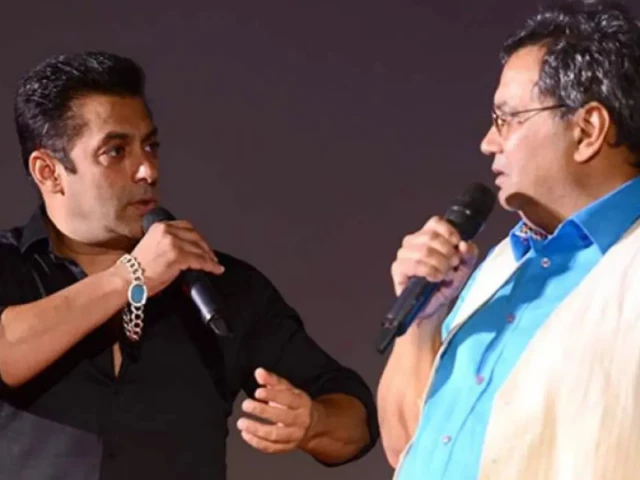
In the high-stakes, hyper-visible ecosystem of Bollywood, interpersonal friction between prominent directors and leading actors is hardly unprecedented. Yet, few such conflicts offer as compelling a study in conflict resolution, parental influence, and eventual reconciliation as the 2008 fallout between veteran filmmaker Subhash Ghai and megastar Salman Khan.
Long relegated to the realm of industry rumor and tabloid speculation, the full narrative of their dramatic disagreement—which culminated in a physical altercation at a social gathering—has recently been brought to light by Ghai himself. In a candid, retrospective interview, the iconic director detailed how a minor creative and ideological dispute escalated into a bitter confrontation during the production of their collaborative venture, Yuvvraaj.
However, what sets this episode apart from the standard chronicle of creative clashes in Indian cinema is its swift and mature resolution, orchestrated largely by the intervention of legendary screenwriter Salim Khan, the actor’s father. Through a combination of old-school industry ethics, parental authority, and genuine remorse, the feud was not merely settled; it was transformed into a foundation for a lifelong friendship and continued professional partnership.
Read Also
This comprehensive report examines the genesis of the conflict, the anatomy of their public fallout, the crucial role played by Salim Khan, the subsequent artistic trajectory of Yuvvraaj, and the broader implications of star power versus character immersion in modern Indian filmmaking.
Detailed Chronology
The Genesis of Creative Tension (2008)
To understand the friction that ultimately boiled over between Ghai and Khan, one must examine the atmosphere surrounding the production of Yuvvraaj in 2008. Subhash Ghai, historically celebrated as the "Showman" of Hindi cinema—a title earned through grand, theatrical blockbusters like Karz, Ram Lakhan, and Pardes—was accustomed to absolute creative authority on his sets. Conversely, Salman Khan was rapidly solidifying his status as an unassailable box office titan, a star whose persona was increasingly beginning to dictate the contours of the narratives he inhabited.
The two cinematic heavyweights had agreed to collaborate on Yuvvraaj, an ambitious musical drama intended to marry Ghai’s grand-scale aesthetic with Khan’s magnetic box-office pull. However, underlying tensions regarding creative decisions, professional boundaries, and artistic direction had begun to accumulate well before the incident that fractured their working relationship.
The Social Disagreement and Physical Altercation
The breaking point arrived unexpectedly outside the controlled environment of a film studio. According to Ghai’s recent revelations, the two men encountered each other at a high-profile social gathering in Mumbai. As the evening progressed, a casual exchange quickly deteriorated into a heated argument over creative and behavioral choices.
Recounting the incident, Ghai noted:
"We were at a party. Salman was saying something wrong when I told him, ‘Don’t say that.’ He had some issues with me. He asked me, ‘Why did you do this or that?’ I said it is my decision as a director. He started abusing me, so I asked him not to do that. We had a spat there."
The verbal sparring escalated into a physical altercation—a rare and severe breach of professional decorum, particularly between figures of their stature. In the hierarchical and often insular world of Bollywood, a direct physical confrontation between a legendary director and a leading man typically spells the definitive end of any professional relationship, frequently resulting in long-term industry ostracization or entrenched camps. For a brief window, it appeared that Yuvvraaj—and any future goodwill between Ghai and Khan—was irrevocably damaged.
The Intervention of Salim Khan
What prevented the feud from metastasizing into a permanent industry war was the swift, decisive intervention of industry patriarch and veteran screenwriter Salim Khan. Recognized widely as one-half of the legendary writing duo Salim-Javed, Salim Khan commanded immense respect across generations of filmmakers, actors, and technicians.
Realizing the gravity of his son’s misconduct, Salim Khan initiated damage control the very next morning. In his interview, Ghai recalled receiving a phone call from the senior Khan that set a completely unexpected tone for the day:
"He told me that Salman told all of these things to his mother. He said, ‘I have scolded him.’ He sent Salman to my house to apologise to me. And he came."
The willingness of a reigning megastar to physically travel to a director’s home to offer a personal, unprompted apology is an extraordinary anomaly in contemporary celebrity culture. When Khan arrived at Ghai’s residence, he extended a sincere and polite apology for his behavior the previous night.
The gesture left an indelible mark on the veteran filmmaker. Ghai confessed:
"He politely apologised, after which I fell in love with him because he respected his father so much."
This profound display of filial respect and accountability instantly dissolved Ghai’s lingering resentment. The crisis was averted not through legal notices, PR campaigns, or mediated industry bodies, but through traditional values of accountability, parental guidance, and personal contrition.
Supporting Context & Metrics: The Yuvvraaj Post-Mortem
With peace restored and mutual respect established, Ghai and Khan seamlessly resumed their professional collaboration, returning to the sets of Yuvvraaj to complete the film. Alongside Khan, the movie boasted an ensemble cast featuring Anil Kapoor, Zayed Khan, and Katrina Kaif, coupled with a lavish soundtrack composed by A.R. Rahman.
Despite the high-profile talent attached to the project, Yuvvraaj faced a challenging journey at the box office upon its release in November 2008. Financially and critically, the film failed to achieve the monumental success that Ghai’s earlier directorial ventures had routinely commanded.
Reflecting on the film’s underperformance, Ghai offered a nuanced critique of the limitations inherent in casting hyper-dominant superstars in character-driven narratives. He pointed out that Khan’s "larger-than-life" screen image frequently overpowered the fictional individuals he was hired to portray:
"Sometimes these characters don’t work because the star dominates the character. He plays himself rather than the character. Stars become a caricature of their own after a point."
This cinematic phenomenon—where the star’s personal brand eclipses narrative development—remains a central challenge in commercial filmmaking. When an actor achieves a level of stardom where audiences view the celebrity rather than the role, the suspension of disbelief required for dramatic storytelling is often compromised. In the case of Yuvvraaj, this star-versus-character dichotomy contributed significantly to the disconnect felt by mainstream audiences.
Official Statements and Industry Perspectives
The revelations shared by Subhash Ghai provide valuable insight into the shifting dynamics of Bollywood over the decades. While the era of the 1970s and 1980s was characterized by rigid studio hierarchies and formal deference to directors, the 2000s marked the ascendancy of the star-driven vehicle, where leading actors wielded unprecedented influence over production, casting, and narrative direction.
Industry analysts and veteran observers have noted several key takeaways from Ghai’s account:
- The Weight of Legacy: Salim Khan’s intervention underscores the stabilizing influence of industry elders who prioritize institutional harmony and personal integrity over ego. In an era where modern PR handlers often insulate stars from taking direct accountability, Salim Khan’s old-school approach stands out as a masterclass in conflict resolution.
- Ego vs. Professionalism: The transition from a heated physical altercation to a respectful working relationship highlights a rare level of maturity in both men. While Khan’s initial outburst reflected the pressures of stardom, his subsequent apology demonstrated an ability to separate professional disagreements from personal respect.
- The Evolution of the Star System: Ghai’s critique of how stars become "caricatures of their own" speaks to a broader creative anxiety within Indian cinema: the struggle to balance commercial viability with authentic artistic expression.
Beyond Yuvvraaj, the repaired relationship between the filmmaker and the actor proved durable. In 2015, Ghai and Khan crossed paths professionally once more when Ghai co-produced Hero, a modern remake of his 1983 classic, while Khan lent his support and involvement to the project as a producer. This subsequent collaboration served as tangible proof that their post-fallout bond extended far beyond a single remedial film project.
Future Outlook
As the landscape of Indian cinema continues to evolve with the rise of streaming platforms, pan-Indian theatrical releases, and a shifting audience appetite for grounded, content-driven storytelling, the lessons embedded within the Ghai-Khan episode remain profoundly relevant.
The anecdote serves as a reminder that the longevity of careers in the entertainment industry is sustained not merely by commercial metrics or box-office supremacy, but by interpersonal grace, accountability, and mutual respect. For Salman Khan, who continues to navigate the complexities of megastardom in an increasingly critical media landscape, the foundational values instilled by his father—evidenced by that fateful morning visit to Subhash Ghai’s home in 2008—remain a vital touchstone of his enduring legacy.
For Subhash Ghai, sharing this story decades later offers a masterclass in forgiveness and professional resilience. It demonstrates that creative friction, when met with maturity and parental wisdom, can be transformed from a destructive force into the bedrock of a lasting friendship. As Bollywood looks toward its future, the reconciliation of the "Showman" and the "Tiger" stands as an enduring testament to the power of humility in the face of conflict.




Comments
Facebook App ID not configured. Please add it in the Customizer.