

EXECUTIVE SUMMARY
On October 5, 2026, The Missouri Review designated "Hello, Bruce Springsteen" by Tennessee-born, London-based poet Trenna Sharpe as its Poem of the Week. Anchored by the visceral sensory overload of a July descent into the New York City subway system and threaded through with the heavy, complex grief of familial loss, the poem operates as both a visceral love letter to rock-and-roll mythology and a poignant elegy for Sharpe’s late stepbrother, the acclaimed singer-songwriter Justin Townes Earle.
Sharpe’s work, which has previously graced the pages of the New England Review, the North American Review, Sinister Wisdom, and The Tangerine, captures a rare intersection of pop-cultural absurdity and devastating personal remembrance. By juxtaposing iconic, hyper-masculine American iconography—specifically the bruised, denim-clad swagger of Bruce Springsteen—with the gritty realities of contemporary mourning, Sharpe has crafted a lyric that resonates far beyond the conventional boundaries of contemporary verse. This analytical feature examines the architectural components of Sharpe’s poem, its deeper biographical and cultural context, and the critical reception surrounding its selection as one of the standout literary pieces of the autumn season.
Read Also
1. Executive Overview: A Symphony of Asphalt and Memory
Contemporary American poetry often struggles to balance the high-art expectations of the academy with the raw, populist pulse of vernacular culture. In "Hello, Bruce Springsteen," Trenna Sharpe effortlessly bridges this chasm. The poem opens inside the sweltering, subterranean bowels of the New York City subway during the peak of July, transforming a standard urban transit nightmare into a liminal, womb-like space of transformation and exposure.
Rather than retreating into elite academic abstraction, Sharpe leans heavily into shared cultural touchstones. She invokes Springsteen not merely as a nostalgic musical artifact, but as a protective, mythic talisman—a patron saint of sweat, working-class longing, and emotional survival. The poem moves fluidly from public spectacle to private desolation, pausing along the way to reflect on the complexities of grief, regional identity, and the haunting persistence of familial ties.
The selection of "Hello, Bruce Springsteen" by The Missouri Review underscores a growing appetite in contemporary literary journals for poetry that is emotionally unflinching, structurally kinetic, and grounded in the messy realities of lived experience. Through this close reading and contextual review, we unpack how Sharpe achieves this delicate balance of lightness and gravity.
2. Detailed Chronology and Textual Genesis: From the Subway to the Page
To understand the emotional machinery of "Hello, Bruce Springsteen," one must trace the coordinates of its creation, rooted in both immediate sensory experience and deep-seated historical trauma.
The Heat of the Subterranean Summer
According to the author’s notes accompanying the publication, the genesis of the poem lies in Sharpe’s first-ever descent into the New York City subway system during an unforgiving July. For an artist hailing from the verdant, rolling expanses of Tennessee, the sensory shock of the New York underground was totalizing. The oppressive heat acted as a physical equalizer, breaking down personal boundaries. In the poem, Sharpe writes:
The subway in July is a womb,
and Bruce, I tell you what,
I feel alive. I wear black to work,
but inside I am a confetti parade
splitting open—
This metaphor establishes the core tension of the piece: the external armor of urban professionalism ("I wear black to work") versus the explosive, chaotic vitality raging underneath. The tourists screaming on the platform and the heat "of a thousand love songs" create an atmosphere where the speaker feels simultaneously unmoored and hyper-present.
The Shadow of Justin Townes Earle
The emotional anchor of the poem shifts dramatically in its second half, introducing a figure who casts a long, bittersweet shadow over Sharpe’s life and art: her stepbrother, the late musician Justin Townes Earle.
Justin Earle, son of alternative-country icon Steve Earle, carved out a brilliant, tumultuous career as a torchbearer of American roots music before his tragic death from an accidental fentanyl overdose in August 2020. In her author’s note, Sharpe recalls the complex dynamics of their relationship—interrupted by their parents’ separation, followed years later by a spontaneous, heartwarming reunion in the crumbling parking lot of JJ’s Bohemia in Chattanooga, Tennessee.
In the poem, this memory is rendered with startling clarity and emotional restraint:
Justin is dead, but I see him in all my poems.
Look, there’s where I found him
after thirteen years apart: the crumbling parking lot
of JJ’s Bohemia in Chattanooga, Tennessee.
The interaction in the parking lot—punctuated by a local drunk misinterpreting their relationship and shouting, “Y’all should kiss”—captures the distinct flavor of Southern grit and accidental intimacy. Sharpe’s internal retort, “That’s my brother,” I wanted to say and still do, anchors the poem in an ongoing, unresolved dialogue with the dead.
3. Supporting Context, Metrics, and Literary Milestones
The publication of "Hello, Bruce Springsteen" arrives at a time of significant critical acclaim for Sharpe, whose work has steadily gained traction across prominent literary magazines.

Publication History and Editorial Reception
Sharpe’s trajectory as a writer reflects a keen dedication to publishing in spaces that prioritize distinct, regional, and socially conscious voices. Her poetry and prose have found homes in outlets known for rigorous editorial standards:
- The New England Review: Known for publishing enduring works of contemporary American fiction and verse.
- The North American Review: One of the oldest literary magazines in the United States, celebrated for championing diverse poetic forms.
- Sinister Wisdom: A multicultural lesbian publication emphasizing art, literature, and liberation.
- The Tangerine: A Belfast-based magazine offering sharp cultural critique and contemporary literary works.
By securing the Poem of the Week spot in The Missouri Review—a publication renowned for discovering and launching major literary talents—Sharpe cements her status as an essential voice in contemporary transatlantic poetry (splitting her creative life between Tennessee and London).
Artistic Allusions: Wanda Gag and Bruce Springsteen
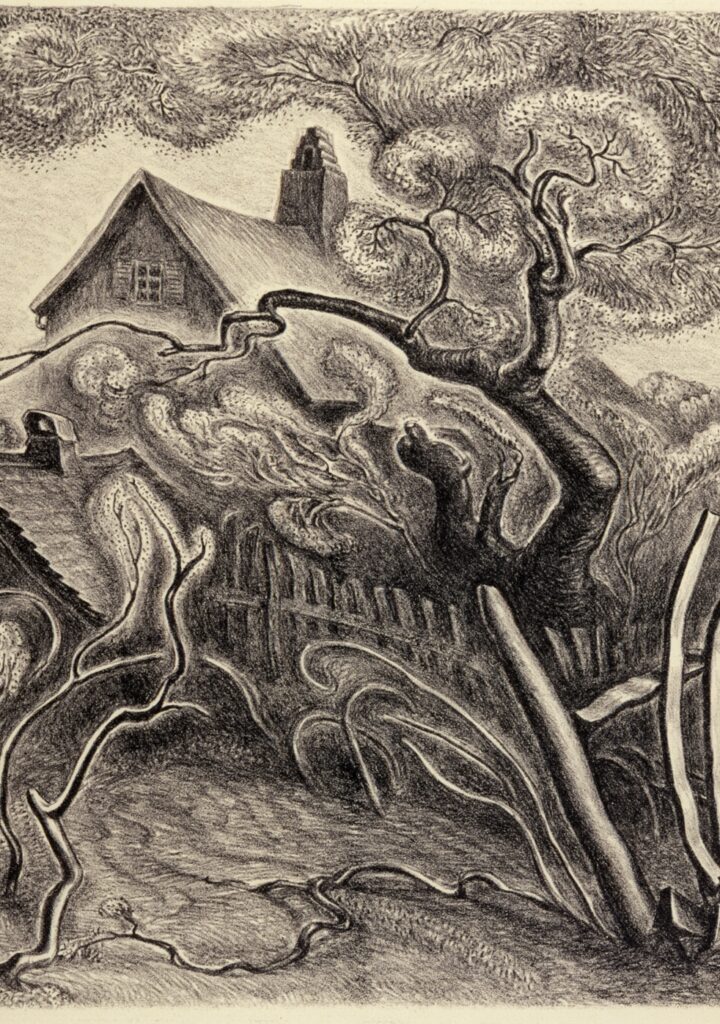
The pairing of visual art with poetry is a hallmark of The Missouri Review’s digital presentation. For this feature, the editors selected Wanda Gag’s 1927 lithograph/print Spring (Spring in the Garden) as the title image. Gag, a pioneering American modernist and printmaker, is famous for her dynamic, expressionistic treatment of organic forms. The writhing, vital energy of Gag’s flora mirrors the "body-crackling stretch" of Tennessee springs that Sharpe evokes in her lines.
Simultaneously, the invocation of Bruce Springsteen—specifically his infamous 2009 Super Bowl halftime show mishap—adds an element of high-stakes vulnerability to the poem. Springsteen’s athletic, working-class bravado becomes a metaphor for endurance:
Let your be-denimmed crotch lead the way, Bruce.
It is powerful and impervious.
Through this surreal, humorous homage, Sharpe strips away the untouchable mythos of the rock star, reframing him as a fellow traveler navigating the physical humiliations and triumphant survivals of earthly life.
4. Official Statements and Critical Commentary
While formal press releases are rare for individual poetry features, the editorial staff at The Missouri Review and literary commentators have increasingly highlighted the cultural resonance of poetry that addresses the opioid crisis and modern grief.
In editorial notes accompanying the weekly release, critics have pointed to Sharpe’s ability to weave humor into tragedy as one of her greatest strengths. The juxtaposition of a accidental fentanyl overdose—a defining American tragedy of the 21st century—with the joyful, chaotic memory of Justin Townes Earle playing a Springsteen cover ("Racing in the Street") offers a profound commentary on how families survive catastrophic loss.
Sharpe herself has reflected candidly on the survivor’s guilt inherent in her grief:
"Sometimes I feel like I don’t deserve to grieve for him like I do because I wasn’t his real sister. But whenever I listen to the Boss sing… I think of Justin. And I hope he feels free."
This quote underscores the broader thematic weight of "Hello, Bruce Springsteen." It speaks to the modern condition of blended families, fractured lineages, and the ways popular music serves as the connective tissue for relationships cut short by addiction and distance.
5. Future Outlook: The Continuing Evolution of Trenna Sharpe’s Oeuvre
With "Hello, Bruce Springsteen" drawing widespread attention from poetry enthusiasts and music fans alike, anticipation is building regarding Sharpe’s future publishing projects.
Upcoming Works and Collections
As an expatriate writer living in London while maintaining deep imaginative roots in the American South, Sharpe occupies a unique dual perspective. Her poetry consistently explores the friction between geographic displacement and emotional permanence. Observers of the contemporary literary scene anticipate that this widely praised poem will serve as a cornerstone for her forthcoming debut full-length poetry collection.
The Intersection of Music and Verse
The cultural footprint of songwriters like Bruce Springsteen and Justin Townes Earle continues to inspire contemporary American writers. Sharpe’s success with this piece suggests a broader trend: a movement away from hermetic, self-referential academic verse toward a poetry of pop-cultural excavation. By treating the canon of heartland rock and the parking lots of indie music venues with the same reverence historically reserved for classical myth, Sharpe is helping to redefine what contemporary lyric poetry can achieve.
As readers continue to share and discuss "Hello, Bruce Springsteen" across digital and literary platforms, it stands as a testament to the fact that grief, no matter how heavy, can still find a way to dance—or at least, to step lightly into whatever heaven awaits us.





Comments
Facebook App ID not configured. Please add it in the Customizer.