
Executive Overview
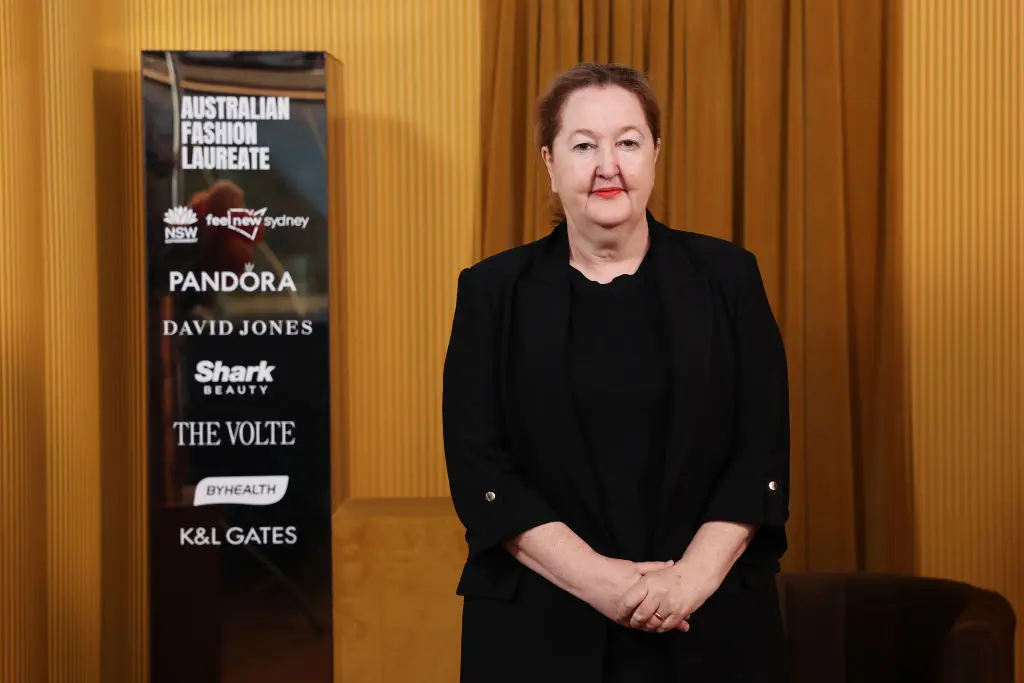
In a dramatic development that has sent shockwaves through Australia’s arts and cultural landscape, Lisa Havilah has stepped down as chief executive of the Powerhouse Museum—also known as the Museum of Applied Arts and Sciences (MAAS)—just 10 weeks before the scheduled November 7 opening of its flagship new venue, Powerhouse Parramatta.
The sudden departure, announced on Thursday via a statement from the office of New South Wales (NSW) Minister for Arts John Graham, comes amid ongoing, highly sensitive investigations into internal governance and procurement practices. Havilah, who has spearheaded the institution since 2019, leaves behind the final, high-pressure stages of delivering a $915 million architectural titan. Billed as the most significant cultural infrastructure project in New South Wales since the completion of the iconic Sydney Opera House in 1973, Powerhouse Parramatta has long been framed as a transformative moment for Western Sydney’s cultural identity.
Yet, the project’s monumental scale is now matched by the gravity of its administrative turmoil. With multiple lines of inquiry currently underway within government departments, officials have scrambled to install an experienced interim leadership team to safeguard the institution’s trajectory. NSW Government Architect Abbie Galvin is set to step in as interim CEO, supported by former Sydney Opera House CEO Louise Herron as a strategic adviser. Both are slated to assume their roles on September 1.
Read Also
Despite the sudden leadership vacuum and the complexities of the ongoing investigations, state authorities and project stakeholders have insisted that the November 7 inauguration date remains insulated from the chaos. Nevertheless, the timing—occurring mere weeks before global dignitaries, artists, and the public are expected to flood the Western Sydney precinct—has cast an unavoidable shadow over what was intended to be a triumphant milestone for Australian culture.
Detailed Chronology: From Appointment to Abrupt Departure
To fully understand the weight of Lisa Havilah’s exit, it is necessary to trace the trajectory of her tenure and the rapid sequence of events that culminated in her departure.
The Rise of a Cultural Heavyweight (2018–2019)
Lisa Havilah entered the MAAS ecosystem with an impressive pedigree in arts administration. Prior to her appointment as chief executive in 2019, she served for more than seven years as the director of Carriageworks, a leading contemporary arts center located in the inner-Sydney suburb of Redfern. During her time at Carriageworks, Havilah earned a reputation as an innovative programmer capable of bridging community engagement with ambitious contemporary art.
When she was tapped to lead MAAS in late 2018—with her tenure formally beginning the following year—her primary mandate was clear: steer the modernization of the state’s premier applied arts and sciences museum while overseeing the conceptualization, construction, and eventual launch of Powerhouse Parramatta. The project represented a decentralization of Sydney’s cultural power, shifting focus away from the harbor and toward the demographic heart of Greater Western Sydney.
Construction Milestones and Mounting Pressures (2019–2026)
Over the next seven years, Havilah became the public face of the $915 million build. She navigated the intricate logistical, architectural, and financial hurdles of erecting a world-class museum on the banks of the Parramatta River. The project was designed by Moreau Kusunoki in association with Genton, featuring a striking, exhibition-scale spatial grid that promised to redefine museum architecture in Australia.
However, as the bricks were laid and budgets ballooned to meet global inflation and supply chain pressures, administrative scrutiny intensified. Earlier in the year, state politician Chris Rath raised pointed budgetary concerns regarding the management and financial trajectory of the project. While Havilah vehemently defended the institution’s financial stewardship at the time, the exchange signaled that the museum’s operations were under a growing microscope.
The Breaking Point (Late August 2026)
By late August, the mounting pressure reached a breaking point. Behind the scenes, investigations into governance and procurement—orchestrated across multiple government lines of inquiry—intensified. Faced with complex administrative and legal probes, Havilah made the decision to step aside.
The announcement, delivered abruptly on Thursday via Minister John Graham’s office, sent immediate ripples through the Australian media landscape. Powerhouse Trust president David Borger captured the sentiment of the institution’s governing body in an interview with ABC Radio Sydney (702 ABC Sydney), admitting, "I think obviously, it’s challenging… these things are always somewhat surprising. Obviously it’s not an ideal situation this close to the opening."
Supporting Context & Metrics: The Scale of Powerhouse Parramatta
The gravity of Havilah’s departure cannot be divorced from the sheer scale, cost, and cultural significance of the institution she leaves behind.
Financial and Architectural Metrics
- Total Project Cost: Estimated at $915 million AUD, making it the single largest cultural infrastructure investment in the state of New South Wales in half a century.
- Historical Comparison: State officials have frequently compared the project’s ambition to the construction of the Sydney Opera House, which opened in 1973 at an initial estimated cost of $102 million AUD (though its final tab famously exceeded that figure).
- Physical Footprint: Designed by international architecture firm Moreau Kusunoki and local practice Genton, the building features column-free exhibition spaces that span thousands of square meters, engineered to host major international blockbusters and large-scale installations.
- Geographic Significance: Situated on the Parramatta River, the museum is the first major cultural institution of its kind to be established in Western Sydney, a region home to more than 2.5 million people.
The Governance Framework of MAAS
The Museum of Applied Arts and Sciences operates as a statutory body funded by the New South Wales Government through the Department of Creative Industries. It encompasses multiple sites, including the historic Powerhouse Museum in Ultimo, the Museums Discovery Centre in Castle Hill, and the forthcoming flagship in Parramatta.
Because public funding constitutes the lion’s share of the museum’s operational and capital budget, its procurement processes, tender issuances, and governance structures are bound by strict government accountability frameworks. Any deviation, perceived conflict of interest, or procedural misstep in these areas naturally triggers rigorous audits, setting the stage for the current investigations.
Official Statements and Institutional Response
As news of the departure broke, government officials, departmental spokespersons, and museum trustees rushed to manage the public narrative, balancing the need for transparency with the protections required by ongoing legal and administrative inquiries.
The Department of Creative Industries Speaks
A spokesperson for the Department of Creative Industries offered a guarded and measured response to national broadcaster ABC News, characterizing the situation as "complex and involv[ing] multiple lines of inquiry."
The spokesperson underscored the government’s dual obligations to accountability and fairness:
"The Department has a responsibility to address these matters with due diligence and procedural fairness. As the investigation is continuing and no formal findings or conclusions have been made, it would not be appropriate to provide further comment at this stage."
Navigating the Transition: Galvin and Herron Step In
Recognizing that a headless institution could spell disaster with only 10 weeks remaining until launch day, the NSW government acted swiftly to install a formidable interim leadership tandem.
- Abbie Galvin (Interim CEO): As the Government Architect for New South Wales, Galvin brings a deep understanding of public infrastructure, spatial design, and bureaucratic navigation. Her appointment ensures that architectural integrity and state-level oversight remain intact as the building prepares to receive its first waves of visitors.
- Louise Herron (Strategic Adviser): The former CEO of the Sydney Opera House brings invaluable, battle-tested experience in managing high-profile cultural precincts, public relations crises, and monumental opening schedules.
Both leaders are scheduled to formally commence their roles on September 1, immediately plunging into the logistical sprint required to finish the job.
Silence from the Top
As of Thursday afternoon, Powerhouse Parramatta and the broader MAAS organization had not immediately responded to requests for comment from major international art publications, including ARTnews. The institutional silence reflects a defensive posture as legal and public relations teams attempt to weather the storm of inquiries.
Future Outlook: Can the Launch Survive the Scandal?
With the opening date locked in for November 7, the central question dominating cultural circles across Australia is simple: Can Powerhouse Parramatta successfully open its doors against a backdrop of governance investigations and executive turmoil?
Operational Resilience vs. Reputational Risk
Operationally, the installation of Abbie Galvin and Louise Herron provides a safety net. Both individuals possess the administrative muscle and institutional familiarity required to oversee final fit-outs, staff training, and exhibition installations without missing a beat. The physical completion of the building is largely insulated from executive-level inquiries, and contractors have continued their work unabated.
However, the reputational risk is non-trivial. Cultural institutions rely heavily on public trust, philanthropic donations, and corporate sponsorships. Investigations into "governance and procurement" invariably cast a cold light on how public funds have been allocated during the construction boom. If subsequent findings reveal systemic failures or procurement irregularities, the shadow over Powerhouse Parramatta could linger long after the ribbon-cutting ceremony.
A Defining Moment for Western Sydney
For the residents of Western Sydney, who have long advocated for equitable cultural investment outside of Sydney’s eastern suburbs, the political and administrative drama surrounding the CEO’s exit is an unwelcome distraction. The promise of Powerhouse Parramatta has always transcended administrative personalities; it is envisioned as a democratic engine for education, design, science, and community connection.
As September 1 approaches, the interim leadership team faces a formidable dual mandate: they must ensure the museum opens on time, on budget, and to world-class standards, while simultaneously cooperating with investigators to ensure absolute transparency. How they navigate these turbulent final 10 weeks will determine whether Powerhouse Parramatta launches as a triumphant cultural beacon or a cautionary tale of bureaucratic overreach.

Comments
Facebook App ID not configured. Please add it in the Customizer.