
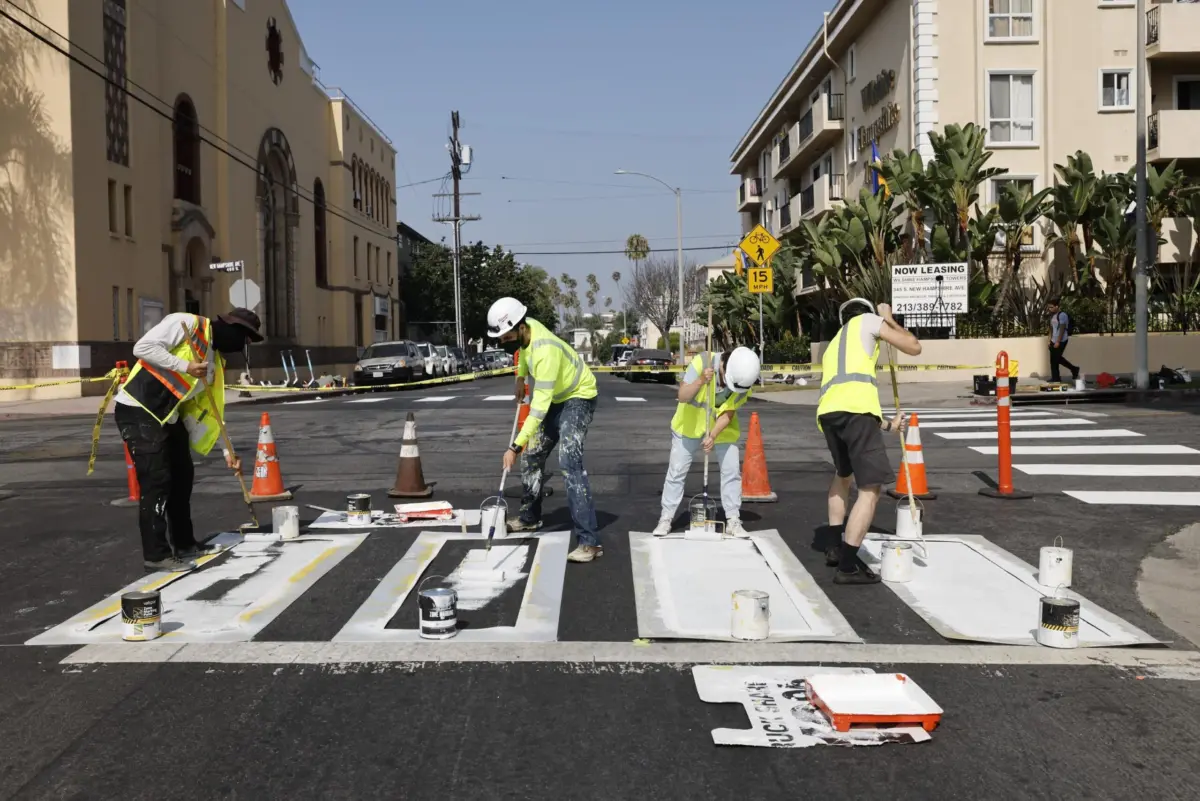
Across metropolitan landscapes in the United States, a quiet revolution is taking shape at the corner of the block. From the bustling asphalt grids of Los Angeles to the historic corridors of Boston and Nashville, a new wave of civic engagement has emerged—not through ballot measures or zoning board meetings, but through buckets of white paint, duct tape, and raw lumber. Known as "guerrilla urbanism" or "tactical urbanism," this decentralized movement is driven by fed-up residents taking municipal matters into their own hands.
Frustrated by sluggish bureaucratic procedures, paralyzing liability concerns, and multi-year delays for projects as simple as a pedestrian crosswalk, everyday citizens are becoming impromptu civil engineers. They are painting their own safety stripes, assembling wooden benches for exhausted bus riders, and laying down temporary bike lanes in the wake of fatal traffic accidents.
Yet, this phenomenon is more than just a series of harmless community art projects or acts of civil disobedience; it is a glaring indictment of modern municipal governance. When a law student and viral road safety advocate like Jonathan Hale can partner with local activists to install a crosswalk faster, cheaper, and more efficiently than a major American city, fundamental questions arise about how taxpayer dollars are spent and why public institutions have become so profoundly incapacitated.
Read Also
This deep dive investigates the rise of tactical urbanism, examining the legal standoffs, structural inertia, and administrative roadblocks that force citizens to pick up paint rollers. Furthermore, it explores how visionary municipalities are beginning to learn from these insurgent design practices, turning friction into collaboration to construct more humane, accessible, and responsive cities.
Detailed Chronology: From Bureaucratic Deadlocks to Guerrilla Resistance
The timeline of tactical urbanism is marked by an ongoing escalation between cautious, liability-averse city halls and proactive, impatient urban activists. While low-cost interventions have historical roots—dating back to the 1970s when disability rights activists used sledgehammers to install their own concrete curb cuts in Berkeley, California—the modern wave of guerrilla urbanism has accelerated drastically over the past decade due to worsening urban traffic violence and stagnant local leadership.
The Los Angeles Flashpoint
In Los Angeles, the boiling point was reached after years of unfulfilled promises regarding pedestrian safety. Jonathan Hale, a law student turned viral road safety advocate, found himself facing criminal vandalism charges after spending months painting DIY crosswalks across some of the city’s most treacherous intersections.
The tipping point occurred during a high-stakes meeting earlier this year between Hale and Los Angeles Mayor Karen Bass. After the mayor apologized for Hale’s arrest following a late-night paint job the previous December, Hale confronted her directly: "Dude, you’re the mayor. Do something about this. It’s you, dude."
Trusting the subsequent emailed assurances from the mayor’s office that a sweeping new executive order addressing pedestrian safety was imminent, Hale temporarily laid down his paint rollers. He honored a self-imposed truce for months. However, as weeks turned into months of radio silence from city hall, the institutional inertia proved too familiar. Just as he had when he first picked up a stencil and a bucket of white paint, Hale realized that waiting for the municipal machine meant waiting indefinitely.
Tragedy and Retaliation in Koreatown
The lethal cost of bureaucratic delays became starkly apparent in the summer of 2025 in Los Angeles’s Koreatown neighborhood. According to municipal transit watchdogs at Streetsblog, the city had sat on allocated funds for over a decade to improve a notoriously perilous intersection. That bureaucratic negligence turned fatal when a drunk driver struck and killed nine-year-old Nadir Gavarrete.

While city officials stalled in the immediate aftermath, the grassroots group Crosswalk Collective LA—the very organization that inspired Hale—refused to wait. They mobilized overnight, painting guerrilla crosswalks to protect children and families walking to nearby schools. It took three full months after Gavarrete’s tragic death for the city of Los Angeles to finally scrub away the unauthorized paint, replacing the grassroots safety measures with "official" crosswalks and a temporary traffic circle. While a permanent infrastructural solution was promised, the sequence of events underscored a bitter reality: it often requires a profound tragedy to shock a static government into action.
A Nationwide Movement
This cat-and-mouse dynamic is not isolated to Southern California. Across the country, tactical urbanists are staging similar interventions:
- Boston (July 2026): Following the tragic death of 36-year-old Louisa Gag, who was struck and killed by a truck at a dangerous intersection, local cyclists took matters into their own hands. Utilizing strips of green and white duct tape, they improvised an unauthorized bike lane to force oncoming traffic to recognize vulnerable road users.
- San Francisco & the Bay Area: Frustrated by the systematic removal of public seating as part of a nationwide shift toward hostile urban architecture, the San Francisco Bay Area Bench Collective began deploying handcrafted wooden benches at bus stops where city officials had stripped away places for the elderly and disabled to sit.
- Nashville, Tennessee: Pastor Robin Owen and her network of volunteer "bench builders" have engaged in a yearlong game of administrative whack-a-mole. After crafting sturdy benches for $35 apiece, they install them at neglected bus stops. The city swiftly dispatches crews to remove them, prompting Owen and her allies to build and install replacements—highlighting how municipalities often find it easier to destroy helpful infrastructure than to build it.
Supporting Context & Metrics: The Cost of Bureaucratic Paralysis
To understand why citizens are risking arrest to paint crosswalks and build benches, one must examine the staggering financial and temporal inefficiencies that plague modern municipal project delivery.
According to Anthony Garcia, a Miami-based urban planner and co-pioneer of the tactical urbanism movement alongside Mike Lydon, the primary driver of urban stagnation is an overblown fear of litigation and liability.
"We see the fear of litigation and liability so thoroughly sabotaging mundane municipal projects that a crosswalk takes half-a-million dollars in five years to do when it’s really a bucket of paint in an afternoon," Garcia explains.
This Kafkaesque reality means that basic street improvements are subjected to multi-year environmental impact studies, endless community board reviews, and complex procurement processes. By holding a simple crosswalk or a street corner curb extension to the same rigorous engineering and legal standards applied to major suspension bridges, cities have priced themselves—and timed themselves—out of basic public safety.
The Liability Double Standard
A central irony of modern municipal risk management is the legal paradox surrounding public infrastructure. Cities are overwhelmingly more likely to face litigation over infrastructure they choose to build than over the infrastructure they ignore.
A crosswalk that is never painted is one less liability for city attorneys to worry about. A bus stop bench that is never installed cannot become the subject of a slip-and-fall lawsuit. Consequently, municipal risk-avoidance strategies incentivize doing nothing.
However, this strategy creates a profound moral hazard. As Pastor Robin Owen points out:

"There is this massive moral disconnection where cities are not concerned about liability when it comes to people dying in traffic violence, but are concerned about liability when citizens take action ourselves. We should be more concerned about our moral liability of people having to suffer as they navigate our cities."
Reclaiming Collective Agency
Beyond immediate physical safety, guerrilla urbanism serves a vital psychological and social function. Decades of red tape and unresponsive bureaucracies have left urban residents feeling alienated from their own neighborhoods.
Carter Lavin, co-founder of the TransBay Coalition, emphasizes the empowering nature of tactile, neighborhood-level interventions:
"It’s very easy to feel small, and that nothing that you do matters… but one thing about building benches is that every screw you drive, every board you sand makes your neighbor’s life better, and it does it for hundreds of people."
Official Statements & Institutional Responses
While the relationship between guerrilla urbanists and city halls is frequently adversarial, history shows that civil disobedience often paves the way for institutional reform. When local governments shift their posture from defensive hostility to active collaboration, transformational change can occur rapidly.
The Rochester Model: Permitted Tactical Urbanism
Not all tactical urbanism requires working in the dark of night. In Rochester, New York, the local transit advocacy group Reconnect Rochester has partnered successfully with city officials for over a decade to deploy brightly colored, boxy "bus stop cubes" along critical transit corridors.
Crucially, these interventions are fully permitted. Mary Staropoli, co-executive director of Reconnect Rochester, notes the stark difference that official sanctioning provides:
"If we were to have just kind of gone out there and done this in the dark of night without following any sort of process, I think those bus stop cubes would have been quickly removed."
By establishing clear administrative pathways for low-cost, quick-build projects, Rochester demonstrates that municipalities do not have to choose between total stagnation and outright illegality.

From Resistance to Integration
Urban planners like Mike Lydon point to historical precedents where municipal governments ultimately integrated rogue citizen projects into official city policy once their popularity and utility became undeniable:
- Curb Cuts (1970s Berkeley): Wheelchair users taking sledgehammers to concrete curbs to carve out makeshift ramps forced Berkeley to pioneer accessible design, a standard that eventually transformed global urban planning through the Americans with Disabilities Act (ADA).
- Raleigh Wayfinding Signs (2012): When graduate student Matt Tomasulo zip-tied DIY pedestrian wayfinding signs to street poles in Raleigh, North Carolina, the city initially tore them down. However, the overwhelming public support forced city leaders to reverse course, adopt the design, and roll it out citywide.
These examples illustrate what Lydon terms "productive tension"—a dynamic where citizen-led interventions apply necessary pressure on static institutions, compelling them to innovate, adapt, and serve their constituents more effectively.
Future Outlook: Building the Simple Stuff Quickly
As metropolitan areas across the United States grapple with growing populations, affordable housing crises, and escalating traffic fatalities, the status quo of urban governance is increasingly unsustainable. The rise of guerrilla urbanism is a symptom of a deeper systemic failure, but it also points toward a hopeful blueprint for the future.
If cities are to survive and thrive in the 21st century, local governments must learn to embrace the core tenets of tactical urbanism: speed, low cost, community collaboration, and iterative design.
- Streamlining Bureaucracy: Municipalities must create expedited permitting categories for tactical urbanism, allowing community groups, neighborhood associations, and transit advocates to install low-risk public amenities without wading through years of bureaucratic red tape.
- Reforming Liability Frameworks: City attorneys and risk management departments must balance their fear of litigation against the moral and public health costs of failing to secure dangerous streets.
- Embracing Prototyping: Just as software developers release beta versions of applications to gather real-world user feedback before finalizing code, cities should view street furniture and traffic calming measures as low-cost prototypes that can be tested, tweaked, and permanently installed based on community needs.
As Jonathan Hale aptly summarizes, the ultimate goal of the guerrilla painter is not to establish a permanent criminal enterprise of illicit crosswalk artists, but to force public servants to rise to a higher standard of accountability:
"The point of the crosswalks is the protest. It’s to draw awareness to the issue… We need to hold the government to a higher standard."
Until city halls nationwide learn to build the simple things quickly and reliably, the paint rollers, duct tape, and power tools of tactical urbanism will remain primed and ready in the garages of everyday citizens—reminding us all that building a better, safer city is entirely possible when we decide not to wait for permission.



Comments
Facebook App ID not configured. Please add it in the Customizer.