
Executive Overview
As the crisp autumn air settles over the Northeast, the cultural calendar hits a fever pitch, highlighted by the annual pilgrimage of fandom to the Jacob K. Javits Convention Center for New York Comic Con (NYCC). While legions of enthusiasts don elaborate cosplay and scour vendor floors for rare variants and exclusive merchandise, media consumers across the globe are met with a dizzying, eclectic slate of entertainment releases.
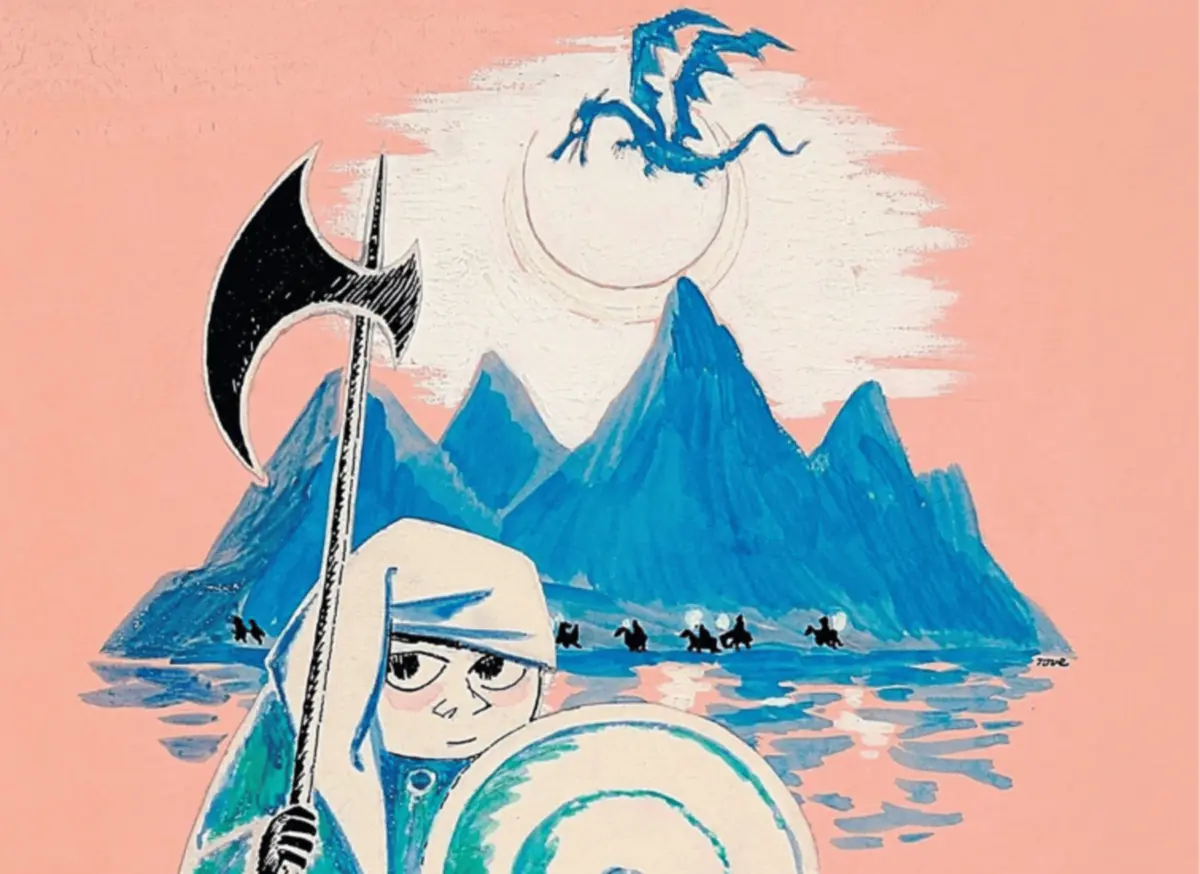
From the long-awaited stateside publication of Tove Jansson’s visionary illustrations for J.R.R. Tolkien’s The Hobbit to a resurgence of nautical epics anchored by MGM+’s Treasure Island and Netflix’s monster-feature Below, the autumn slate offers a robust cross-section of nostalgic revivals and avant-garde criticism.
This report provides an exhaustive, authoritative overview of the week’s defining pop culture milestones. We examine the logistical realities of major convention attendance, analyze landmark publishing events that bridge decades of international art divides, audit the cyclical nature of prestige television adaptations, and evaluate boundary-pushing contemporary essay work. Through a rigorous journalistic lens, we map the intersections of commerce, curation, and community defining contemporary entertainment.
Read Also
Detailed Chronology: A Week in Culture
The cultural milestones unfolding this week represent a convergence of archival releases, streaming premieres, and large-scale live events. Below is the operational timeline governing the week’s major pop culture developments:
- Monday: Advance critical reviews land for Netflix’s subterranean survival-thriller Below, setting off online debates regarding its monster design—affectionately and disparagingly dubbed the "killer snot-berg"—and establishing its tonal lineage within modern sci-fi horror.
- Tuesday: Independent bookstores and major retailers nationwide process the historic shipment of The Hobbit: Illustrated by Tove Jansson, officially marking the title’s debut in the American literary market decades after its Scandinavian publication.
- Wednesday: Media outlets release early spotlights on the autumn cinematic landscape, contrasting standard multiplex fare with repertory screenings, such as the 20th-anniversary theatrical run of Guillermo del Toro’s dark fantasy masterpiece, Pan’s Labyrinth.
- Thursday: Doors officially open for New York Comic Con at the Javits Center. Thousands of attendees flood the exhibition floor, initiating the annual pilgrimage of comic book collectors, industry professionals, and cosplayers, alongside the inevitable seasonal onset of convention-floor maladies.
- Friday: Literary critics focus attention on the release of Franny Choi’s essay collection, We Radiant Things: Notes on Being Alien and Becoming Cyborg, amplifying conversations around speculative fiction, cinematic critique, and post-humanist theory.
- Sunday: MGM+ officially premieres its high-stakes literary adaptation of Treasure Island, starring powerhouse talents David Oyelowo and Hayley Atwell, offering a fresh prestige interpretation of Robert Louis Stevenson’s classic adventure framework.
Supporting Context & Metrics
To fully appreciate the scope of this week’s cultural developments, we must examine the underlying metrics, historical contexts, and industry dynamics driving these stories.
1. The Convention Phenomenon and Public Health Economics
New York Comic Con remains one of North America’s premier pop culture conventions, drawing upwards of 200,000 attendees over its multi-day run. Beyond its economic impact on the hospitality and tourism sectors of New York City, NYCC serves as a primary marketing engine for major studios, comic publishers, and merchandise brands.
However, large-scale indoor gatherings of this density invariably invite operational challenges, most notably the transmission of transient pathogens—colloquially known in fandom circles as "con crud." Epidemiological factors at conventions are exacerbated by high-touch surfaces, recycled HVAC air, and prolonged physical proximity. Simple behavioral interventions, such as decoupling the consumption of food or gum from hands that have physically interacted with shared currency, promotional swag, and vintage paper goods, remain an essential frontline defense for attendees navigating the convention floor.
2. The Transatlantic Literary Bridge: Tove Jansson’s Hobbit
The publication of The Hobbit: Illustrated by Tove Jansson by William Morrow represents a major milestone in transnational literary distribution. While Finnish and Swedish readers have enjoyed Jansson’s distinct artistic interpretations since the mid-20th century, American audiences have historically been limited to Tolkien’s own cartography and spot-illustrations, or later interpretations by artists like Alan Lee and John Howe.
The genesis of Jansson’s involvement is deeply intertwined with the broader history of children’s literature. Astrid Lindgren, the legendary creator of Pippi Longstocking working in her capacity as a publishing visionary, recognized the universal staying power of Tolkien’s manuscript. In correspondence urging Jansson to take on the project, Lindgren predicted with striking accuracy that The Hobbit would become "the children’s book of the century." Jansson’s visual style—famed for her creation of the minimalist, existential Moomin universe—infuses Middle-earth with an idiosyncratic, folkloric aesthetic that diverges sharply from contemporary heroic fantasy norms. Her renditions of Smaug and the company of dwarves offer a starkly Scandinavian, modernist re-imagining of high fantasy archetypes.
3. The Enduring Nautical Cycle: Treasure Island and Black Sails
The announcement and subsequent premiere of MGM+’s Treasure Island, featuring David Oyelowo and Hayley Atwell, arrives in a crowded seaswept marketplace. Alongside Ridley Scott’s upcoming 2027 cinematic take on the property, contemporary producers continue to mine Robert Louis Stevenson’s foundational 1883 pirate adventure.
This trend prompts vital questions regarding audience fatigue and critical appraisal, particularly when juxtaposed against Jonathan E. Steinberg and Robert Levine’s critically acclaimed Starz series, Black Sails (2014–2017). Despite operating as a narrative prequel to Treasure Island, Black Sails achieved rare narrative depth by subverting imperialist histories, weaving queer representation, and maintaining intricate character studies through figures like Eleanor Guthrie (Hannah New) and Max (Jessica Parker Kennedy). The persistent under-appreciation of these foundational performances in mainstream awards circuits highlights a systemic undervaluing of complex, serialized television within the broader entertainment economy.
4. Speculative Criticism: Franny Choi’s We Radiant Things
In the realm of contemporary criticism, Franny Choi’s We Radiant Things: Notes on Being Alien and Becoming Cyborg redefines the parameters of cultural analysis. Building upon the thematic architecture of their 2019 poetry collection Soft Science, Choi approaches text and cinema not as distant artifacts, but as visceral, lived experiences.
By dissecting visual milestones like Alex Garland’s Ex Machina and Mamoru Oshii’s Ghost in the Shell, Choi engages with intersectional frameworks of race, technology, and bodily autonomy. Their stated methodology—"tenderly, from stabbing range"—encapsulates a mode of cultural critique that marries rigorous intellectual deconstruction with profound emotional resonance, proving that analytical prose can achieve the lyrical beauty of poetry.
5. Genre Television: The Case of Below
Netflix’s subterranean survival-thriller Below, starring Josh Hartnett and Mackenzie Davis, exemplifies the platform’s high-risk, high-reward commissioning strategy for atmospheric genre fiction. Set against the stark, damp backdrop of Newfoundland, the series occupies a liminal space between prestige psychological drama and creature-feature horror. Critical reception has run the gamut from enthusiastic praise regarding its world-building to wry amusement at its visceral practical effects, affectionately dubbed the "killer snot-berg."
The project’s casting choices—pairing veteran anchors like Hartnett with indie-darling mainstays like Davis, alongside younger ensemble members—reflects an ongoing industry trend to blend nostalgic star power with high-concept genre mysteries reminiscent of classic supernatural procedurals.
Official Statements & Industry Perspectives
While direct public relations statements regarding specific convention hygiene protocols remain informal, publishing and television executives have increasingly vocalized their strategies for navigating modern audience demands.
On Archival Literary Releases:
Representatives from HarperCollins and William Morrow emphasized the long-term cultural value of bringing international editions to the domestic market. In promotional statements accompanying the launch of The Hobbit: Illustrated by Tove Jansson, editors noted:
"The opportunity to introduce generations of American readers to a masterclass in cross-cultural artistic interpretation cannot be overstated. Tove Jansson did not merely illustrate Tolkien’s world; she translated its primordial mythos through a distinctly Nordic lens, expanding the visual vocabulary of fantasy for all time."
On Prestige Television and Adaptation Realism:
MGM+ executives have positioned their adaptation of Treasure Island as a return to character-driven prestige adventure, aiming to capture both legacy fans of classic literature and modern streaming demographics. While specific platform metrics remain proprietary, production notes highlight a deliberate shift toward grounded historical realism paired with high-profile theatrical casting, such as Hayley Atwell and David Oyelowo, to cut through an increasingly saturated content ecosystem.
Future Outlook
As the autumn cultural calendar unfolds, industry analysts anticipate several key trends shaping media consumption through the end of the year and into 2026:
- The Rise of Cross-Disciplinary Criticism: Works like Franny Choi’s We Radiant Things signal a growing appetite among readers for hybridized essay collections that merge personal memoir with pop culture analysis, moving away from dry academic critique toward emotionally resonant, identity-informed criticism.
- Archival Reassessment in Publishing: The commercial success of international editions, such as Jansson’s Tolkien illustrations, will likely embolden major publishing houses to scour international archives for long-overlooked translations and regional art books, satisfying an increasingly globally-minded readership.
- Genre Hybridization on Streaming Platforms: High-concept streaming series that blend grounded regional settings with speculative elements—exemplified by Netflix’s Below—will continue to dominate greenlight decisions, as networks seek out distinct atmospheric hooks to capture fragmented viewer attention in a crowded marketplace.
- Convention Adaptability: As live-event attendance stabilizes post-pandemic, major conventions like NYCC will face ongoing pressure to balance massive commercial footprints with crowd-control logistics and public health awareness, ensuring that the physical gathering of fandom remains both economically viable and sustainable.





Comments
Facebook App ID not configured. Please add it in the Customizer.