
Executive Overview
The autumnal media landscape is currently undergoing a radical bifurcation. On one hand, coastal epicenters like New York City are submerged in the high-density sensory overload of New York Comic Con (NYCC), drawing hundreds of thousands of costumed attendees to the Javits Center. On the other hand, remote observers and home-bound enthusiasts are greeted by an eclectic, if somewhat perplexing, slate of streaming debuts, milestone cinema anniversaries, and rare literary imports.
This report provides a comprehensive examination of the week’s most significant cultural developments. We analyze the operational realities of massive fan conventions, evaluate long-overdue international publishing milestones—specifically Tove Jansson’s legendary illustrations of J.R.R. Tolkien’s The Hobbit—and assess the economic and creative viability of major new streaming adaptations, including MGM+’s Treasure Island and Netflix’s Newfoundland-set creature feature, Below. Finally, we explore critical literary criticism through the lens of contemporary essayists examining cybernetic alienation.
Detailed Chronology & Industry Developments
1. New York Comic Con: The Logistics of "Con Crud" and Spatial Hygiene
As New York Comic Con officially opens its doors at the Javits Center, convention veterans and first-timers alike navigate an environment defined by extreme human density, tactile exhaustion, and the perennial threat of post-event illness—colloquially known as "con crud."
Read Also
Public health analysts and veteran attendees stress fundamental operational hygiene protocols during peak convention weeks:
- Tactile Isolation: The primary vector for convention-acquired pathogens involves hand-to-mouth transmission after physical interaction with high-contact surfaces, including vintage comic books, promotional swag, communal touchscreens, and vendor displays.
- Nutritional Delivery Systems: Experts recommend eliminating finger-to-food contact entirely. Solutions range from dispensing pre-packaged consumables (such as rigid, shaker-style containers of chewing gum) directly into the mouth to employing rigorous hand-sanitization routines before every meal.
- Footwear Optimization: Given the expansive square footage of the Javits Center and continuous standing queues, structural podiatric support remains the single most critical preventative metric for sustaining multi-day attendance.
2. Literary Import: Tove Jansson’s The Hobbit Finally Reaches U.S. Shores
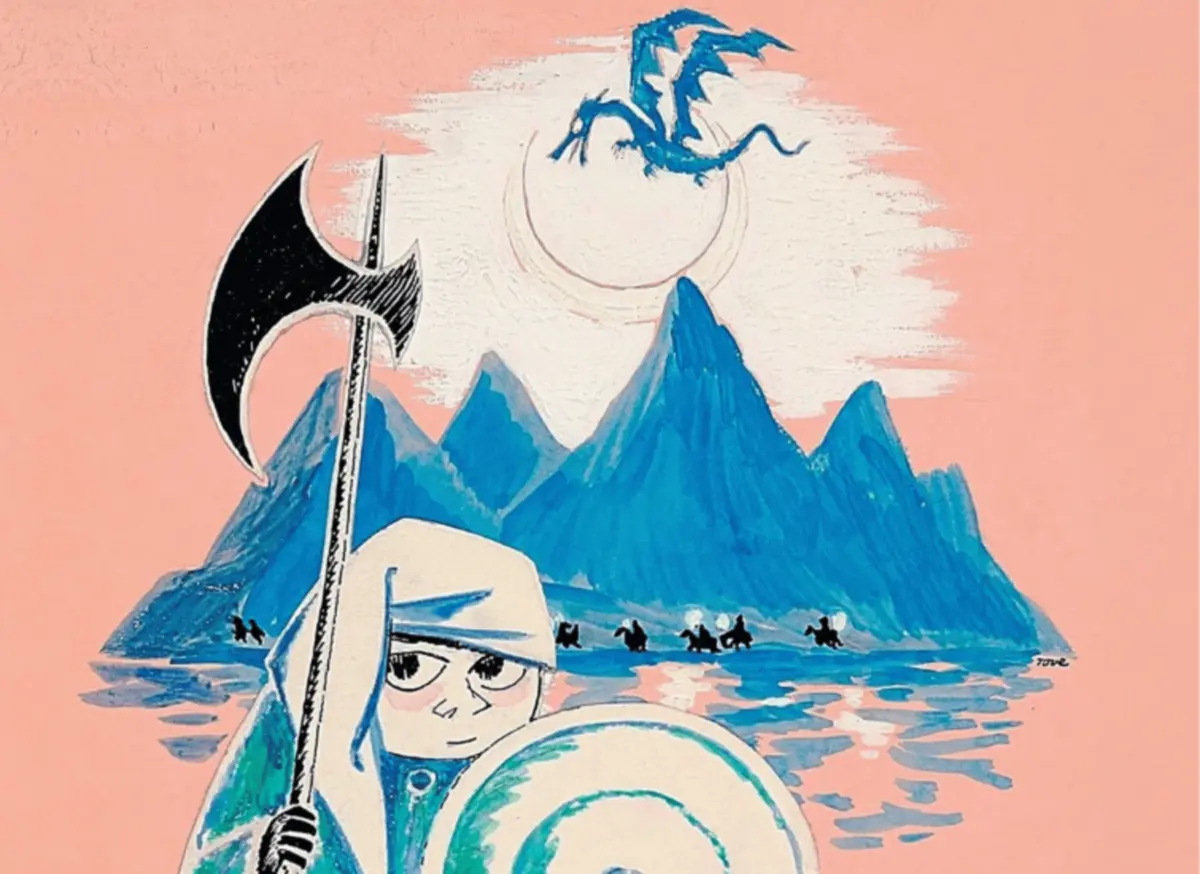
For decades, an essential piece of Tolkien lore remained geographically restricted to Scandinavian audiences. This week, publisher William Morrow officially released The Hobbit: Illustrated by Tove Jansson in the United States, granting American readers their first authorized, widely available domestic printing of Jansson’s visionary artistic interpretations.
The genesis of this collection dates back to correspondence between the Moomin creator Tove Jansson and legendary Pippi Longstocking author Astrid Lindgren. Operating in her capacity as a publishing visionary, Lindgren recognized the cultural longevity of Jansson’s aesthetic, writing to her contemporary with profound prescience: “…this will be the children’s book of the century, and will live long after we are dead and buried.”
Jansson’s illustrations diverge sharply from the traditional, hyper-realistic, or pastoral visual motifs typically associated with Middle-earth. Instead, her depictions of Smaug, Thorin’s company, and Bilbo Baggins exhibit the stark, minimalist, yet profoundly expressive lines that characterize her broader literary catalog. The release marks a major milestone for Tolkien bibliography and international illustration history.
3. The Adaptation Cycle: Treasure Island and the Long Shadow of Black Sails
The television marketplace continues to mine classic maritime adventure literature, highlighted by the upcoming MGM+ series Treasure Island, premiering on October 11. Despite boasting an A-list cast featuring David Oyelowo and Hayley Atwell, the project has experienced relatively muted pre-release marketing momentum.
This development arrives amid ongoing industry discourse regarding the durability of Robert Louis Stevenson’s source material. With a major theatrical feature directed by Ridley Scott scheduled for 2027, the market is poised to absorb multiple concurrent interpretations of the 1883 pirate classic.
Concurrently, media analysts frequently compare these new iterations against Starz’s critically acclaimed Black Sails (2014–2017). Despite operating as a narrative prequel to Stevenson’s novel, Black Sails established a high-water mark for prestige pirate television that contemporary revivals struggle to eclipse. The show’s underseen status among mainstream audiences—coupled with the underutilization of its principal cast, including Hannah New and Jessica Parker Kennedy—highlights persistent gaps in how modern streaming platforms market complex, serialized historical dramas.
4. Critical Theory and Cybernetics: We Radiant Things
In the realm of literary criticism, poet and essayist Franny Choi has returned with We Radiant Things: Notes on Being Alien and Becoming Cyborg (published via their ongoing exploration of speculative identity). Building upon the structural successes of their 2019 poetry collection Soft Science, Choi’s new essay collection addresses the intersections of race, technology, marginality, and somatic anger.
The opening chapters of the collection tackle foundational texts of artificial intelligence cinema, specifically Alex Garland’s Ex Machina. Rather than relying on detached academic formalism, Choi approaches cultural criticism through an embodied, adversarial lens. As they famously articulate within the text: “This is the only way I want to do what someone might call criticism: tenderly, from stabbing range.” Subsequent chapters expand this analytical framework toward milestone anime and cyberpunk milestones like Ghost in the Shell.
5. Streaming Speculation: Netflix’s Below and the Newfoundland Monster Phenomenon
Netflix’s latest genre entry, Below, has generated significant critical debate following its digital debut. Starring Josh Hartnett and Mackenzie Davis, the series follows a tense, claustrophobic narrative set against the damp, isolated backdrop of Newfoundland.
While early reviews range from enthusiastic endorsements by major trades (Variety, RogerEbert.com) to moderate praise from regional outlets (The Sydney Morning Herald), the show has captured public imagination largely due to its bizarre monster design—unofficially dubbed by early viewers as a "killer snot-berg."
Despite minor casting anomalies—such as the generational alignment of Josh Hartnett and Charlie Heaton playing father and son—the series functions as an effective, atmospheric throwback to classic X-Files-style monster-of-the-week storytelling.
Supporting Context & Metrics
To contextualize the week’s media and publishing events, industry data highlights several underlying trends across publishing, streaming, and live events:
- Convention Demographics: Major trade events like NYCC continue to operate at near-maximum capacity, generating hundreds of millions in local tourism revenue while simultaneously straining urban transit and public health infrastructure.
- International Translation Lag: The delayed U.S. release of Tove Jansson’s The Hobbit (over fifty years after its initial Scandinavian publication) underscores historical barriers in cross-border literary licensing, a friction point that modern digital publishing agreements have only recently begun to resolve.
- Streaming Visibility Paradox: The simultaneous production of multiple adaptations of the same public-domain intellectual property (such as Treasure Island) often leads to audience fragmentation, making it difficult for prestige entries with high-profile talent (Oyelowo, Atwell) to achieve dominant cultural penetration without extensive promotional backing.
Official Statements & Industry Commentary
- On Literary Preservation: Representatives from William Morrow emphasized the historical significance of the Jansson collection, noting that “bringing Tove Jansson’s singular artistic vision of Middle-earth to North American readers fulfills a decades-long demand for international Tolkien scholarship.”
- On Critical Methodology: Franny Choi’s editorial team highlighted the philosophy driving We Radiant Things, stating that the collection seeks to “reclaim speculative media as a mirror for lived experiences of alienation, systemic bias, and technological integration.”
- On Convention Safety Protocols: Public health organizers at major convention centers continue to advise attendees to maintain voluntary hygiene practices, recognizing that high-density indoor gatherings remain primary vectors for seasonal respiratory transmission.
Future Outlook
Looking toward the remainder of the fourth quarter, the entertainment and publishing sectors face a period of intense counter-programming. As convention season recedes, attention will pivot toward prestige film slates and late-year literary awards.
Key milestones to monitor include:
- The Performance of MGM+’s Treasure Island: Its reception on October 11 will serve as a bellwether for whether traditional adventure narratives can capture contemporary streaming audiences outside of established fantasy mega-franchises.
- The Long-Term Impact of We Radiant Things: Choi’s essays are expected to heavily influence academic and popular discourse surrounding artificial intelligence ethics and representation in media throughout the coming year.
- The Expansion of Global Literary Editions: The commercial success of The Hobbit: Illustrated by Tove Jansson may prompt publishers to accelerate the localization of other rare, region-locked artistic adaptations of major speculative properties.





Comments
Facebook App ID not configured. Please add it in the Customizer.